
Businesses like snow removal require insurance due to the dangers and nature of the job. Snow removal insurance protects your business from risks like accidents, property damage, or equipment theft during snow removal operations.
The main benefits include liability protection, coverage for employee injuries, and protection of expensive tools and vehicles. It may preserve your cash flow when large equipment breaks down or an employee is injured on the job and you have to pay compensation.
There are many insurance providers for snow removal companies. Progressive stands out as the top provider. Progressive is suitable for companies with trucks as they provide competitive rates and excellent customer service.
While Progressive may be the leading provider, it won’t necessarily be the best for you. Various factors play a role in finding the right insurance plan. Factors like business size, employee count, vehicles (numbers and type), and insurance history all influence the quality of the insurance plan. You should read through our list of the top seven providers and choose the one that best matches your specific business requirements.
| Company | Summary | Pros | Cons |
|---|---|---|---|
| Progressive | Offers snow‐plow coverage via its Advantage Business Program, including workers’ comp, commercial auto, and general liability. |
|
|
| Allstate Business | Provides liability, E&O, workers’ comp, BOP, commercial auto and more, aimed at small businesses. |
|
|
| Next Insurance | Digital first provider with tailored packages: general liability, E&O, auto, workers’ comp, tools & equipment. |
|
|
| Insureon | Aggregator offering GLI, BOP, workers’ comp, auto, tools, and professional liability with transparent average costs. |
|
|
| The Hartford | Offers GLI, BOP, workers’ comp, auto, E&O, and umbrella known for strong BOP and financial stability. |
|
|
| Cross Agency Insurance | Regional agency offering auto, liability, tools, and BOP tailored through local agents. |
|
|
| XINSURANCE | Specializes in high risk snow removal coverage: general liability, auto, professional liability, TRU umbrella, and equipment. |
|
|
1. Progressive
Progressive offers snow plow insurance through its Progressive Advantage Business Program. Coverage options include workers’ compensation, commercial auto insurance for vehicles used in snow removal, and general liability insurance to protect against third-party injuries and property damage.
The cost of snow removal insurance with Progressive depends on specific aspects of your business. The deciding factors usually include the types of projects you work on, your location, payroll, coverage needs, driving history, claims history, and the number and types of vehicles you use. Deductibles vary based on the chosen coverage and policy terms.
Progressive determines your liability limits by the policy you select, which can be customized to meet the needs of the business.
Exclusions and restrictions are typical of standard commercial auto and general liability policies like Progressive’s. However, it would be best to contact them to learn more about their exclusions and restrictions for your business.
2. Allstate Business
Allstate offers business insurance that protects your property and assets. Coverage options include business liability insurance, which can help cover unexpected costs like injuries at your workplace or lawsuits from clients claiming damages. Alternatives include errors and omissions (E & O), workers’ compensation, business interruption, equipment breakdown, commercial auto, and more.
The cost of Allstate’s business insurance depends on factors such as your business size, location, and coverage needs. However, it is fairly affordable seeing that it’s the best snow removal business insurance for small companies. Deductibles are determined by the terms of your selected policy and the specific coverage options.
Liability limits with Allstate are customizable based on the policy you choose, allowing you to construct a coverage plan for your business's needs.
Exclusions and restrictions vary by policy but often include intentional acts, certain professional services, and high-risk activities.
3. Next Insurance
Next Insurance provides snow plowing insurance packages tailored to your business. Their coverage options typically include general liability insurance, professional liability (errors and omissions) insurance, commercial auto insurance, workers’ compensation, and tools and equipment coverage. These options protect against accidents, injuries, legal fees, and damage to vehicles.
Like the other companies, the cost of Next Insurance policies depends on factors like the types of projects you handle, your location, payroll, and the number and types of vehicles used. Deductibles vary according to the chosen coverage and policy terms.
Liability limits are customizable to suit your business requirements. Specific standard limits are not detailed but can be adjusted to meet your needs.
Exclusions and restrictions are policy-specific but commonly include intentional acts, certain professional services, and high-risk activities. For more details, we recommend you contact Next Insurance.
4. Insureon
Insureon offers comprehensive snow plowing and removal insurance for snow removals. Their policies include general liability insurance, a business owner’s policy (BOP), workers’ compensation, commercial auto insurance, contractor’s tools and equipment insurance, and professional liability insurance. These coverages protect against risks like vehicle accidents, stolen equipment, and accidental damage.
Insureon provides detailed average cost breakdowns, for instance, general liability averages $43/month, while workers’ compensation is around $254/month, BOP is $98/month, and commercial auto insurance is $173/month. You would pay around $745 on average for the complete business insurance package.
Again, deductibles are determined by the specific policy and coverage options you select.
Liability limits for general liability policies are typically $1 million per occurrence and $2 million aggregate. Other policies vary in limits based on your selections.
Exclusions and restrictions depend on the policy but include the same scenarios I described in the other insurance policies.
5. The Hartford
The Hartford provides business insurance for snow removal, including general liability insurance (GLI), a business owner’s policy (BOP), workers’ compensation, commercial auto insurance, errors and omissions insurance, and commercial umbrella insurance. These coverages help protect against risks like bodily injury, property damage, and professional negligence.
The cost of coverage with The Hartford depends on factors such as your business size, location, and coverage requirements. On average, you can expect to pay $85/month for BOP, $67/month for GLI, $86/month for workers’ compensation insurance, and $76 for professional liability insurance
6. Cross Agency Insurance
Cross Insurance provides various coverage solutions. Their options include commercial auto insurance, general liability insurance, tools and equipment insurance, and a business owner’s policy (BOP), which combines general liability and property insurance. These coverages protect against risks like theft, property damage, unforeseen circumstances, and third-party injuries.
Cross Insurance policies’ costs vary based on your insurance needs, history, business size, employee count, etc. Exclusions and restrictions depend on the chosen policies. Contact Cross Insurance for precise details about your policy.
7. XINSURANCE
XINSURANCE specializes in providing tailored insurance solutions for snow removal businesses, particularly those considered high-risk or with a history of claims. Their comprehensive coverage extends to commercial general liability, as well as commercial auto insurance for vehicles used primarily for business purposes.
Additionally, they offer professional liability coverage for risks associated with negligent acts, along with TRU Umbrella policies that fill gaps or exclusions in existing coverage. Equipment coverage is available, safeguarding owned or rented machinery from malfunctions or theft.
The cost of coverage is highly personalized, based on factors like the business’s operational scope, claims history, and specific requirements. XINSURANCE provides flexible options for deductibles and liability limits, making it easy to adapt policies to the unique needs of your company. While exclusions and restrictions vary depending on the selected policy, they commonly include intentional acts and certain professional services.
How To Pick Snow Removal Business Insurance?
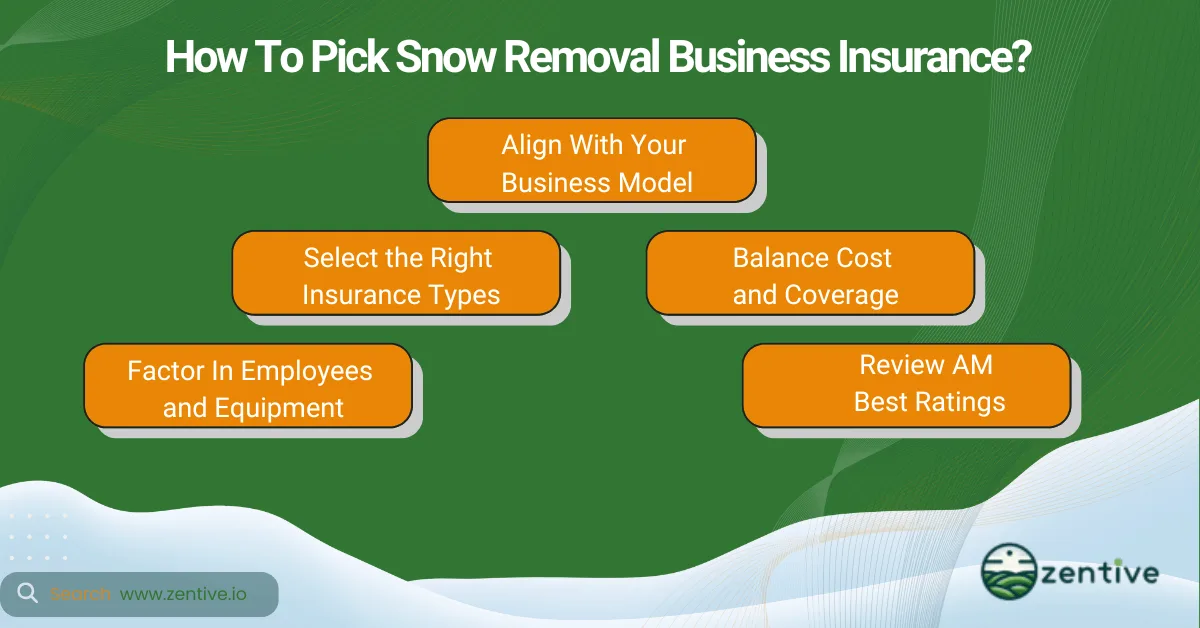
Pick snow removal business insurance based on evaluating factors like your business model, insurance type, cost, employee count, equipment, coverage, and AM rating.
Your business model—commercial, residential, or mixed—impacts your insurance needs. Commercial operations require higher liability limits and more specialized coverage than residential businesses.
Your insurance type is important. Think about what you need most: general liability, commercial auto, or workers’ compensation. The cost of insurance plays a pivotal role. Be sure to factor in monthly and annual premiums. Costs will depend on the scope of your business, payroll, and equipment. Balance affordability with adequate coverage.
Employee count will influence your snow removal premium. More employees mean higher workers' compensation costs. If you're solo, your insurance needs will likely focus on equipment and general liability.
Consider your snow removal equipment. Insuring expensive machinery like snowplows and salt spreaders protects against damage, theft, or accidents.
Next, think about what your desired coverage is. Some policies, like a Business Owner’s Policy (BOP), bundle essential coverages for simplicity and cost savings. Think about what you really need for your business.
Your AM best rating will influence your insurance. A higher AM Best rating means the insurer is financially stable, so claims are more likely to be paid without hassle.
Who Needs To Get Snow Removal Insurance?
Both commercial and residential snow removal companies need snow removal insurance.
- Commercial Snow Removal Company: These companies handle large-scale operations for businesses and municipalities, so insurance protects against liability, accidents, and damage.
- Residential Snow Removal Company: Smaller-scale businesses that often work with individual homeowners, so insurance ensures you're covered for property damage or injuries.
What Are The Types Of Snow Removal Insurance?
The eight types of snow removal insurance are listed below.
- General Liability Insurance: Covers third-party property damage and bodily injuries. Protects your business from lawsuits.
- Commercial Auto Insurance: Covers vehicles you use for snow removal, including accidents and damages. A must for businesses relying on trucks and snowplows, especially commercial companies.
- Workers' Compensation Insurance: Legally required in most states if you have employees. It covers medical expenses and lost wages for on-the-job injuries.
- Professional Liability Insurance: Protects against claims of negligence or errors in your services, such as failing to clear a driveway properly.
- Equipment and Tools Insurance: Covers repair or replacement costs for damaged or stolen tools and machinery. Essential for protecting your business investments.
- Commercial Property Insurance: Covers your office or storage space against damage from fire, theft, or other risks.
- Umbrella Insurance: Provides extra liability coverage beyond your general or auto policies. Ideal for high-risk businesses.
- Business Owner’s Policy (BOP): Combines liability and property insurance into one package. This type of insurance is usually more cost-effective than paying for liability and property insurance plans separately.
What Is the Average Cost of Insurance for Snow Removals?
The average snow removal business insurance costs around $500–$1,500 per year or $40–$125 per month. The price of your plan will depend on factors like coverage type, policy limits, employee count, operating heavy machinery, or working on high-risk projects.
However, there are ways you can save money on your insurance. For instance, you can bundle multiple policies with one provider or use a BOP. Snow removal businesses can opt for higher deductibles to lower premiums. But the best way to reduce your cost is to maintain a clean claims history.
How Does Snow Removal Business Insurance Affect Employee Hiring?
Snow removal business insurance often plays a deciding role in hiring and retaining employees. Snow removal employees work hard for their money and often risk their lives, so it’s understandable for them to have the assurance that they are well protected in case of injuries.
Workers’ compensation insurance is so important that it’s often mandatory in most states for businesses with employees. It protects your team and ensures your snow plowing business complies with local laws.
But don’t think of workers’ compensation as a legal expense you have to pay every month. You can use insurance to attract talent. Offering comprehensive coverage, like health and workers' compensation, makes your business more appealing to potential hires and attracts more skilled workers.
Use insurance as a tool for risk mitigation. Similar to insurance for equipment, workers' compensation protects you from financial risks. These financial risks often include employees who require compensation from workplace accidents, especially those who operate heavy equipment like plows or salt spreaders.
Do Snow Removals Need Insurance for Their Equipment?
Yes, snow removal companies require insurance for their equipment. You paid a lot for your equipment, won’t you feel better knowing it’s protected against damage, theft, or vandalism?
You don't need your entire snow removal business equipment list, but insuring heavy, expensive equipment is definitely a smart move. For example, if an employee accidentally damages a snowplow in a collision or it gets stolen, equipment insurance can cover repair or replacement costs, saving you thousands of dollars.
What Does Snow Removal Insurance Cover?
Snow removal insurance covers third-party injuries and property damage. It covers vehicle accidents and damages, employee injuries and medical expenses, damage or theft of tools and equipment, and professional negligence claims. Basically, snow removal insurance covers all aspects of your business in which you pose a potential financial risk.
What Is Not Covered By Snow Removal Insurance?
Intentional acts are not covered by snow removal insurance. Damage from excluded high-risk activities, and normal wear and tear of equipment are not covered by your snow business insurance. As a new snow removal business insurance, it’s important that you know what is covered and what isn’t. Otherwise, you might be in for an unpleasant surprise down the line.
Do You Need Insurance To Start a Snow Removal Business?
Yes, you need insurance to start a snow removal business & minimize risk. General liability and commercial auto insurance are often mandatory for legal, external funding, and client contract reasons. When you create a snow removal business, you need to ensure your business is as protected as possible. For instance, without insurance, a slip-and-fall lawsuit or equipment theft could financially ruin your business before it even takes off.
Get This Guide as a PDF
Save this article for offline reading. We'll send a formatted PDF straight to your inbox.
No spam. Unsubscribe anytime.
Ready To Streamline Your Field Service Business?
Zentive is the all-in-one field service management software built for landscaping, lawn care, tree care, and snow removal businesses. Start your free trial today.
No credit card required · Cancel anytime