
Tree service businesses need equipment and tools to complete jobs. These tools range from tree-trimming equipment to tree-cutting tools.
The most important tip we can give you for this article is to start with the right tools. Yes, you can cut corners by buying the cheapest tools on the shelf, but their warranty is usually short, and they don’t last long in the field. Instead, splurge a little more on professional tree-trimming equipment. This allows you and your team to handle jobs quickly and professionally, ultimately saving you money in the long run.
The average investment new tree service businesses make in tools and equipment ranges from $10,000 to $50,000 or more, depending on the variety of services you offer. In my opinion, you don’t need to buy tools like a wood chipper, stump grinder, and log splitter at the start. Instead, rent them until buying them makes more sense. Other factors influencing your decision in tools include climate (gasoline-powered tools struggle to start in winter), type of services, size of your business, and existing tools.
Here are the main types of tools used by tree service companies.
| Tool Type | Definition |
|---|---|
| Tree Service Power Tools | Tree service power tools use motor-driven mechanisms to perform cutting and pruning tasks. |
| Tree Service Hand Tools | Tree service hand tools perform manual cutting, shaping, and maintenance tasks. |
| Tree Service Vehicles | Tree service vehicles transport crews, equipment, and tree debris to and from job sites. |
| Tree Service Safety Equipment | Tree service safety equipment reduces injury risk through protective gear and safety devices. |
| Tree Service Software Tools | Tree service software tools manage scheduling, invoicing, and operational workflows. |
| Miscellaneous Tree Service Tools | Miscellaneous tree service tools support specialized and auxiliary tree care tasks. |
Tree Service Power Tools
There are eight tree service power tools you should consider buying for your business.
| Power Tool | Definition |
|---|---|
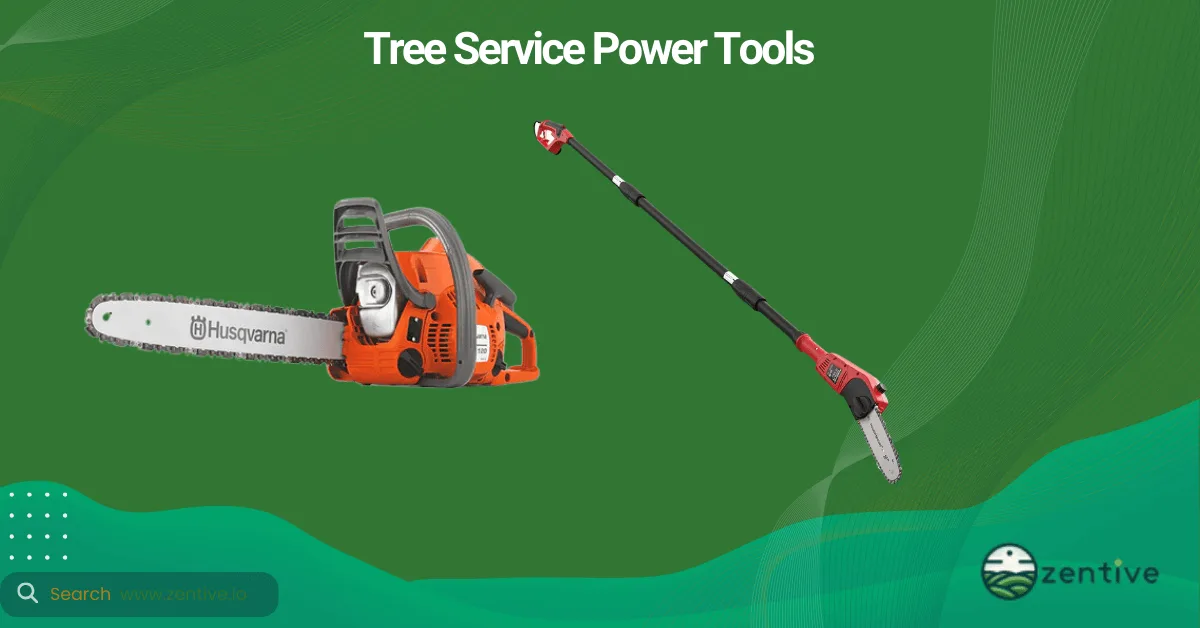
| Chainsaw | A chainsaw cuts tree trunks and branches using a motor-driven rotating chain. |
| Pole Saw | A pole saw trims high branches using an extended handle with a cutting blade. |
| Wood Chipper | A wood chipper processes branches and limbs into mulch or wood chips. |
| Stump Grinder | A stump grinder removes tree stumps by grinding them into wood debris. |
| Hedge Trimmer | A hedge trimmer shapes hedges and shrubs using reciprocating cutting blades. |
| Leaf Blower | A leaf blower clears leaves and debris using high-velocity air. |
| Brush Cutter | A brush cutter removes dense vegetation using a rotating metal or nylon blade. |
| Log Splitter | A log splitter divides logs into smaller sections using hydraulic force. |
1. Chainsaw
A chainsaw is a powered saw-like tool designed for cutting trees and wood faster than a handsaw. It comes in two main types: gas-powered for heavy-duty work and electric for lighter tasks. Chainsaws are essential for trimming, pruning, or removing trees.
A chainsaw is one of your core tools; you’ll use it almost daily. Therefore, buy a more expensive tool with a good warranty. Price ranges from $150 to $600, depending on size and power.
2. Pole Saw
A pole saw is like a small chainsaw attached to a pole, useful for trimming high branches. There are manual, electric, and gas-powered versions, each with its own advantages. The tool helps access hard-to-reach areas without the need for a ladder. It saves your team time and reduces the risk of injury from climbing trees and falling ladders - definitely a must-have. Expect prices between $100 and $400.
3. Wood Chipper
A wood chipper reduces large branches and debris into small chips or mulch. It’s vital for cleanup after large jobs, leaving clients more satisfied. This opens another potential revenue channel: you can sell wood chips or mulch to interested clients or landscapers.
Wood chippers generally range from $500 to $2,500. I recommend buying a larger one, as the smaller chippers tend to break more easily and have a limited “chipping” capacity in terms of branch size.
4. Stump Grinder
A stump grinder helps remove tree stumps left after a tree is cut down. It’s available in walk-behind or riding models. Not many tree service businesses have a stump grinder, so having one will set you apart from your competitors. Still, I’d avoid buying one when starting your business and instead only renting as they are quite expensive. Prices generally range from $1,000 to $5,000.
5. Hedge Trimmer
A hedge trimmer is designed to cut and shape bushes or shrubs, making landscapes look neat. Tree trimming machinery comes in gas and electric options. The electric option is cheaper and can do the job almost as well as the gas-powered one, though the power cable can be quite irritating. The prices range from $50 to $300.
6. Leaf Blower
Leaf blowers clear away leaves and debris. They can be gas-powered or electric, with handheld and backpack versions. It’s an essential tool I’d recommend you buy as it saves a lot of time in the cleanup process. Prices range from $50 to $400. In my opinion, gas-powered handheld options are the best - not too expensive and very efficient.
7. Brush Cutter
A brush cutter is a more powerful version of a weed eater. They are specifically designed to clear thick brush and small trees. You won’t use it too much unless your main service is to clear overgrown backyards. Still, I recommend you rent before you buy. They are priced between $150 and $600.
8. Log Splitter
Log splitters save time by splitting logs quickly. Think of it as a powered and very strong axe. The tool makes firewood preparation easier and can be a nice source of additional income during slower months. Prices range from $500 to $2,000.
Tree Service Hand Tools
You need five tree service hand tools for your tree service business.
| Hand Tool | Definition |
|---|---|
| Pruning Shears | Pruning shears cut small branches and stems for precise tree maintenance. |
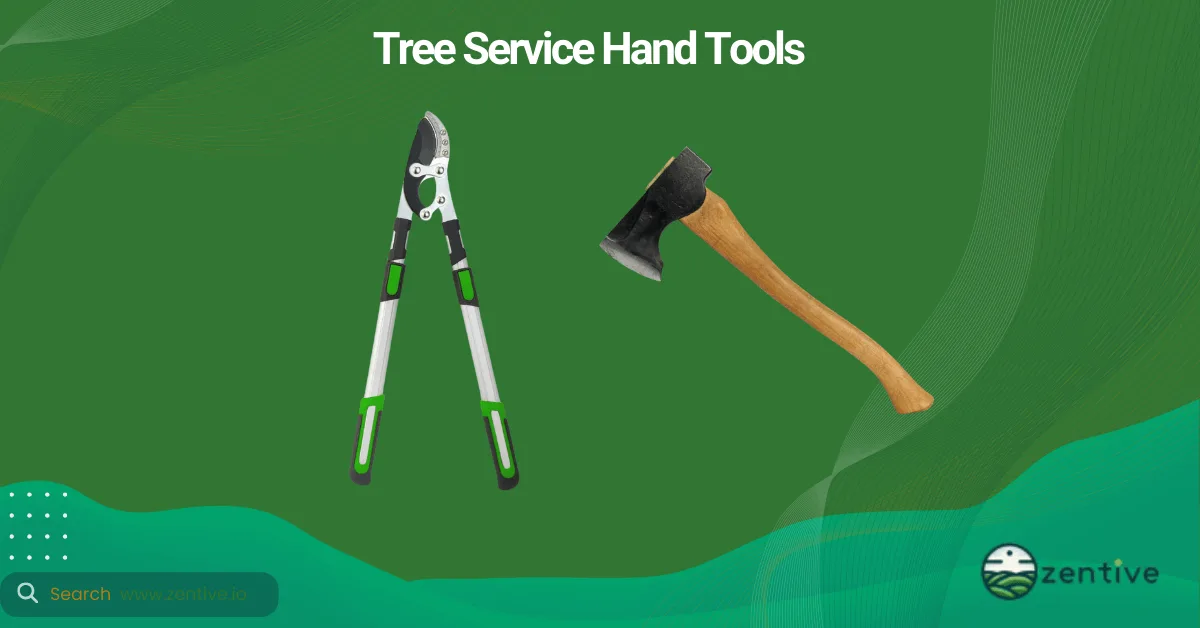
| Loppers | Loppers cut thicker branches using long handles for increased leverage. |
| Hand Saw | A hand saw cuts medium-sized branches through manual back-and-forth motion. |
| Axe | An axe chops wood and tree limbs using a weighted metal blade. |
| Hatchet | A hatchet performs light chopping and trimming tasks with a short-handled blade. |
1. Pruning Shears
Pruning shears are hand tools for trimming small branches from trees. There are bypass and anvil shears. Pruning shears are useful tools for cleaning specific branches that you missed with the trimmer or are too thick but too thin for the chain saw. The tool is fairly cheap, with prices ranging from $10 to $50, but the blade tends to get dull fairly quickly.
2. Loppers
Loppers are long-handled shears designed for cutting thicker branches. They provide extra leverage and are used after you’ve used the chainsaw and need to clean some of the final branches. The cost is usually between $20 and $75.
3. Hand Saw
A hand saw is used to manually cut branches. Hand saws are useful in areas when it’s too dangerous to work with chainsaws or when you don’t want to make too much noise when cutting trees. There are various sizes and types available. They are fairly cheap, priced between $10 and $60.
4. Axe
An axe is used for chopping wood and splitting logs. They are useful if you only need to split a handful of logs. Prices typically range from $30 to $100.
5. Hatchet
A hatchet is a smaller version of an axe. It’s useful for trimming and splitting smaller wood but isn’t used as much as an axe. Prices range from $20 to $70.
Tree Service Vehicles
There are three main types of tree service vehicles you will need for your business. It’s the most expensive equipment category for tree service businesses.
| Vehicle Type | Definition |
|---|---|
| Utility Truck | A utility truck transports tree service crews, tools, and materials to job sites. |
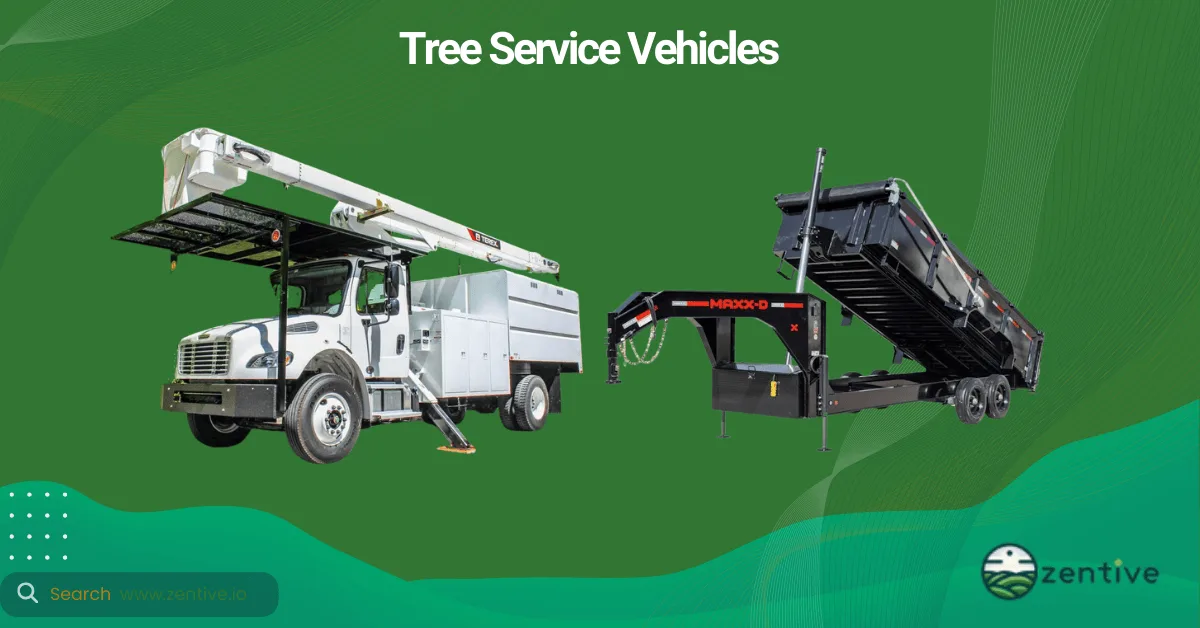
| Bucket Truck | A bucket truck lifts workers to elevated tree canopies using a hydraulic boom. |
| Trailer | A trailer hauls equipment, wood debris, and materials behind a service vehicle. |
1. Utility Truck
A utility truck is a specific type of vehicle you use to transport tools, workers, and debris. Prices vary depending on the model you want, but the key is to buy a truck from a reliable car manufacturer. This will be your most expensive equipment when starting your business, as prices range from $20,000 to $50,000.
2. Bucket Truck
A bucket truck allows tree service workers to reach high branches safely. It is handy because it ensures the safety of your workers better than a ladder or climbing a tree. Prices typically range from $50,000 to $150,000. You won’t use it every day, so I recommend renting instead of buying.
3. Trailer
A trailer helps haul equipment or debris. It’s especially helpful when you do large-scale cleanups of yards. It’s a must-have piece of equipment, but I would wait until your business is more established before buying a trailer. You can always rent a trailer at the start of your business. Prices for new trailers range from $1,000 to $10,000.
Tree Service Safety Equipment
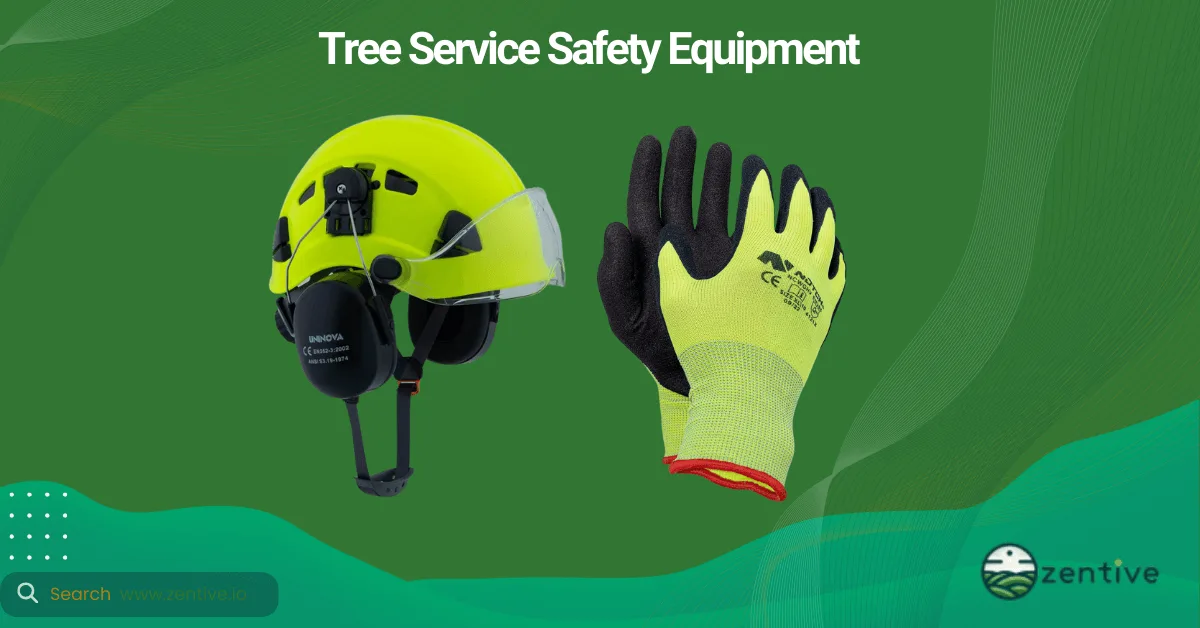
Tree service safety equipment is vital in ensuring the safety of your workers and that you comply with local laws. There are four pieces of equipment all tree service workers should have.
| Safety Equipment | Definition |
|---|---|
| Safety Helmet | A safety helmet protects the head from falling branches and impact hazards. |
| Chainsaw Chaps | Chainsaw chaps protect the legs by stopping or slowing chainsaw contact. |
| Protective Gloves | Protective gloves shield hands from cuts, abrasions, and vibration. |
| Safety Goggles | Safety goggles protect the eyes from debris, dust, and wood chips. |
1. Safety Helmet
A safety helmet or hard hat protects your head from falling branches or debris. It’s a compulsory piece of equipment, and doing tree services without it could result in fines or even suspension of your business license. Prices range from $30 to $150, but you should opt for high-quality hats - there’s no price on safety.
2. Chainsaw Chaps
Chainsaw chaps are worn to protect legs from chainsaw injuries. Chainsaws are dangerous, and chaps should always be worn when handling them. You can expect to pay between $50 to $150.
3. Protective Gloves
Protective gloves protect hands from cuts, splinters, thorn pricks, and other injuries. They generally cost $5 to $50, depending on the quality and thickness of the gloves.
4. Safety Goggles
Safety goggles shield eyes from debris. Workers should always wear them when using power and hand tools. Prices range from $2 to $30.
Tree Service Software Tools
Tree service software tools can be split into two main categories.
| Software Tool Type | Definition |
|---|---|
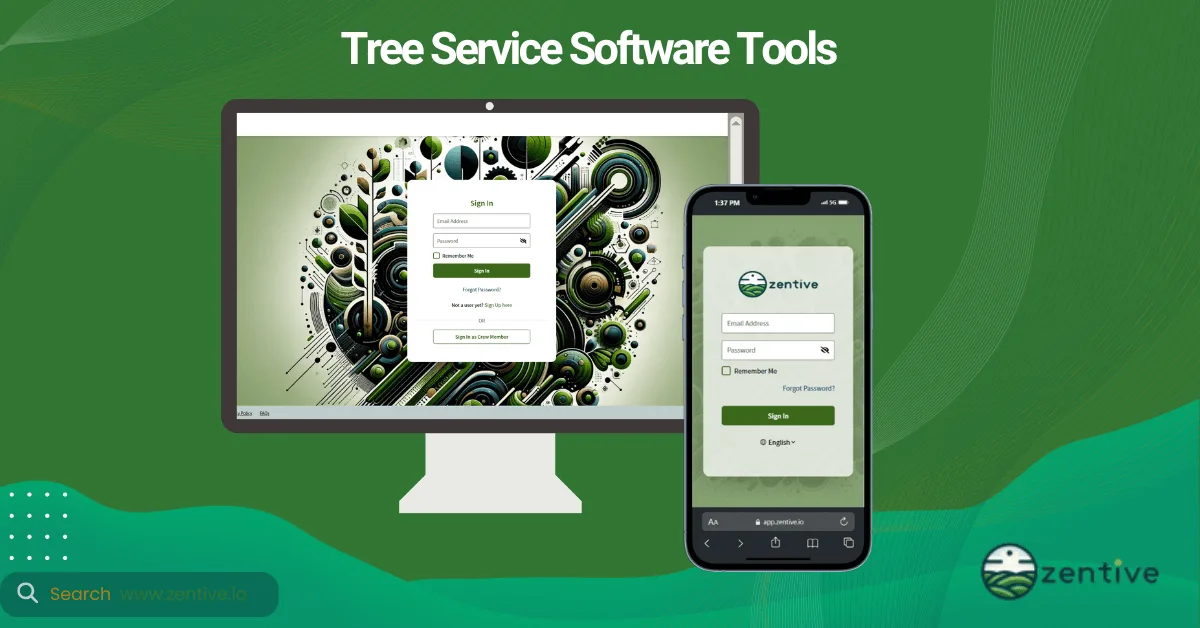
| Tree Service Business Management Software | Tree service business management software, such as Zentive, manages scheduling, quoting, invoicing, and routing. |
| Tree Identification Software | Tree identification software classifies tree species using visual and data-based analysis. |
1. Tree Service Business Management Software
Business management software is an online tool that helps with scheduling, invoicing, and managing jobs. You mainly want to use tree care business management software to reduce costs and increase profitability. It’s arguably the best tool to help you scale and grow your business sustainably. Prices vary, typically ranging from $50 for small businesses to $500 per month for enterprise-level tree service businesses.
2. Tree Identification Software
This software helps identify tree species for proper care and maintenance. It’s usually an app or online website that tells you the species of plant and specific disease or pest after you’ve uploaded an image. Prices range from $10 to $50.
Some tools are inaccurate, so it’s best to experiment with free versions until you find the tree identification software that works best for you.
Miscellaneous Tree Service Tools
A tree service business requires miscellaneous tools for custom services or unique scenarios.
| Tool | Definition |
|---|---|
| Rake | A rake gathers leaves, branches, and debris during site cleanup. |
| Waterproof Tarp | A waterproof tarp protects property and contains debris during tree work. |
| Climbing and Rigging Equipment | Climbing and rigging equipment supports safe ascent, positioning, and controlled tree removal. |
1. Rake
A rake helps gather leaves and debris. It’s particularly effective when leaves are wet and the leaf blower can’t blow them. Prices range from $5 to $50, depending on whether you opt for plastic, wood, or metal.
2. Waterproof Tarp
A waterproof tarp is useful for protecting materials or gathering debris. It’s very useful when you have jobs that take more than one day and want to store large equipment like a wood chipper or log splitter. Tarps usually cost between $15 to $100, but a decent-sized one will set you back $50.
3. Climbing and Rigging Equipment
Climbing helps workers safely work at heights. Rigging equipment assists in lifting and lowering tree limbs. You’ll definitely need these two pieces of equipment if you want to cut high branches of tall trees. Prices range between $200 to $1,000.
How To Decide Which Tree Service Equipment You Need?
You need to consider four factors when deciding what tree service equipment you require. First, the type of business you operate influences your equipment. Commercial businesses, residential services, and arborist-focused companies all require different tools.
Next is the services you offer. Are you focusing on trimming, removal, pesticides, or stump grinding? Different services require tools. Consider renting versus buying. Some tools you should buy from the start, while other tools that are not so often used should be rented until you use them so often that buying them makes more sense.
Lastly, consider business size and funding. Do you run a tree service enterprise, or are you just starting out? Larger businesses with more jobs need to invest in more equipment. At the same time, smaller startups with limited funds should focus on essential tools and consider renting or leasing.
| Equipment Decision Factors | |
|---|---|
| Business Type |
• Commercial requires heavy-duty equipment • Residential needs versatile tools • Arborist services need specialized equipment |
| Services |
• Trimming tools • Removal equipment • Pesticide applicators • Stump grinders |
| Buy vs Rent |
• Buy frequently used equipment • Rent occasional-use tools • Consider usage frequency |
| Business Scale |
• Match equipment to job volume • Consider available funding • Focus on essential tools first |
How Does Type Of Tree Service Business Affect Equipment Needs?
The type of tree service you run directly influences the tools you’ll need. For example, commercial tree service companies require heavy-duty machinery like stump grinders and wood chippers to handle larger jobs. They need more tools than other tree-cutting company types due to the larger scale of the jobs.
In comparison, residential services usually focus on trimming and pruning, requiring chainsaws, pole saws, and hand tools. Contractors work on big or very specific projects, which is why they might need equipment like bucket trucks or log splitters, and certified arborists may require specialized tools for diagnosing and treating tree health.
What Tools Do Commercial Tree Trimming Businesses Use?
Commercial tree trimming businesses use a variety of heavy-duty equipment to handle bigger projects efficiently. Commercial tree trimming equipment includes industrial-sized chainsaws, wood chippers, stump grinders, and bucket trucks to reach higher branches. These tools are designed to handle larger volumes of work and withstand daily use.
They often buy this equipment because it makes more sense than renting them, given the frequency of use.
Should You Rent Or Buy Tree Cutting Equipment?
You should buy essential tree-cutting equipment that you use every day and rent equipment that is expensive and only used occasionally.
Renting does have its perks. For instance, you don’t have to exhaust your capital by buying expensive equipment, which is helpful for new businesses. However, rental fees can add up if you need the tools often.
In comparison, buying gives you full ownership. No more rental costs or booking equipment in advance. It’s perfect for tools you use every day, but the initial costs are quite high.
The best approach is a combination of both. Buy your everyday tools like chainsaws, cutters, etc., and rent or lease major equipment, like stump grinders and wood chippers. It’s how most new tree service businesses do it.
Is Used Tree Management Equipment Worth It?
Yes, buying used tree management equipment can be worth it, but there are maintenance considerations. Used equipment is more affordable because of value depreciation, allowing you to stretch your budget further. However, test the tool extensively and make sure it’s in good working condition, as repair costs can add up if you purchase poorly maintained tools.
What Are Must-Have Tools When Starting A New Tree Service Business?
The must-have tools when starting a new tree service business include a chainsaw, pole saw, pruning shears, and a utility truck. When you start a tree cutting business, your budget will most likely be small, which is why it might be best to buy essential equipment and lease or finance the rest, like your utility truck.
How To Acquire Tree Removal Tools With No Money?
You can acquire tree removal tools with no money through financing, like small business loans or equipment leasing. Many new business owners opt for this route, and it’s often recommended to help you get started with the right tools. Many companies offer lease-to-own options, where you can eventually own the equipment after a period of renting. Additionally, look into local grants or small business assistance programs that might provide funding to cover startup costs.
Get This Guide as a PDF
Save this article for offline reading. We'll send a formatted PDF straight to your inbox.
No spam. Unsubscribe anytime.
Ready To Streamline Your Field Service Business?
Zentive is the all-in-one field service management software built for landscaping, lawn care, tree care, and snow removal businesses. Start your free trial today.
No credit card required · Cancel anytime