
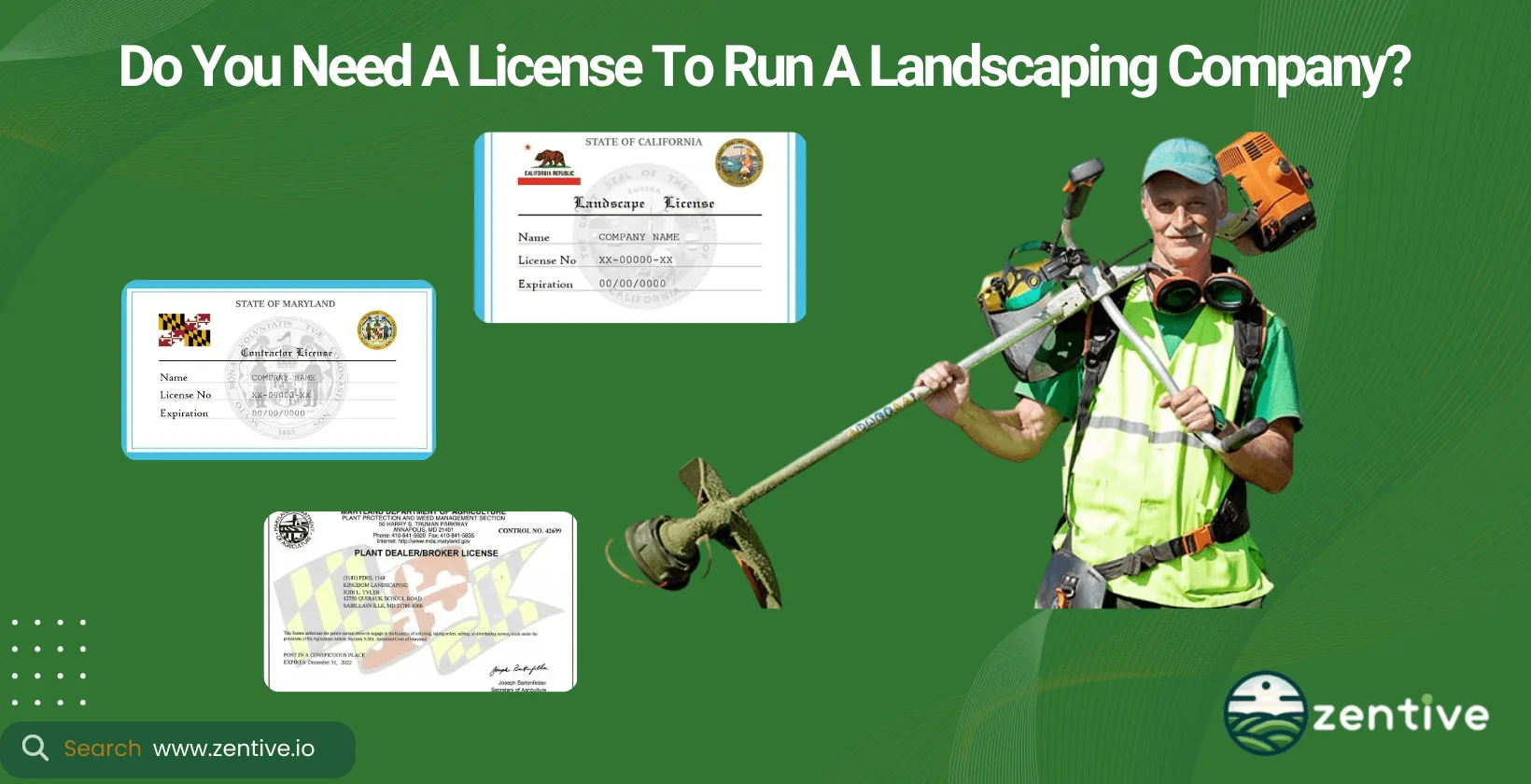
Yes, you need a license to start a landscaping company in many states because licenses regulate quality and environmental compliance. Licenses serve as a regulation method in the field service industry, ensuring projects are completed with quality and respect for the environment. Landscaping license requirements differ by state because each state sets its own regulations. 16 states currently require landscaping specific licenses.
The process of obtaining a landscaping license involves checking eligibility, preparing and passing the examination, completing and submitting an application, undergoing a background check, and receiving the license.
Landscaping companies must meet additional operational requirements, including securing business insurance and bonds to protect against liabilities and comply with local regulations. In some states, insurance and bonds are prerequisites for a landscaping license.
Find Landscaping Licenses You May Need
Answer a few questions to see common license types for a landscaping company in your state.
Recommended License Types
Insurance, Bonds & Other Requirements
This tool is based on general information and your answers. It is not legal advice. Always confirm current requirements on your state or local government licensing website.
What Is A License For Landscaping?
A license for landscaping certifies that a business meets state standards for legal landscape operations. It is a mandatory credential in some states that landscaping businesses must obtain to operate legally.
A typical landscaping license includes details such as the license number, issue date, expiration date, and the name of the license holder. It highlights the qualifications required of the licensee, the scope of work permitted (lawn care, pesticides, residential construction, etc.), and any restrictions that may apply.
Landscapers that offer services in multiple niches will require different types of licenses.
What Are The Types Of Landscaping Licenses?
Below are the five general types of landscaping licenses.
- General Business License: This is the basic license required for operating any business entity, including a landscaping company. You don't require particular skills for this license, but it ensures that your business adheres to general municipal regulations.
- Landscaping Contractor's License: A landscape contracting business license is necessary for contractors who handle larger projects. These landscaping services typically involve significant alterations to the landscape, such as installing outdoor BBQ areas or constructing patios. Obtaining a landscape contractor license is not as easy as a general business license and usually requires you to show a level of competence.
- Pesticide Application License: Businesses that apply chemical or organic pesticides require a commercial pesticide applicator license. A pesticide applicator demonstrates thorough knowledge of pesticide use and safety procedures.
- Nursery License: Essential for businesses that grow and sell plants. A horticulture professional services license ensures that your nursery complies with agricultural standards and quarantine regulations.
- Irrigation or Sprinkler System Installer License: Specifically for businesses that install and maintain irrigation and sprinkler systems. This license often requires proof of knowledge about water conservation and competence in water system design, e.g., how water flow works, using pipes that can handle the same level of pressure as the pump puts out, etc.
Does A Softscaping Business Require A License?
Yes, a softscaping business requires a license when state regulations classify softscaping as regulated landscape work. It's not as common as for hardscaping businesses. Softscaping refers to the plant aspect of landscaping—such as garden bed installation, tree planting, and seasonal planting. Factors like the scale of the projects, the type of services offered, and your local state regulations will determine whether you require a license for softscaping services.
Does A Hardscaping Business Require A License?
Yes, a hardscaping business requires a license. Hardscaping includes altering an outdoor space through the construction of non-living features such as patios, walkways, and retaining walls.
Whether you need a landscape construction professional license often hinges on the scale and type of construction you perform, ensuring that operators have the necessary skills and follow safety standards. Remember, for any type of construction to commence, a certain degree of safety standard needs to be upheld. A proper license further solidifies that those safety standards are enforced.
Your local state and municipal laws will dictate specific licenses for different types of construction activities within hardscaping.
Do Landscaping Contractors Require A License?
Yes, landscaping contractors generally require a license. Landscaper licensing requirements for landscaping contractors depend on where you work, the type of properties you service (residential or commercial), and the nature of your work.
For example, in Pennsylvania, landscapers who perform construction-related tasks must obtain a Home Improvement Contractors License. This can be for anything from installing a concrete driveway to an outdoor BBQ area.
Which States Require A License?
Only 16 states in the U.S. require a landscaping-specific license for businesses performing landscaping services within their jurisdictions. While there are only 16 states that require contractor or landscaping-specific licenses, most states require you to have a general business license.
You'll most likely require a landscaping license if you reside in one of the following states.
- Alabama: License and exam required; issued by the Alabama Department of Agriculture and Industries.
- Alaska: License required; issued by the Alaska Department of Commerce, Community, and Economic Development.
- Arkansas: License required; issued by the Arkansas Department of Agriculture.
- California: C-27 landscaping contractor license required; issued by the Department of Consumer Affairs, Contractors State License Board.
- Hawaii: C-27 landscaping contractor license required; issued by the Department of Commerce and Consumer Affairs.
- Idaho: Nursery, Florist, & Landscaping license required; issued by the Idaho State Department of Agriculture.
- Louisiana: License required; issued by the Horticulture Commission of Louisiana, Department of Agriculture and Forestry.
- Maryland: Home improvement license and exam required for landscaping and sod installation; issued by the Maryland Department of Labor, Licensing, and Regulation.
- Mississippi: License required; issued by the Mississippi Bureau of Plant Industry.
- Nevada: Classification C-10 Landscape Contracting license required; issued by the Nevada State Contractors Board.
- North Carolina: State contract required for planting, repairing, and managing decorative vegetation; issued by the Department of Agriculture and Consumer Services.
- Oregon: Landscape construction professional license and exams required; issued by the Oregon Landscape Contractors Board.
- Tennessee: Landscaping (HRA-E.2) license and exams required; issued by the Tennessee Department of Commerce & Insurance.
- Utah: S-330 Landscaping Contractor license required; issued by the Utah Department of Commerce.
- Virginia: License required for construction, excavation, or grading work; issued by the Virginia Department of Agriculture and Consumer Services.
- West Virginia: License required for preparing and altering land and installing concrete, brick, gravel, and stone; issued by the West Virginia Division of Labor.
The best advice I can give you on determining what licensing requirements you need to start your new landscaping business is to visit your specific state government website and read their requirements.
Can You Start A Landscaping Business Without A License?
Yes, you can start a landscaping business without a license in some states. Most states require you to have some sort of license, be it a business license or a landscaping-specific license.
For instance, let's say you're thinking of starting a landscape business that performs pesticide application; you'll have to obtain all the required licenses as highlighted by the EPA. In comparison, if you're simply starting basic lawn care, you might not need a license in some states, except maybe a business license.
You need the respective licenses before any work commences for your new landscaping business. This ensures you remain on the right side of the law.
| Reason | Description |
|---|---|
| Professional Credibility | A license enhances your professional credibility, making you more trustworthy in the eyes of clients and employers. |
| Legal Requirements | Many regions require landscapers to have a license to operate legally, ensuring compliance with local laws and regulations. |
| Increased Job Opportunities | Licensed landscapers often have access to more job opportunities and higher-paying contracts compared to unlicensed individuals. |
| Insurance and Liability | Having a license can make it easier to obtain business insurance and limit liability, protecting you and your clients. |
| Skill Verification | A license verifies your skills and knowledge, demonstrating your competency and commitment to quality work. |
| Client Confidence | Clients are more likely to hire a licensed landscaper, knowing they meet professional standards and can be held accountable. |
What Are Requirements To Get A License?
To obtain a landscaping license in many states, you need to meet a couple of requirements. Some states, for instance, require you to pass an exam, provide business experience, obtain general liability insurance, and pay a landscaper licensing fee. It seems daunting and might feel unnecessary, but these licenses are there for a reason, and the sooner you have them, the sooner you can run your dream business safely and legally.
Note: Each state has a specific procedure for applying for a landscaper license, which can usually be found on the state licensing board website.
How To Get A Landscaping License?
You need to follow to specific procedure to get a landscaping license. Below is an example the steps needed to obtain a C-27 landscaping contractor license in California.
- Check Eligibility Requirements: Ensure you have at least four years of journeyman-level landscaping experience, are 18 years old, and possess a Social Security Number (SSN) or Individual Taxpayer Identification Number (ITIN).
- Prepare for and Pass the Examination: Study for the C-27 Landscaping Contractor examination to demonstrate your knowledge and competency.
- Complete the Application for Original Contractor License: Submit your application on the Contractors State License Board (CSLB) website, pay the necessary exam fees, and provide all required documentation.
- Background Check: Undergo a criminal background check as part of the licensing process.
- Obtain a Bond and Insurance: Secure a contractor's bond, typically a $25,000 bond, and provide proof of Workers' Compensation Insurance for your employees and general landscaping business insurance.
- License Issuance: Once you have met all requirements and passed the exams, you will be issued a landscaping contractor license by the state of California, and you can legally operate your very own landscaping business.
Remember, this is the procedure for applying for a landscaping license in California. You need to check the CSLB's official website for detailed information on how to apply for a landscaping license in your state.
Pro Tip: You can take prep classes for a landscaper license, just as you would take preparation classes for your driving license. Doing so will save you time and money from having to retake the exam.
How Long Does It Take To Get A Landscaping Business License?
It usually takes several weeks to a couple of months, depending on your commitment, available exam dates, and the efficiency of the government in handling your application. But the thing that takes the most time is your commitment. These tests aren't a walk in the park; you actually need to study hard for them, which is why the majority of your application time will be split between studying and taking the test. Retaking tests due to failing the test will further extend the timeline and increase your costs.
What Does It Cost To Get A Landscaper License?
The cost of a landscaper license is around $1,000 to $2000, with an additional $25,000 average bond in some states. This cost includes exam fees of $50 to $100, insurance fees, application fees of $50 to $100, background checks, and more.
These costs differ from state to state, but the general consensus is that they are expensive and easily add up when you fail an exam, which makes it important for you as a landscaper to plan and budget accordingly.
What Are Other Landscaping Business Requirements?
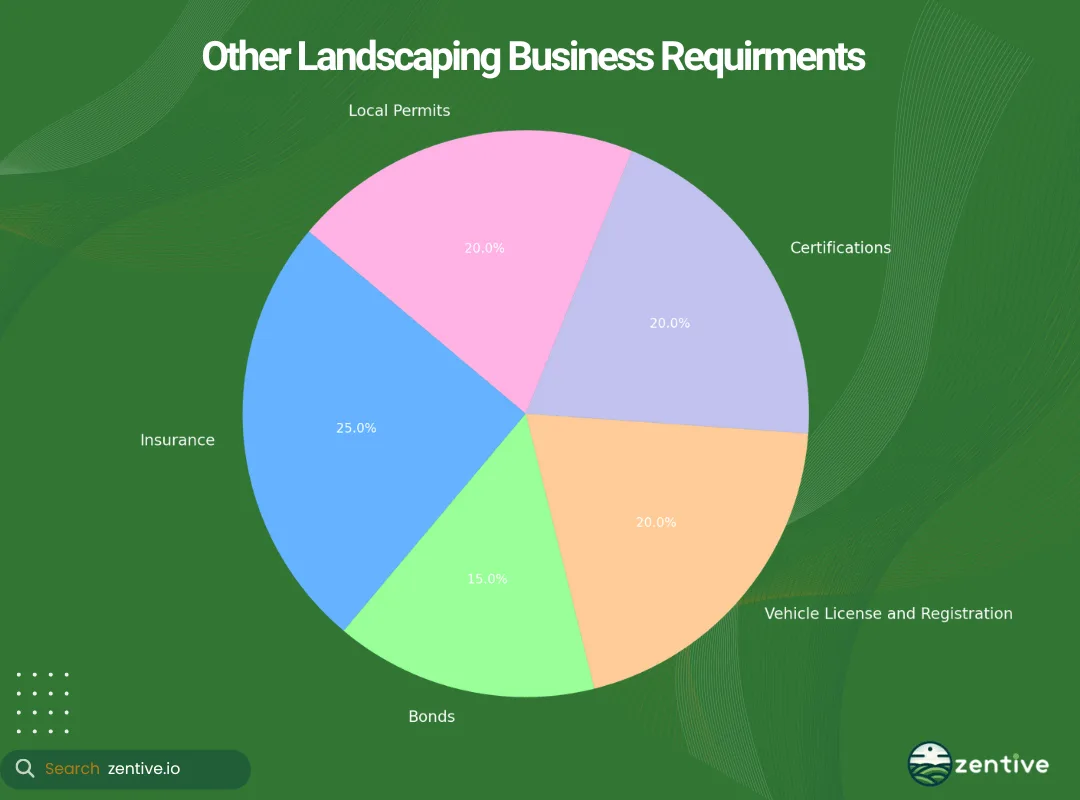
Starting a landscaping business involves several key requirements, including insurance, bonds, vehicle license and registration, certifications, and local permits.
Running landscape business means you expose yourself to a lot of liabilities (damages, accidents, etc.), which is why you should get landscape insurance and commercial auto insurance for your vehicles.
Business bonds are important. They ensure your business meets all legal and ethical standards. You will need a vehicle license and registration, which is necessary for business vehicles used in landscaping operations.
Professional certifications, although not typically a mandatory business requirement, can enhance your credibility and expertise, leading to more high-value clients.
Ensure you have all the relevant local permits for your specific landscaping activities. Nothing can be worse for your business than being halfway through a landscaping job and then getting shut down by the government because you didn't have the appropriate permits.
What Bonds And Insurance Do Landscapers Need?
Landscaping businesses should secure several types of bonds, such as permit bonds and insurance, including general liability insurance, auto insurance, and workers' compensation insurance.
Landscaping bonds guarantee the fulfillment of contractual obligations. These bonds act as your "promise" to the client that you will adhere to the regulations and terms outlined in contracts and state legislation. They serve as a form of security for clients, ensuring reimbursement if the business does not fulfill its obligations.
Landscaping company insurance refers to all the insurance your business has to protect itself against liabilities for property damage, accidents, injuries, theft, lawsuits, and damages during landscaping projects. Its main purpose is to protect your business against financial losses.
I know it's difficult to keep track of all your business's bonds and insurance. Luckily, landscaping software can help—it's a great way to keep your business and employees organized, ensuring you remain on top of all things related to your business.
| Policy Name | Description |
|---|---|
| General Liability Insurance | Covers accidental damage to a client’s property, customer injury, and advertising injury. This is often the first policy a new business owner obtains. |
| Business Owner’s Policy (BOP) | Combines general liability and commercial property coverage into one policy. It is usually less expensive than buying these coverages separately. |
| Workers’ Compensation Insurance | Covers medical expenses and lost wages from work-related injuries and illnesses. Most states require this coverage when a business has one or more employees. |
| Contractor’s Tools and Equipment Insurance | Covers repair or replacement of tools and equipment if they are lost, stolen, or damaged. It typically applies to items that are under five years old. |
| Commercial Auto Insurance | Covers business-owned vehicles in the event of accidents, theft, or vandalism. Most states require this coverage for businesses that own vehicles. |
| Cyber Liability Insurance | Protects businesses from high costs associated with data breaches or malicious software attacks. It covers expenses such as legal fees, customer notification, and credit monitoring. |
How Can Business Software Help Track Employee Licenses?
When utilizing business software, you can track, manage, and organize all things related to your employees, including employee licenses. Business software for landscaping allows business owners to keep records of license and permit numbers, expiration dates, and renewal deadlines, ensuring that all employees are properly certified and legally compliant at all times.
Get This Guide as a PDF
Save this article for offline reading. We'll send a formatted PDF straight to your inbox.
No spam. Unsubscribe anytime.
Ready To Streamline Your Field Service Business?
Zentive is the all-in-one field service management software built for landscaping, lawn care, tree care, and snow removal businesses. Start your free trial today.
No credit card required · Cancel anytime