
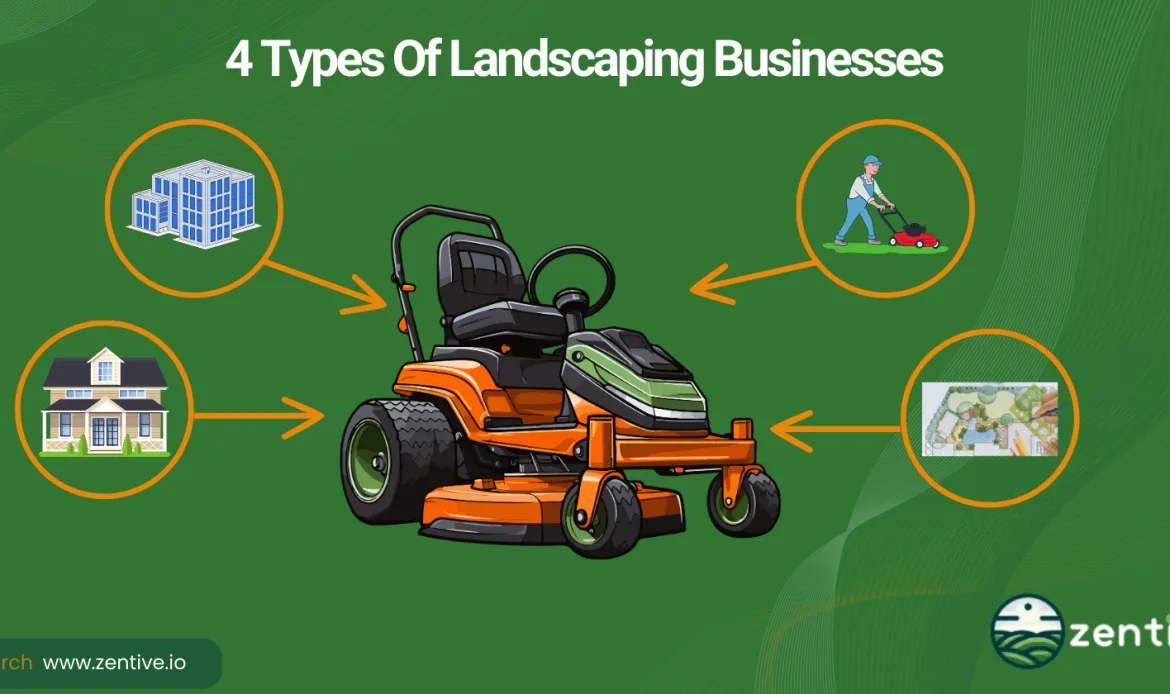
A landscaping business is a type of field-service business that offers services aimed at bettering the aesthetic appeal and functionality of outdoor spaces. There are many different types of landscaping businesses, each with its own target customers. However, all types of landscapers share the same goal: to beautify or improve an outdoor space, be it a company's campus or a homeowner's barbeque sanctuary. The scope of work in landscaping is as varied as their target customers.
All landscape business owners want to grow their business. The different types of landscaping businesses have different strategies for growing their landscaping business type. The most common growth strategies are leveraging business management software, improving employee management practices, sound financial management, and hiring skilled personnel.
The below table defines the four types of landscapers.
| Type of Landscaping Business | Definition (SPO Triple Format) |
|---|---|
| Commercial Landscapers | Provide large-scale landscape design, maintenance, and enhancement services to business and public properties. |
| Residential Landscapers | Deliver customized landscaping services such as lawn care and garden design to individual homeowners. |
| Landscape Contractors | Execute construction-based landscaping tasks by installing hardscapes, planting features, and outdoor structures. |
| Landscape Design and Architecture Firms | Develop comprehensive outdoor plans by integrating aesthetics, functionality, and environmental sustainability. |
1. Commercial Landscapers
Commercial landscapers specialize in servicing business properties, including office parks, retail complexes, and public spaces. Their professional landscaping services usually involve landscape design, maintenance, and improvements. They focus on creating visually appealing and functional outdoor areas that reflect a company's brand and values, be it a koi pond for a hotel or spa or an outdoor working space for a tech startup.
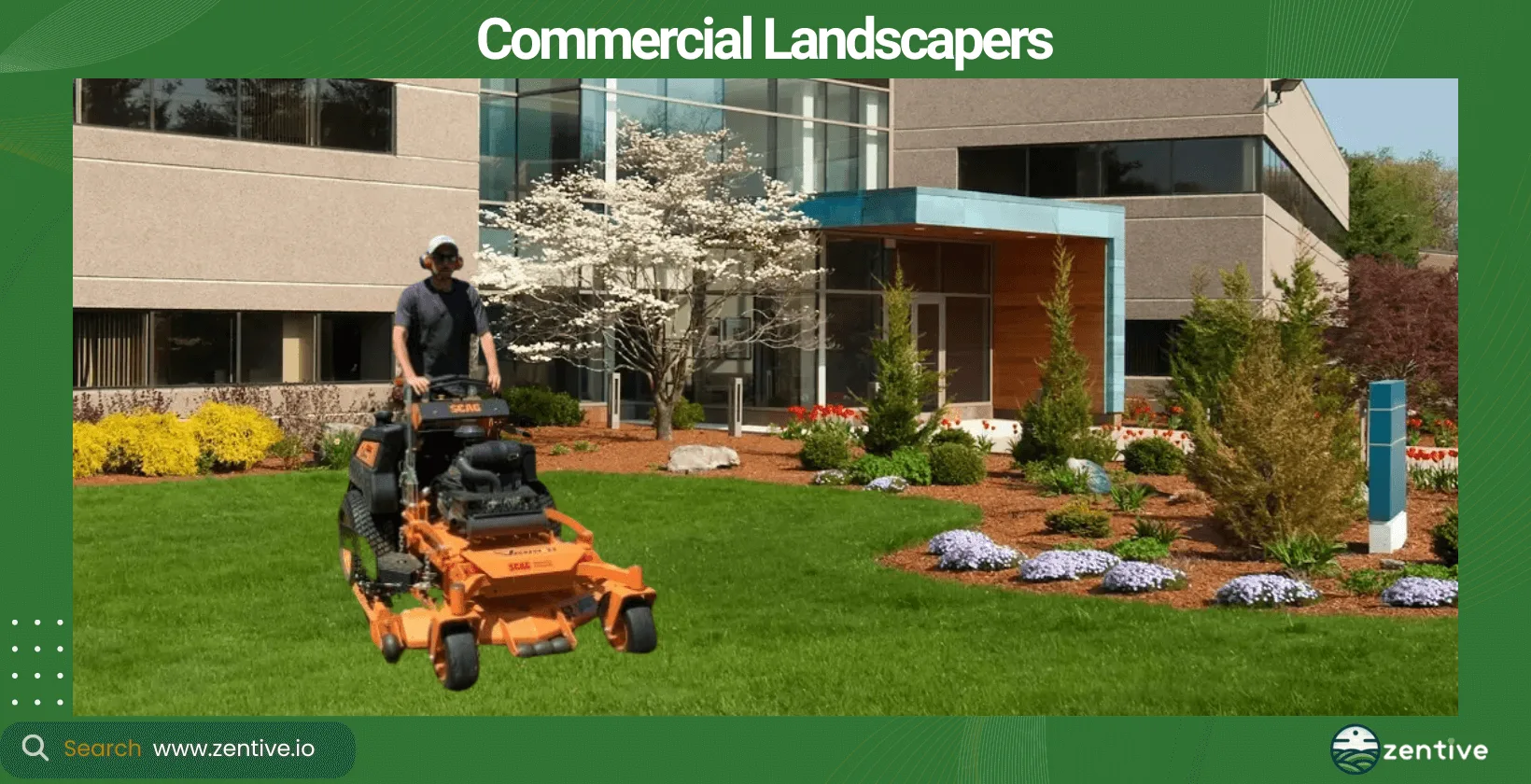
Running a commercial landscaping company involves handling large-scale projects with significant budgetary allocations. Efficiency, reliability, and the ability to adhere to strict timelines are key. Commercial landscape businesses often invest in heavy-duty equipment and technology, such as advanced irrigation systems, small excavators, and landscape management software, to better operational efficiency and maintain high-quality standards.
Attracting new clients requires showcasing strengths via professional portfolios and case studies. Showcase your capacity to manage large projects by highlighting previous work & projects.
For a real-world comparison of how commercial operators scale, see our updated ranking of the largest landscaping companies by revenue, employees, and primary services.
Another crucial element to winning new clients is networking, networking, networking. To network, tap into business circles, attend industry-related events, and maintain a robust online presence (website, SEO, social media marketing, etc.).
2. Residential Landscapers
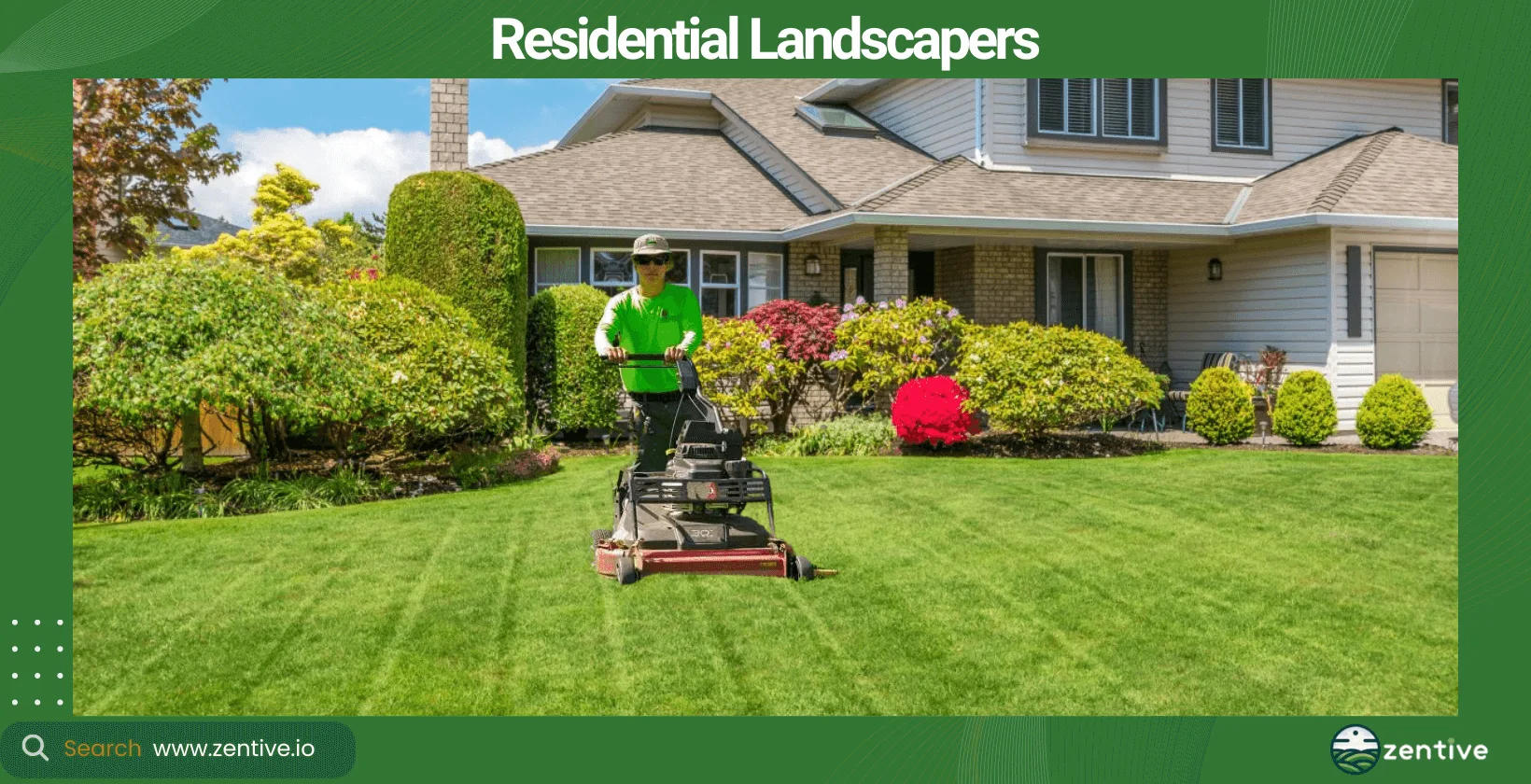
Residential landscapers focus on designing, installing, and maintaining landscapes for homeowners. Their services include garden design, lawn care (lawn mowing, leaf removal service), patio construction, and seasonal decorating and lighting. The main goal of a residential landscaper is to showcase the beauty and usability of someone's personal outdoor spaces.
Residential landscaping businesses differ from other types of landscaping services in that they often deal with a more diverse selection of smaller projects compared to their commercial counterparts. In this type of landscaping business, personalized service and client relationships are key. They require strong communication skills and a flexible approach to design and scheduling.
Gaining new clients as a residential landscaper is easier than for their commercial counterparts. Build a strong local reputation by being good at what you do and making sure all your clients are satisfied—it's that simple. Your existing clients will then generate new clients through word-of-mouth referrals.
To step up your client acquisition game even further, showcase before-and-after projects on social media, and engage with the community through local events, such as sponsoring a local sports team, organizing a fun run, or handing out hot dogs in front of a busy sidewalk.
All these can help, but the key to winning new clients as a residential landscaper is to offer exceptional service that exceeds client expectations, which encourages repeat business and referrals.
3. Landscape Contractors
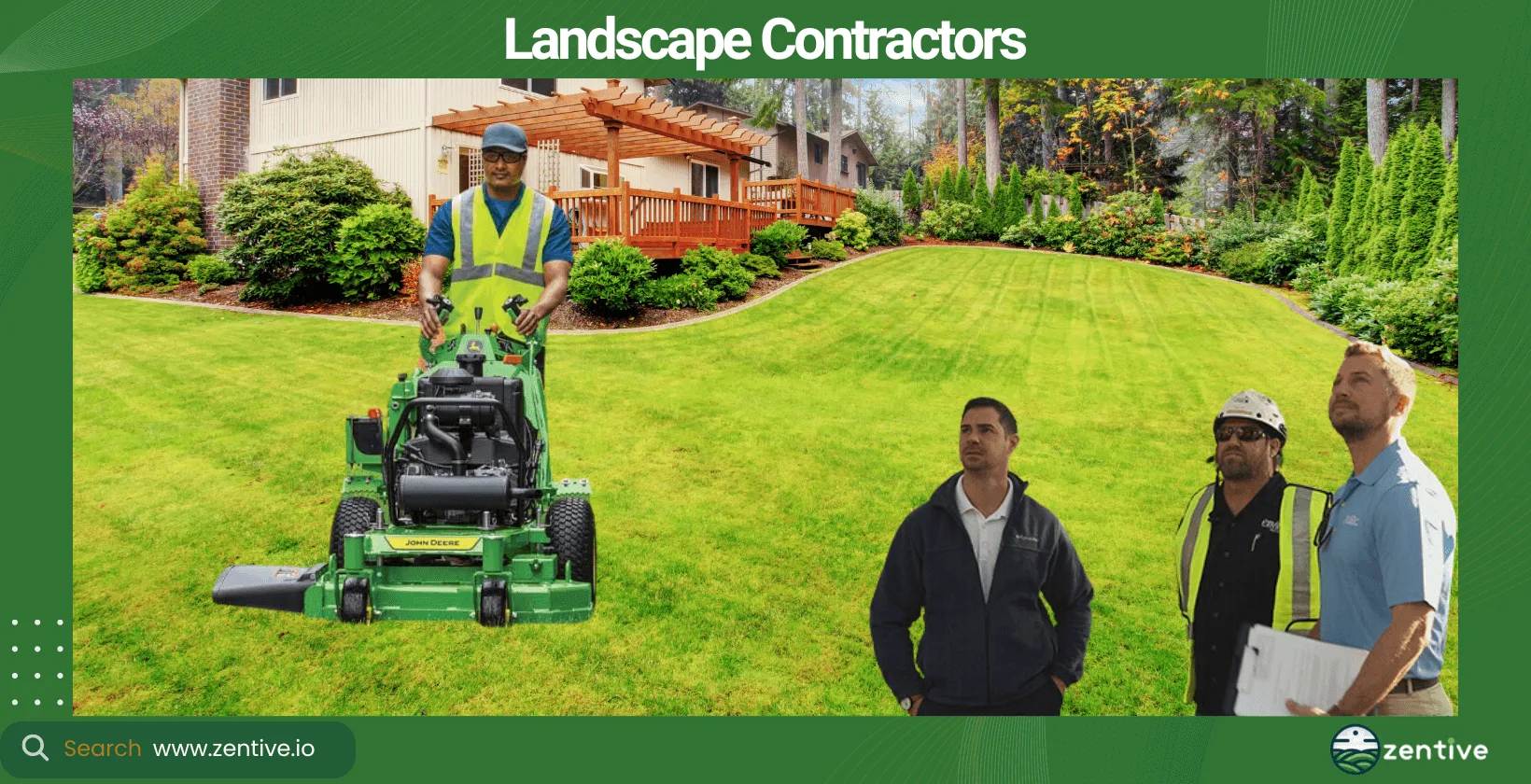
Landscape contractors are hands-on professionals focusing on the construction and installation aspects of landscaping. This includes hardscaping (like patios, walkways, and retaining walls), planting, water features, and outdoor structures. Landscaping contractors' main mission is to turn landscape designs into reality, working closely with landscape designers and architects.
A successful landscape contractor possesses high technical skill and proficiency with various construction materials and methods. Project management and logistical planning are critical, as contractors must coordinate multiple projects, manage crews, and ensure compliance with local building codes and regulations.
Successful landscape contractors often rely on three main things to land new clients: building strong partnerships with landscape designers and architects, referrals from satisfied customers, and showcasing a strong portfolio demonstrating their technical expertise and ability to deliver projects on time and within budget. You can do networking by participating in trade shows and local builder associations.
4. Landscape Design and Architecture Firms
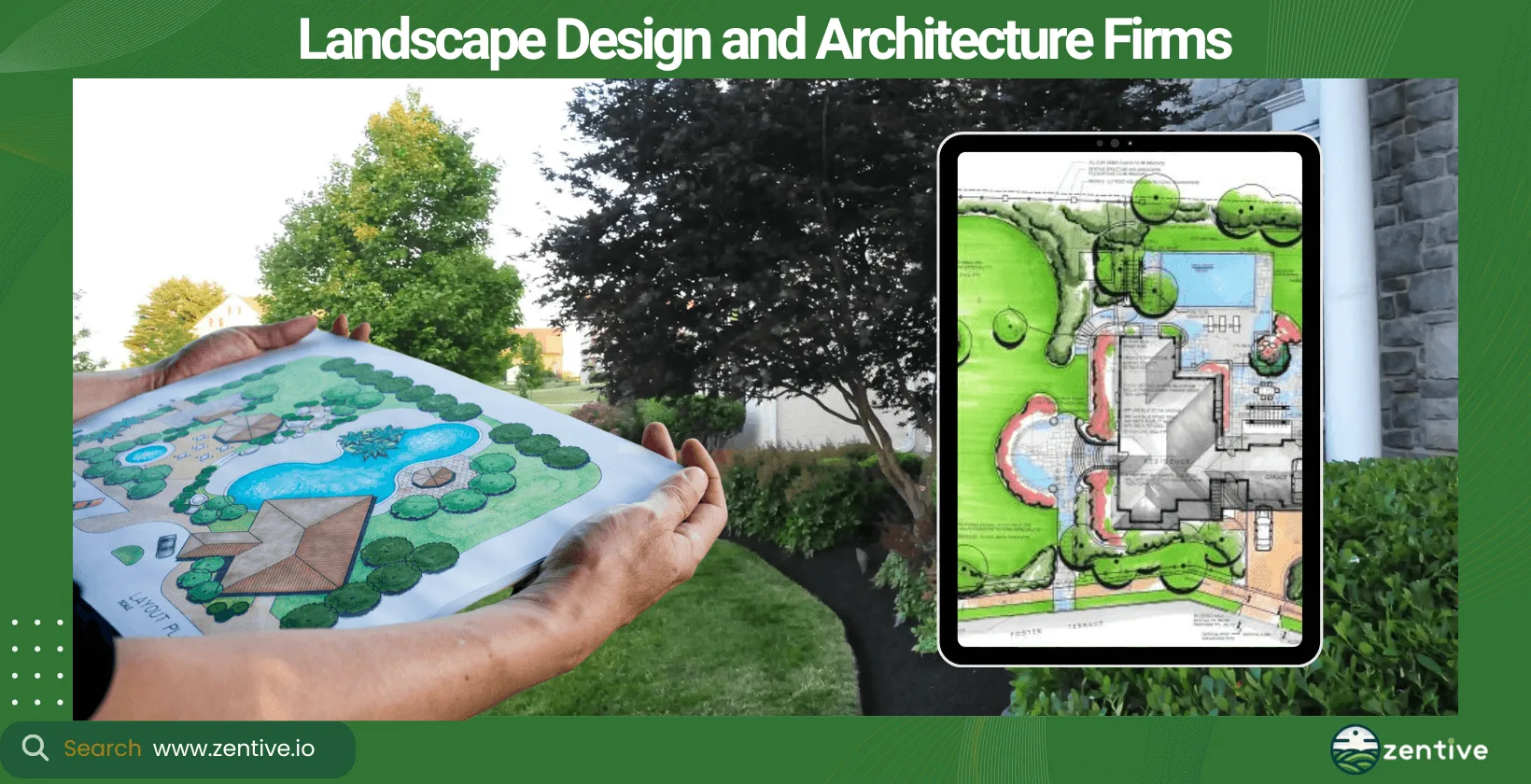
Landscape design and architecture firms offer professional design services, creating detailed plans and visualizations for landscape projects. Services range from residential garden design to comprehensive landscape planning for commercial and public spaces. These designers need to combine aesthetic design with functional planning, considering things such as ecological sustainability of the space, maintenance needs, and client desires.
Running a landscape design or architecture firm is no walk in the park. These business owners require an understanding of outdoor design principles, horticulture, and environmental sustainability. These businesses often employ professionals with degrees in landscape architecture and design software skills. These firms focus on the initial phase of landscaping projects, which is conceptualization and planning. They work closely with clients to develop the image they have in mind before handing off implementation to landscaping contractors.
Design and architecture firms must focus on building a strong brand and showcasing their skills through a well-curated portfolio that's easily accessible on their website in order to attract new clients. Engaging content marketing, speaking engagements at industry events, and partnerships with real estate developers and other related professionals can help these firms reach their target audience.
What Services Do Landscaping Businesses Offer?
Landscaping businesses offer a wide range of services to improve and maintain outdoor spaces. Here's a brief overview of the landscaping services list.
- Garden Design and Installation: Designing and building new garden areas. Unique to residential landscapers with advanced projects employing the help of landscape design and architecture firms.
- Lawn Care and Maintenance: Regular lawn mowing services and yard waste removal services, as well as fertilization and aeration services. Common across all types, particularly residential landscapers.
- Hardscaping: Installation of non-living elements like patios, walkways, ponds, and walls. Unique to landscape contractors and sometimes commercial landscapers.
- Tree Planting and Care: Includes planting, pruning, and removal services. Commercial and residential landscapers.
- Irrigation Systems: Designing, installing, and maintaining watering systems. Done by all, but specialized services can be offered by landscape contractors and design and architecture firms.
- Snow Removal and Winter Services: Clearing snow from paths and driveways. Offered as off-season services by residential and commercial landscapers.
- Landscape Lighting: Design and installation of outdoor lighting for aesthetics and security. Often a specialty of landscape design and architecture firms, which are implemented by landscaping contractors.
Do All Types Of Landscapers Offer Offseason Services?
Yes, all types of landscapers offer offseason services in fall and winter. The main reason why all types of landscapers offer these services is to maintain revenue streams year-round.
Fall Services include the following.
- Leaf removal
- Garden winterization
- Preparation for the cold months, such as mulching and pruning.
Winter Services include the following.
- Snow removal
- Holiday lighting installations
- Tree care services to protect against winter damage.
How To Manage Different Types Of Landscaping Companies?
There are four main methods for managing different types of landscaping companies. The first is to use management software. This software improves your business's operational efficiency, streamlining everything from scheduling to invoicing and job routing.
Manage employees' schedules. It's a critical part of managing a landscaping company as it's essential for maintaining service quality and meeting deadlines. Landscape contractors, with their project-based work, can especially benefit from employee scheduling software.
Monitoring your finances is important regardless of your landscaping business type. Keep a close eye on budgets, expenses, and revenue. Employees can make or break a business, which is why landscapers focus on hiring better employees. It's a challenge across the industry, but when you focus on providing competitive benefits and clear career paths, you'll almost certainly attract quality employees.
Here are some management tips each type of landscaping business can follow.
- Commercial landscapers have to invest in heavy-duty equipment and employee tracking software.
- Residential landscapers can focus on customer relationship management tools like Zentive to help them improve their customer communication.
- Landscape contractors must prioritize standing out from the competition by outlying a clear landscaping business description to potential customers and improving marketing. They can implement project management software like Zentive for better oversight of current jobs and employees.
- Landscape Design and architecture firms need to leverage advanced design software with project management features, which can make running their business easier.
Why Do Landscapers Need A Business Management Software?
Landscapers need business management software to help them run their business more smoothly. Using software for landscaping business has many benefits, including making employee scheduling much easier, and better management of company finances by providing more accurate quotes, and efficient invoicing.
Landscaping business software, like Zentive, ensures better client communication that facilitates better customer management and customer satisfaction.
How Do Landscapers Manage Employee Schedules?
Landscapers manage employee schedules manually, which often leads to errors and time expenditure, or they do it automatically through scheduling tools. Managing employee schedules effectively is critical to ensuring projects are completed on time, and clients are satisfied.
Each type of landscaping business - residential, contractor, commercial, and design - has unique scheduling needs. For instance, contractors require flexibility for project work and residential services need consistent schedules for regular maintenance.
Tools like Zentive, a landscape scheduling tool, can significantly help you optimize your workforce allocation and job assignments. This reduces administrative headaches and increases the amount of jobs you can finish each day.
How Do Landscapers Manage Company Finances?
Landscapers manage their company finances through tracking of income, expenses, and profitability. It's mostly done by hand, or semi-hand through Quickbooks. It's important to monitor and track your business's financial data to make informed decisions and ensure sustainability. For instance, if you don't keep track of your data, you won't know that your actually making a loss before it's too late.
Using tools like Zentive can help. These tools improve financial oversight, offering features for better budgeting, invoicing and quoting. They can help with expense tracking and financial forecasting through their analytical features. Plus, Zentive offers integration with Quickbooks, which makes financial reporting even more effortless.
How Can Landscapers Find Better Employees?
Landscapers can find better employees by offering attractive salaries and incentive programs to ensure they retain their employees. Finding and retaining skilled employees is a significant challenge for the landscaping industry. Most employees start a new job only to quit before the season is finished. Then you have to start the hiring process again, followed by training the employee - it can be a real headache for business owners.
Focus on offering competitive wages, opportunities for advancement, and a positive work environment to hire landscape employees. Network within industry circles, offer apprenticeships, and utilize job boards specialized in landscaping to attract qualified candidates.
How To Grow Your Landscaping Company?
To grow your landscaping company, focus on expanding your service offerings, improving customer satisfaction, and adopting aggressive marketing strategies to propel landscape company growth. The best growth strategy varies by each landscape business type.
Commercial landscapers leverage B2B marketing and build partnerships with commercial property managers and developers. Residential landscapers benefit from B2C marketing tactics, emphasizing local SEO and community engagement.
Landscape contractors can grow by specializing in niche services that are in high demand, such as sustainable landscaping or high-tech irrigation systems. Landscape design and architecture firms showcase their unique designs and previous projects in a robust and easily accessible portfolio to attract high-end clients and commercial projects.
| Strategy | Action | Explanation |
|---|---|---|
| Expanding Service Offerings | Add Hardscaping, Landscape Lighting, Irrigation System Installation | Diversifying services meets more customer needs and increases revenue streams. |
| Investing in Employee Training | Provide Training Programs for Employees | Well-trained employees are more efficient, knowledgeable, and provide better customer service, leading to higher satisfaction and repeat business. |
| Leveraging Technology | Use Landscaping Software for Scheduling, Invoicing, and Customer Management | Technology improves efficiency, reduces administrative workload, and provides valuable data insights for informed business decisions. |
| Marketing and Branding | Develop a Professional Website, Engage on Social Media, Offer Promotions, Showcase Work, Encourage Reviews | A strong online presence and active marketing attract new clients, enhance reputation, and increase visibility. |
How To Grow A Commercial Landscape Business?
Growing a commercial landscape business requires a focus on business-to-business (B2B) marketing strategies. Networking with commercial property owners, real estate developers, and property management companies is crucial.
Attend trade shows, join business associations, utilize LinkedIn for connections, and use content marketing to drive growth.
How To Get More Commercial Landscaping Contracts?
Securing more commercial landscaping contracts involves a blend of demonstrating the value and professionalism of your services and excellent marketing. Commercial contracts are valuable due to their scale, consistency, and the opportunity for recurring revenue.
A great way to get more contracts is to upgrade your proposal process. You can do this by clearly communicating your capabilities, including case studies or testimonials from existing clients, and outlining the long-term benefits of your services.
Establishing a reputation for reliability and quality work is key. Consider offering value-added services such as environmental sustainability assessments to stand out.
How To Grow A Residential Landscape Business?
Residential landscape businesses grow through business-to-consumer (B2C) marketing. Focus on building a strong local presence through SEO-optimized websites, social media marketing (Instagram, Facebook, YouTube, TikTok), and engaging with the community via local events or sponsorships.
The easiest method to grow your business is to offer exceptional customer service and encourage word-of-mouth advertising through incentives for referrals (discounts, promotions).
Diversifying your services to include seasonal offerings in fall and winter can help maintain a steady workflow throughout the year.
How To Boost Residential Landscaping Sales?
Landscapers can boost their residential landscaping sales by increasing brand visibility and demonstrating their services' value to potential clients. Implement a robust online marketing strategy with an engaging website, active social media presence, and targeted local advertising.
Landscaping service providers can personalize your services by offering free consultations on their landscaping and lawn maintenance services and customizing packages to meet individual client needs.
Get This Guide as a PDF
Save this article for offline reading. We'll send a formatted PDF straight to your inbox.
No spam. Unsubscribe anytime.
Ready To Streamline Your Field Service Business?
Zentive is the all-in-one field service management software built for landscaping, lawn care, tree care, and snow removal businesses. Start your free trial today.
No credit card required · Cancel anytime