
Successful business owners say that employees can make or break a business. Hiring dedicated, hardworking employees is key to a successful landscaping business. A landscaping business typically hires two types of employees: administrative staff and field service staff.
Hiring and managing employees effectively is crucial for business growth and sustainability. It's better to take time hiring the right employees rather than rushing, especially in the early stages when building a reputation. You should learn how to hire good employees, particularly as your business grows. Employee retention in the field service industry is low, meaning you’ll likely have new employees every year. To reduce turnover, improve your ability to hire high-quality employees.
How do you identify high-quality employees? They have the right skills and experience, align with your company’s culture, and demonstrate strong values. They should also be presentable, as they represent your business.
Hiring Readiness Checklist
See if you’re ready to hire your next landscape employee.
0% complete
Start checking items to see how prepared you are.
Many don’t realize that employees can be either an asset or a liability. Making hiring strategic is essential for business growth. The right team improves operational efficiency and customer satisfaction. A good landscape worker is skilled in landscaping, reliable, physically fit, and adaptable to different working conditions.
Another key to retaining employees and keeping them satisfied is effective management. Successful landscape business owners understand that managing a team requires clear communication, fair and organized scheduling, continuous training, and incentives.
What Makes A Good Landscape Employee?
A good landscape employee has the right skills and experience for a particular job. They have the correct certifications, such as a certified landscape technician (CLT), ensuring their competence.
A good landscape employee will be dependable in terms of availability, including willingness to work on weekends or late if the job requires it. Your team in the field should be physically fit—if they're not fit, then the rate at which you fulfill the services will be reduced.
This employee should have their own transportation, at least to the business offices. A bonus is when they have transportation to job sites, but this shouldn't be a prerequisite unless it's in regions where job sites are spread out.
A landscape employee should have a legal work status. I know this seems harsh, but imagine the legal complications when someone with epilepsy is working with a chainsaw and an incident occurs. You can't have that stress on you; you already have a business to worry about!
A good landscape employee will have a matching personality. Lawn care employees are the face of your business, so they need to have warm and inviting personality traits. Look for people who are diligent and creative, can work well in a team environment, and have a contagious positive attitude.
Lastly, ensure there is no landscape barrier. Effective communication is key in landscaping, so in America, the employee should be fluent in English.
| Criteria | Details |
|---|---|
| Skills & Certifications | A good landscape employee has the right skills and experience for the job. They should hold the correct certifications (e.g., Certified Landscape Technician) to prove competence. |
| Dependability & Physical Fitness | They should be dependable in terms of availability, willing to work weekends or late if needed. Being physically fit is important for efficient work output. |
| Transportation | Ideally, an employee has their own transportation to at least get to the business office. Having transportation to job sites is a bonus but may not be required in all areas. |
| Legal Work Status & Safety | The employee should have a legal work status to avoid any legal complications. Additionally, consider health and safety implications (e.g., conditions like epilepsy). |
| Personality & Attitude | Landscaping staff are the face of the business, so a warm, positive, and team-oriented personality is key. Creativity, diligence, and a can-do attitude help maintain a good working environment. |
| Language Proficiency | Effective communication is crucial. In the United States, employees should be fluent in English to avoid misunderstandings on the job. |
What Are The Different Types Of Landscape Workers?
There are four types of landscape workers.
- Full-Time Employees: These employees have a contract to work full-time with your business. They are generally your administrative and core service teams.
- Part-Time Employees: These employees only help when it is needed. They are usually employed when work is too much for the core service teams or on specific days of the week.
- Seasonal Employees: Temporary or seasonal workers are very similar to part-time employees, but the former only works during peak seasons, such as spring and fall, when the demand for lawn care services is high.
- Contractors: Contractors are independent employees who aren't really affiliated with your business but still help fulfill a service your employees cannot complete. They only work on a per-project basis, providing expertise for specific tasks without the need for long-term employment.
When Should Landscapers Look To Hire More Employees?
A landscape and lawn care business should hire more employees when the demand for their services is higher than what the current employees can handle. Not hiring lawn care employees at the right time can lead to missed opportunities, strained resources, and over-exhaustion of your current employees.
We know, it isn't easy to hire lawn care employees that are reliable, but there are a couple of strategies to find great landscapers.
Where To Find Landscaping Workers?
You can find landscaping workers by advertising on job boards, utilizing social media, talking to vendors, and posting on local job postings.
Advertising open positions on online job boards like Indeed and Craigslist is an easy way to find job seekers. These boards are effective for reaching a wide audience that is specifically looking for the type of job you're offering.
Use social media platforms like Facebook and LinkedIn that can help you tap into networks and reach potential candidates who may not actively search on job boards.
Talking to vendors is another option. Suppliers and vendors often have connections with freelancers and contractors who might be looking for new opportunities.
A last resort is to post help-wanted ads on local job boards where people hang out. Community centers, churches, and even local bars can be great places to post a job ad.
| Method | Pros | Cons |
|---|---|---|
| Online Job Boards (Indeed, Craigslist) |
|
|
| Social Media (Facebook, LinkedIn) |
|
|
| Vendors and Suppliers |
|
|
| Local Job Postings (Community Centers, Churches, Local Bars) |
|
|
How To Hire Landscaping Employees?
There are six steps involved in learning how to hire landscape employees.
- Define Your Business Needs: Evaluate current and future staffing needs based on your landscaping projects and growth goals to tailor a landscaper job description.
- Create A Job Description: Develop a detailed job description that outlines the role, responsibilities, and qualifications to attract suitable candidates.
- Make A Job Posting: Advertise your job opening through job boards, social media, and local platforms to reach a wide pool of potential candidates.
- Screen and Interview Candidates: Assess applicants through applications, interviews, and practical tests to select the most qualified hires.
- Check References and Backgrounds: Verify candidate information and past job performance by contacting previous employers to ensure reliability.
- Make Offers and Onboard: Extend job offers, negotiate terms, and integrate new hires smoothly with an effective onboarding process to boost retention.
1. Define Your Business Needs
Define your business needs means identifying the exact labor, skills, and workload requirements your landscaping company must support.
To determine this, evaluate your current projects (lawn care, mowing, trimming, leaf removal, etc.) and their employee requirements, then evaluate your future growth projections (how many jobs you want to do daily and what types of jobs) to determine staffing needs.
Defining your business needs helps target the right skill set and experience level during recruitment. By doing this step first, you will be able to create a tailored landscaper job description for your business.
2. Create A Job Description
Create a job description means outlining the role, responsibilities, skills, and qualifications needed for the landscaping position.
Use what you learned in your first step—defining business needs—to identify what skills this employee needs to fulfill specific tasks. Then, list the specific tasks the employee will perform, required certifications, and desirable personality traits. For example, you will write: "Help wanted: a hardworking, dedicated landscaping employee who can mow lawns. Must have passed high school."
Creating a job description ensures you attract the right kind of people by naturally curating unfit candidates. See it as your benchmark for evaluations.
3. Make A Job Posting
Make a job posting means publishing your open landscaping position so qualified candidates can find and apply for the job. You can do this by making a job posting, which can be any of the strategies we mentioned in the previous section, "Where to find landscaping workers?" The best methods to use are job boards, social media, and local postings. They reach a broad audience with little effort.
The main reason why we want to make a job posting is to increase the chance of finding qualified candidates. How else are people going to know that you're hiring if they don't see your ads?
4. Screen and Interview Candidates
Screen and interview candidates means evaluating each applicant’s skills, experience, and fit for your landscaping business. This involves evaluating candidates based on their applications and interviews.
You'll have to conduct thorough interviews and practical tests if necessary. The more initial effort you put into hiring the right employees for the job, the better it will pay off in the long term.
5. Check References and Backgrounds
Check references and backgrounds means verifying a candidate’s past performance, reliability, and employment history. It acts as a vetting process, sifting out bad actors among potential hires.
You can check references and backgrounds by asking candidates for contact information of their previous employers. Then, contact these previous employers and ask for their feedback on the specific candidate.
Doing step five ensures the reliability and integrity of potential employees. You don't want to hire someone who looks great on paper and has a good interview, but past employers say they were lazy or prone to violent outbursts.
6. Make Offers and Onboard
Make offers and onboard means extending a formal job offer and integrating the new landscaping hire into your company operations. To do this step, you will need to present a clear and attractive landscapers salary to the candidate. Effective onboarding should then be provided to familiarize new lawn care employees with company operations. Make them feel like they are part of the team right from the moment they're hired.
A smooth onboarding process enhances employee retention and job satisfaction - the happier your employees, the longer they'll stay at your business, provided what you pay lawn care employees remains attractive.
How To Manage Landscaping Employees?
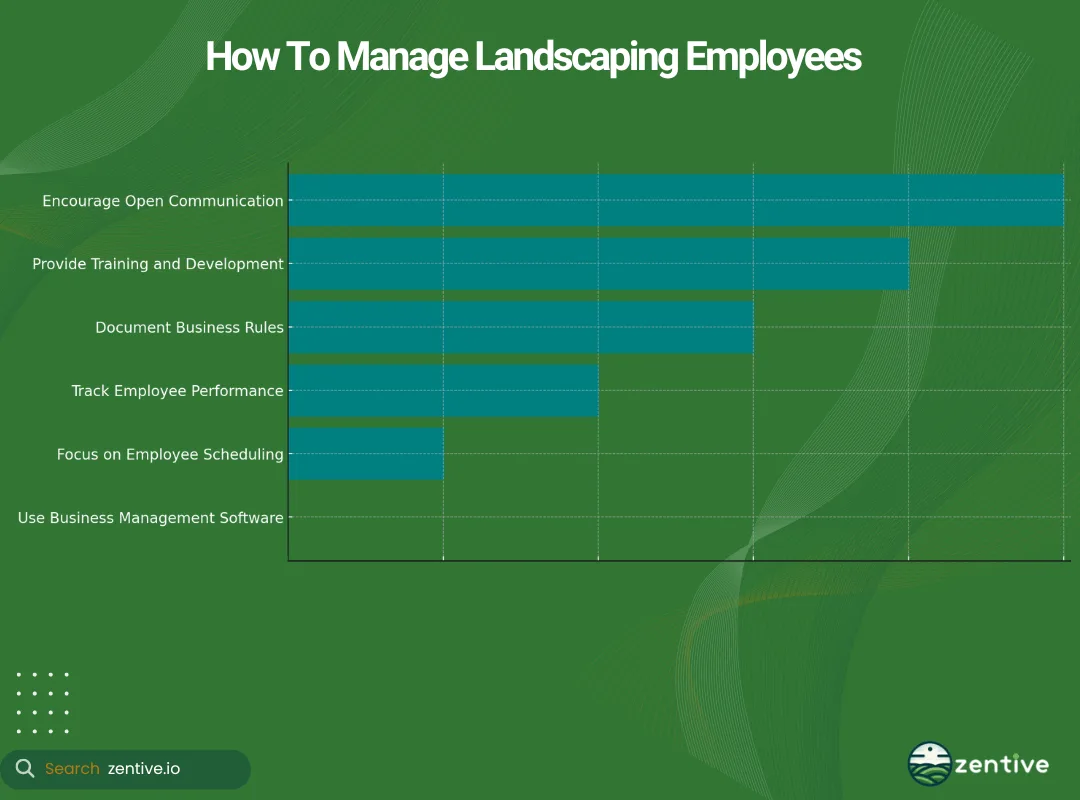
There are four key strategies you should use to manage your landscaping employees. The first strategy is to use business management software. This type of software makes running and managing your business and employees easier and more effective - the easier it is to manage a business and its employees, the better your business will do.
The second strategy is to focus on employee scheduling. To maximize productivity, allocate tasks based on employee skills and availability.
Thirdly, track your employees. Yes, we know that implementing systems to monitor employee performance and manage day-to-day operations might seem excessive and negative from some employees' points of view. But it will help you identify hardworking individuals and reward them for their efforts. It will help you spot employees who are not contributing as much as they should. Remember, good managers create good employees!
The last strategy is to document your business rules. To ensure consistency and fairness, you can establish clear guidelines for all processes and employee behaviors.
How Does Software Help Manage Landscape Employees?
Software helps by automating scheduling, tracking hours, and managing job assignments, which optimizes workflow and reduces administrative overhead. Implementing landscaper management software is an effective strategy to streamline and optimize employee scheduling and routing, as well as making managing day-to-day tasks easier.
How To Optimize Scheduling For Landscapers?
You can optimize your landscaper scheduling needs, such as employee scheduling, by using landscape management software.
We know it's not easy to schedule landscape employees, especially if there are multiple jobs a day. Sometimes, you double-book a team or schedule the wrong employees for a certain job - it happens. This is why you should start leveraging scheduling software to assign tasks based on employee skills and availability, ensuring numerous benefits, including efficient use of resources, meeting project deadlines, and always choosing the correct type of employee schedule.
What Are The Types Of Schedules For Landscape Workers?
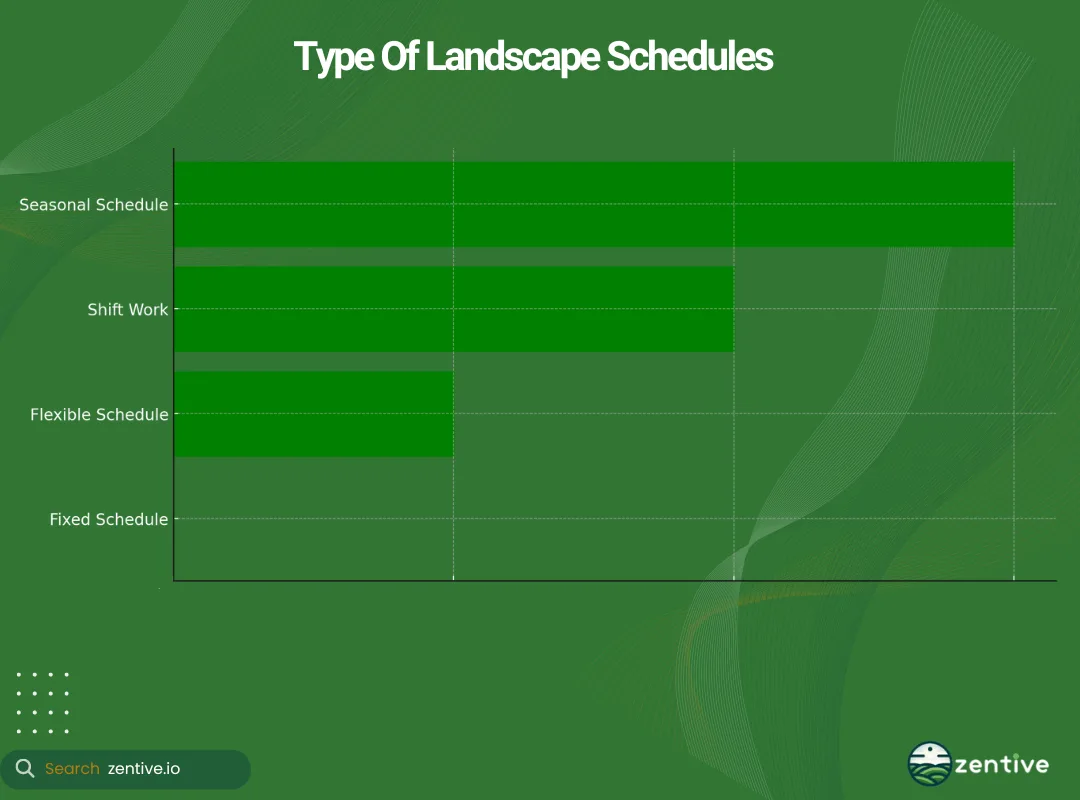
There are four types of schedules for landscape workers. Fixed schedules are the most common for admin staff among the types of schedules for landscaping. These employees work the same set hours each day.
Flexible schedules are the second type of schedule. Employees with this schedule have varying work hours chosen within agreed limits. Shift work is the third type; these employees have rotating shifts to cover various parts of the day and night. They are especially common in the hardscaping niche with tight deadlines.
The final type of landscape employee schedule is a seasonal schedule. Work hours are based on seasonal demands and are the most common in landscaping for field teams.
Be sure to include the type of employee schedule you'll be using for business in your business plan, as it helps a lot with planning.
What Should Be Included In A Landscaper Business Plan?
Your landscaper business plan should include the following: types of services offered, work days, number of employees and how you'll manage them, growth projections (three months, six months, five years), marketing strategies, client retention strategies, and more.
Pertinent to the subject of this article, I'd like to stress the importance of including employee management strategies in your business plan. You should have a clearly defined plan for how you plan to manage your employees.
Create a landscaping employee handbook - an employee will be happier in your company if they know what is expected of them and what type of company they are in, specifically values and morals.
How To Track Your Landscape Employees?
You can track your landscape employees by using software. Crew tracking software is a type of software that tracks and monitors your employee's whereabouts, what jobs they've completed, and sometimes even the progress of current jobs.
This type of software is ideal if you want a more hands-on approach to managing your employees, especially for identifying areas of improvement in your workforce. I should warn you the chances are good that you will find poor-performing employees who are wasting time throughout the day.
What To Do If Landscape Employees Perform Poorly?
You should first try motivating a poor-performing employee; if that doesn't work, you should fire them.
First, try implementing employee incentive programs to motivate employees. These programs can include bonuses for referrals, incentives for hard work, or even commissions on jobs they complete. These three strategies will help align your employees' interests with your business's.
If these programs don't work and the employee still underperforms, I suggest you opt for termination, following the proper legal procedures.
How To Fire Landscaping Workers?
When you fire landscaping workers, ensure all legal requirements are followed, document all proceedings, and conduct the termination respectfully and professionally to avoid legal complications and maintain morale. I suggest you have a third party present in the room, particularly someone with a legal background, and have video footage, a paper trail, or a recording of the termination.
When you fire landscaping workers the right way, you have the assurance that there won't be any legal consequences against you.
Get This Guide as a PDF
Save this article for offline reading. We'll send a formatted PDF straight to your inbox.
No spam. Unsubscribe anytime.
Ready To Streamline Your Field Service Business?
Zentive is the all-in-one field service management software built for landscaping, lawn care, tree care, and snow removal businesses. Start your free trial today.
No credit card required · Cancel anytime