
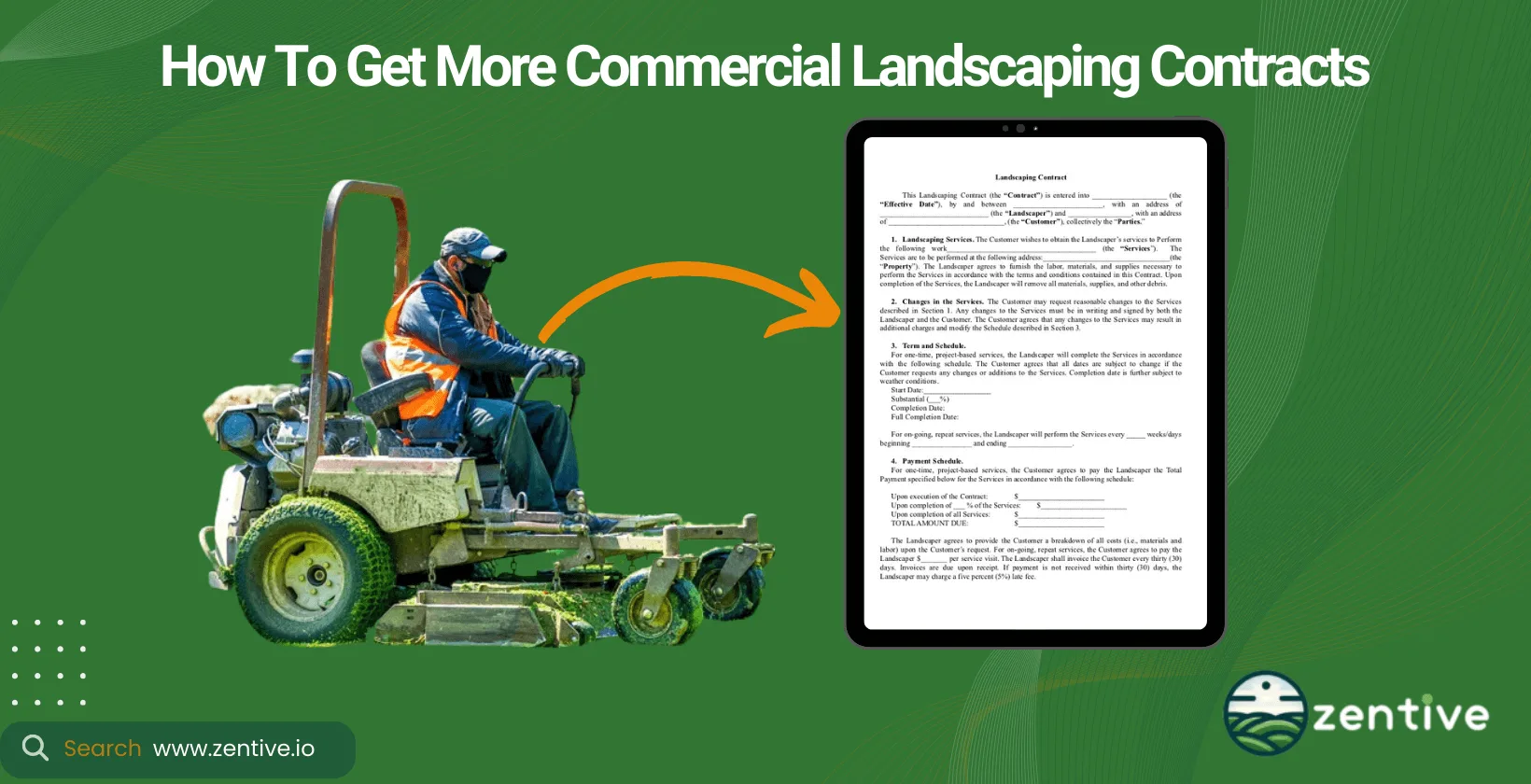
A commercial landscaping contract is a written agreement between a landscaping company and a commercial entity to maintain or improve their outdoor spaces. Landscapers pursue these contracts because increased profitability (higher ROI), assurance predictable income, and long-term business relationships. Profit margins are lower for commercial contracts, but total contract values are higher.
Commercial contracts reduce client volume and administrative marketing costs. The commercial landscaping industry grew 5.1% annually from 2016 to 2021 and represents 50% of total landscaping revenue.. Strategies employ land more commercial landscaping contracts. Best strategy improve bidding process. Making better bids involves understanding client needs, promptly submitting well-detailed proposals, ensuring bid competitive profitable.
How To Get Commercial Landscape Contracts?
There are 11 steps you can employ to get commercial landscape contracts.
| Strategy | Description |
|---|---|
| Define Your Ideal Customer Profile (ICP) | Identify and describe the specific characteristics of commercial clients who are most likely to need and value your landscaping services. |
| Enhance Your Service Offerings | Expand or improve your landscaping services to meet the diverse needs of commercial clients. |
| Display A Strong Portfolio | Showcase your best work through a professional portfolio to demonstrate your expertise to potential clients. |
| Utilize Digital Marketing | Leverage online channels like websites, social media, and SEO to promote your landscaping business. |
| Network and Build Relationships | Engage with industry professionals and potential clients to establish connections that may lead to contracts. |
| Offer Competitive Pricing and Packages | Provide attractive pricing and customizable service packages to appeal to commercial clients. |
| Provide Exceptional Customer Service | Deliver high-quality service to ensure client satisfaction and encourage repeat business. |
| Run Targeted Advertising | Use focused advertising strategies to reach specific commercial clients in need of landscaping services. |
| Bid Actively on Contracts | Participate in tender processes and submit proposals to win commercial landscaping projects. |
| Use Software To Automate | Implement software solutions to streamline operations and improve efficiency in your business. |
| Give Referral Rewards | Offer incentives to clients or partners who refer new business to your landscaping company. |
1. Define Your Ideal Customer Profile (ICP)
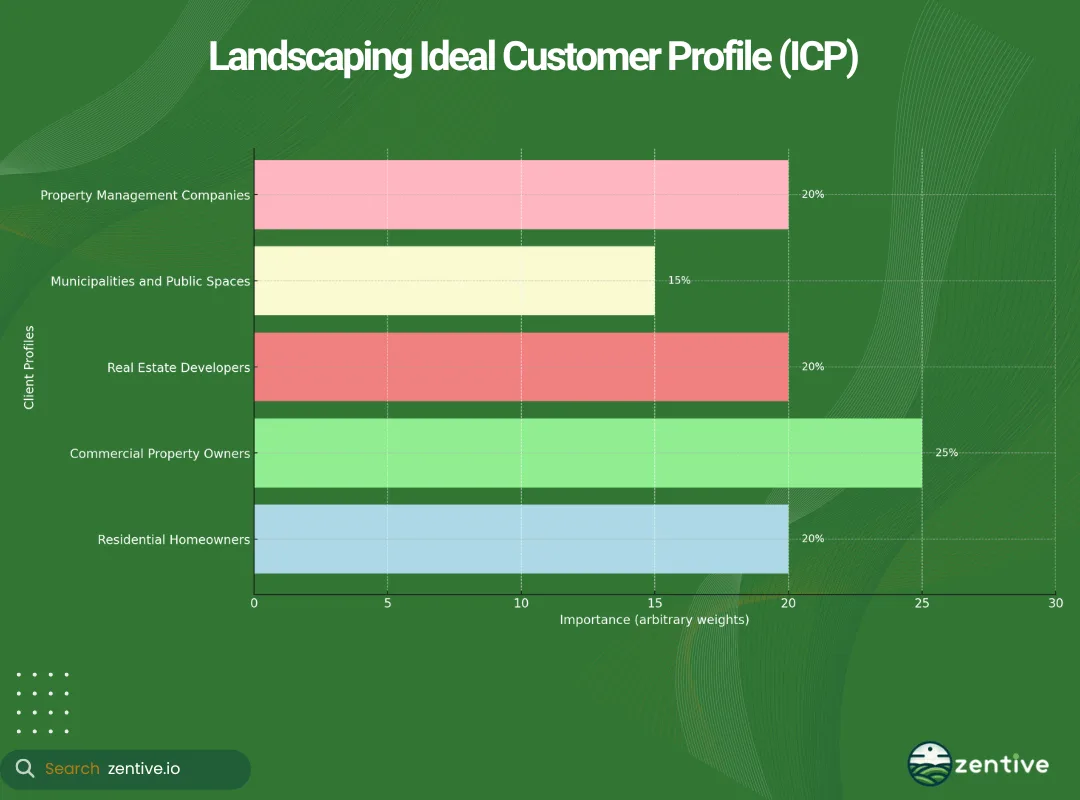
Defining your Ideal Customer Profile (ICP) involves identifying the specific characteristics of the businesses or organizations that are most likely to become your customers. For instance, landscapers offering leaf removal services, should be targeting businesses with lots of trees on their business grounds.
It's important you focus on targeting a specific customer base, as it allows you to tailor your marketing and service offerings more effectively. For instance, align your marketing and services to the municipal needs when targeting townships and cities. Emphasize your leaf removal services if they have a lot of old trees in the streets.
2. Enhance Your Service Offerings
Enhancing your service offerings means expanding the range of services you provide to meet the broad and varying needs of commercial clients. Most commercial lawn care contracts include more than one landscaping service.
A business would rather hire someone who does leaf removal, mowing, edging, pest management, and patio cleaning than someone who only does one of these services—it just makes more sense, admin-wise. A business wants a jack of all trades for their general landscaping needs, not a master of one. Your chances of winning the contract increase when you offer more services.
3. Display A Strong Portfolio
A strong portfolio shows your capabilities and previous successes. When you showcase your portfolio and include client testimonials, it can help persuade businesses that you're the right landscaping business for the job. They're taking a risk granting you the contract, so a strong portfolio helps build trust and conveys a message of competence.
Your portfolio should be prominently displayed on your website and social media platforms. Remember to include high-quality images of completed projects, detailed descriptions of the work performed, and client testimonials. Showcasing your portfolio online allows potential clients to assess your work visually and helps build trust and credibility.
4. Utilize Digital Marketing
Digital marketing is a marketing strategy that employs digital techniques to raise awareness of your brand and increase its online visibility and credibility. Digital marketing for landscapers is critical for reaching and engaging potential commercial clients.
Effective strategies our landscaping clients have used include email outreach, cold calling, and maintaining a strong online presence through a well-optimized website, SEO, and social media.
5. Network and Build Relationships
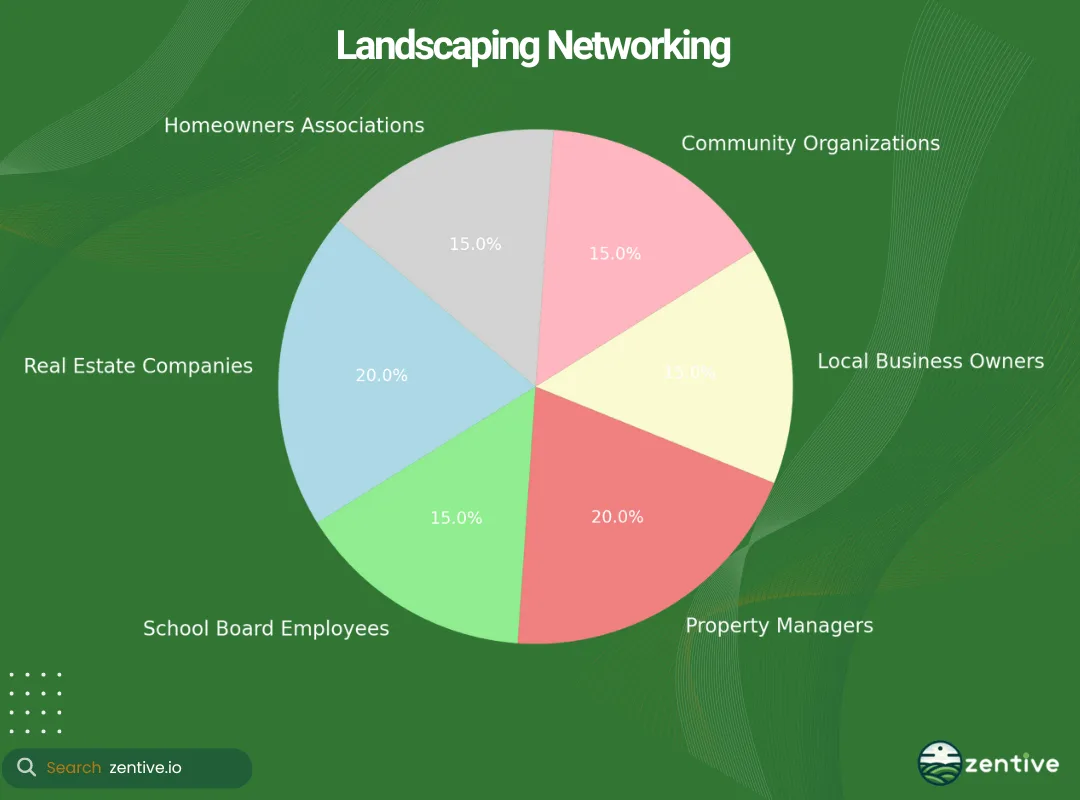
Networking and building strong relationships refers to interacting with people in the same or related industry as you. It's how you get a "foot in the door" to lucrative opportunities.
For example, partnering with real estate companies is an excellent choice, as these companies often manage properties that require regular landscaping services. Networking can lead to referrals and collaborative projects that expand your client base. For instance, your real estate partners can refer new commercial renters to your landscaping business.
6. Offer Competitive Pricing and Packages
Competitive pricing and flexible service packages involve pricing your services in line with the industry standard and offering adjustable packages to the client, respectively. Remember, your clients have strict budgets, so when your prices are competitive, it will look more attractive to commercial clients,
A useful strategy you can employ is providing flexible packages that allow clients to choose services that best fit their needs and budget. A client might not want all the services you offer in your package.
Offering free estimates seals the deal and shows transparency to clients. It shows transparency and willingness to engage with the client's specific requirements. Your willingness to commit might persuade the client that you're the right business for the contract.
7. Provide Exceptional Customer Service
Exceptional customer service involves being highly responsive and exceeding clients' expectations in every interaction. Prompt responses to inquiries and proactive communication can set you apart from competitors. Ensuring your team delivers services on time and to the highest standard can help in retaining clients and encouraging positive word-of-mouth.
8. Run Targeted Advertising
Targeted advertising involves creating and running marketing strategies that directly target commercial clients. You can use pay-per-click ads to gain more clients, as everyone uses Google. These types of ads are generally more effective for residential clients. Instead, you should focus on local advertising for commercial clients.
A local landscaping advertisement should focus on advertising on channels that commercial clients are likely to engage with, such as industry magazines, conferences, business networking sites, radio commercials, and billboards.
9. Bid Actively on Contracts
Bidding actively on contracts involves bidding on numerous contracts and on a regular basis. The more contracts you bid on, the higher your chances of landing one. It's important that you actively monitor bid opportunities. Doing so ensures you never miss a bidding opportunity.
10. Use Software to Automate
You can use certain types of software, like landscape business management software, to help automate and streamline some of the bidding processes. Landscape business management software is a type of software that includes various tools to help landscaping businesses automate certain tasks and make the business run more efficiently.
A landscape company software, like Zentive, often includes customer relationship management (CRM) systems that help track and manage leads, automate follow-ups, and maintain customer communications, making the management of large-scale projects more efficient.
11. Give Referral Rewards
A referral reward program is a program where you incentivize your existing clients to refer new business to you. Offering discounts or other benefits for referrals ensures your current clients promote your business, and it helps you acquire new clients through trusted recommendations. It's an easy yet very effective marketing method.
What Is Commercial Landscaping?
Commercial landscaping is a landscaping business that offers services such as design, planning, installation, and maintenance of outdoor spaces for commercial clients like business properties, government agencies (parks), and nonprofit organizations.
A commercial landscape company needs to win contracts to get jobs. An outline of a typical commercial contract includes the duration of the service agreement, scope of work, payment terms, and required compliance with local regulations and licensing.
If you're a residential landscaper looking to convert to a commercial one, you need to understand that the commercial industry is more professional and sophisticated. You'll need to construct professional contracts, understand regulatory requirements, manage large teams, and be able to compete in the competitive commercial landscaping market.
What Are The Types Of Commercial Contracts For Landscapers?
There are five types of commercial contracts for landscapers, including maintenance, design/build, seasonal, integrated pest management (IPM), and consultation contracts.
Commercial landscape maintenance contracts are ongoing services to ensure that commercial properties remain pristine and functional. This usually includes a commercial lawn care contract offering services like mowing, trimming, seasonal planting, and general upkeep.
Design/Build contracts involve both the design and construction of landscaping projects. These contracts aim to level up the aesthetic appeal of commercial property. The third type of contract, seasonal contracts, focuses on specific seasonal needs like snow removal in winter or leaf cleanup in fall.
IPM contracts aim to maintain the health of the landscape through environmentally sensitive methods of managing pests and diseases. These can include anything from rodent control to preventing termite infestation.
Lastly, we have consultation contracts. Through these contracts, you'll provide expert advice on landscape projects, sustainability practices, or renovation of existing spaces without the commitment to full-scale execution (managing a team and purchasing supplies).
Regardless of what type of contract it is, most landscape contractors want to win one of these lucrative commercial contracts because of their benefits.
Why Do Landscapers Want Commercial Contracts?
Landscapers want commercial contracts because they offer a higher potential for repeat business, a more predictable income, and yield higher returns on investments. Working with commercial clients elevates your company's profile and credibility, which can open a lot of doors to future contracts and help your business grow.
| Reason | Description |
|---|---|
| Stable Income | Commercial contracts typically involve regular maintenance and long-term agreements, providing a steady and predictable source of income. |
| Higher Revenue | Commercial contracts often have larger scopes and budgets compared to residential jobs, resulting in higher overall revenue. |
| Professional Relationships | Working with commercial clients can lead to valuable business relationships and networking opportunities, potentially resulting in more contracts and referrals. |
| Reputation Building | Securing and successfully completing commercial contracts enhances a landscaper's portfolio and reputation, attracting more high-profile clients. |
| Less Seasonality | Commercial contracts often require year-round services, reducing the impact of seasonality on business operations and revenue. |
How To Make A Better Commercial Landscaping Bid?
There are four tips you can implement to make better commercial landscaping bids.
The first tip is to find better bid opportunities. Before you bid on landscaping jobs, first find bid opportunities that align well with your company's strengths and resources. Regularly check public databases, local government websites, and business portals.
Another useful tip is to ensure bid profitability. Analyze each potential project to ensure it will be profitable. This includes calculating all costs associated with the project, such as labor, materials, fuel, and overhead.
Try to send faster bids. It's simple: the faster you send bids, the more bids you can send. Streamline the bid preparation process by utilizing landscape management software to submit bids more quickly.
The final tip is to tailor your bids to match customer needs. Customize your bids to address the specific concerns and requirements of the client, highlighting how your services align with their objectives. Clients want to know how you can help them, i.e., what value you offer, which is why landscapers emphasize creating your bids around the customer's needs.
Where To Find New Commercial Landscape Accounts?
You can find new commercial landscape accounts by searching online, visiting the city clerk's offices, or directly visiting the business and asking them if they require your services. Most contracts are public info; for instance, you can acquire all the info about commercial mowing bids by simply talking to the town/city clerk's office.
Keep in mind that not all potential accounts are worth bidding on as they might not be profitable or yield a low return on investment (ROI).
Are All Commercial Landscaping Jobs Profitable?
No, not all commercial landscaping jobs are profitable. Profit margins can vary widely based on the project's scale, scope, and the specific requirements involved.
Before you bid on a project, perform a thorough cost analysis, considering factors like labor, materials, equipment, travel expenditure, and overhead. In some cases, you can negotiate the terms of the contract with the client, but I would rather spend my resources on finding better deals than trying to make an existing deal more attractive.
Running a cost analysis sounds like a lot of work. Luckily, you can use specialized software like Zentive to help determine profitability in real-time when making your estimates.
Do Commercial Contracts Only Go To The Lowest Bidder?
No, commercial contracts do not always go to the lowest bidder, especially in local government municipalities where the bid evaluation criteria are strict. Municipalities want the services to reflect positively on them, so if they just hand out commercial contracts to the lowest bidder, they might compromise their image. This is why they implement a set of criteria when determining who gets the contract. These include factors such as value, price, relationship with bidder, reliability, environmental practices, and timeline.
How Can Quoting Software Speed Up Commercial Landscaping Bids?
Quoting software can significantly speed up the bid process by streamlining and automating certain aspects of the quote generation process. Quoting software for landscapers like Zentive has tools that automatically calculate costs based on predetermined prices and integrate with CRM software to manage client communications more effortlessly.
Zentive offers professional quoting templates, which reduce the time needed to prepare each bid and minimize errors.
What Is The Difference Between Bidding On Commercial vs Residential Jobs?
Bidding on commercial versus residential landscaping jobs differ in scale and scope, bidding process, and regulatory requirements. Commercial contracts involve larger projects, which means more costs. They follow a strict bidding process, which you don't normally see with residential clients. Most commercial clients have strict regulatory requirements, like environmental practices you need to adhere to.
When you're bidding on commercial jobs, you need to factor in different insurance requirements. For instance, a local government might have different insurance requirements than a private business, but you still need to adhere to these requirements regardless of the type of client.
Do Landscapers Need More Insurance To Win Commercial Contracts?
Yes, landscapers generally need more comprehensive insurance coverage to win commercial contracts. Public municipalities, for example, are especially strict when it comes to insurance coverage, and you'll need a lot of it in order to win one of their contracts.
It's not that they want to prevent you from bidding on the contract. They require higher levels of insurance due to greater potential liabilities. They're protecting themselves from legal consequences. In order to win a commercial landscape contract, obtain general liability coverage, worker's compensation, and specific coverage like vehicle and equipment insurance.
What To Do After Winning A Commercial Landscape Contract?
After winning a commercial landscape contract, it's important to formalize the agreement by drafting a detailed and official contract. This agreement outlines all terms of service, scope of work (services you'll be offering and to what extent), payment schedules (after each job, weekly, bi-weekly, monthly, etc.), and responsibilities of both parties.
This contract will help protect you in case of any legal dispute between you and the client and will help secure your income by ensuring that the client doesn't terminate the agreement at a moment's notice.
How To Write A Commercial Landscaping Account Contract?
A commercial landscaping contract is written in a formal tone and outline each aspect of the agreement. It's crucial to ensure that the landscaping account contract you create is comprehensive and clear to both you and the client. When writing landscaping contracts, outline the scope of work and expectations as well as safeguard against potential disputes by providing detailed information on payment terms, service levels, and responsibilities.
Before sending out your contract, make sure it includes the following key components: a detailed description of the services to be provided, payment terms and conditions, scope of work with detailed specifications, responsibilities, and obligations of both parties, termination clauses, and dispute resolution mechanisms.
Writing a landscaping account contract can take a lot of time, so use our free Zentive commercial landscape contract template. This will save you time and help ensure that all necessary details are included and the contract meets industry standards.
Get This Guide as a PDF
Save this article for offline reading. We'll send a formatted PDF straight to your inbox.
No spam. Unsubscribe anytime.
Ready To Streamline Your Field Service Business?
Zentive is the all-in-one field service management software built for landscaping, lawn care, tree care, and snow removal businesses. Start your free trial today.
No credit card required · Cancel anytime