
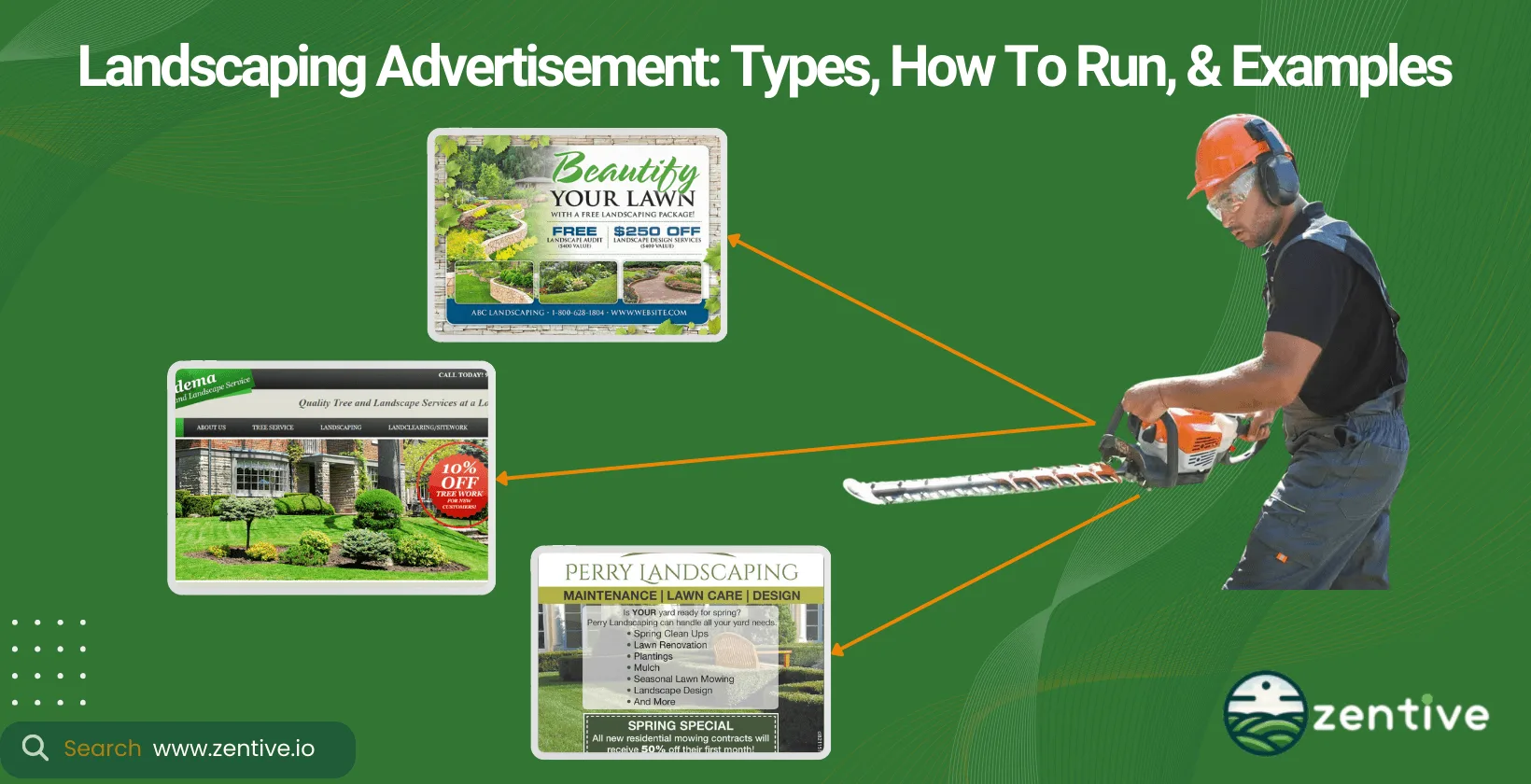
Landscaping advertisements help raise brand awareness and promote your services to potential clients. These ads can include flyers, paid social media posts, digital campaigns (Google and Facebook), local commercial ads like billboards and flyers, and TV and radio commercials. Businesses use landscaping advertisements to grow their client base and increase sales.
How do you create an ad, and which type do you choose for your landscaping business? We'll explain in detail with examples. You can create and run your own ad, such as a Facebook marketing campaign or a PPC Google ad.
Key factors in a landscaping advertisement strategy include defining your target audience, setting a budget, and choosing the right mix of advertising methods. Landscaping business software elevates your advertising strategy.
What Are Examples Of Landscaping Ads?
Here are five examples of landscaping ads we found to be effective.
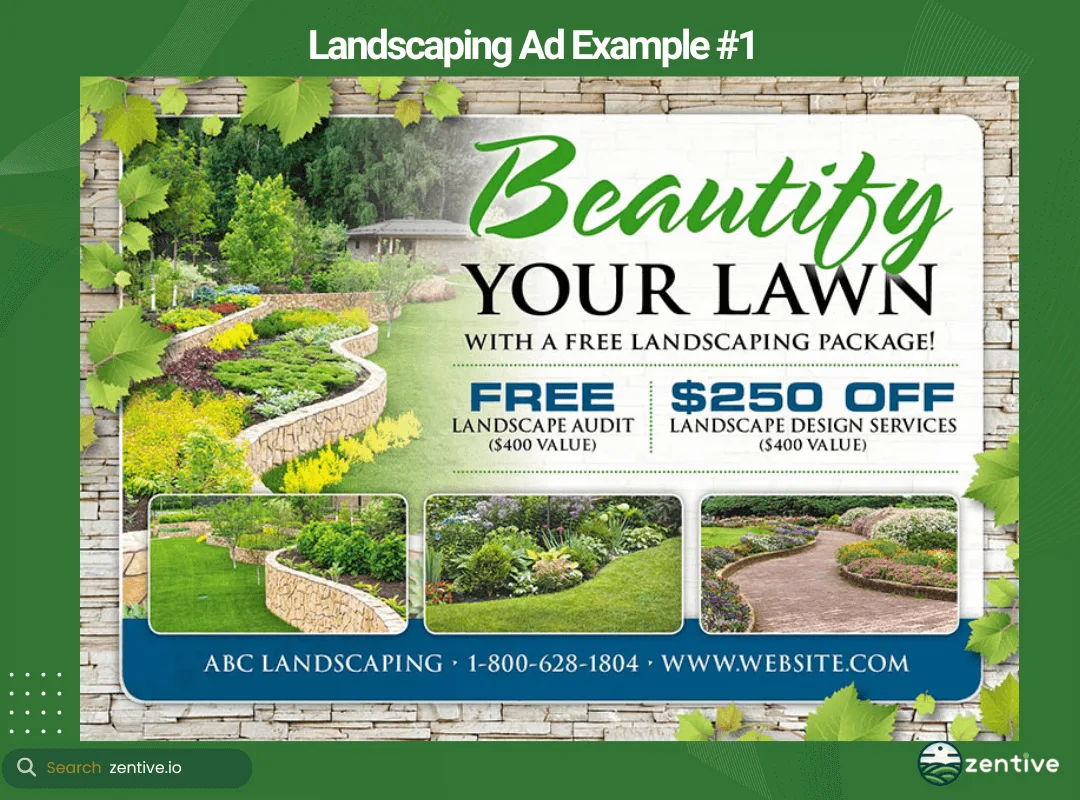
Example Ad 1: Utilizes photos of past projects and clever wording to capture interest in the audience.
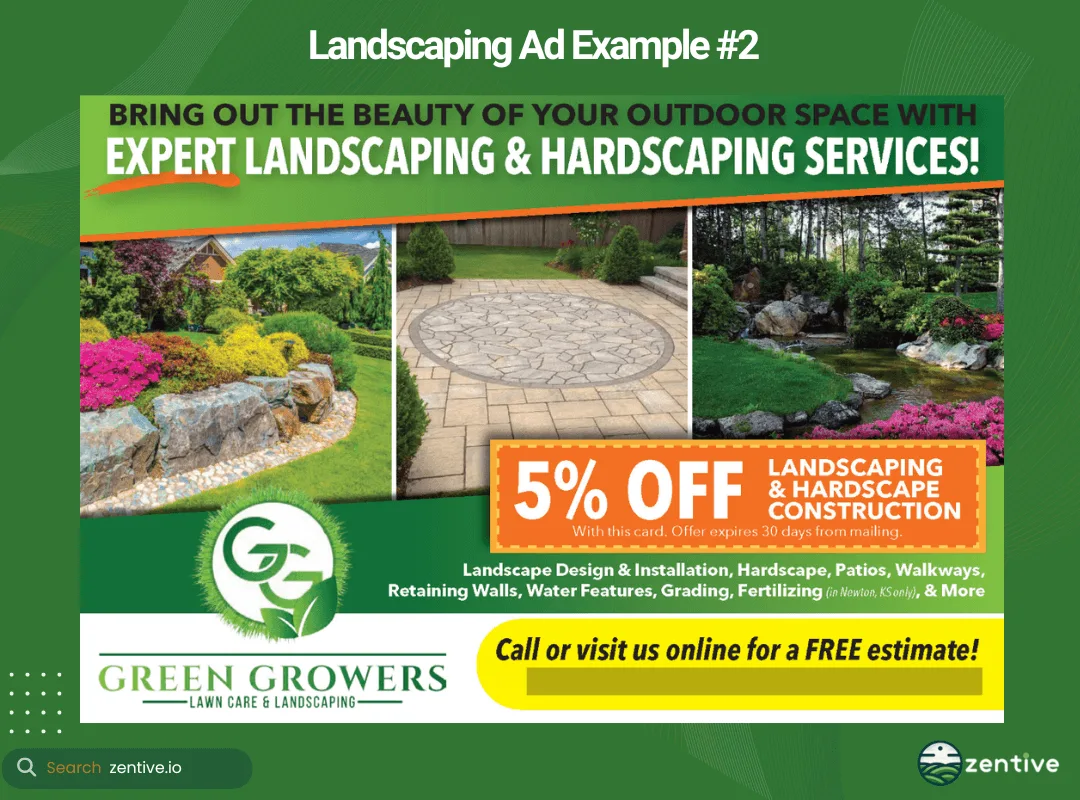
Example Ad 2: Similar to Ad 1, uses images of past projects and discounts to spark interest.
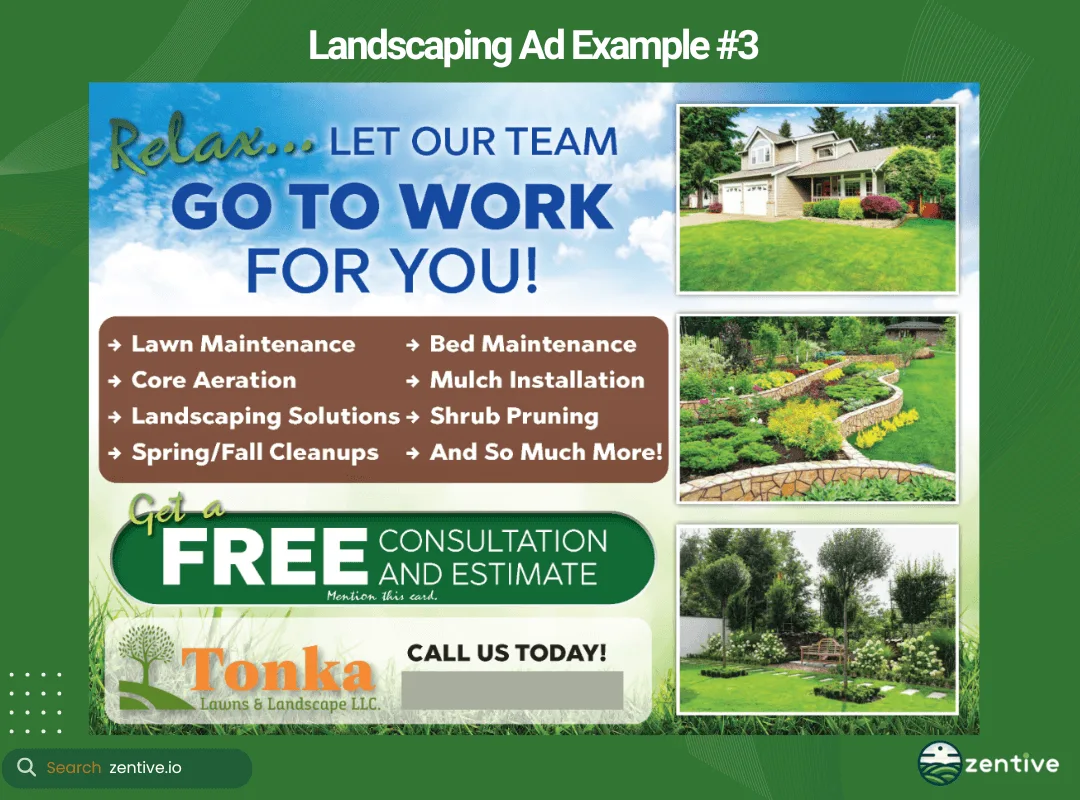
Example Ad 3: I like the fact that they clearly define their services and that they mention that they offer free consultations.
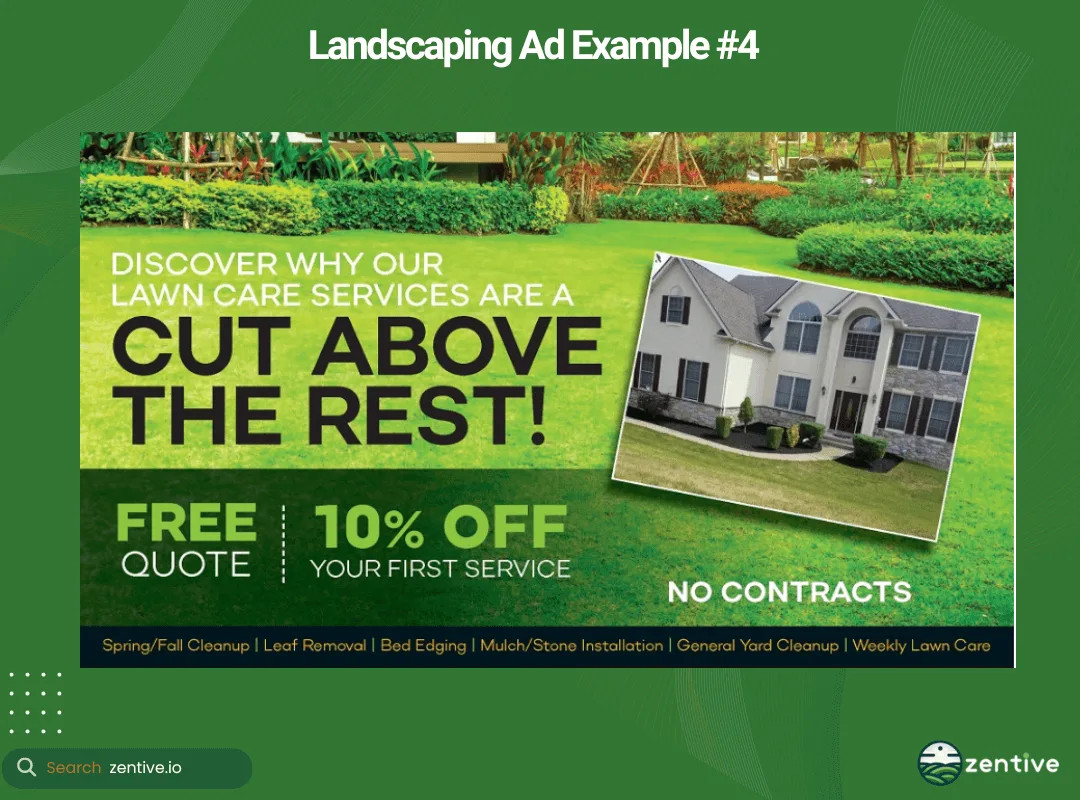
Example Ad 4: Utilizes smart wording to capture interest. I like the fact that they don't use excessive amounts of wording in their articles. They emphasize that they offer discounts to new customers.
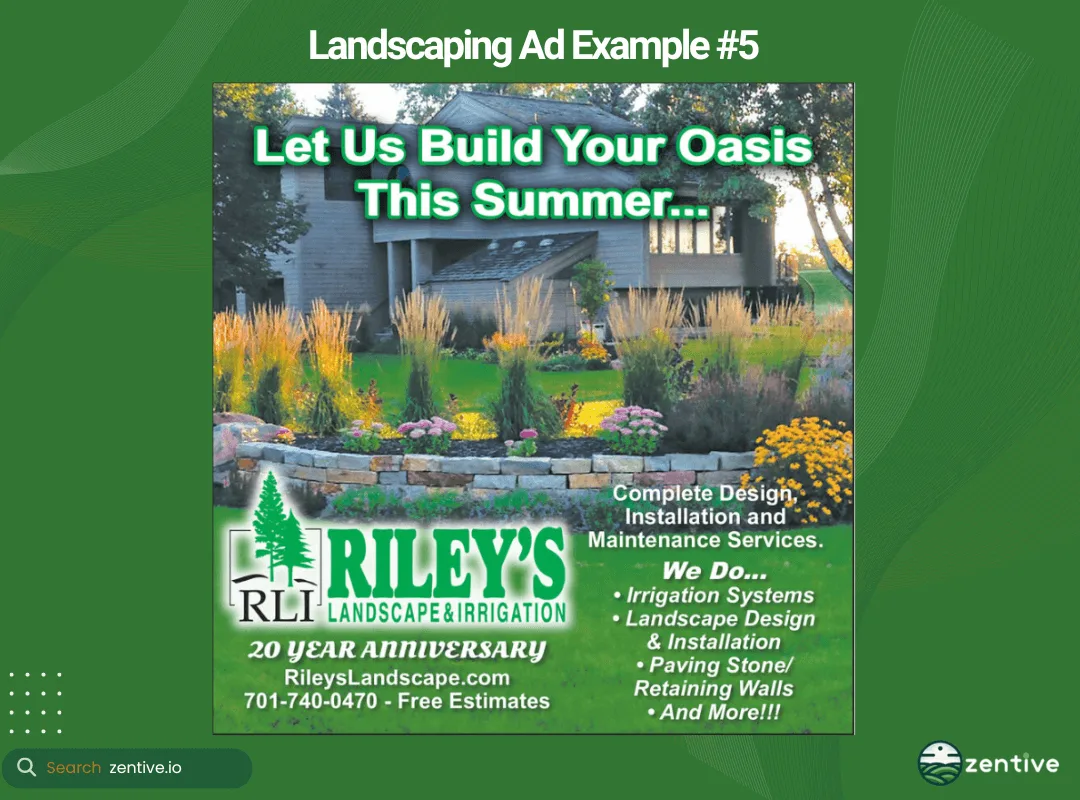
Example Ad 5: Uses a beautiful image and emotional words to spark interest in the audience.
What Is A Landscaping Advertisement?
A landscaping advertisement is an ad a landscaping business uses to raise public awareness of its brand and services, to onboard more clients, and to increase revenue. Landscapers use these ads to grow their business at a faster rate than it would with organic growth. It allows them to differentiate themselves in a competitive market, showcasing how they are better than their competitors and the value they offer to clients.
The great thing about landscaping ads is that any business can utilize them, no matter how small or large, and they will still be effective when done correctly. Remember, the more people hear about your brand and services, the more potential clients you have, which is why ads are key to driving business growth.
What Are The Components Of A Landscaping Ad?
The eight key components of a landscaping ad include Headline, Visual Elements, Service Details, Benefits, Testimonials or Social Proof, Call to Action (CTA), Contact Information, and Branding Elements. The headline is the main attention-grabber, succinctly conveying the unique selling point. It's how you hook people into reading the rest of your ad.
Include visual elements in your ads. Visual elements attract attention, retain interest, and communicate service quality. Landscaping ads use photos, graphics, and videos to demonstrate project results, build trust, and create desire.
Including service details is important. Be sure to include specific information about the landscaping services offered. Don't forget to mention the benefits of people using your services. It's all about the value you add to people's lives; ensure you clearly mention it to them.
Testimonials or social proof is another key component of a landscaping ad. People trust the opinion of clients with past experience. Many landscapers forget to include a call to action (CTA), but it's one of the most important aspects of increasing the click-through rate/ effectiveness of an ad. Include a strong, clear instruction on what the viewer needs to do next, such as "Get a Free Estimate," "Call now," or "Visit our website."
Always remember to include contact information. How else are people going to reach out to you if they can't email or call you? Ensure you include easy-to-find contact details (email, address, contact number) to facilitate immediate action.
Remember to include branding elements. You're building a brand and increasing the public's awareness of your business. Therefore, be sure to include logos, color schemes, and other brand-related in all the different types of landscape advertisements you utilize.
What Are Types Of Landscape Advertisements?
There are several types and places to advertise your landscaping business.
- Google Ads: Appear at the top of search results to attract actively searching homeowners and businesses.
- Bing Ads: Tap a different search audience to expand your market reach.
- Instagram Ads: Showcase eye-catching visuals to entice potential clients.
- Facebook Ads: Use targeted ads to connect with local homeowners and businesses.
- LinkedIn Ads: Reach commercial clients and property managers seeking ongoing landscaping support.
- Local Commercials: Build local trust and recognition through community-focused TV or radio spots.
1. Google Ads
Google Ads is a powerful form of landscaping ads as it targets the people who are actively searching for landscaping services in your geographical location. For instance, if a potential client searches on Google for lawn mowing services, then through a Google ad, your name will appear at the top of the search results, labeled as "sponsored."
Google ads are effective based on people's browsing behavior. For instance, if someone searches for gardening tools or plants for their garden, then an ad highlighting your services might pop up on a website.
Google uses a pay-per-click (PPC) cost structure, which means you, the advertiser, only pay when someone clicks your ad. There are different ad formats you can use, including text ads that appear in search results and display ads (banners) that appear on websites within Google's network.
Google ads are effective because of their immediateness and geographic relevance, meaning these ads drive local traffic (potential clients) to your website or landing page quickly.
| Key Element | Description |
|---|---|
| Compelling Headline | A strong and attention-grabbing headline that clearly conveys the unique selling point or primary benefit of your landscaping services. |
| Call to Action (CTA) | A clear and strong call to action that directs viewers on what to do next, such as "Get a Free Estimate," "Call Now," or "Visit Our Website." |
| Contact Information | Easy-to-find contact details, including phone number, email, and address, to facilitate immediate action from potential customers. |
2. Bing Ads
Bing ads are very similar to Google ads, in that they use a PPC model with options for demographic and geographic targeting. However, Bing ads are cheaper because of reduced competition and the platform has a lower user base.
Although I would advise you to try Google first, you can use Bing if you want to reach an older demographic who uses Bing more frequently. A simple explanation is that many older desktop users use Microsoft Edge (the native browser for Microsoft), and this browser utilizes Bing for Internet searches. This platform is ideal for reaching an older demographic who tends to use Bing more frequently.
Like Google, Bing offers text, display, and video ad formats. Bing's main advantage is that there is less competition and lower costs, making it a more cost-effective advertisement platform.
3. Instagram Ads
Instagram ads strongly emphasize reaching a specific demographic with specific interests and behaviors. For instance, if an Instagram user watches a lot of lawn and garden TLC videos and posts, your landscaping ad will likely appear on their feed. You can choose between two pricing models for these ads - either PPC or CPM (cost per impressions).
Younger people are the main users of Instagram, so keep that in mind when you're thinking of lawn care advertising ideas. These ads need to be highly visual in order to spark the user's interest. There are four main ad formats for Instagram, including photo (most common), video, carousel, and stories ads.
The advantage of using Instagram to advertise your landscaping company and its services is that you can reach a wider demographic of users.
4. Facebook Ads
Facebook Ads are very similar to Instagram ads, but they are often more detailed. Structure your ads around interests, behaviors, and demographics.
The main advantage of using Facebook over Instagram is the demographic using the platforms. Facebook users are generally older, meaning there are more homeowners, which means there is a larger audience who require lawn care services. Like Instagram, they use PPC and CPM options.
Facebook offers a wide range of ad formats, including images, videos, carousels, and more. Overall, It is a great platform for generating cost-effective leads.
5. LinkedIn Ads
LinkedIn is a great platform if you're targeting commercial clients - B2B advertising. It's a useful platform for landscapers targeting commercial clients or partnerships with other businesses. Ad formats on LinkedIn include text, image, and video ads.
These ads are quite expensive compared to other social media platforms but allow precise targeting of high-value audiences. See it as a paid digital method of networking. The main advantage of using LinkedIn is that you're able to target commercial contracts and network with other businesses.
6. Local Commercial
Local commercials, whether on TV or radio, offer landscapers the opportunity to target people directly in a specific geographical area, which is effective for landscaping businesses. The majority of your target audience will be local homeowners and businesses.
These types of ads can be expensive, especially if you're advertising on A-tier radio and TV stations. Commercials can either be through mentions on the radio or video footage on TV. It's a great method for building local brand awareness in community-centric markets but it can be expensive and ineffective if it's a poorly constructed ad.
How To Run Landscape Ads?
There are nine steps to run a landscape ad.
- Define Your Objective: Determine what you want to achieve with your ads. Do you want to increase website traffic, generate leads, or boost service bookings?
- Identify Your Target Audience: Understand who your ideal customers are, including demographics like age, location, and interests. As a lawn care business, your main target audience is homeowners.
- Choose the Right Platforms: Select platforms that best reach your target audience, such as Google for those actively searching for landscaping services or Facebook for a broader demographic appeal. These two, followed by local commercials, are arguably the best marketing platforms for lawn care businesses.
- Craft Compelling Ad Content: Develop engaging taglines, attractive graphics, and relevant keywords that hook the audience and address their needs. An effective ad is one that sparks interest in the audience.
- Set Your Budget: Decide how much you're willing to spend on your ad campaign. The average budget for small businesses is usually 5% to 10% ($100 to $1000) of their monthly total revenue.
- Select Your Ad Format: Choose from various ad formats like images, videos, or carousels to best showcase your services. Choose an ad format that best aligns with your type of ad, e.g., if you're showing off your services, then use a video with a catchy song.
- Launch Your Campaign: Start your ad campaign on the chosen platform with all elements in place.
- Monitor and Optimize: Regularly check the performance of your ads and make adjustments to improve effectiveness and ROI. If a certain strategy doesn't work, replace it with something different.
How To Run Facebook Ads For Landscaping?
You need to take seven steps to run a successful Facebook ad for your landscaping business.
- Choose your campaign goal in Facebook Ads Manager: Start by selecting a goal that aligns with your business objectives, such as lead generation or brand awareness. It will determine how Facebook displays your ads.
- Define your audience using Facebook's targeting options: Utilize demographic, geographic, and behavioral criteria to reach your ideal customer. It's very important you do this step correctly; you want to target the right people.
- Create images or videos showcasing your landscaping work with compelling ad copy: Visual content highlights your best work, paired with ad copy that encourages the viewer to take action. You want to spark the audience's interest - how are you going to make your ad stand out from the myriad of content already on the platform?
- Select where your ads will appear on Facebook: Choose placements across Facebook's feed, stories, or sidebar to maximize visibility.
- Decide on a daily or lifetime budget, and set your ad schedule: Manage your spending by setting a budget that fits your financial constraints and business goals. You can adjust the ad budget based on how many people you want to reach on a daily basis.
- Utilize Facebook's lead form ads for lead generation: These ads are especially useful for collecting contact details from potential customers directly on Facebook. It helps to reduce administrative burden and makes it easier for Facebook users to provide their details.
- Start your campaign and monitor performance using Facebook Ads Manager: Launch your ads and use the analytics tools provided to track success and make necessary adjustments. If the ROI is low, then head back to the drawing board and optimize your ad to yield better results.
How To Run Google Ads For Landscaping?
To run a successful Google ad for your landscaping business, you need to perform eight steps.
- Select your campaign goal in Google Ads: Choose a goal that supports your overall marketing objectives. How many people do you want to reach daily, and what to do when they see your ad?
- Choose "Search Network" or "Display Network" as your campaign type: Search ads target users who are actively searching online, while display ads help build brand awareness.
- Set geographic targeting for your ads: Focus your ads on the locations where you offer services to increase relevancy and effectiveness.
- Use Google Keyword Planner for keyword research: Identify keywords that potential customers are using to find services like yours, e.g., "lawnmowing services Denver," "leaf removal New York City," etc.
- Write your ad copy, including relevant keywords: Create compelling ad text that includes the keywords you've identified in the previous step.
- Determine your bid strategy and set your daily budget: Manage your costs by setting bids that align with your marketing budget.
- Use ad extensions to provide additional information: Extensions can include links to specific parts of your website, your phone number, or even promotions. It's important that you don't insert the link to look spammy; otherwise, people won't click on it.
- Launch your campaign and regularly monitor its performance: Start your ads and use Google Ads' tools to track how they perform and make adjustments as needed.
Should Landscapers Make Funny Advertisements?
Yes, landscapers should use funny advertisements as they help capture the audience's attention better than standard ads. One of the funniest ads I saw was a sodding business that used an image of a man with bright, clearly defined green hear in their advertisements. Everyone laughs at the man and reads the rest of the ad, making it highly effective and memorable.
How To Develop A Landscaping Advertisement Strategy?
When developing a landscape advertising strategy, there are five steps. The first step is to consider your business plan. Ensure that your advertising goals align with your overall business plan. For instance, focus your landscaping advertisements around homeowners if your business plan involves a clientele largely out of homeowners.
Next, make sure your advertisement strategy fits well into your overall marketing strategy. It ensures consistency across all channels. If you market primarily on social media, then the next ad should be on social media platforms.
The third step is to set a budget. What amount of money are you comfortable spending on this advertisement strategy? Consider your financial resources and marketing goals. Don't spend your entire marketing budget on a single campaign.
After setting your budget, ensure that your ad strategy focuses on the services you offer. Consider seasonality and demand. For instance, don't advertise snow removal services in the middle of the summer.
Lastly, leverage software to gather customer data so that you can improve your ads and make them more domain-specific and targeted. This will result in a higher ROI in the long run.
What Should Be Included In A Landscaping Marketing Strategy?
In a marketing strategy, you should include target market identification, service offerings, unique selling proposition, marketing channels, analytics, and budget. We understand that it takes time to learn how to market your landscaping company effectively, which is why we advise you to pay attention to the next few lines.
The first step to ensuring the success of your marketing strategy is to identify your target market. Clearly define who your customers are and where you can find them. Advertise to people in your city who would actually use your services.
Be sure to include your service offerings and the value they add to clients. How will people know what landscaping services you offer if you don't tell them? Another vital addition to an effective marketing strategy is your unique selling proposition (USP). What makes you better than your competitors? What additional value can you add to clients comparable to your competitors?
Next, consider your marketing channels. Choose the appropriate channels to reach your audience, such as social media (Facebook), email marketing, digital ads (Google), and local commercials. Make sure the chosen marketing channels align with your budget, which leads me to the next point. Don't overstress your budget on a single marketing campaign. You still need to raise brand awareness in other months and seasons.
After implementing the above-mentioned factors, you need to use tools to track the performance of the ads to determine whether they are effective and adjust them if they're not.
How Much Should Landscapers Spend On Advertising?
Landscapers should spend between 5% and 10% of their percentage of revenue on marketing. This is the industry benchmark, and it appears to be quite effective as many landscapers don't deviate to the 5-10% figure.
Consider the ROI before implementing a marketing strategy. If the ROI for a certain marketing strategy is low, then rather stop the advertising strategy and optimize it.
Enter your monthly revenue:
Want data-backed ads?
Can Landscapers Advertise Their Services For Free?
Yes, landscapers can advertise their services for free on social media, Google My Business, and through networking and referrals. Social Media is an effective platform for reaching a wide target audience. Platforms like Facebook and Instagram allow businesses to post updates, share photos of their work, and engage with customers at no cost.
Google My Business is an ideal local SEO strategy. A well-optimized GMB profile can improve local search visibility without any expense. Networking and referrals take time, but they are very effective free advertising methods.
Which Landscape Services Are Best For Running Ads?
All landscaping services are good for running ads, but more in-demand jobs like lawn care often yield the best results. As a landscaping business, focus on running ads on your most profitable landscaper services. Using landscape management software can help identify which of your services are most popular and profitable based on historical data and customer feedback.
How Does Landscape Business Software Improve Ad Creation?
Landscape business software provides valuable marketing insights by analyzing customer data and your service performance.
For instance, Zentive, a software for landscaping company, provides you detailed data and which of your services are the most profitable and have the highest demand. You can use these data points to help you create ads. If 95% of your business profits come from lawnmowing and only 5% come from leaf removal, then allocate your marketing efforts in the same ratio.
Get This Guide as a PDF
Save this article for offline reading. We'll send a formatted PDF straight to your inbox.
No spam. Unsubscribe anytime.
Ready To Streamline Your Field Service Business?
Zentive is the all-in-one field service management software built for landscaping, lawn care, tree care, and snow removal businesses. Start your free trial today.
No credit card required · Cancel anytime