
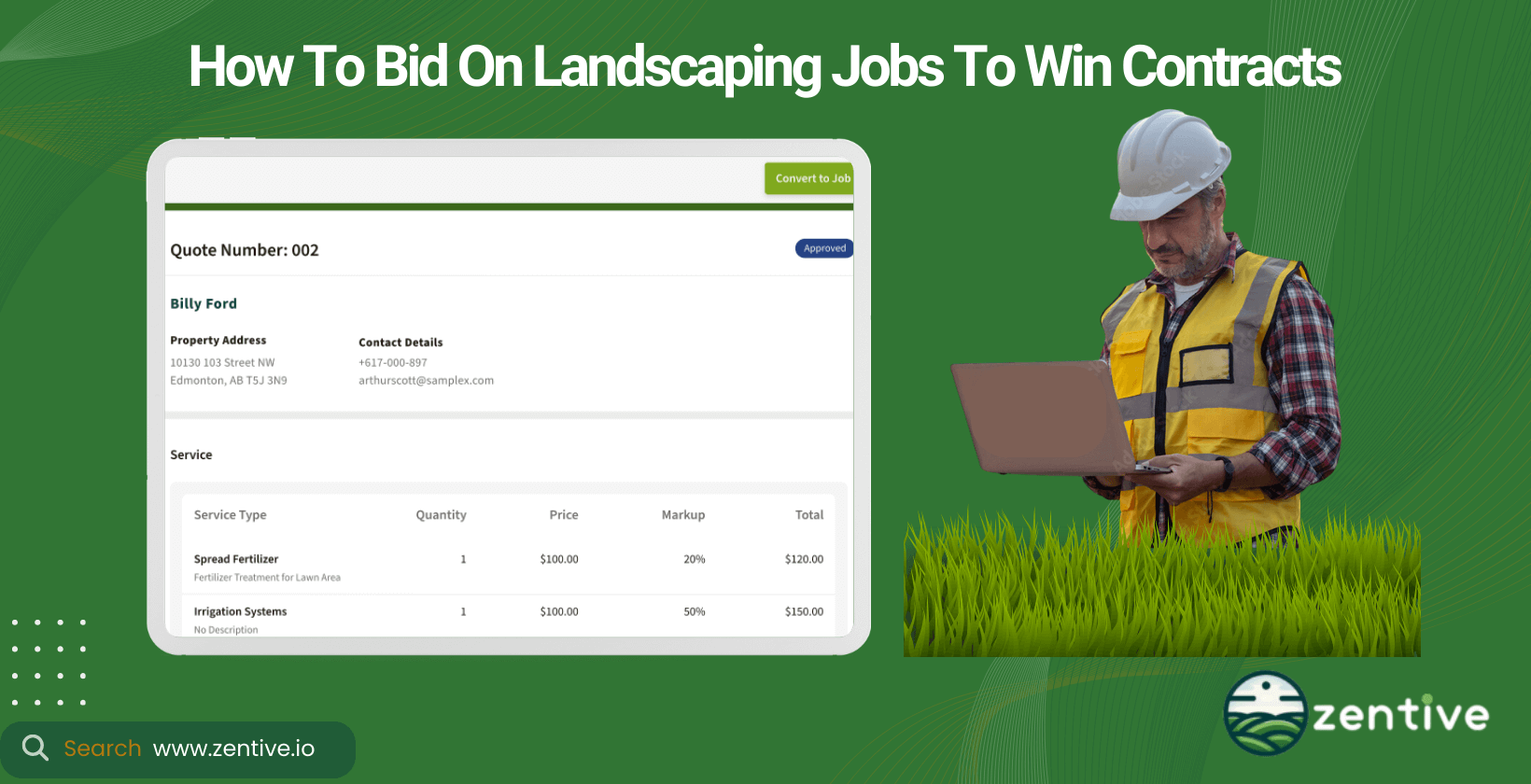
A landscaping bid is a formal proposal that outlines the project scope, estimated cost, and timeline for completing commercial or residential landscaping services. Not all clients require a bid—landscaping bids are primarily targeted at commercial and construction clients. This is because commercial landscaping jobs demand more detailed planning and execution than a standard quote for a residential landscaping job.
The landscaping bid creation process starts by assessing the project's requirements, then calculating costs and proposing a timeline for completion. Landscaping bid software significantly streamlines this process.
When creating a bid, landscapers need to consider their client's vision, the project's scale, required materials and labor, and special considerations such as the use of specific equipment or regulatory compliance.
Here are the steps to bid on a landscaping job.
- Choose The Right Client: Identify and target clients whose project needs, budgets, and timelines align well with your landscaping expertise and capacity.
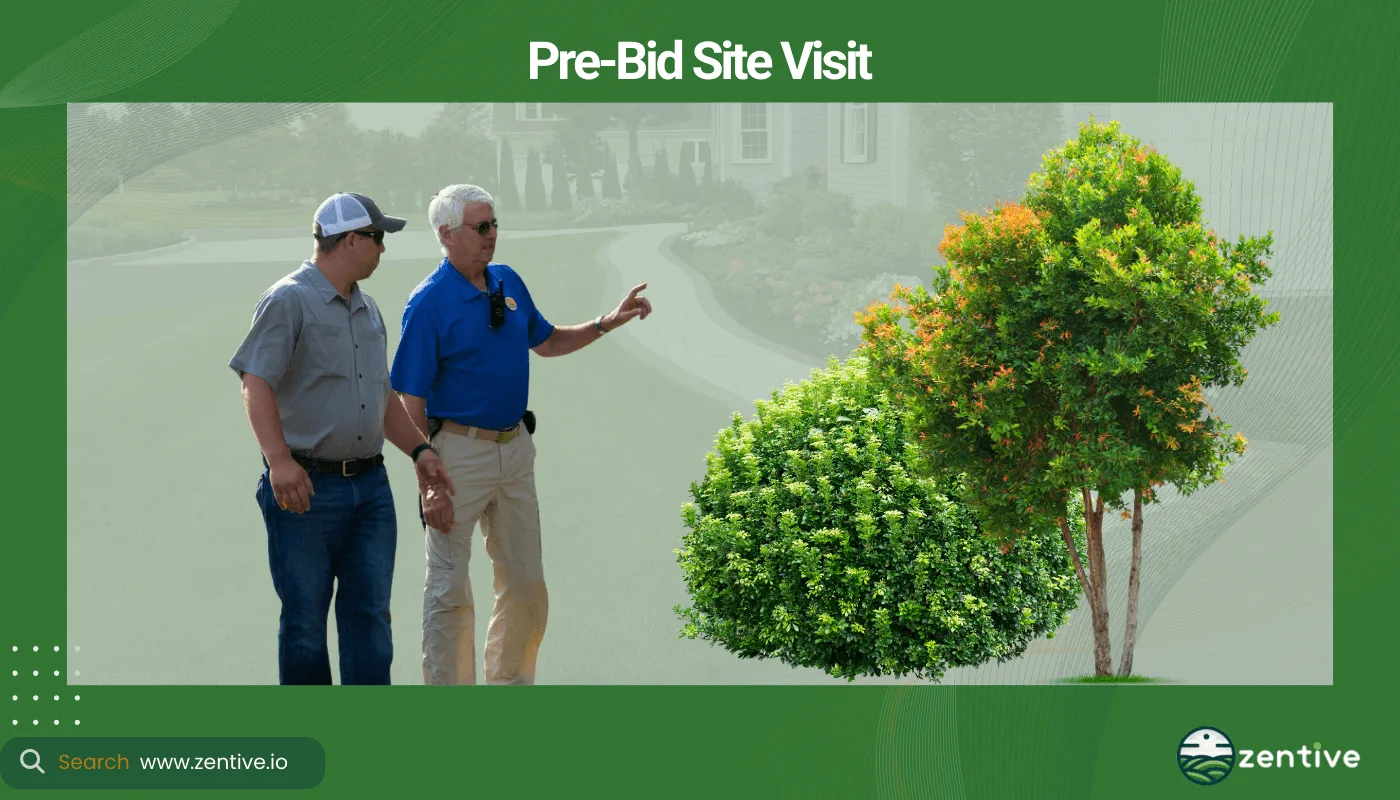
- Perform Pre-Bid Site Visit: Visit the project location beforehand to evaluate the site's conditions, potential challenges, and specific requirements for an accurate bid.
- Use Quoting Software: Leverage specialized software to streamline the estimation process, ensuring precision and consistency in your pricing calculations.
- Calculate Your Expenses: Itemize all costs—including materials, labor, equipment, and overhead—to establish a comprehensive financial baseline for your bid.
- Research Competitors Pricing: Investigate local market rates and competitors' bids to ensure your proposal is competitively priced while remaining profitable.
- Price Your Services: Set your service rates by balancing your calculated expenses, desired profit margin, and the value you offer to the client.
- Estimate Job Schedule: Develop a realistic timeline that outlines key milestones and completion dates, accounting for any potential delays or obstacles.
- Create Your Bid Documents: Prepare clear and detailed documents that articulate your scope of work, pricing, terms, and the unique benefits you provide.
- Leverage Past Work and Testimonials: Showcase previous projects and positive client feedback to build credibility and demonstrate your capability and reliability.
- Send Your Bid: Submit your complete and professional bid package to the client, ensuring all necessary details and documentation are included.
- Bid Follow-Ups: Actively engage with the client after submission to address any questions, clarify details, and reinforce your interest in securing the project.
Win More Landscaping Bids with Zentive
Create itemized bids in minutes, track costs, and send polished proposals your clients accept faster.
1. Choose The Right Client
An ideal client is one whose needs align with your business's capabilities and focus, i.e., the client requires services that your landscaping business offers. Start creating tailored bids, which leads to a higher win rate once you identify your ideal client type
You must understand your strengths and areas of expertise to ensure that the projects you bid on can be completed to a high standard, satisfying the client and ensuring your reputation remains sound.
Consider the client's budget and payment reliability before bidding on a job. The client must be able to fully fund the project and pay on time, which is essential for your cash flow and business operations. You will lose business opportunities and damage your reputation if you don’t have money to pay your expenses because of cash flow problems.
2. Perform Pre-Bid Site Visit
A pre-bid site visit involves assessing the site's current condition, understanding the client's vision, and identifying any specific requirements or concerns. It can help you gather the necessary information to inform your bid, including taking pictures to assist in planning, designing, and explaining what you want to do, all of which will help bring the client's vision to life. A thorough site visit ultimately helps create a more accurate and competitive bid, showing the prospective client your dedication to understanding their project in depth.
3. Use Quoting Software
Landscaping quoting software is a tool for creating detailed and accurate landscaping proposals. Opt for landscape bidding software, such as Zentive, that offers itemized cost breakdowns, integrates with your customer relationship management (CRM) system, and accounts for labor and overhead costs. This will make running your landscape business more efficient.
Some software even offers customizable templates. Utilizing templates streamlines the entire proposal process, ensuring brand consistency across your bids while saving time and reducing the risk of errors.
4. Calculate Your Expenses
Landscape expenses are the expenses your landscaping business incurs when performing landscaping services. They include material costs, labor costs, equipment costs, and overhead. Material costs are the expenses incurred for the materials you use, such as concrete, timber, potting soil, etc. Labor cost is the money you pay to your employees based on the work they conduct for you.
Finally, equipment and overhead are fixed expenses. The former refers to the equipment you use to perform landscaping projects, such as shovels, and administrative equipment like computers. The latter refers to fixed expenses incurred by your landscaping company, such as electricity and rent. Understanding and accurately calculating the actual cost of doing a landscape job is critical for setting a competitive yet profitable bid.
5. Research Competitors Pricing
You should always know the current market rates and how your services compare to those of your competitors. You won't win any jobs if your bids are miles above the closest competition.
A tip for winning more landscape jobs is to identify what sets your services apart from your competitors and how you can add value, which can justify a higher price if necessary. Being aware of the competition allows you to adjust your pricing strategy to be competitive while ensuring your services remain attractive to potential clients.
6. Price Your Services
Pricing services correctly is crucial for winning bids. Learning how to price landscape jobs involves understanding how to combine expenses, profit margin, and competitor rates into a single type of bid in a way that still looks attractive to the client.
The type of service you offer will influence both the bid price and the project timeline. Ensure that your pricing reflects the quality and scope of the service you're providing, considering the project's specific demands and any unique value you bring to the table.
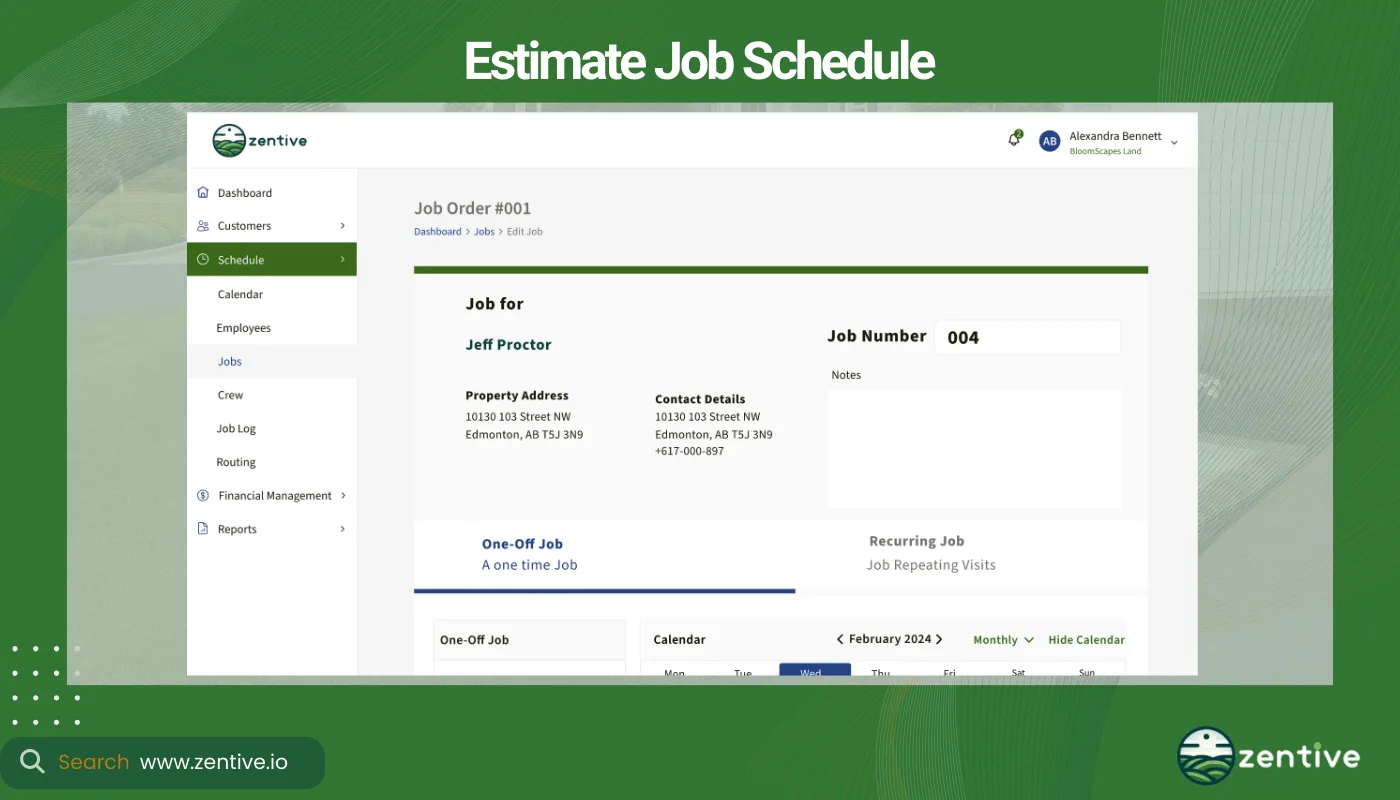
7. Estimate Job Schedule
A landscaping project schedule is a detailed schedule that includes key milestones and the payment schedule associated with these milestones. Always provide a detailed schedule with a clear timeline. This demonstrates your project management skills and sets realistic expectations for project completion, helping to build trust with potential clients.
8. Create Your Bid Documents
A comprehensive landscaping bid must include four essential components. The first is a proposal cover letter that introduces your bid, followed by a detailed scope of work, which outlines what the project entails. Include a cost breakdown, itemizing expenses, and stipulating the terms and conditions that specify the agreement's legal aspects.
9. Leverage Past Work and Testimonials
A great way to increase your chances of winning bids is to include examples of past work and testimonials in your bid. Include before-and-after photos of similar projects accompanied by a brief description of the work you performed for that client. This will showcase your expertise and quality of work. Be sure to include positive feedback from previous clients in the form of testimonials, as it adds a layer of trust, making your bid more compelling.
10. Send Your Bid
You can send your bid either through the mail if it's a hard copy or via email or landscape bidding software if it's a digital bid. I recommend you use landscaping management software, which offers efficiencies and tracking capabilities.
Always respect the client's preferences. Maybe they value the time and effort spent on a printed and mailed or hand-delivered copy. Ensure the client has received your bid and understands its contents, offering to clarify any questions or concerns. You can't win any bids if the client never receives them.
11. Bid Follow-Ups
A bid follow-up is a type of message from the service provider to the prospective client, enquiring whether they've received the bid and have any questions or feedback. It's difficult to keep track of all the bids, and this is where landscape management software really makes a difference. This software can automate follow-ups after a pre-determined period if no feedback has been received, keeping your bid top of mind for clients.
Remember to have your "negotiation face" ready. There will always be clients who want to negotiate. Just make sure that the adjustments in the bid meet both parties' needs.
What To Consider When Creating Landscaping Bids?
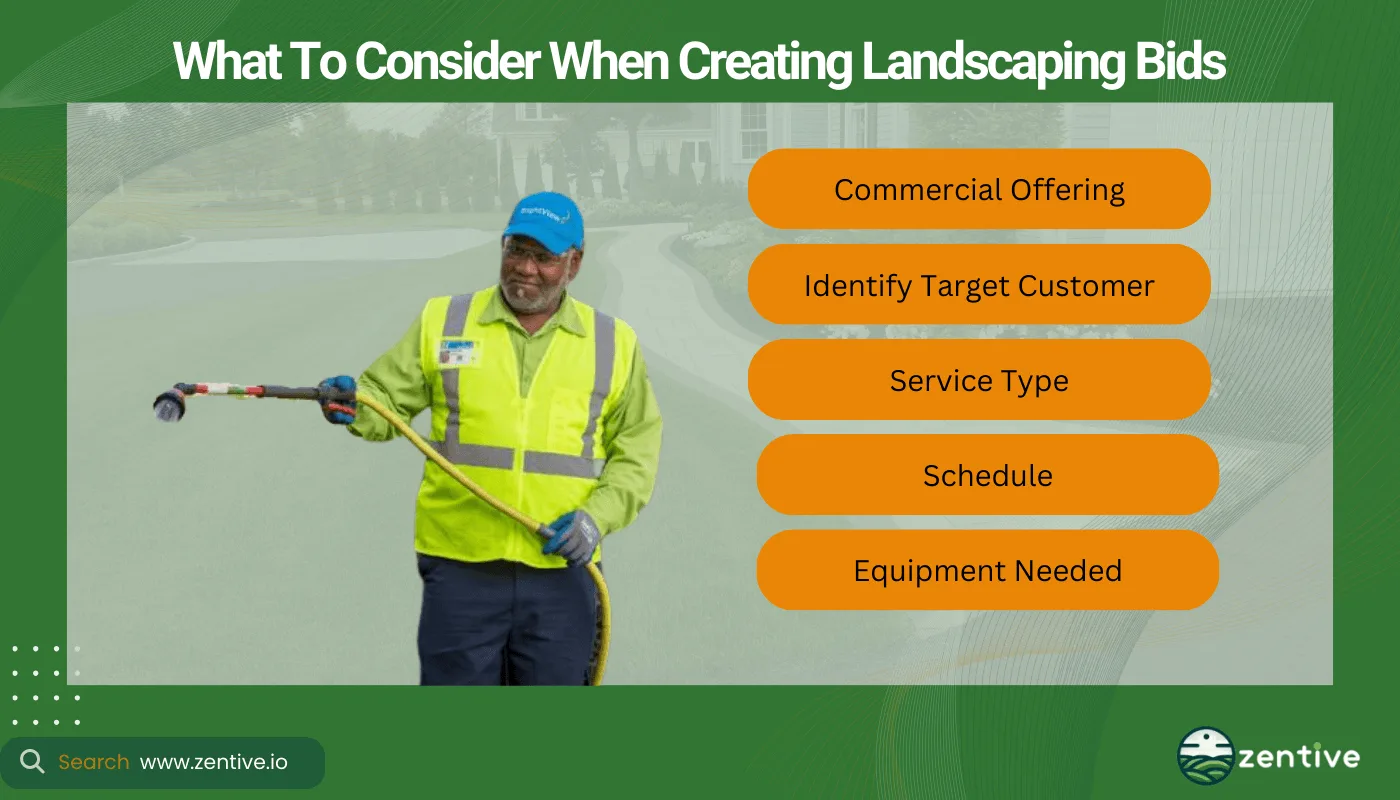
When creating landscaping bids, you should consider five things. The first is to consider the type of landscape commercial offering. Understand whether your offering aligns more with quotes, estimates, bids, or proposals, each serving different purposes and levels of detail.
Next, identify the type of target customer. Are you targeting residential, municipal, or commercial clients? The type of client will influence the bid's complexity and the services offered. Consider the type of landscape service. Your specific services (lawn maintenance, design, installation, etc.) will affect the bid, including the resources needed and the project's scope.
Landscapers should take into account how quickly your company can start. Availability can be a deciding factor for many clients. Highlight in your bid that you can start immediately or within the client’s timeline. The final factor to consider is the type of equipment you require for the job. The need for specialized equipment can significantly affect the cost and logistics of a project. Be clear about what equipment you will require for the job.
What Are The Types Of Landscaping Commercial Offers?
Landscaping quotes, estimates, bids, and proposals are the main types of landscaping commercial offers. Quotes are fixed-cost offers specific to a job, providing clients with a clear, definitive price for services requested. Estimates provide a rough approximation of the project's cost. They are generated quickly and less accurately, offering a ballpark figure rather than a fixed price.
You typically use bids for larger commercial or construction projects. These are competitive offers you formerly submit to clients, offering detailed and tailored information on every aspect of the project. Proposals are similar to bids but more flexible. You can adjust them based on client feedback, and they can be used for both residential and commercial projects. They often include detailed project plans and cost breakdowns.
How To Bid Different Types Of Landscape Customers?
Bids for commercial clients often require a higher level of detail and professionalism. They might involve larger scopes of work and longer project durations. You must understand the business's needs and how your services can improve their property value or operation efficiency.
Bids for residential clients are usually more personalized and flexible. In these bids, you should emphasize your services' aesthetic and practical benefits, focusing on how the landscaping work will improve their living space, i.e., the value your services offer them.
How To Create Commercial Landscaping Bids?
Commercial landscaping bids are bids you make for a commercial entity, such as a business or a municipality. Commercial landscape companies must create detailed and tailored bids that meet a business client’s specific needs.
The commercial bidding process starts by identifying a potential client who needs services such as maintenance, landscape design, snow removal, and large-scale installations. This is followed by a thorough project site assessment. Next, you need to communicate with the client to try to understand the client's objectives.
Then, you'll create a tailored bid following the steps we discussed in the top sections of the article, including information such as a detailed scope of work (timelines, materials, and manpower required). Unlike most residential bids, these clients want detailed outlines of the job, so be thorough and prioritize professionalism.
How Does Service Type Affect Bids For Landscaping?
The type of landscaping service significantly impacts how you bid on it. You need to take into account the complexity and duration of the project, the need for specialized equipment or materials, and the level of expertise required to complete the work satisfactorily, all of which are unique to each type of service. Different services from the list of landscape service types require different pricing strategies and project timelines.
What Happens After Winning A Landscaping Bid?
Upon winning a landscaping bid, the immediate next steps include issuing a formal contract to outline the scope of work, timelines, payment schedules, and any other project specifics. Avoid handshake agreements to ensure both parties are clear on expectations and responsibilities. Once both parties sign the contract, you can prepare your team and resources to start the project within the agreed timeline.
Once you start to grow a landscape business, you need to implement strategies to ensure your operations stay organized. You can implement landscape estimating software to create consistent bids and address scalability issues. This software helps with business operations and clear client communication, ensuring your brand reputation grows as your business grows.
How To Create Effective Landscape Contracts?
Creating effective landscape contracts involves defining scope, defining payment terms, setting a schedule, and specifying dispute resolution terms. First, clearly define the project scope, including detailed descriptions of the services to be provided. Second, outline payment terms, schedules, and any conditions for changes or cancellations. Third, specify the timeline for the project, including start and completion dates. Fourth, include clauses in your commercial landscape contracts for dispute resolution and any guarantees or warranties on the work performed.
Get This Guide as a PDF
Save this article for offline reading. We'll send a formatted PDF straight to your inbox.
No spam. Unsubscribe anytime.
Ready To Streamline Your Field Service Business?
Zentive is the all-in-one field service management software built for landscaping, lawn care, tree care, and snow removal businesses. Start your free trial today.
No credit card required · Cancel anytime