
A landscape contractor specializes in landscaping, transforms outdoor spaces into functional areas, manages design, and constructs outdoor projects. They handle planning, design, and construction.
Types of landscape contractors include residential, commercial, hardscape, and softscape specialists. They provide services such as garden design and install hardscapes like ponds and pergolas.
Managing a crew of landscape contractors is challenging. Key factors to manage include landscaping management software, job management practices, and equipment management.
What Is A Landscaping Contractor?
A landscaping contractor is a professional who executes lawn, garden, and outdoor projects from concept through completion. Unlike a standard gardener or professional landscaper, a landscaping contractor typically handles more complex design and installation services that may require detailed planning, engineering, and the use of heavy machinery.
The difference between a landscaper and a landscape contractor is that landscape contractors are licensed professionals who manage construction based outdoor projects.
Certain states offer better opportunities for landscaping contractors due to their favorable climates, growing seasons, and the value placed on outdoor living spaces. With their expansive residential and commercial landscaping needs, states like Vermont, Wyoming, and Texas are among the best places for a landscaping contractor to work.
| Topic | What It Means for Landscape Contractors |
|---|---|
| Role | A landscape contractor is a licensed professional who builds and installs outdoor projects such as patios, retaining walls, irrigation, and planting beds. |
| Industry Focus | Contractors work across landscaping, hardscaping, irrigation, and outdoor construction projects. |
| Core Services |
• Hardscapes (patios, walls, driveways) • Planting and turf installation • Irrigation and drainage systems • Outdoor living spaces (fire pits, kitchens, lighting) • Site prep and grading |
| Key Business Attributes |
• Must hold proper licensing and insurance • Handles permits and project management • Runs crews and equipment • Prices jobs by project, square foot, or hourly rate |
| Who Hires Contractors |
• Homeowners and HOAs • Commercial property managers • Cities, towns, and local governments • Developers and general contractors |
| Working Relationships |
• Collaborates with landscape designers and architects • Subcontracts from general contractors on construction jobs • Teams up with specialists (irrigation, tree care, etc.) |
What Does A Landscape Contractor Do?
A Landscape contractor is primarily responsible for the design, installation, construction, and maintenance of construction style landscaping projects. This includes installation of hardscapes like patios, retaining walls, irrigation systems, grading, drainage, and large installation projects that require permits and compliance with local building codes.
Working as a landscaping contractor combines physical outdoor work (constructing the landscaping project) and creative design. A typical day you might expect as a landscaping contractor includes client consultations, site assessments, design work, overseeing construction tasks, and managing landscaping teams, all while ensuring your business grows - finances are sound and new clients are onboarded.
The average salary range for a landscaping contractor varies widely, depending on the state. It is around $10-$20 per hour, with an average yearly salary of $40,000-$70,000. There are numerous factors that influence your salary, including geographical location, experience, specialization, and the scale of projects you undertake.
Why Hire A Landscaping Contractor?
Hiring a landscaping contractor ensures that outdoor projects are completed professionally, efficiently, and to a high standard. Why would you want to hire professional landscaping companies rather than do it yourself? It's simple: these contractors have access to specialized expertise, high-quality materials and construction, and time-savings. It means ensuring you give the work to someone more likely to be qualified to do the job than you. You don't have to do it yourself, which gives you time for other daily life activities, and you are not liable if something breaks during the construction process.
The added benefit of hiring a landscaping contractor is that there are various types of these contractors, so you can pick a contractor that specializes in the type of project you want to do, whether it's a hardscaping project or designing a new garden bed with several features and elements.
What Are The Types Of Landscaping Contractors?
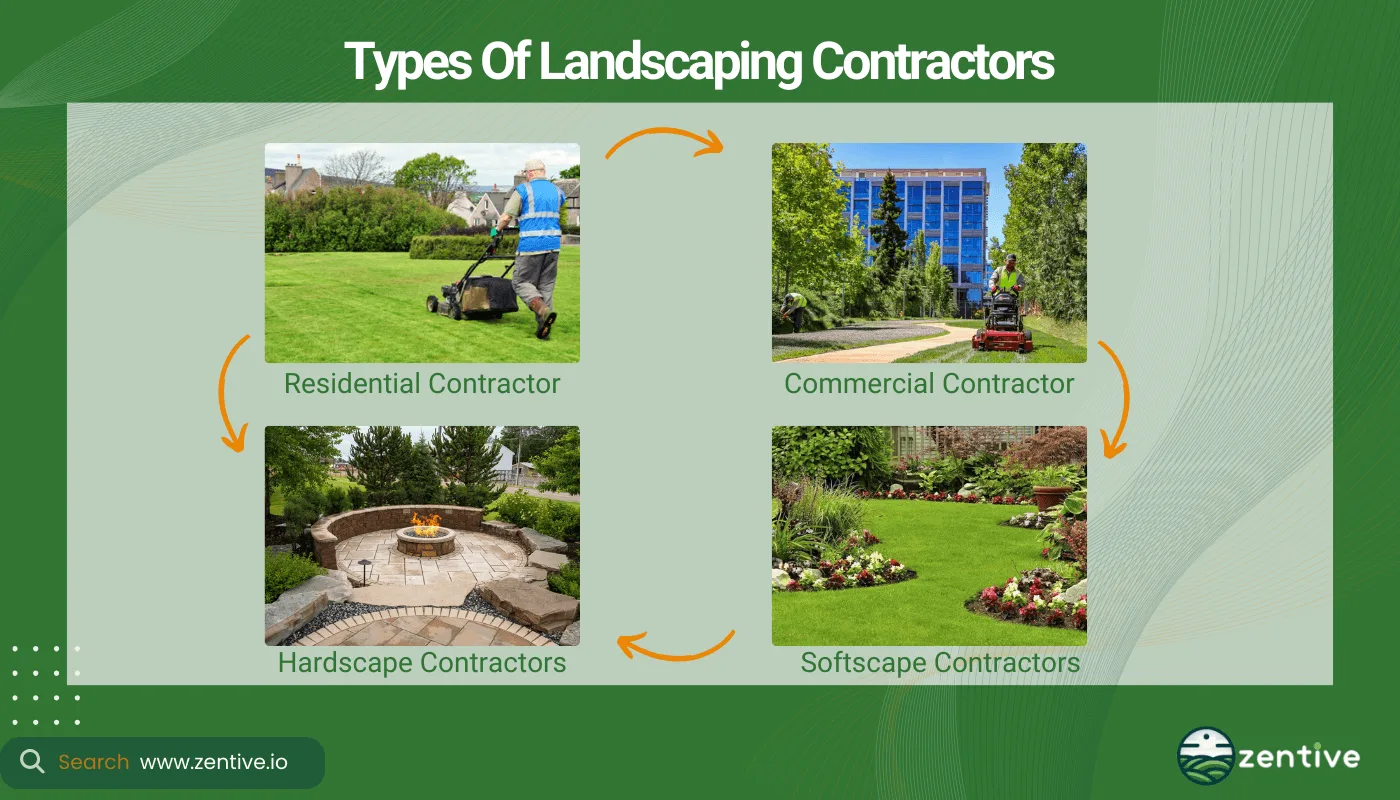
There are four types of landscaping contractors.
- Residential Landscaping Contractors - Design, install, and maintain lawns, gardens, and outdoor spaces for homeowners to enhance curb appeal and property value.
- Commercial Landscaping Contractors - Provide landscape design, installation, and maintenance services for business properties, public spaces, and commercial developments to improve aesthetics and functionality.
- Commercial Hardscape Contractors - Construct non-living landscape elements such as patios, walkways, retaining walls, and outdoor kitchens to create durable and visually appealing outdoor spaces.
- Softscape Contractors - Specialize in planting and maintaining trees, shrubs, flowers, and lawns to create lush and sustainable landscapes.
1. Residential Landscaping Contractors
Residential landscape contractors specialize in designing, installing, and maintaining gardens and outdoor spaces for private homes. They offer a comprehensive range of services, including garden design, lawn care, tree planting, irrigation systems installation, and maintenance of outdoor spaces.
What sets them apart is their sole focus on personalizing spaces to reflect the homeowners' styles and preferences, ensuring each garden is unique. The perfect clientele for residential landscape contractors are homeowners looking to enhance the beauty, usability, and value of their private outdoor spaces.
2. Commercial Landscaping Contractors
Commercial landscaping contractors offer their services to businesses, municipalities, and large residential complexes. They focus on creating and maintaining landscapes that enhance public and commercial properties' aesthetic and functional appeal.
These contractors' services include large-scale landscape design, maintenance, tree care, and seasonal planting.
Many of the largest landscaping companies focus heavily on commercial work, where recurring maintenance contracts can support multiple crews, branches, and service lines.
Commercial landscaping contractors differ from other types of landscaping contractors in that they need to manage extensive projects that require a deep understanding of landscape architecture, the ability to work within larger teams, and adherence to commercial standards, laws, and schedules. You are basically a lawyer, landscaper, business owner, and architect all at the same time.
The ideal client for a commercial landscaping company is business owners, property managers, and public sector administrators who want to improve or maintain the landscaping of commercial properties, public parks, and communal spaces.
3. Commercial Hardscape Contractors
Hardscape contractors focus on the non-living elements of outdoor spaces, such as patios, walkways, retaining walls, pergolas, outdoor kitchens, and more.
A hardscape landscaping company can offer any service related to hardscaping but is usually limited to a certain type of service, given their expertise. For instance, a hardscaping company specializing in building koi ponds won't necessarily bid for an outdoor kitchen job.
What sets them apart from other landscape contractors is that they focus on a single aspect of an outdoor space—non-living elements. They can further be distinguished from other types by specializing in a certain type of hardscaping service, such as designing pool decks or installing water features.
Ideal clients include residential and commercial property owners who want to incorporate functional, aesthetically pleasing hardscape elements into their outdoor spaces.
4. Softscape Contractors
Softscape contractors specialize in the living components of landscaping, such as plants, trees, shrubs, and flowers. They provide services such as garden design, soil preparation and amendment, planting, mulching, and ongoing garden care and maintenance.
These contractors bring a deep understanding of horticulture, which the other types of landscapers don't necessarily know. They know exactly which types of plants will prosper in certain climates and even certain areas of an outdoor space.
Their services suit clients who want to beautify their outdoor spaces with tailored gardening solutions, whether for private residences or commercial properties.
What Services Do Contractor Landscapers Provide?
Contractor landscapers offer services specifically to enhance, maintain, and transform outdoor spaces. What landscapers do is make a client's dream a reality.
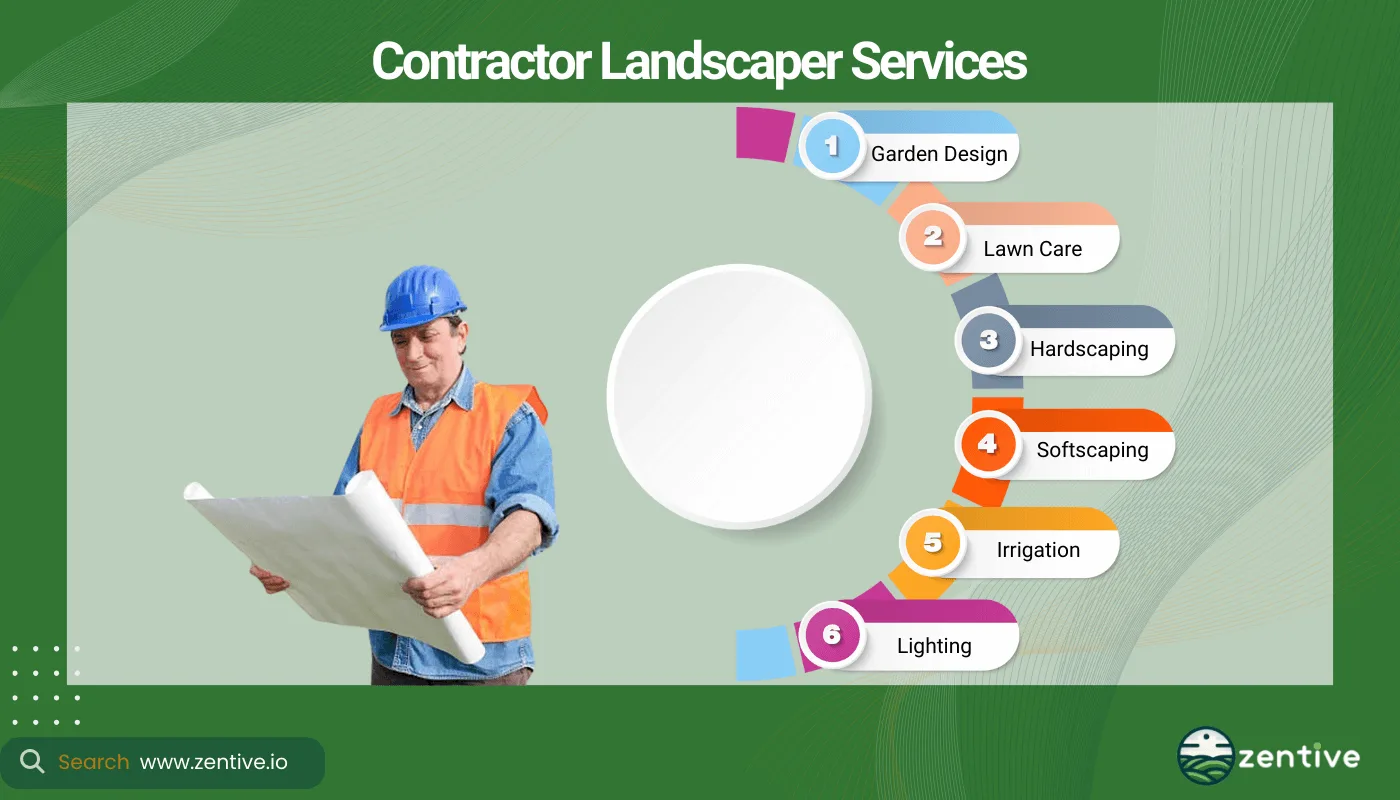
These services can vary significantly based on the contractor's specialization, i.e., the type of landscaping contracting business. They include but are not limited to garden design, lawn care, hardscaping (like patios and walkways), softscaping (involving plants, trees, and turf), irrigation installation and maintenance, and landscape lighting.
Not all landscaping services are equally profitable. The main determinants of the profitability of a landscaping business service are the expertise and skill required to fulfill the service, labor demands, and expenses.
Which Service Is Most Profitable For Contract Landscapers?
Hardscaping services, specifically specialized services such as the installation of pool decks, outdoor kitchens, and retaining walls, are the most profitable for contract landscapers. Due to the cost of materials and the specialized labor involved, these projects usually require a higher upfront investment from the client.
Contract landscapers maximize profitability by offering high-end hardscaping services, including outdoor entertainment areas, structural retaining walls, and premium stonework, which generate higher revenue, decrease competition, and sustain year-round demand.
Which Service Is Least Profitable For Contract Landscapers?
Lawn care and maintenance services are the least profitable for contract landscapers. These services are highly competitive and labor-intensive, with lower billing rates.
| Reason | Explanation |
|---|---|
| High Competition | Lawn care services are highly competitive, with many providers offering similar services, which drives prices down and reduces profit margins. |
| Low Barrier to Entry | The low barrier to entry for lawn care means many new businesses can easily start offering these services, increasing competition and lowering prices. |
| Labor Intensive | Lawn care and maintenance require a significant amount of manual labor, which can increase operational costs and reduce profitability. |
| Frequent Services Required | Lawn care needs to be performed frequently (weekly or bi-weekly), which can lead to a high volume of low-margin work, straining resources. |
| Seasonal Demand | Demand for lawn care services is seasonal, with peak periods in spring and summer, leading to uneven revenue streams and potential off-season losses. |
| High Equipment and Maintenance Costs | The equipment used for lawn care, such as mowers and trimmers, require regular maintenance and replacement, adding to the operational costs. |
| Price Sensitivity | Customers often seek the lowest price for lawn care services, making it difficult to raise prices without losing business, further squeezing profit margins. |
How To Manage Landscaping Contractor Business?
Managing a landscaping contractor business requires a comprehensive approach, focusing on several aspects, not just one. It's for this reason that so many landscaping contractors' businesses fail.
The first key to successful landscape company management is to utilize commercial landscape management software. Software like Zentive is instrumental in making business operations more smoothly. This software can significantly improve organizational efficiency and client satisfaction.
Effective job management is important. Landscaping business owners need to implement systems to efficiently manage projects from quotation to completion. This includes clear task assignments, timeline management, and regular progress reviews. Management software can help with this aspect.
Contractors need to maintain equipment. Regular landscaping equipment maintenance ensures reliability and reduces unexpected downtime, keeping projects on schedule and within budget.
Landscape contractors require licenses to operate legally. Ensure that you have all required local and state licenses for landscaping. The last thing you want is to get shut down by the authorities because you don't have your licenses in order. It leaves a lasting dent in your reputation.
Business insurance protects contractors from liability and property risks to safeguard your business's financial health.
What Software Do Landscape Contractors Use?
Landscape contractors commonly use industry-specific management software like Zentive, Jobber, or Aspire. Landscape company management software offers features designed to make running your business easier. These tools streamline almost every aspect of your business, including scheduling, job management, client communication, quoting, invoicing, financial tracking, and more.
The benefits of such software are vast, but it boils down to cutting operational costs and improving business profitability. You can expect better operational efficiency, enhanced customer satisfaction, and more accurate job costing and profitability analysis.
How To Improve Your Job Management Process?
Improve your job management process by optimizing the planning, execution, and monitoring of landscaping projects. Job management refers to the approach you take to operations management that involves overseeing and coordinating all tasks and activities required to complete service jobs or assignments. It basically means how you monitor and control jobs, tasks, and workers, ensuring efficient workflows and timely completion of jobs.
There are several things you can do to improve your job management process. First, define clear objectives for each project. Second, improve your communication by ensuring effective communication channels among team members and with clients. Third, try to utilize more technology, such as job management software, to track progress, manage schedules, and maintain client records.
Implement ongoing education for your entire team. Keep staff updated on the latest landscaping techniques and management practices. Finally, implement a system for regular feedback from clients and staff to continuously improve processes.
What Equipment Do Commercial Landscapers Use?
Commercial landscapers rely on several tools. The tools for landscaping business differ with each type of commercial landscaper, but you can expect them to have the following tools.
- Mowers and Trimmers: For lawn care and maintenance.
- Blowers: To clean up leaves and debris.
- Edgers and Hedge Trimmers: For defining lawn boundaries and maintaining hedges.
- Sprayers and Spreaders: For applying fertilizers and pesticides.
- Skid Steers and Excavators: For moving earth and heavy materials during hardscaping projects.
- Hand Tools: Such as shovels, rakes, and trowels for planting and minor adjustments.
- Power Tools: For building hardscaping elements.
Do Contract Landscapers Need Professional License?
Yes, contract landscapers need a professional license to provide certain landscaping services legally in most states. The type of services being performed can impact licensing needs. Contract landscapers especially need a professional license for construction, extensive hardscaping, or the application of pesticides and fertilizers.
Do Landscape Contractors Need Insurance?
Yes, landscape contractors need insurance to protect against a variety of risks associated with their work. Business insurance for landscapers typically includes general liability insurance to cover injuries or property damage, commercial auto insurance for the vehicles you and your team use in the business, and workers' compensation insurance if you employ a team.
Get This Guide as a PDF
Save this article for offline reading. We'll send a formatted PDF straight to your inbox.
No spam. Unsubscribe anytime.
Ready To Streamline Your Field Service Business?
Zentive is the all-in-one field service management software built for landscaping, lawn care, tree care, and snow removal businesses. Start your free trial today.
No credit card required · Cancel anytime