
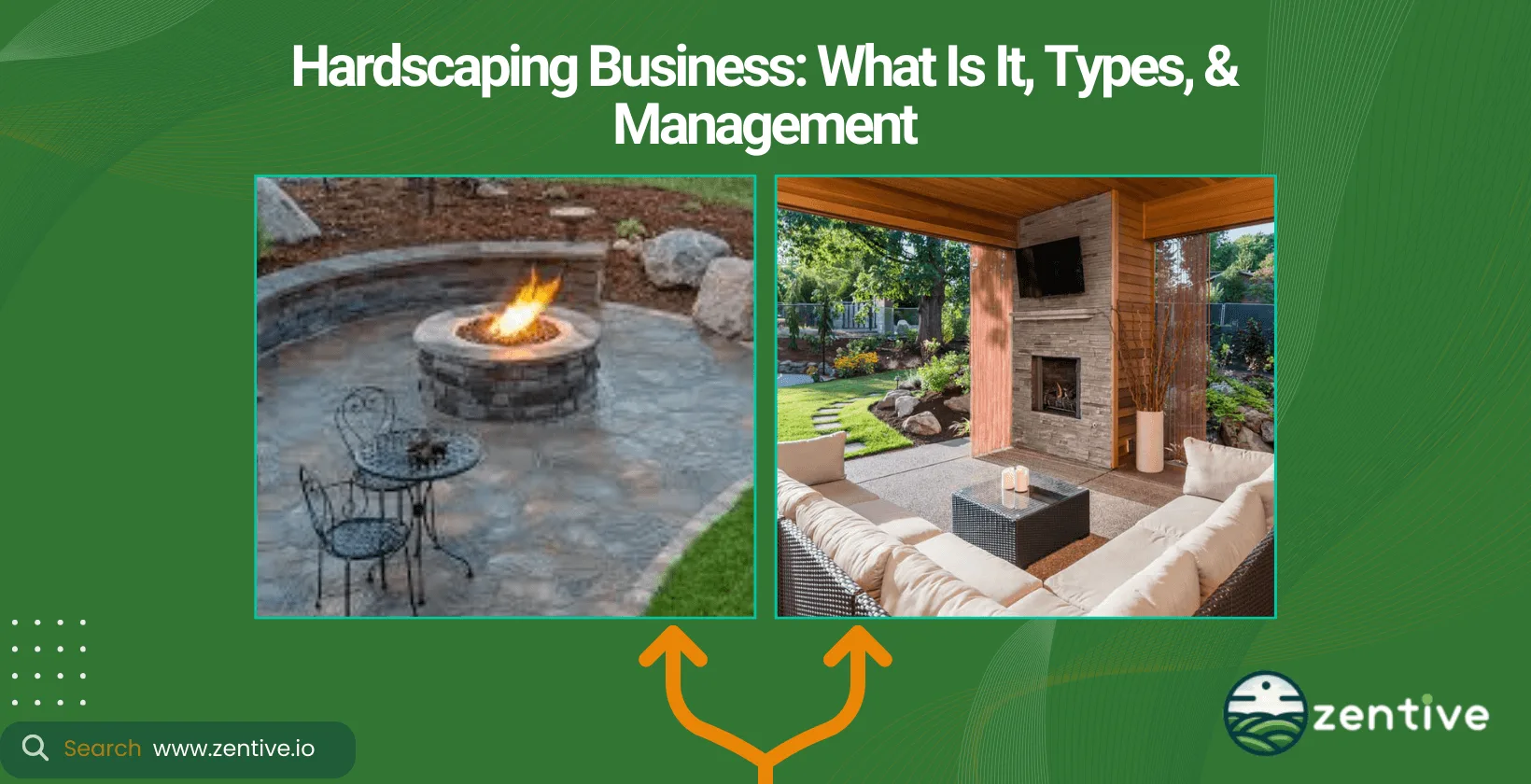
Hardscaping is a type of landscaping service that integrates non-living elements into outdoor spaces. A hardscaping business specializes in designing, installing, and maintaining these structures within landscapes. Services include patios, walkways, retaining walls, decks, and outdoor kitchens.
Hardscaping differs from traditional landscaping by focusing on non-living elements such as wood, concrete, stone, and metal. These structures enhance the aesthetic value of outdoor spaces and provide functional benefits like drainage improvement, erosion control, and increased land usability.
To manage a hardscaping business, you need design skills, construction knowledge, and business management expertise. This includes using landscape management software to maintain equipment and manage employees.
What Is Hardscaping?
Hardscaping is a type of landscaping service that involves all non-living elements incorporated into an outdoor space, utilizing materials like concrete, brick, stone, wood, and metal.
This differs from normal landscaping services, which usually cater to living elements of an area - lawns, trees, plants, etc. Hardscaping services include designing and building anything from functional patios and walkways to aesthetic features like pergolas and water features.
Hardscaping offers significant functional benefits, including erosion control, improved water drainage, increased property value, and usable outdoor living spaces. Implementing an outdoor hardscape element has a profound aesthetic impact, making your landscape more beautiful and unique.
What Is A Hardscaping Company?
A hardscaping company is a type of landscaping company that provides a range of services centered around the design, installation, and maintenance of hardscape elements. These services can either be functional, like erosion control, or aesthetic, like koi ponds and pergolas. They often involve the use of various materials, such as natural stone, pavers, concrete, and timber.
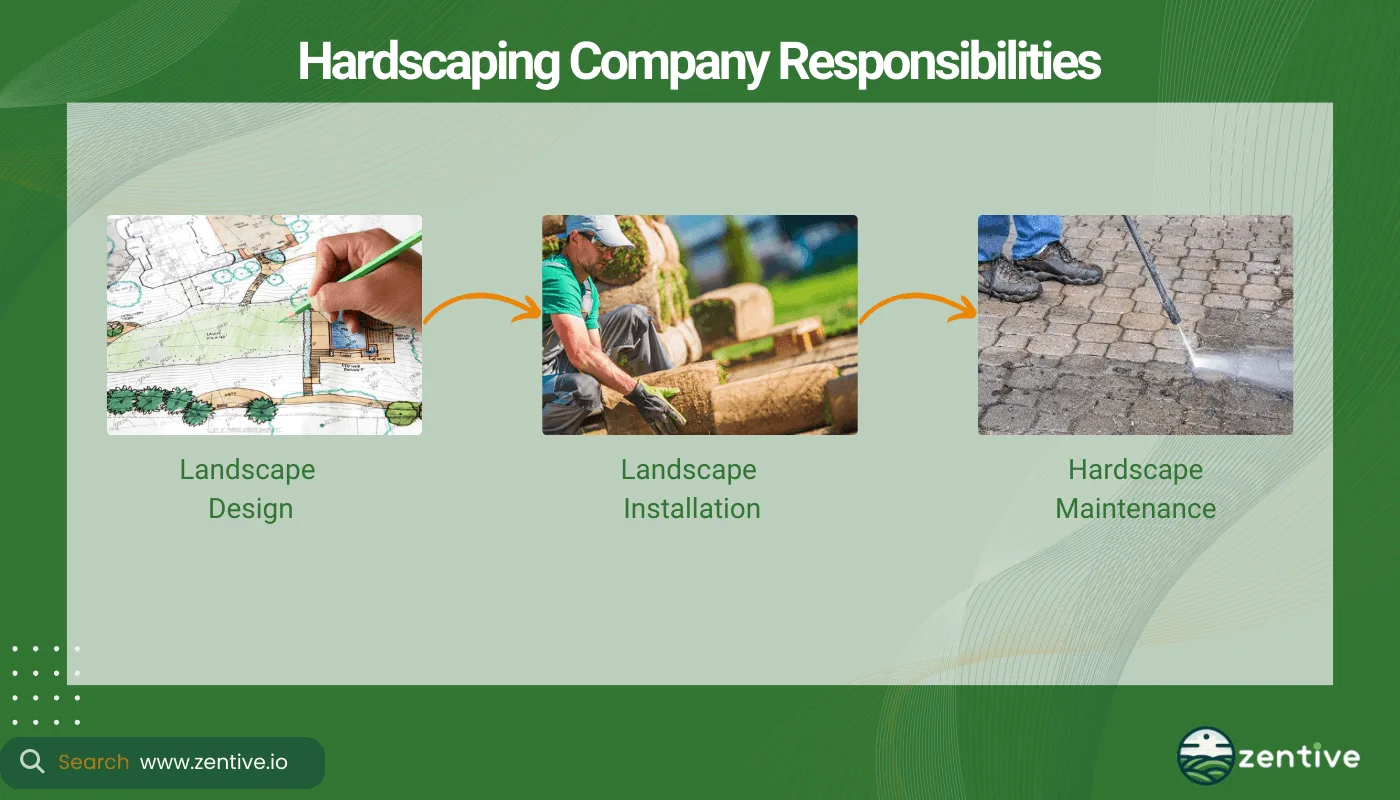
Hardscaping companies work closely with landscaping businesses, such as landscape design and construction businesses, to create cohesive outdoor spaces that blend both living (softscape) and non-living (hardscape) elements. Often, hardscaping companies require design companies to design the client's vision and secondary landscaping construction businesses, such as softscaping companies, to help make the design a reality.
Hardscaping can be further divided into residential and commercial. Residential projects are often smaller and more niche, while commercial projects are larger and more general.
Always hire a professional hardscaping company to do your hardscaping jobs. Their expertise ensures the job is done with a certain degree of professionalism and quality standard, saving you time, money, and a potential headache.
What's The Difference Between Hardscaping vs Landscaping?
The difference between hardscaping vs landscaping is that hardscaping consists of non-living elements like patios, walkways, and retaining walls, while landscaping includes both hardscaping and softscaping, which involves living elements like plants, trees, and lawns. Landscaping is landscaping refers to the broader field of modifying and enhancing outdoor spaces by integrating living (plants, trees, shrubs) and non-living (patios, walkways, fences) elements. Hardscaping is a type of landscape business that focuses specifically on the non-living components.
Other aspects of outdoor field services, such as softscaping, complement hardscaping by focusing on the living elements of the landscape. These two types of landscaping businesses often work together to help make a client's dream a reality.
What's The Difference Between Hardscaping vs Softscaping?
The difference between hardscaping vs softscaping is softscaping represents the living, organic elements of landscape design, including soil, trees, flowers, and shrubs, while hardscaping focuses on non-living elements, such as patios, walkways, and barbeque areas. Softscaping contrasts with hardscaping by focusing on the dynamic, growing aspects of a landscape. Services offered by a softscaping business include garden bed installation, tree planting, lawn care, and seasonal planting.
What Are The Types Of Hardscape Services?
There are nine main types of hardscape services. Here is a complete list of landscaping services you can expect from a hardscaping company.
| Service | Description |
|---|---|
| Installing Driveways | Involves constructing durable, smooth surfaces for vehicle access that enhance curb appeal and property value. |
| Constructing Fire Pits | Building a designated outdoor area for safely enjoying fires, which serves as a social focal point for gatherings. |
| Building Patios | Creates versatile outdoor living spaces for dining and relaxation that seamlessly connect indoor and outdoor areas while boosting aesthetics. |
| Designing Pool Decks | Entails crafting slip-resistant, attractive surfaces around pools that enhance safety and extend outdoor usability. |
| Erecting Retaining and Seat Walls | Involves constructing structures to manage soil erosion and provide additional seating, thereby improving landscape functionality and appearance. |
| Laying Pathways, Sidewalks, and Walkways | Creates defined routes for safe and aesthetic movement throughout the landscape. |
| Creating Steps | Involves building series of platforms to navigate changes in elevation safely while adding visual interest to the terrain. |
| Adding Water Features and Fountains | Incorporates elements like ponds or waterfalls that create a serene atmosphere and serve as visual focal points. |
| Making Gazebos and Pergolas | Provides shaded, architecturally interesting outdoor structures that define spaces for relaxation and entertaining. |
| Installing Outdoor Kitchens | Integrates cooking amenities into outdoor spaces to enhance functionality and enable alfresco dining. |
| Constructing Decks | Builds elevated wooden or composite platforms that expand living space and improve landscape usability. |
| Building Fences | Establishes property boundaries and privacy while contributing to safety and aesthetic cohesion. |
| Using Natural Stone and Flagstone | Applies durable, visually rich materials to surfaces for long-lasting, organic design. |
| Placing Landscape Edging | Defines garden beds and hardscape borders with clean lines that prevent erosion and material migration. |
| Applying Gravel and Stone Groundcover | Lays decorative and functional layers of loose material for low-maintenance surface coverage. |
| Setting Brick and Concrete Features | Constructs durable elements such as borders, pads, or structures that enhance form and utility. |
| Integrating Granite Elements | Uses high-durability stone for countertops, benches, or accents that withstand outdoor exposure. |
| Providing Hardscaping Materials | Supplies essential raw materials required for hardscape construction and maintenance. |
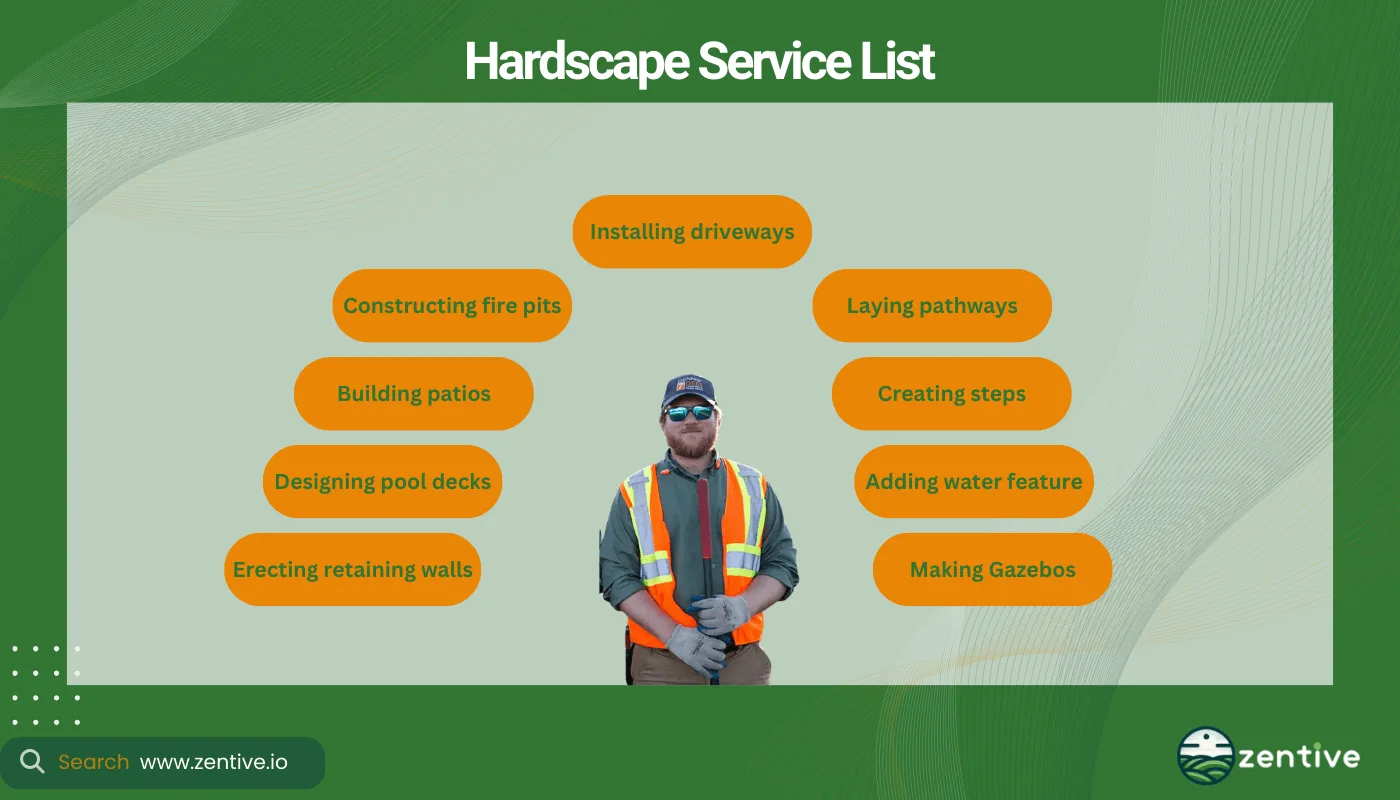
1. Installing Driveways
The installation of driveways is a common type of hardscaping. It involves creating a durable path for vehicles from the street to a home or garage. This process utilizes a range of materials, including concrete, asphalt, gravel, cobblestone, and pavers.
While installing driveways seems basic, they can be quite advanced, especially when dealing with inclines. This is why design software can aid in the planning and visualizing the finished driveway, ensuring a satisfied customer. Management software is used to improve the operational efficiency of each job, reducing operational costs.
The maintenance requirements for driveways vary significantly depending on the chosen material. Sand and gravel paths, for instance, often require more maintenance than asphalt. Some maintenance services you can offer include resealing pavers and repairing cracks in asphalt.
2. Constructing Fire Pits
Constructing fire pits introduces a contained area for outdoor fires, often becoming the focal point of social gatherings. Materials such as brick, stone, concrete, and metal are required.
Design tools assist in visualizing the fire pit within the landscape, ensuring it complements other features and that the client approves before construction work commences.
Given their repeated exposure to intense heat, fire pits require regular maintenance. You can offer services such as crack touch-ups or less advanced maintenance services like regular ash cleaning and removing flammable materials nearby.
3. Building Patios
Building patios involves creating a paved area adjacent to a house, typically utilized for dining, relaxation, and leisure. Materials are often decided based on the client's preference and the area's climate. They can range from concrete slabs and pavers to stone or a brick patio.
You can use landscape design software to facilitate the planning process, helping to integrate the patio with the yard and ensure better material usage planning. Maintenance tasks for patios revolve around ensuring the patio's longevity and include services such as sealing surfaces and replacing damaged pavers ensure its longevity.
4. Designing Pool Decks
This type of hardscaping service involves designing and building an area surrounding a swimming pool for lounging, sunbathing, and poolside activities. The materials used are often chosen for slip and heat resistance while improving the area's aesthetics. These materials include wood, concrete pavers, concrete, and composite materials.
Pool design software can model the deck in 3D, helping with material selection and layout. Pool decks require regular maintenance to prevent injury. You can offer services like regular cleaning, sealing of certain materials, and repair of damaged sections.
5. Erecting Retaining and Seat Walls
A retaining wall holds back soil to prevent erosion, while seat walls provide seating and can define outdoor spaces. This hardscaping service utilizes materials like concrete blocks, natural stone, and bricks. The choice often depends on the landscape design and functional requirements.
Software, such as structural design software, is important as it helps determine the stability and durability of the walls. You can offer maintenance services to clients, such as inspection for signs of wear or failure, especially after heavy rain for retaining walls, and occasional cleaning or sealing based on material, such as a stone wall.
6. Laying Pathways, Sidewalks, and Walkways
This type of service aims to create routes for pedestrian traffic within a property. Hardscaping companies use materials like pavers, natural stone, concrete, gravel, and brick. Each offers different aesthetic appeals and walking experiences.
Hardscaping companies incorporate path design tools to help plan functional and aesthetically pleasing routes. They use management software to help manage crews better, ensuring each job is handled with efficiency.
Laying walkways and pathways requires maintenance dependent on the material, which may include resetting pavers, clearing overgrown areas, filling in gravel, or sealing surfaces.
7. Creating Steps
Creating steps involve constructing a series of rising surfaces to facilitate movement between elevations in the landscape. You can either use wood, concrete, stone, or brick. The choice is often based on durability, safety, and whether it blends with the rest of the landscape.
Using software to design the steps is important as you need to determine whether they meet safety standards and fit the landscape design. A hardscaping business can offer maintenance services such as regular checks for stability, repairing loose or damaged steps, and ensuring surfaces are slip-resistant.
8. Adding Water Features and Fountains
This service involves introducing water elements such as fountains, ponds, and waterfalls to the landscape. The Materials used are stone, concrete, metal, and fiberglass. The choice affects the water feature's look, sound, and maintenance needs.
You use software to plan the plumbing and water circulation and to visualize whether the water feature fits into the area aesthetically. Hardscaping businesses offering maintenance services for water features are always busy. These features require intense maintenance. Services include cleaning pumps and filters, treating water to prevent algae, and winterizing to prevent freeze damage.
9. Making Gazebos and Pergolas
Making gazebos and pergolas involves constructing open structures for shade and decoration, often serving as an outdoor living space. Gazebos and pergolas are often created from wood, metal, and vinyl.
Like most other hardscaping services, you use software, like visualization tools, to assist in integrating these structures into the landscape and designing them to meet specific needs. Designing the element before building it ensures better planning and higher customer satisfaction.
The maintenance requirements for gazebos and pergolas depend primarily on the material. Be sure to offer services like staining or painting wood, cleaning metal or vinyl, and checking structural integrity. Use a management tool to help you better schedule, invoice, and manage your maintenance services.
How To Start A Hardscaping Business?
Start a hardscaping business by forming a business plan that defines your services, target clients, pricing model, hiring strategies and growth objectives. Hire experienced workers who specialize in hardscape installation, such as patios, retaining walls, and walkways. Acquire essential equipment and materials like compactors, saws, and pavers to execute projects efficiently. Secure licenses, insurance, and funding, then launch operations with a strong marketing and sales strategy.
Expect to invest between $10,000 - $50,000 to start a hardscaping business. There will be costs for ongoing management of your business to plan for.
How To Manage A Hardscaping Business?
Managing a hardscaping business efficiently involves incorporating the latest technology, such as management software, ensuring the use of high-quality equipment, efficiently managing employees, and implementing strategic marketing efforts.
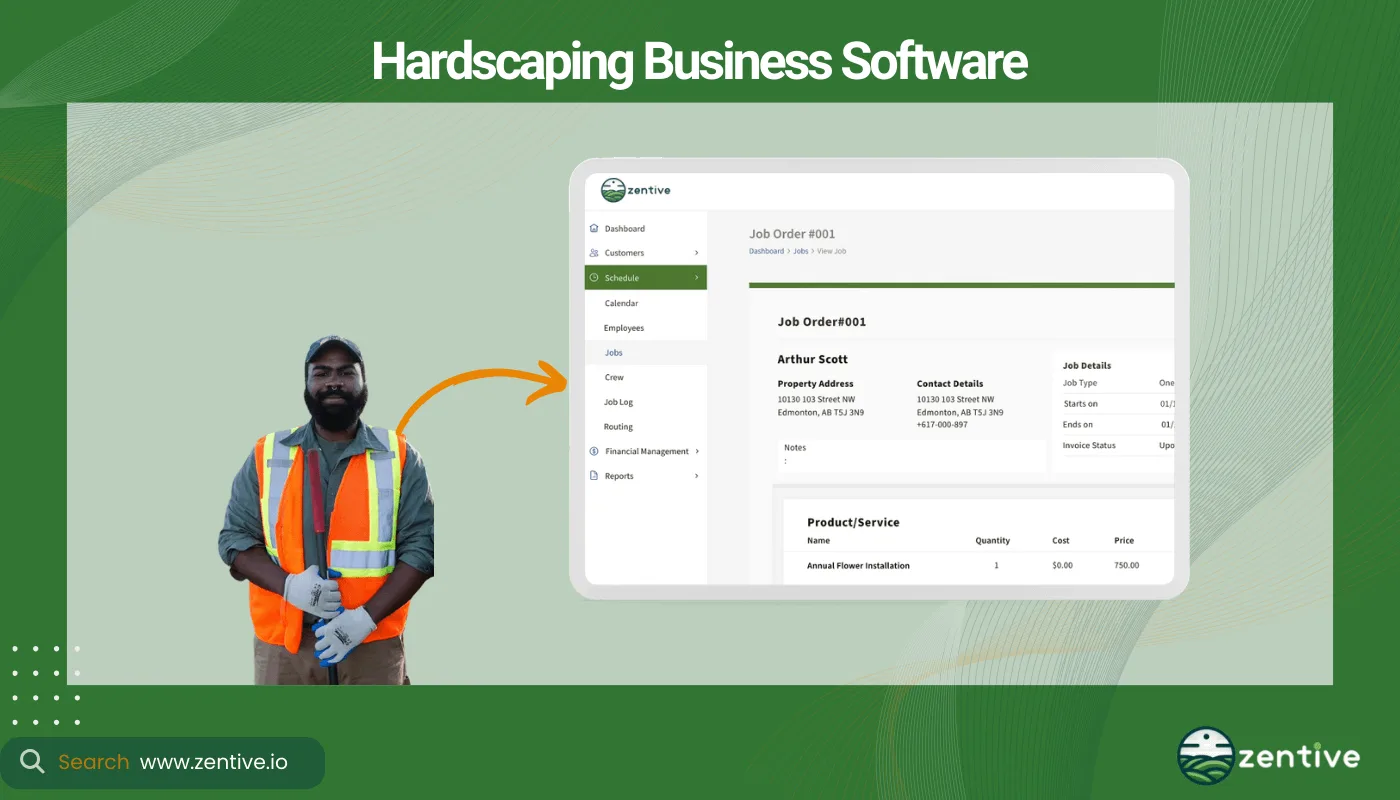
Business management software helps manage your hardscaping business. Tools like Zentive automate several aspects of your business, from project planning and customer relationship management (CRM) to financial tracking and employee scheduling and routing. When introducing Zentive to your business, you can better optimize your workflows, reduce paperwork, and enhance communication within teams and with clients.
Using top-quality equipment is very important. The foundation of delivering exceptional hardscaping services lies in using top-quality equipment. Buying cheap is actually expensive buying in the long run. Rather, invest in durable, reliable, and efficient tools and machinery to ensure projects are completed to a high standard, within budget, and on schedule. This not only maximizes productivity but minimizes downtime and repair costs.
Effective employee management is vital for maintaining high levels of service quality and operational efficiency. This includes clear communication of job expectations, ongoing training and development, and recognizing and rewarding good performance. You can use scheduling software like Zentive to assist in efficiently managing staff assignments and availability, ensuring the right team is on the right job.
Developing and implementing strategic marketing plans are essential for attracting new clients and retaining existing ones. This could involve introducing digital marketing efforts such as a strong online presence through a well-designed website and active social media platforms to your marketing strategy. You should emphasize traditional marketing techniques like networking in local business communities and word-of-mouth referrals.
Why Do Hardscapers Use Management Software?
Hardscapers use management software to help them manage their business, effectively reducing operational costs and improving profitability.
This management software for landscapers has numerous benefits, the first of which is streamlined operations. Management software automates and simplifies several business processes, such as project estimation, design, invoicing, and payment processing, saving time and reducing errors.
The software improves communication, especially within the team and with clients, providing real-time updates on project statuses and changes.
You can expect enhanced scheduling. Tools like Zentive optimize crew scheduling and project timelines, ensuring resources are allocated more efficiently. Zentive offers landscape project management software for tracking progress, managing materials, and maintaining budgets.
Client relationship management is another benefit. These tools integrate CRM features to manage client information, follow up on leads, and improve customer service.
What Tools Are Needed For Hardscaping?
Hardscaping businesses require various tools to help them complete their jobs. A hardscaping landscaper tools list includes a mix of hand tools, power equipment, and materials handling machinery.
- Hand Tools: Shovels, trowels, rakes, and hammers for basic ground preparation and fine detailing.
- Power Equipment: Concrete mixers, saws (for cutting pavers, stone, and brick), and plate compactors for ground preparation.
- Materials Handling: Wheelbarrows, skid steers, and excavators for moving materials around the site.
- Measuring and Leveling Tools: Levels, measuring tapes, and laser levels to ensure accuracy in layouts and constructions.
- Safety Gear: Gloves, goggles, ear protection, and dust masks to protect workers on site.
How To Manage Hardscaping Employees?
To manage hardscaping employees successfully, landscapers should ensure clear communication, clear scheduling, regular training, and the implementation of performance incentive programs.
Scheduling employees is very important as it directly converts into operational efficiency and jobs completed per day. Clearly scheduling employees helps these employees as they can play in advance and have clear expectations of what is expected from them.
Scheduling can be difficult; luckily, there are tools like Zentive that can help schedule your team more effectively.
| Strategy | Action | Explanation |
|---|---|---|
| Clear Communication | Ensure all team members understand project goals, tasks, and expectations. | Clear communication minimizes misunderstandings and enhances teamwork efficiency. |
| Clear Scheduling | Schedule employees effectively using tools like Zentive. | Effective scheduling boosts operational efficiency, helps employees plan in advance, and sets clear expectations. |
| Regular Training | Conduct ongoing training sessions for employees. | Regular training ensures employees are updated with the latest techniques and safety protocols, enhancing job performance. |
| Performance Incentive Programs | Implement incentive programs to reward high performance. | Incentive programs motivate employees to perform better, increasing productivity and job satisfaction. |
Can Employee Scheduling Be Automated?
Yes, employee scheduling can be automated. Software for landscape scheduling can help automate the entire scheduling process. There are several benefits of doing so, including better efficiency by reducing the time spent on manually organizing schedules.
It improves accuracy by minimizing scheduling conflicts and ensuring that hardscaping projects have the necessary workforce with the appropriate skills.
Not to mention, it improves accessibility by enabling employees to access their schedules remotely, improving communication and planning.
Get This Guide as a PDF
Save this article for offline reading. We'll send a formatted PDF straight to your inbox.
No spam. Unsubscribe anytime.
Ready To Streamline Your Field Service Business?
Zentive is the all-in-one field service management software built for landscaping, lawn care, tree care, and snow removal businesses. Start your free trial today.
No credit card required · Cancel anytime