
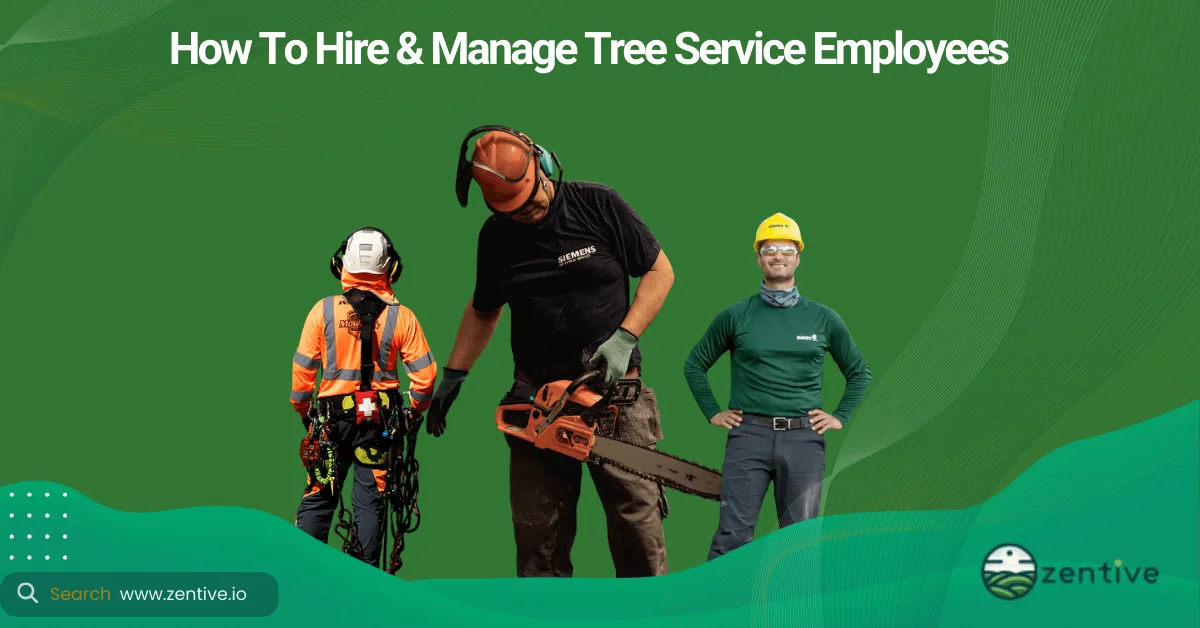
Hiring tree service employees involves onboarding qualified staff to your tree care business. Every service-orientated business needs employees. The right employees are key to business success. They are the face of the business and play a major role in the company's reputation. Furthermore, skilled employees who are good with customers can leave customers satisfied and improve the business's growth. This is why you need to hire the right tree service employees.
A good tree service worker is reliable, skilled, good with customers, and physically capable of handling demanding tasks. As I mentioned, the key to business success is to hire the right employees, which is why you want the best of the best to work for you. The best way you can find candidates with the right mix of experience, certifications, and availability is to use the six-step hiring process we discuss in this article.
It's important to remember that employees can only be as good as their manager. The employees will suffer if the manager doesn't run a tight ship. Managing tree service employees effectively involves clear communication, organized scheduling, and performance monitoring. Implementing a business management system and setting clear company rules will help keep everything running smoothly. Ultimately, success comes down to building a strong team and managing them well.
What Makes A Good Tree Service Employee?
A good tree service employee is someone who brings a mix of skills, reliability, and the right attitude to the job. First and foremost, skills and experience matter. Employees must be able to handle chainsaws, climb trees, and understand safety protocols. Some employees may have arboriculture or tree care certifications, which is a bonus but not always a requirement for entry-level positions. Availability is another key factor. You need someone who you can count on. Someone who can show up when needed, especially during peak seasons or emergencies.
Then there's the matter of physical ability - you know how physically demanding this job can be. Employees need to be fit enough to handle the work. Along with physical fitness, reliable transportation is a must. Employees should be able to reach the base of operations on time. Employers must verify legal work status to ensure compliance with regulations.
Personality plays a big role in making a great employee, too. Someone friendly and easy to work with will mesh well with the team. Remember, they're dealing with clients - do you want someone who curses and is rude or someone who is friendly and likable to work with your clients?
Finally, think of the language barrier. Clear communication is vital when visiting clients, as well as when safety and coordination are involved, so it's crucial that language doesn't hinder the workflow.
What Are The Different Types Of Tree Service Workers?
There are four different types of tree service workers.
- Full-Time Tree Service Employees: Your business employs these workers year-round, and they typically have more experience. They become a consistent part of the team.
- Part-Time Tree Service Employees: These workers fill in as you need them, which can help during busy seasons like summer.
- Seasonal Tree Service Employees: You hire skilled seasonal employees for specific seasons, especially during storm season or the peak of tree growth.
- Tree Service Contractors: These are independent workers who offer specialized services but are not permanent employees.
When Should Tree Servicers Look To Hire More Employees?
You should hire more employees when the business is constantly overbooked. Hiring more employees at the right time is crucial. If you wait too long to hire, you may end up overwhelmed with jobs you can't handle efficiently. This leads to unhappy customers and missed opportunities for growth.
It's not easy to find skilled workers, but if you plan ahead and keep an eye on your workload, you can bring in new employees before it's too late. The key is to have a proactive approach. You should already know where to find great tree workers before even considering hiring new employees. This ensures you're ready when the time comes, making the hiring process much shorter.
Where To Find Tree Service Workers?
You can find tree service workers on platforms like Indeed and Craigslist, as well as on social media, vendors, and job boards. I suggest you start by advertising open positions on Indeed and Craigslist, where people often search for labor jobs.
Social media is another great tool for sourcing tree service workers. Post on Facebook and LinkedIn to reach a wider audience. Don't overlook your vendors either; they often know workers who may be looking for a job.
Additionally, post job openings at places where people gather, like churches, bars, or the local community center. Help wanted ads can still be effective, too, especially in local areas, but the type of employees these attract aren't always what you're looking for.
How To Hire Tree Service Employees?
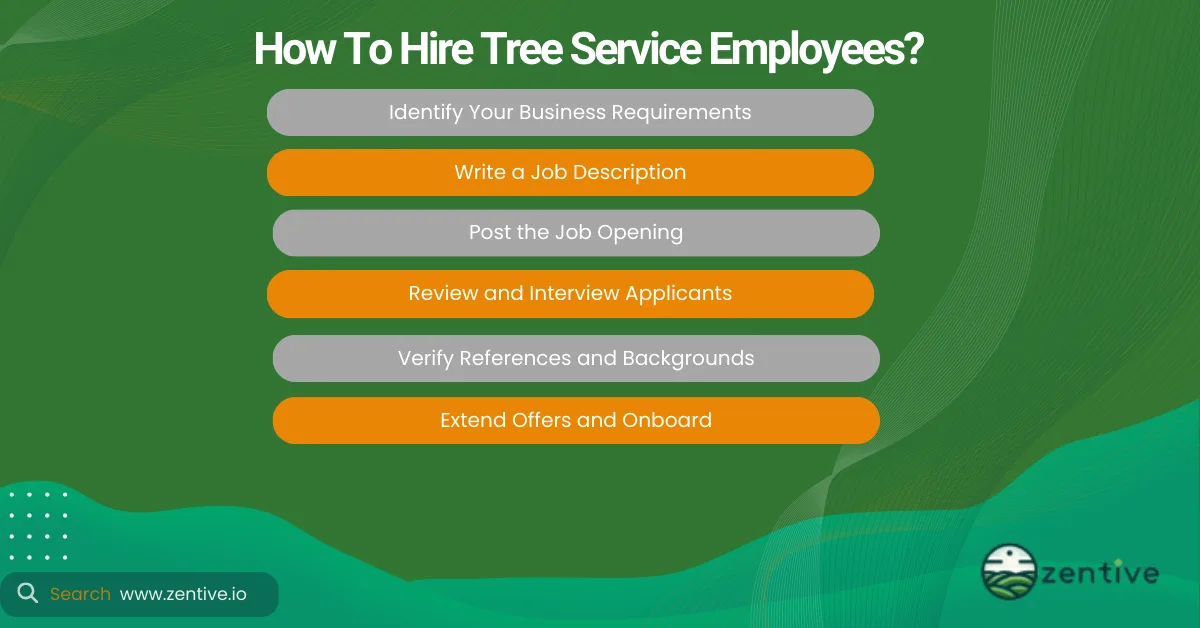
Hiring tree service employees involves six important steps. Here's how you do it right.
- Identify Your Business Requirements
- Write a Job Description
- Post the Job Opening
- Review and Interview Applicants
- Verify References and Backgrounds
- Extend Offers and Onboard
1. Identify Your Business Requirements
Start by identifying your business requirements. Think about what kind of help you need. Do you need someone who can work full-time or just help out during busy seasons? Are you looking for certified arborists, or will someone with basic tree service skills suffice? Use your tree service description to help you identify exactly what your business requires from the employee.
When you have a clear idea of what you expect from the employee and the job requirements, you can streamline the hiring process so you're not wasting time with candidates who are unfit for the job.
2. Write a Job Description
Once you know what you need, write a detailed job description. Your job description should clearly state the necessary skills, certifications, and experience level the job requires. Don't forget to mention specifics like the hours, transportation, pay rate, and any benefits you offer.
A clear job description helps filter out unqualified applicants from the start. Remember to be fair and reasonable with your job description and specifics. You can't expect a certified arborist to work for $12-$14 an hour.
3. Post the Job Opening
Now that your job description is ready, it's time to post it on the platforms we mentioned earlier. Start with Indeed and Craigslist, as they are the most effective at sourcing service-orientated employees.
You should use social media to spread the word. Don't limit yourself - advertise wherever potential candidates might see it. Remember, no one will know you're hiring if you don't post the openings, so be as vocal about the job as possible.
4. Review and Interview Applicants
After you start receiving applications, you will need to review them. Look for candidates who meet the qualifications you outlined in your job description and seem like a good fit for your company culture.
During interviews, ask about their work history and what they bring to the table. Analyze their personality and morals. An employee with a great personality but an average resume is far better than an employee with the best resume but lacks basic communication skills. They need to gel with the rest of the team to be a cohesive, high-performing arborist team.
5. Verify References and Backgrounds
After identifying a shortlist of candidates, you should verify their references and backgrounds. Don't skip this crucial step! This step helps ensure that you are hiring someone reliable and professional. Reach out to their previous employers and verify their certifications or licenses.
6. Extend Offers and Onboard
Once you've found the right fit, make a formal job offer. Clearly outline their tree service salary, benefits, and any other specifics in a formal document.
Then, if they accept and everything goes as planned, you can start onboarding them effectively. Show them the ropes, introduce them to the team, and provide training so they can hit the ground running. A good manager knows that you want them to feel as close to home as soon as possible.
How To Manage Tree Service Employees?
Managers use four strategies to manage tree service employees, including using business management software, improving employee scheduling, tracking and monitoring employees, and documenting company rules. Remember, good employees don't just happen; good managers create them. Here are some of the strategies the best tree service managers use.
First, use a business management software. This streamlines the entire management process, from payroll to project management, making your life and theirs much easier. Next, improve employee scheduling by using the software or your own system to keep things organized and predictable. When employees know what's expected of them, they perform better.
You should track and monitor your employees. I'm not saying you should micromanage the team, but having a system in place to check progress can prevent slacking off. Think of it this way: if one employee only gives 60%, the other three employees need to perform at 110% to compensate for the underperforming employee. This doesn't foster a healthy work environment.
Finally, make sure you've documented your company rules. A well-written handbook lets everyone know where they stand and what's expected.
How Does Software Help Manage Tree Service Employees?
Software is the best tool you can use to improve the management of your tree service employees. It helps you streamline and optimize scheduling. This means no more double bookings, and the right employees are always at the right job site.
A tree removal management software can even track work hours, tasks completed, and overall productivity, all in one place. This means less time managing paperwork and more time growing your business. With the right software, managing payroll and employee availability becomes a breeze.
How To Optimize Scheduling For Tree Servicers?
You can optimize scheduling for tree servicers by using scheduling software. This type of software automates schedules and adjusts for last-minute changes. The main benefit of using a tree service scheduling app instead of manually scheduling jobs is that it reduces human error and confusion.
You can further optimize your scheduling for tree services by choosing the right type of employee schedule. You can choose between fixed or flexible shifts, but the schedule should work for both your business and your workers. The right balance will improve morale and efficiency.
What Are The Types Of Schedules For Tree Service Workers?
There are four types of schedules for tree service workers. Fixed schedules are the most common type for tree service companies and require employees to work the same daily hours.
Flexible schedules involve employees having some control over when they work but must meet certain deadlines. It's not really common in this niche, but it's typical in remote-type jobs.
Shift work is when workers are assigned to specific shifts, such as morning or evening. This is common in tree service business that handles emergency services and requires employees to be ready at a moment's notice.
Seasonal schedules are when some employees are only needed during certain times of the year, such as summer or storm season.
| Tree Service Worker Schedule Types | |
|---|---|
| Fixed |
• Most common schedule type • Same daily working hours • Consistent routine |
| Flexible |
• Employee controls hours • Must meet deadlines • Less common in tree services |
| Shift Work |
• Specific assigned shifts • Common for emergency services • On-call availability |
| Seasonal |
• Time-specific employment • Based on peak seasons • Storm season coverage |
What Should Be Included On A Tree Service Business Plan?
You should include all the necessary details of running your business in your business plan to have a holistic business overview. Be sure to include a clear employee management strategy. Outline how you'll hire, train, and retain good employees.
Many businesses create a detailed employee handbook. It's a great idea as it helps provide structure and expectations. When employees know what employers expect from them, they can perform their jobs better.
How To Track Your Tree Service Employees?
You can track your tree service employees by using tracking software. Employee tracking software monitors hours worked, locations visited, and jobs completed, all from the comfort of a single app.
In addition to keeping everyone accountable, you can identify underperforming employees who are not pulling their weight. When you see that some workers are wasting time, you can address the issue before it affects your bottom line and the morale of the rest of the team.
What To Do If Tree Service Employees Perform Poorly?
When tree service employees perform poorly, first try positive incentives; if that doesn't work, you will need to fire them.
First, go the incentive route. Offer them bonuses for referrals or incentives like extra pay for efficient work. You can even provide commissions on jobs completed to motivate employees. If these strategies don't work, it might be time to fire the employee. You can only keep a rotten fruit in the basket for so long before the other fruit starts rotting.
How To Fire Tree Service Workers?
When firing tree service workers, you should always follow legal requirements and document everything - from warnings to performance reviews - so you're protected in case of legal disputes. Firing an employee is never easy, but sometimes it's necessary. When it's time, be clear, compassionate, and professional. This method has proved to be the most effective.
Get This Guide as a PDF
Save this article for offline reading. We'll send a formatted PDF straight to your inbox.
No spam. Unsubscribe anytime.
Ready To Streamline Your Field Service Business?
Zentive is the all-in-one field service management software built for landscaping, lawn care, tree care, and snow removal businesses. Start your free trial today.
No credit card required · Cancel anytime