

A landscaping business plan outlines goals, marketing strategies, and financial projections. Successful businesses share a key trait—they create a detailed business plan before launching.
Landscapers need a business plan to refine their strategy, assess profitability, and secure funding, as investors often require one before investing. Creating a landscaping business plan is simple with the guide in this article. Start with an executive summary, then add a business description, market analysis, marketing plan, operations plan, management structure, and financial plan. Conclude with an appendix.
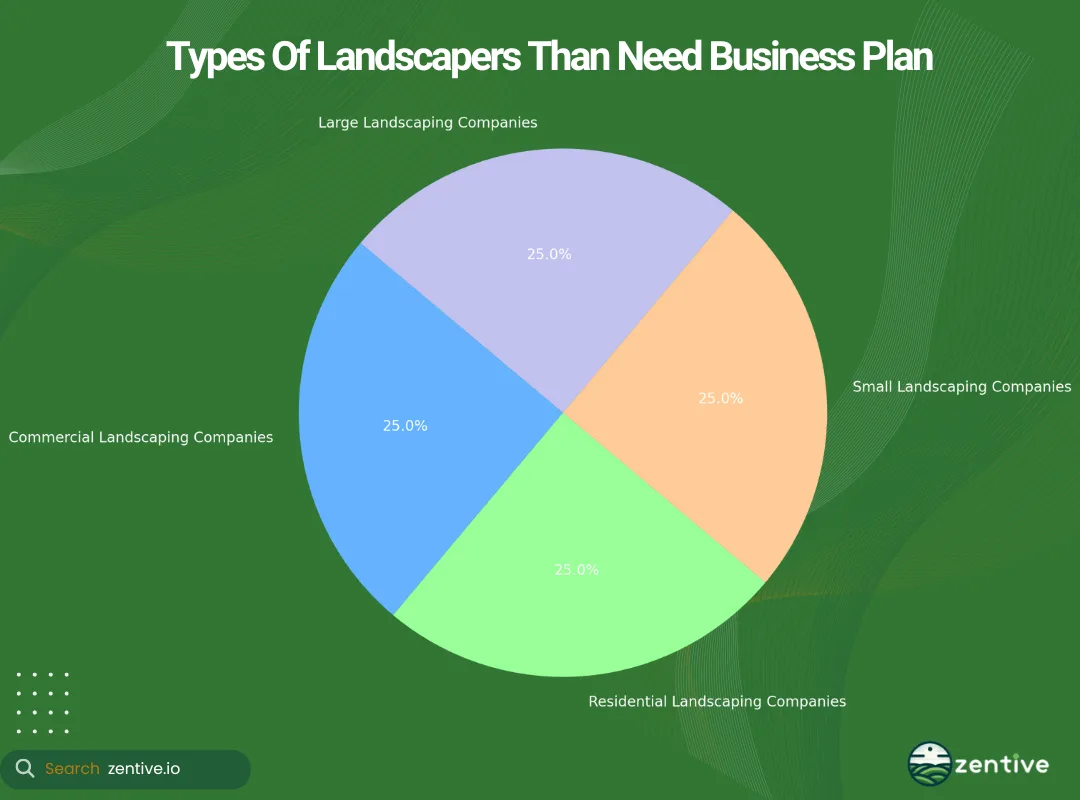
Different types of landscaping companies—commercial, residential, small, and large—benefit from a business plan by identifying and addressing potential problems early.
Download our free landscaping business plan template below to simplify the process.
What Is A Business Plan?
A business plan is a formal written document outlining your business goals, strategies, and timeframe for achieving them. Think of it as your roadmap for growing your business, providing direction and guiding you through all aspects of your business and ensuring you achieve your goals in the pre-allotted timeframe.
Generally, there are four types of business plans.
- Startup Business Plan: You create this one at the start of your business, outlining the goals and strategies of your new business. The relevant information you should include:] information on the company (address, contact information, etc.), its products or services, in this case, a particular service in the landscaping industry), market research (who is your target market), marketing strategies, and financial projections.
- Strategic Business Plan: This plan focuses on long-term goals and the strategies you need to achieve them. Create this business plan at the start of your business to guide you as the business grows and serves as a benchmark.
- Operational Business Plan: This is a more detailed plan that focuses on the internal operations of the business—what are your day-to-day operations, how many crew members you will have, what the responsibilities of each team member are, how many admin staff you will have, etc.
- Expansion Business Plan: This type of plan is used when a business is looking to expand, typically created after a few months of running your business. It mainly includes growth strategies, such as new marketing campaigns, entering new markets, expanding your service offerings, or increasing your number of crews.
A business plan is important for all types of businesses. It is important for those in the home and field service sector, such as landscapers.
Why Is A Business Plan Important For Landscaping Business?
A business plan is important for a landscaping business because it is your roadmap for achieving business goals. It clarifies your business vision, secures funding, plans operations, and mitigates risk.
A business plan helps you set a clear vision for your business. It sets the direction for where your business should go and how you plan to get it there. It helps secure funding; it's actually one of the main reasons for creating a business plan if you plan on taking out a loan or seeking investors to fund your new business. Investors and lenders require a comprehensive business plan to understand whether your business makes sense and the potential return on investment (ROI).
A business plan will help you plan your day-to-day operations. In a business plan, you outline the management team's responsibilities, the operational procedures, and the resources needed to achieve the business goals.
A landscaper business plan helps you identify potential risks and develop mitigation strategies. For instance, you conduct market research on possible lawn-mowing clients and see only 100 people in your town. Obviously, there is already competition, so you would only have a small portion of that 100 potential clients. Starting your business now would be very risky, but through your business plan, you can analyze what other potential services you can offer to expand your client base and mitigate risk.
Landscaping, lawn care, tree service, and snow removal businesses should all have business plans. After all, failing to plan is planning to fail.
| Reason | Description |
|---|---|
| Clarify Business Vision | Sets the direction for where your business should go and how to get there. |
| Secure Funding | Helps secure funding from investors and lenders by demonstrating potential ROI. |
| Plan Operations | Outlines daily operations, management responsibilities, and needed resources. |
| Mitigate Risk | Identifies potential risks and develops mitigation strategies to manage them. |
| Prevention of Problems | Helps address problems before they become significant issues. |
What Should Be Included In A Landscaping Business Plan?
A landscaping business plan should include an executive summary, business description, market analysis results, marketing plan, operation plan, tools and software required for the business, management and organization, financial model/plan, and appendix.
These are the major components of a landscaping company business plan. When you include all of them, you'll better understand what it will take to make your business successful. There is a specific strategy involved in creating a business plan for landscapers, which we discuss in the following sections.
How To Create A Landscaping Business Plan?
There are nine steps to creating an effective landscaping business plan.
- Begin with the Executive Summary: Provide a concise overview of your landscaping company, including key goals and unique selling points.
- Elaborate on the Business Description: Describe your company's mission, services, and target market in detail.
- Conduct a Thorough Market Analysis: Analyze your industry, competitors, and target customers to identify opportunities and challenges.
- Develop a Strategic Marketing Plan: Outline how you will attract and retain customers through specific marketing tactics.
- Outline Your Operations Plan: Define day-to-day operations, staffing, and logistics for delivering landscaping services.
- Define Tools & Software Needed: List essential equipment, tools, and software required to run your landscaping business efficiently.
- Describe the Management and Organization: Specify the structure of your leadership team and roles within the company.
- Prepare a Detailed Financial Plan: Present revenue projections, expenses, and funding needs to ensure financial viability.
- Conclude with an Appendix: Include any supporting documents such as permits, licenses, and additional references to back up your business plan.
1. Begin with the Executive Summary
The executive summary is a brief overview of your business plan, including your mission statement, primary landscaping services, and key financial goals and projections. To write this step, start with your business's mission statement by clearly stating what your business stands for. Next, list your primary services, such as lawn care, garden design, hardscaping, and tree services.
Finish your executive summary with a brief overview of your financial objectives, such as expected revenue, profit margins, and growth targets for the first few years. Remember, be optimistic but realistic—it's best to conduct research on this one. You can have a look through our articles that highlight the financial aspects of landscaping businesses.
2. Elaborate on the Business Description
A business description is a detailed explanation of how you plan to provide your landscaping services, generate revenue, how the geographic location plays a role in generating the revenue, and what sets your business apart from your competition, i.e. your unique selling point (USP).
First, describe how your business will provide landscaping services and generate revenue. Are your services one-off, seasonal packages, or subscription-based? How do you plan to retain clients? What is your markup on your services?
Next, identify the geographic areas your business will serve and their significance. For instance, if you're in an area prone to drought, you can offer services like softscaping with water-savvy plants to conserve water and maintain lush landscapes. Or, if the area is prone to heavy snowfall, you can offer rapid snow removal services.
Lastly, highlight what sets your business apart from competitors - your USP. For example, "If you're not happy with our services, we will gladly give 50% back." Or "We provide snow removal services 24/7."
3. Conduct a Thorough Market Analysis
Conducting a market analysis basically means researching market conditions (potential clients, type of clients, need for services, etc.) and the saturation/competitiveness of your niche.
An effective market analysis always starts by first defining your ideal customer segments based on demographics, preferences, and landscaping needs. Are you targeting homeowners or commercial clients? What age group are you targeting, and what income level?
Next, conduct research on current trends in the landscaping industry. A popular trend now is eco-friendly plants and sustainable landscaping practices. A lot of people are converting to artificial grass from standard turf. Remember, trends come and go, so just make sure your business can sustain the changing tide of these trends.
Finally, you should finish off your market analysis with competitor research. It's important you spend extra time on this step, as it will help you identify what strategies work and what strategies don't for your competition, allowing you to optimize your business plan.
4. Develop a Strategic Marketing Plan
Develop a strategic marketing plan that defines your marketing goals and strategies. How do you plan to market your services, and what is your marketing budget?
A well-crafted landscaping marketing plan starts with outlining your marketing objectives. Your marketing objectives should align with your business goals. If you want your business to grow 30% in the next year, your brand awareness percentage should at least match, if not double, that figure. Outline clear, measurable marketing objectives that align with your business goals. For example, "I want my landscaping business to grow 30% next year, so I need to increase my brand awareness by 50% through targeted social media campaigns on Facebook and local advertising."
After outlining your marketing objectives, you need to set competitive yet profitable pricing for your landscaping services. You should use your results from step number three to help you. A great pricing strategy for new businesses is to set their prices the same or just below their competitors. Remember, you can have great ads and increase brand awareness, but nobody will use your services if your too expensive, especially for lawn care services.
5. Outline Your Operations Plan
The operations plan outlines the operational aspects of your business, including what the day-to-day operations will look like for all members of your teams.
An operations plan has three pillars: daily activities, key suppliers, and a staffing plan. For daily activities, you should describe the day-to-day activities necessary to run the landscaping business efficiently. For example, "Daily activities for admin staff will include scheduling client appointments, collecting client payments, and ensuring the field staff is on schedule."
The second pillar includes a list of your key suppliers. Depending on your niche, you'll likely list suppliers for plants, materials, and equipment. Tip: Reach out to these suppliers and form a formal partnership with them. Tell them you'll make them your exclusive supplier if they can provide a discount or refer potential clients to your business.
Lastly, outline your staffing plan. This includes projecting the number and roles of employees required to start and grow the business sustainably. For example, "Initially, we will hire a team of seven, including five lawn care technicians, one manager, and one administrative assistant."
6. Define Tools & Software Needed
The tools and software section outlines all the equipment and software you require to run your business. Be sure to conduct thorough research for this step as tools take a lot of your initial capital. For a lawn care business, you'll require lawnmowers, trimmers, irrigation systems, shovels, rakes, and refusal bags.
Software almost becomes a necessity when your business starts growing. These tools will help you with scheduling, customer management, invoicing, and financial tracking. For example, a landscaping business management app like Zentive can help your admin staff with scheduling and routing employees, managing clients, and even helping create quotes and invoices. Plus, it integrates with Quickbooks, which is another type of software you'll need to manage the financial and tax aspects of your business.
7. Describe the Management and Organization
The management and organization section details your business's structure and team responsibilities. This step is important as it clearly outlines each team member's role and responsibilities.
It's crucial that you define your business's structure, detailing the roles of the founders, management team, and key employees. This ensures that you have roles for all aspects required for running your landscaping business and that no two people do the same job.
People often overlook assigning specific responsibilities to team members when initially creating a lawn care business plan. This step ensures clear accountability for all parties. It helps your team members better understand what is expected from them and the implications if they don't fulfill their responsibilities. It helps protect you legally as it serves as viable grounds for termination when someone doesn't do what is expected from them.
8. Prepare a Detailed Financial Plan
The financial plan outlines your business's financial projections and funding needs. How do you plan on funding your startup costs, how much capital do you need to buy all your assets and stay afloat before business revenue sustains operations, etc?
Start your financial plan by outlining the main costs of starting your business. These usually include equipment and vehicle purchases, marketing expenses, initial labor costs, employee attire costs, rent, and landscaper licensing fees.
Luckily, there are ways to secure funding when you don't have your own. Grants and small business loans are excellent strategies.
It's vital that you incorporate revenue projections and a profit and loss statement to illustrate your business's financial viability. Most businesses fail within the first year, but meticulous planning mitigates those risks.
9. Conclude with an Appendix
The appendix includes any type of document that supports your business plan.
When you conclude with your appendix, be sure to list and explain any relevant types of documents, including resumes of key personnel, detailed market research data, legal documents, and contracts.
What Types Of Landscaping Businesses Need A Business Plan?
Commercial, residential, small, and large landscaping companies need a business plan. When you plan your business better ahead of time, you'll have a much higher chance of making it successful, regardless of the landscaping business type.
The business plan creation process will differ based on the type of landscaping company you have. For instance, commercial landscaping companies will have business plans addressing large-scale operations, including acquiring and managing commercial clients. While a residential landscaping company's business plan addresses how to offer personalized services.
How To Write A Business Plan For Commercial Landscapers?
Write a business plan for commercial landscaping businesses by addressing large-scale operations and how to acquire and manage commercial clients.
Commercial landscapers are landscapers with companies that provide landscaping services to businesses, municipalities, public spaces, and large estates. What makes these landscapers unique is their ability to manage large-scale projects, which require significant resources, manpower, and equipment. The business plan should outline strategies for managing these projects efficiently.
If you're planning to start a landscape company for commercial clients, remember that the sector is very competitive. Your business plan needs to highlight strategies that will grant you a competitive advantage, such as excellent client acquisition strategies.
Take your time with this step in your business plan; remember, you're competing in a highly saturated market. Include detailed strategies for acquiring and retaining commercial clients, such as networking with property managers, actively participating in commercial tenders, and providing competitive pricing and service packages.
How To Write A Business Plan For Residential Landscapers?
Write a residential landscaper's business plan by addressing the unique needs of homeowners and residential properties, such as personalized services, discounts on seasonal packages, etc. Residential landscapers offer landscaping services directly to homeowners. Their main services include garden design, lawn care, and maintenance (mowing, leaf removal, edging, hedge trimming, etc.).
What makes residential landscaping unique is these businesses need to connect with homeowners, either through personalized service or close client interaction. Your business plan should emphasize tailored services and customer relationship management (CRM).
The size of your landscaping company will affect how you create the business plan. Smaller companies focus on local marketing and community engagement, while larger residential landscapers invest in broader marketing campaigns, extensive service offerings, and software to help them run their businesses smoothly.
| Aspect | Summary |
|---|---|
| Target Audience | Homeowners and residential property owners seeking personalized landscaping services. |
| Core Services | Garden design, lawn care, and regular maintenance (mowing, leaf removal, edging, hedge trimming, etc.). |
| Unique Needs of Residential Clients | Emphasis on personalized service, close client interaction, seasonal discounts, and tailored packages. |
| Personalization & CRM | Focus on building long-term relationships through customized solutions, responsive communication, and effective customer relationship management systems. |
| Business Plan Focus | Highlight unique selling propositions (e.g., bespoke landscape designs, flexible service packages) and outline strategies for marketing and client retention. |
| Company Size Considerations |
|
How To Create A Business Plan For A Small Landscaping Company?
Create a business plan for a small landscaping company by emphasizing their unique strengths and niche markets, as well as paying attention to local market conditions and marketing strategies.
Small landscaping companies are unique in that they mostly manage one or two crew teams. They don't have many administrative burdens, and they mostly serve the same clientele over and over while searching for new clients.
In order for a small landscaping company to stand out, it should focus on niche markets. For example, specializing in organic gardening, xeriscaping (landscaping that reduces or eliminates the need for irrigation), or eco-friendly landscaping can help your company stand out in a competitive market.
How To Create A Business Plan For A Large Landscaping Company?
Large landscaping companies need a business plan that focuses on managing multiple crew members and clients, expanding to new markets, and retaining existing clients.
Large landscapers are unique because they have many crew members and clients and even have franchising options. Before trying to grow their company, they should establish a thorough business plan that includes detailed strategies for sustainable scaling operations, managing a large workforce, and maintaining service quality across different locations.
When Should Landscapers Write A Business Plan?
Landscapers should write a business plan before starting their business, as this will help them with their vision, business objectives/goals, and strategies.
Having a business plan before starting a landscape company helps clarify the business vision, set objectives, and develop strategies for achieving those objectives. It ensures a clear direction from the start, serving as your business roadmap.
A solid business plan will help you secure loans, investments, or grants. Investors often want to see your business plan before investing in your company. It helps them determine the viability of your company and their potential ROI.
How Do Landscapers Plan Funding For Their New Business?
Landscapers plan funding for their new business based on the type of funding they want to secure. There are four options landscapers can look at. Self-funding is the first option, which involves using your savings to fund the business. It offers full control but is limited by available personal resources.
Alternatively, you can consider loans. Securing loans from banks or financial institutions requires a good credit score and a solid business plan. Landscaping grants is a great option. Applying for grants, which do not need to be repaid, is often available for specific purposes like sustainability or small business support.
Consider investments to fund a new landscaping business. These involve seeking investment from venture capitalists or angel investors, who provide capital in exchange for equity in the business. You'll need a solid business plan for this type of funding.
Be sure to include a funding section in your landscaper business plan. You should include it in step number eight, "Prepare a Detailed Financial Plan."
Get This Guide as a PDF
Save this article for offline reading. We'll send a formatted PDF straight to your inbox.
No spam. Unsubscribe anytime.
Ready To Streamline Your Field Service Business?
Zentive is the all-in-one field service management software built for landscaping, lawn care, tree care, and snow removal businesses. Start your free trial today.
No credit card required · Cancel anytime