
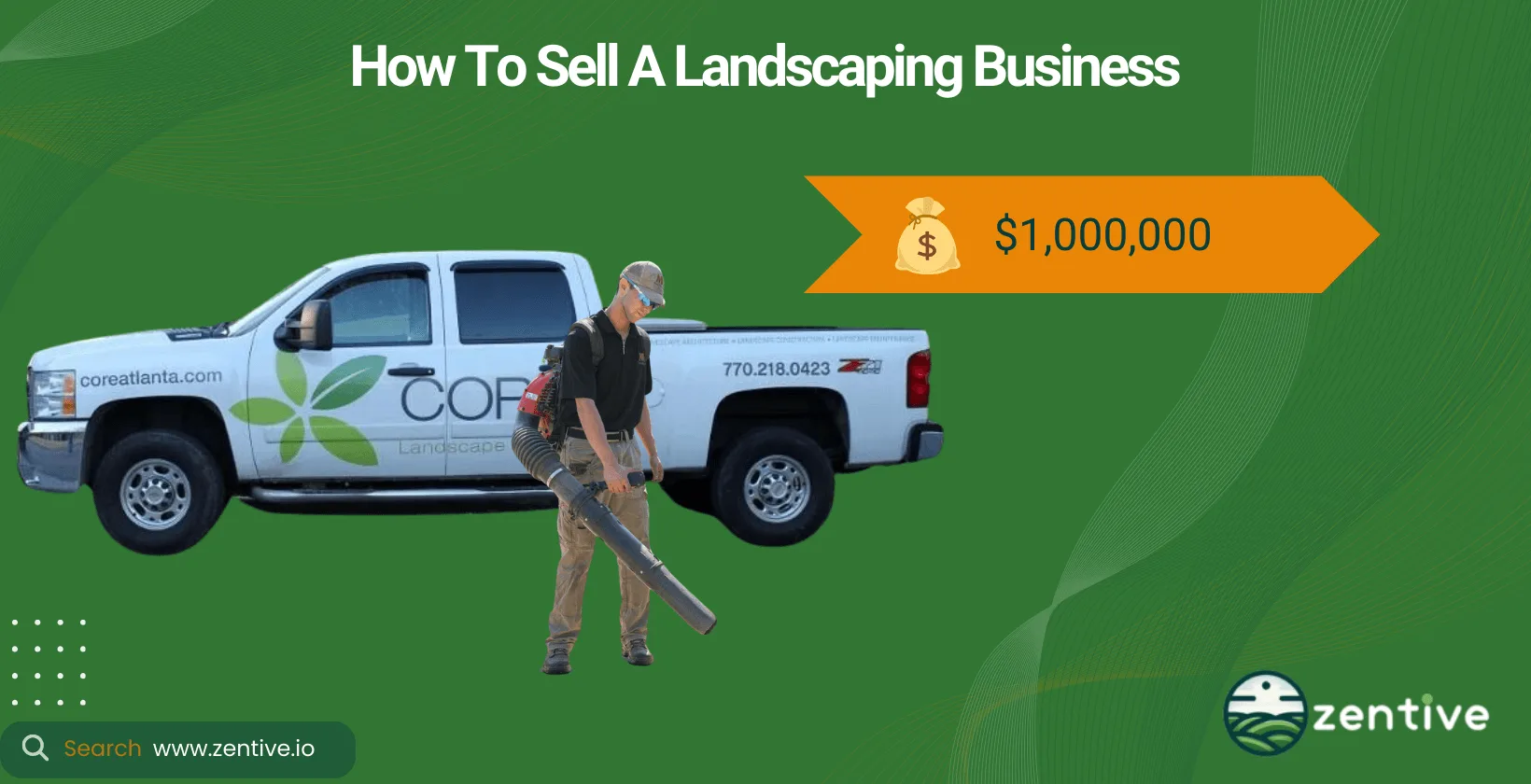
Maximizing the value of a landscaping business during sale requires effort. You can sell to the first buyer, but considering the hard work and risk involved, you likely want to achieve maximum value.
Landscaping businesses are profitable when managed correctly. 65% of landscaping businesses earn over $1 million, with gross profit margins between 45% and 55%. The American landscaping industry was valued at $153.56 billion in 2023 and is set to grow to $221.19 billion in 2029.
Business owners either pass their business to the next generation or sell it. Reasons for selling include retirement, bankruptcy, pursuing new ventures, or capitalizing on a profitable market.
It's easy to sell a landscaping business to the first bidder, but to achieve maximum market value, follow key steps: preparing the business for sale, conducting a market analysis, making improvements, and marketing to potential buyers.
When selling, you must value your company's worth. The most common valuation strategy is multiplying yearly revenue while considering factors like customer base, service diversity, equipment condition, and operational efficiency.
Landscape Business Valuation Estimator
Enter your yearly revenue and business type to see an estimated value range based on common revenue multiples.
Typical Multiple Range 2.0× – 3.0× yearly revenue These are illustrative ranges. Always confirm with a broker or appraiser.
Below are the steps to follow when selling a landscaping business.
- Prepare For The Sale: Preparation organizes business documentation for buyer attraction.
- Conduct Market Analysis: Analysis determines pricing through comparable sales research.
- Make Improvements: Improvements increase value before business listing.
- Market Business For Sale: Marketing promotes business across channels for buyer visibility.
- Negotiate Sale Offers: Negotiation evaluates offers for deal optimization.
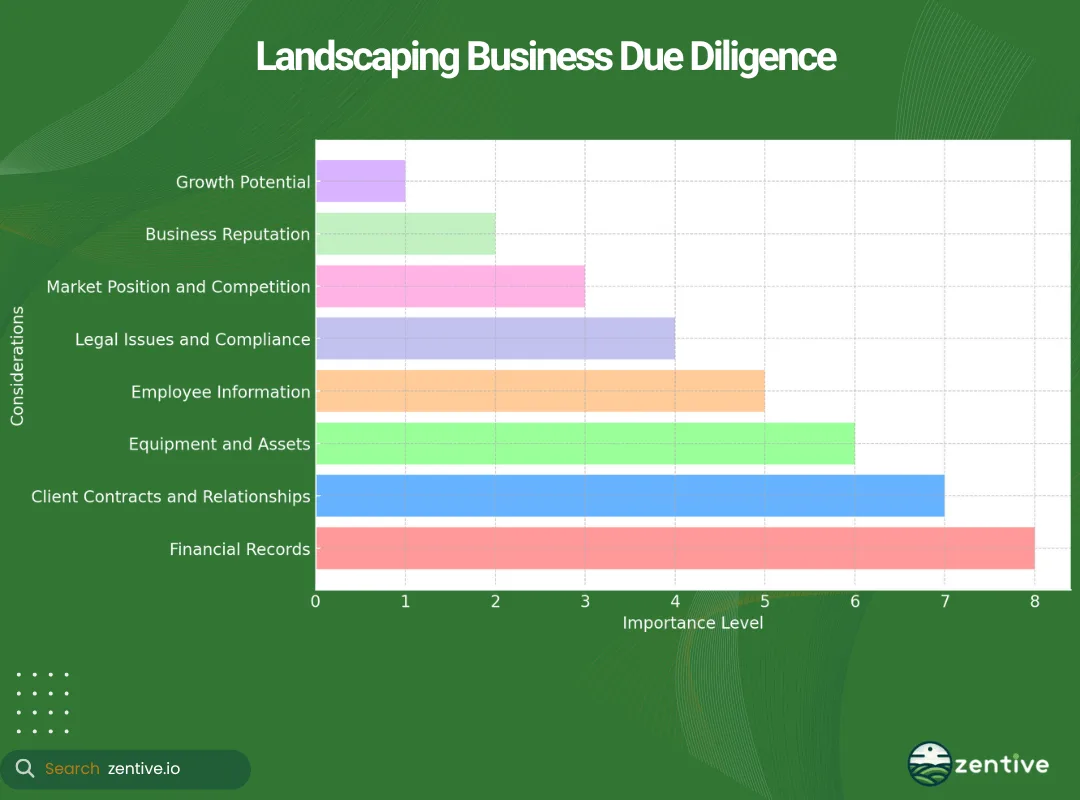
- Buyer Due Diligence: Diligence verifies information through transparent record access.
- Finalize the Sale: Finalization transfers ownership through legal documentation.
- Provide Post-Sale Support: Support assists owners during business transition.
1. Prepare For The Sale
Preparing for the sale of a landscaping business means organizing all aspects of your business to make it attractive to potential buyers.
You prepare for the sale by gathering all necessary documentation, including financial statements (cash flow statements), contracts, list of assets (tangible and intangible assets), and employee records. Remember, the potential bidder will see proof that your company is doing good. It's important that you address any outstanding legal or regulatory issues before selling a landscape business.
Preparation is key, as it provides transparency, builds trust with potential buyers, and helps streamline the entire sales process.
2. Conduct Market Analysis
Landscapers conduct market analysis before attempting to sell a landscape business. This step involves researching the current marketing conditions and evaluating similar landscaping businesses to determine the value of your landscaping business.
The best strategy for market analysis is to analyze recent sales of similar businesses in your area. When analyzing recent landscaping sales, consider location, size, revenue, and growth potential. It's advised to consult with a business broker or valuation expert for additional insights.
We mainly do market analysis because it helps set a realistic price for both the buyer and the seller.
| Step | Description |
|---|---|
| Research Current Market Conditions | Investigate the current state of the landscaping market, including trends, demand, and economic factors that could influence the sale. |
| Evaluate Similar Businesses | Analyze recently sold landscaping businesses that are similar in size, location, revenue, and services offered to understand market value. |
| Consider Location | Examine how the geographical location affects the value of the business. Areas with higher demand for landscaping services typically yield higher values. |
| Analyze Business Size | Look at the size of the business in terms of employee count, client base, and service capacity. Larger businesses may have higher values. |
| Assess Revenue | Review the business's revenue streams, including past and projected earnings, to gauge financial health and attractiveness to buyers. |
| Evaluate Growth Potential | Consider the business’s potential for future growth based on market trends, expansion opportunities, and current growth rates. |
| Consult with Experts | Engage with business brokers or valuation experts to get professional insights and accurate valuation of the business. |
| Set Realistic Pricing | Use the gathered data to establish a fair and realistic price that benefits both the buyer and the seller. |
| Understand Buyer Preferences | Identify what potential buyers are looking for in a landscaping business, such as established client lists, brand reputation, and profitability. |
| Prepare Financial Documentation | Compile comprehensive financial records, including balance sheets, income statements, and cash flow statements, to support valuation. |
3. Make Improvements
Just like you would improve a home when putting it on the market to boost its valuation, so too would you make improvements to make your landscaping business more appealing before listing it.
The main areas of improvement are usually operational inefficiencies, updating equipment, improving customer service, and renovating your business headquarters (painting and general renovations).
Remember, we want to maximize the value you're getting for your business, and improvements help do just that. It can significantly increase the value of your business, making it more attractive to buyers and potentially leading to a higher sale price.
4. Market Business For Sale
Marketing your business for sale involves promoting it to buyers through different marketing channels. Landscapers list their landscaping business in a local business directory and business-for-sale websites, engage with business brokers, and even advertise on social media platforms.
The main reason why you market your landscaping business as for sale is to increase its visibility to a larger pool of buyers. Your sale price increases with more interested buyers.
5. Negotiate Sale Offers
After you've identified potential buyers, it's time to negotiate the sale offers. Negotiating sale offers means discussing and finalizing the terms of the sale with interested buyers.
Landscapers negotiate sale offers by evaluating each offer based on price, terms, and the buyer's qualifications. In the negotiation stage of selling a landscaping business, it's vital that you include payment structure, transition period, and included assets. Consult legal and financial advisors to ensure you get favorable terms and the best possible deal for your business.
6. Buyer Due Diligence
The next step is the buyer's due diligence. It is the process where the potential buyer examines all aspects of your landscaping business to confirm its value and that what you state on your business papers is true.
Landscapers provide access to their financial records, operational data, and other relevant information (legal disputes or anything that can potentially harm the new business owner). This step presents challenges, requiring patience and a willingness to provide every document they request. They're investing a lot of money in your business and want to ensure they're getting a good deal. The more transparent you are in providing your documents, the easier and faster the sales process will go.
7. Finalize the Sale
Finalizing the deal to sell your landscaping business occurs after settling on an agreement. Finalizing the sale involves completing all legal and financial steps to transfer ownership of the business to the buyer.
Work with lawyers and financial professionals to draft and review the sale agreement. Ensure all conditions are met and the transfer of assets is properly documented. Close the sale by signing the necessary documents and transferring ownership.
Finalizing the sale legally transfers ownership to the new landscape business owner, ensuring both parties fulfill their obligations and protect against future disputes.
8. Provide Post-Sale Support
Providing post-sale support means assisting the new owner during the transition period to ensure the business remains successful. You're proud of what you built, so of course, you would want to see its continued success.
You can offer the new owner training and support on business operations, client management, and staff coordination. This will really help them understand the landscaping business's operations.
How to Sell a Landscaping Business for Maximum Profit
Selling a landscaping business for maximum profit involves maintaining strong financial records (great yearly revenue), streamlined business operations, building a strong and easily recognizable brand, and diversifying your services.
Consistent profitability is the most critical factor in maximizing your business valuation. Nobody wants to buy a sinking ship. Buyers are most interested in businesses that show a stable or growing profit margin. They want a low-risk investment with the security of continued profit.
Several strategies exist to increase sale valuations for different types of landscaping companies.
What Are Tips for Selling a Lawn Care Business?
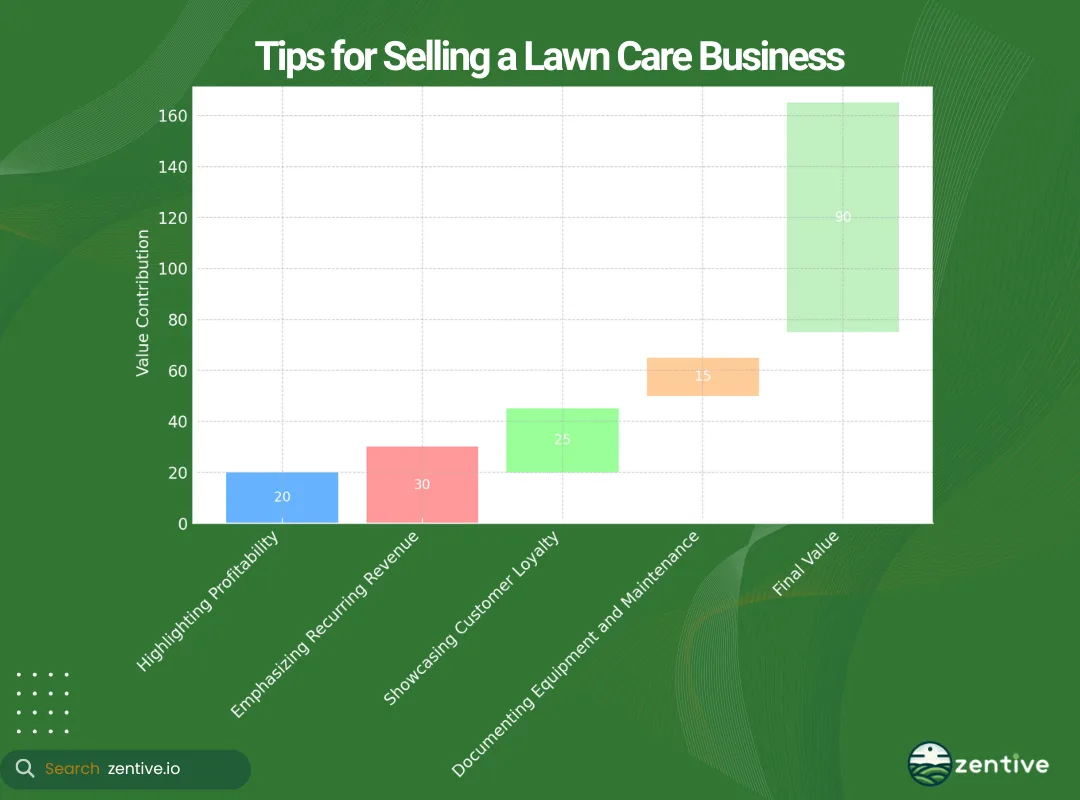
Tips for selling a lawn care business include highlighting profitability and focusing specifically on recurring revenue, showcasing customer loyalty, and documenting equipment and maintenance.
Recurring contracts comprise the majority of a lawn care business's clients for services like mowing, fertilization, and maintenance. This steady and reliable income is what new business owners want to see, so it's best to emphasize it.
You can further emphasize this recurring revenue by demonstrating your loyal customer base by showcasing long-term contracts and high customer retention rates. You can even perform customer satisfaction surveys and testimonials.
Documenting equipment and maintenance is important. Keep detailed records of all equipment, including purchase dates, maintenance history, and current condition. Business owners want to know that the assets they are buying with the company are in good condition, and keeping detailed records helps provide reassurance.
What makes the valuation of a lawn care business unique is the fact that its valuation is largely based on its recurring revenue streams and customer loyalty. The majority of a lawn care business's clients are recurring, so the valuation will largely be determined by the number of these recurring clients.
What Are Tips for Selling a Tree Service Business?
When selling your tree service business, highlight the cost of obtaining a new customer and recurring revenue in your financial records, as well as emphasizing certifications and specialized equipment.
Tree service clients are mostly once-off, so you must highlight the effort and money it takes to obtain a new client. It will help the sales process significantly if your numbers look attractive. Demonstrate all your safety certifications, training programs, and safety records. As you know, tree services involve high-risk activities, so having all the pertinent and required certifications will help assure buyers of your commitment to safe operations.
Finally, tree service businesses require specialized equipment. Provide a comprehensive list of your equipment, along with maintenance records and any warranties. Be sure to highlight niche services if you offer any specialized services, such as disease diagnosis, tree preservation, or emergency storm response.
What makes valuing a tree service business unique is the large emphasis on the cost per conversion (CPC) and the business's safety record. Buyers will consider your specialized equipment and niche services in their own valuations.
What Are Tips for Selling a Snow Removal Business?
The main tips for selling a snow removal business are to show seasonal revenue year after year, highlight reliable contracts, and showcase emergency response capabilities. Snow removal businesses have some of the most fluctuating incomes in the landscaping industry, so providing financial records that show consistent revenue will make your business seem much more attractive.
Potential buyers will value your snow removal business on the basis of how quickly your crew members respond to snow emergencies. Clients usually hire a snow removal business based on their response time, which is why buyers place a large emphasis on this factor. Highlight your response times, customer satisfaction during emergencies, and any contingency plans.
The soundness of income determines the value of a snow removal business, i.e., consistent revenue. Buyers will look at the business's ability to handle emergency situations efficiently. It will only sweeten the deal for buyers if your response time is faster than the competition's.
How to Value a Landscape Company?
Value a landscape company by using three main valuation methods when selling your landscaping business.
- Multiple of Yearly Revenue: The most common method and values the business based on a multiple of its annual revenue. For example, a landscape company with consistent revenue and a strong market presence can have a value of 2-3 times its yearly revenue.
- SDE (Seller's Discretionary Earnings): SDE is calculated by adding back any discretionary expenses to the net profit. These expenses include the owner's salary, personal benefits, and other non-essential costs. This gives a clearer picture of the actual earnings that a new owner can expect. It's particularly useful for small to medium-sized landscaping businesses where the owner's involvement is significant.
- EBITDA (Earnings Before Interest, Taxes, Depreciation, and Amortization): EBITDA focuses on the business's operating performance by excluding non-operational expenses. This method is often used for larger landscaping businesses with significant capital investments. It helps potential buyers understand the business's profitability from core operations without the influence of financing and accounting decisions.
In addition to performing a valuation based on these three main methods, take to a business broker or appraiser to get a professional opinion and double-check your valuation calculations. Building a strong, recognizable brand creates a highly valuable landscape company.
What Are the Most Valuable Landscape Companies?
The three most valuable landscape companies include BrightView Holdings, TruGreen, and The Davey Tree Expert Co
- BrightView Holdings, Inc.: With a 2021 revenue of $2,553,600,000, BrightView Holdings is the most valuable landscaping company.
- TruGreen: This company has a revenue of $1,500,000,000, making it the second most valuable landscaping company based on revenue. They are one of the leading providers of lawn care services.
- The Davey Tree Expert Company: With a revenue of $1,378,053,000, this company is the most valuable specialized tree and environmental services company.
Where to Sell a Landscaping Business
You can sell your landscaping business either through a broker or by selling it online. Opting for a business broker is always a good idea when it's a mid to large-sized landscape business, as it can provide valuable assistance in finding qualified buyers, negotiating terms, and handling the sale's legal aspects. You can find brokers through industry associations, referrals, or online directories.
Alternatively, you can sell your business through online platforms such as BizBuySell and BusinessBroker.net. Posting on these websites is easy and grants you access to a large audience.
What Factors Affect Landscape Business Valuation?
There are seven factors that affect your landscape business valuation.
- Number of Customers: The more customers you have, the higher your business's value, as you'll likely have higher revenue and won't be significantly impacted when you lose one client.
- Expand Services: Offering more services increases your business's appeal as it shows that you can generate income from multiple revenue channels.
- Condition of Equipment: Well-maintained equipment is essential. Buyers prefer businesses with reliable, fairly new tools, reducing their need for immediate investment.
- Automate Your Business: Automation improves efficiency and profitability. Implementing business management software streamlines operations, making the business more attractive to buyers.
- Hire Great Employees: Labor is one of the most influential factors of business success, especially in the landscaping industry, which is why skilled employees are a valuable asset. They ensure high-quality service and smooth operations, positively impacting the business's valuation.
- Type of Clients: The nature of your client base matters. Commercial clients with long-term contracts often bring in more stable revenue streams than residential clients.
- State Business Operates In: Location impacts valuation. Due to greater market opportunities, businesses in states with high demand and low supply for landscaping services typically have higher valuations.
How to Get More Landscaping Customers?
To get more landscaping customers, focus on your marketing, excellent customer service, and building a strong online presence. Increased visibility directly correlates with higher customer acquisition rates.
Start using social media, local advertising, and SEO to get more landscaping customers. Tailor your marketing efforts to attract your ideal customer base. Emphasize excellent customer service. The better your services are, the more existing customers you retain and the likelier they are to advertise your services word-of-mouth to friends and family.
Maintain a strong online presence through a professional website and active social media profiles. Positive online reviews and engaging content are great ways to attract new clients.
Acquiring additional customers increases company value prior to sale. A large customer list makes your company more valuable upon sale.
Can You Sell Your Landscaping Customer List?
Yes, you can sell your landscaping customer list. While it might appear as just a list of customers to market services to, they are actually pretty valuable. Once-off clients won't go for much. It's the long-term customers who are the most valuable. A customer list containing long-term contracts can sell for 0.5 to 1.5 times the annual revenue.
How to Expand Landscaping Service Offerings?
To expand your landscape service offerings, identify services that are related to your current services. For instance, if you offer lawn mowing, you can start offering edging and leaf removal. Offering more services increases your market reach and revenue.
Expanding the list of services for landscaping business to include additional services increases your company's value. It shows potential buyers that the business has several revenue streams.
You'll need to ensure that expanding your services is worthwhile, as you'll need to invest in the necessary tools and equipment.
How Does Equipment Condition Affect Landscape Business Appraisal?
Equipment condition significantly impacts a landscape business's appraisal. Buyers will pay more for a business when they know its equipment is well-maintained and in good condition because this ensures that they won't have to put extra investments into new equipment when they start running the company.
Keeping track of all the landscaping equipment is no easy task. Luckily, software can help. Businesses can implement software to keep track of their list of landscaping business equipment, including monitoring equipment conditions and service dates.
How to Automate Your Landscape Company?
You can automate your landscape company by implementing business management software. Landscape company management software is an excellent tool for managing employees, schedules, client relationships, and more. The main reason why companies invest in this software is to reduce admin overhead and streamline profitability, both of which can increase a business's valuation.
Why Are Great Landscape Employees Important for Business Valuation?
Great employees are crucial for business valuation because they ensure consistent, high-quality service. Employees can either make or break a business, especially a landscaping business. Roughly 51% of landscape company owners agree that finding quality employees is one of their greatest challenges.
Hire employees who serve your specific client base (commercial, residential, contractor, design, etc.) to ensure smooth operations and a higher business evaluation. You'd be surprised by how many brokers state that good employees make it easier to sell a landscape company, as buyers value a skilled and reliable workforce.
How Does Type of Client Affect Landscaping Business Value?
The type of client significantly affects the value of a landscaping business. There are different types of clients in the landscaping industry, including residential (homeowner clients), commercial (businesses), and municipal. Of the types of clients mentioned, commercial clients usually generate higher revenue and longer contracts, which makes them sell for more money.
Do Commercial Contracts Make a Landscape Business More Valuable?
Yes, commercial contracts make a landscaping business more valuable. Commercial contracts yield stable, long-term revenue streams. They are often larger and more lucrative than residential contracts, making the business more attractive to potential buyers.
It might be wise to learn how to get commercial landscaping contracts if you're thinking of selling your landscaping business.
Where to Buy Existing Landscaping Business?
You can buy an existing landscaping business on online websites, locally through a broker, or by directly approaching the landscaping business owner. You can buy an existing landscaping business through brokerage websites, online marketplaces (BizBuySell), and landscaping platforms.
You can opt for the local route. This includes finding a potential landscaping business through industry networks and associations, networking events, and directly contacting landscaping business owners or brokers.
Entrepreneurs can start their own business instead of buying an existing one. This will largely depend on your risk appetite, budget, experience, and market conditions. Buying an established business provides immediate income and a client base, while starting a new business allows for more control and customization - you build your brand the way you envision it.
Should You Start a Landscaping Business?
Yes, you should start a landscaping business if you have a passion for landscaping-related services and entrepreneurship. It's a better option if you don't have the money to buy an existing landscaping business, as you can simply apply for a grant or loan.
You'll need to learn how to start a landscaping business and everything it entails, including building a strong brand, providing quality services, and acquiring loyal customers.
Get This Guide as a PDF
Save this article for offline reading. We'll send a formatted PDF straight to your inbox.
No spam. Unsubscribe anytime.
Ready To Streamline Your Field Service Business?
Zentive is the all-in-one field service management software built for landscaping, lawn care, tree care, and snow removal businesses. Start your free trial today.
No credit card required · Cancel anytime