
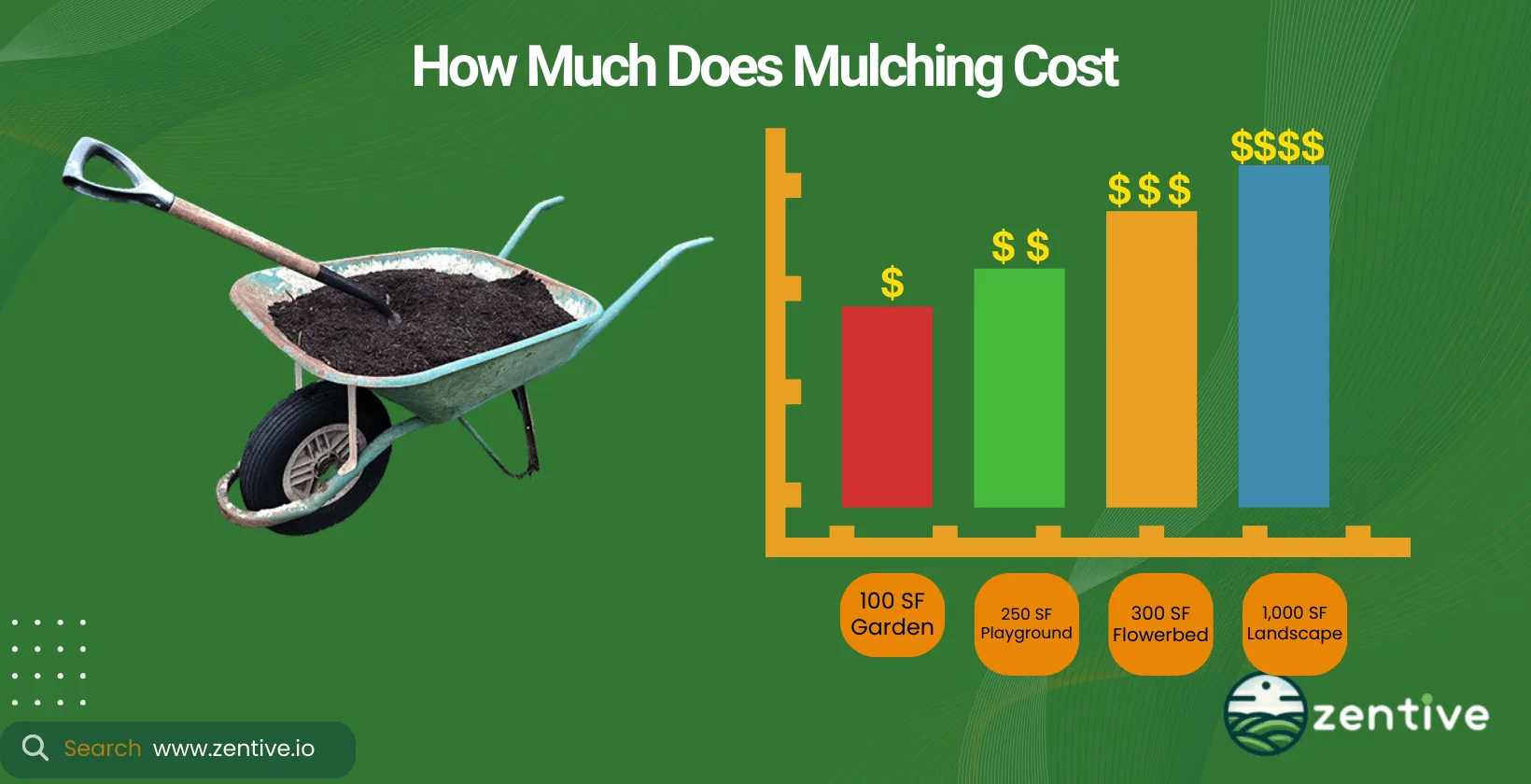
The average mulch price per cubic yard usually ranges from $20 to $60, based on type (organic vs. inorganic), quantity, delivery fees, and labor costs. Mulching is a landscaping maintenance service that covers soil with a material layer to enhance soil health, conserve moisture, suppress weeds, and improve visual appeal. Pricing mulching jobs accurately is challenging due to fluctuating material costs and labor estimates. Clients often ask, "how much is a yard of mulch?" and should receive honest answers.
Bidding on mulching jobs requires considering these factors and conducting a precise property size and condition assessment. The best way to stand out from competitors and price jobs effectively is to use landscape estimating software. This technology streamlines the bidding process, ensuring accurate and competitive quotes.
What Is Cost Of Mulch?
The cost of mulch ranges from $3 to $8 per bag or $15 to $65 per cubic yard. The cost of mulch per yard differs significantly based on the type and quantity you buy. Residential areas typically require only small bags of mulch as it's only for small-scale garden projects.
The difficult question to answer is "How much is mulch per yard?" when it's a large-scale project, as more variables come into play. Mulch suppliers typically estimate between $15 to $65 per cubic yard for bulk orders when it's a truckload. It's noteworthy to state that the mulch cost on bulk orders is cheaper as it accounts for the cost savings associated with purchasing in larger quantities.
The overall cost increases when considering mulch installation as professional landscaping services charge for the cost of mulch, delivery, and labor for spreading the mulch across the desired area. The table below outlines the cost of mulch depending on the size of the job.
| Type of Mulch | Cost per Bag | Cost per Cubic Yard | Notes |
|---|---|---|---|
| Mulch (small bags) | $3 to $8 | N/A | Suitable for small-scale garden projects |
| Mulch (bulk orders) | N/A | $15 to $65 | Cheaper in bulk, typically for large-scale projects |
| Mulch with Installation | N/A | Varies | Includes cost of mulch, delivery, and labor |
What Is The Cost Of Mulch Plus Labor?
The total cost for mulch plus labor ranges from $200 to $600 for a typical project. This price is subject to change depending on the client's project size and the rates you charge. Landscapers generally charge between $50 to $70 per hour for their services, but this can vary by state and local market conditions; e.g., a landscaper in New Jersey won't charge the same as a landscaper in Florida.
What Is The Cost Of Mulch Per Bag?
The cost of mulch bags ranges from $3 to $8, depending on the mulch type and quality. Many people, especially residential clients, choose to buy bagged mulch instead of by truck. This is because bagged mulch offers more convenience, especially for smaller or DIY projects, as bags are easier to transport and spread compared to bulk quantities.
How Much Do Landscapers Charge For Mulch Jobs?
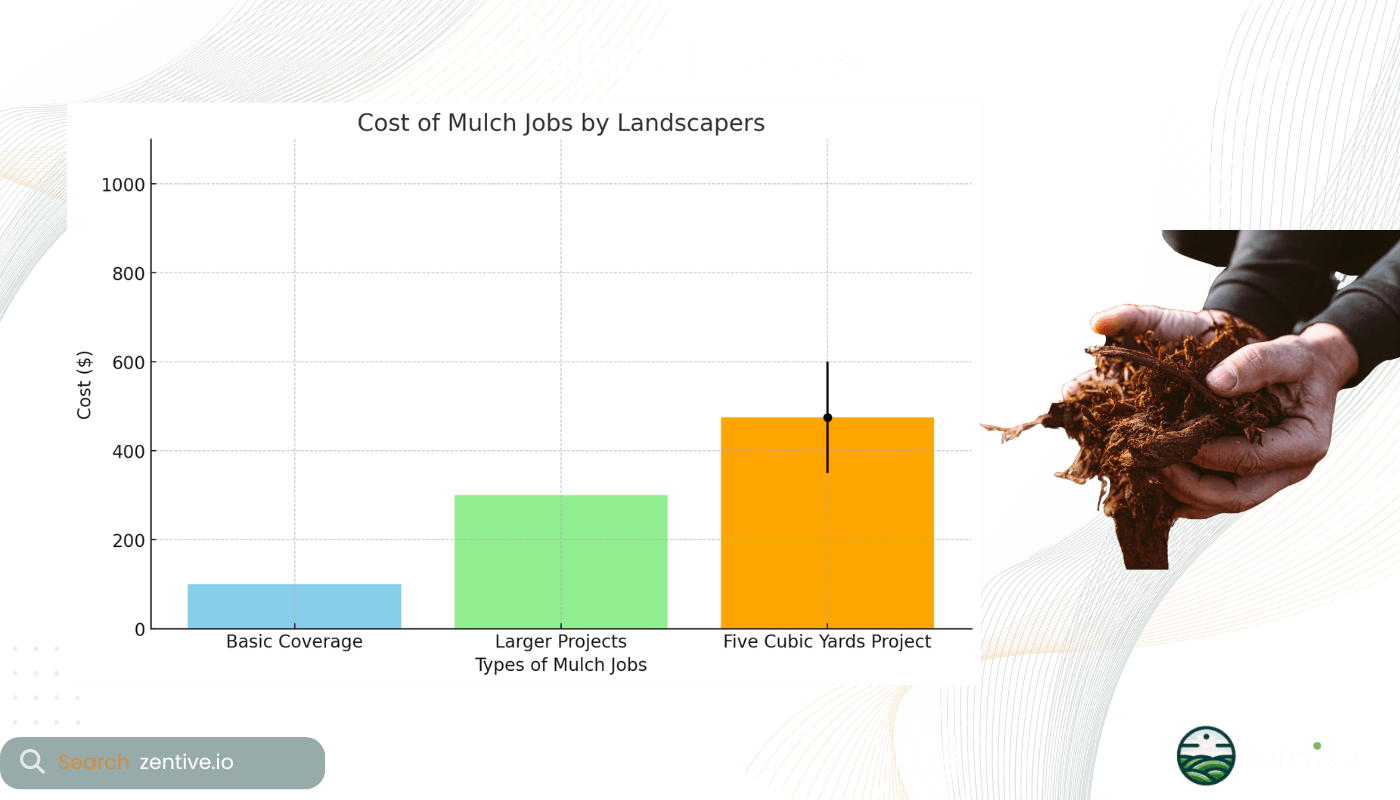
Landscapers usually charge between $100 and $300 for basic coverage but can go up to $1,000 for larger projects. This price includes the cost of materials, delivery, and mulch installation.
Let's say a client has a mulching project that requires five cubic yards of mulch. The mulch might cost $150 depending on the mulch supplier, with labor costs adding an additional $200 to $450, totaling a possible range of $350 to $600 for the completed project as shown by the below graphic.
What Is Mulching?
Mulching is a landscaping service that refers to the process of applying a layer of material over the soil surface. You first prepare the soil by removing weeds and loosening it, then incorporate fertilizer, and finally spread the mulch in a layer of 5-15 centimeters, keeping a sufficient distance from plants' stems and trunks.
People do mulching because it leads to better moisture retention, temperature regulation, weed prevention, and even improves the area's visual appeal. Both residential and commercial clients want mulch as it improves the garden's health and ensures the business's outdoor space looks top-notch, reflecting brand quality.
What Are Types Of Landscaping Mulching Jobs?
There are five types of landscaping mulching jobs.
- Garden Mulching: Improves soil quality and plant health by retaining moisture and suppressing weed growth.
- Playground Mulching: Provides a safe, cushioned surface for playgrounds, using materials like wood chips.
- Pathway Mulching: Used for creating visually appealing and functional walkways in gardens and landscapes using materials like wood chips, gravel mulch, pine bark, or sawdust.
- Seasonal Mulching: Applied during the colder seasons to protect plants from extreme temperatures and seasonal changes.
- Erosion Control Mulching: Prevents soil erosion by stabilizing the soil surface in soil erosion-prone areas, such as areas with a steep gradient or that experience high rainfall.
How To Create Estimate For Mulching Jobs?
Estimating a mulching job includes a variety of steps to provide your customer with an accurate and reasonable price. There are six steps you'll need to master if you want to know how to price landscape jobs accurately and competitively.
- Measure and Assess the Job Site: Evaluate the area by measuring its dimensions and analyzing terrain features, vegetation, and obstacles to determine the mulching project's scope.
- Calculate Material Requirements: Estimate the volume of mulch needed by considering the coverage area, desired depth, and potential material loss during installation.
- Estimate Labor Costs: Calculate the total labor expense by determining the required work hours, number of workers, and local wage rates for the mulching job.
- Account For Administrative Expenses: Factor in additional costs such as permits, insurance, scheduling, and overhead to capture the full scope of project expenses.
- Pick A Pricing Strategy: Select a pricing approach that integrates material, labor, and administrative costs with your target profit margin and market conditions.
- Send Your Quote: Deliver a clear and detailed quotation that outlines the project scope, costs, and terms to the client in a professional manner.
1. Measure and Assess the Job Site
Measuring the job site means physically quantifying the size of the project. Landscapers should always start with a site visit to take their own measurements and assess the job. It's important you do so as to get a general idea of the scope of work; this will help you create better estimates. It shows the client that you're professional and take their requests seriously.
During the visit, measure the client's property to determine the area that needs mulching. This will help you estimate how much mulch you will require. Observing site conditions such as slopes, existing plants, or hard-to-reach areas is essential, as these factors can significantly impact both labor and material requirements.
Remember, a precise assessment ensures that your estimate reflects the true scope of the work.
2. Calculate Material Requirements
Calculating material requirements for a mulching job involves three main elements: choosing the mulch type, determining mulch depth, and then calculating the volume of mulch needed. First, choose the mulch type. Decide between organic (e.g., bark, compost) or inorganic (e.g., rubber, rocks) mulch based on the job's requirements and client preference.
Next, determine mulch depth. A 2-4 inches depth is standard but can change depending on the mulch type and the area's needs. Finally, calculate the volume of mulch needed. To do this, multiply the area's square footage by the desired depth (in feet) and divide by 27 to convert to cubic yards (the common measurement for mulch volume).
Sample Calculation: If the client's garden bed is 50 feet long, 10 feet wide, and you want a 2-inch deep layer of mulch, you would calculate:
50 ft × 10 ft × 2 in = 1000 cubic inches
1000 cubic inches ÷ 12 in/ft = 83.33 cubic feet
83.33 cubic feet ÷ 27 = 3.09 cubic yards
In this example, three cubic yards of mulch will be needed for this garden bed.
3. Estimate Labor Costs
Labor costs account for the time you and your employees will take to complete the job. This includes preparing the site, spreading the mulch, and any cleanup afterward. The method of mulch application - hand or blowing - affects both the hours worked and the price. Blowing is usually quicker but potentially more costly due to equipment use. Larger and more established landscape companies typically use the blowing method.
To calculate labor costs, you can use this formula: Labor cost = Labor hours x Labor rates.
4. Account For Administrative Expenses
Administrative costs cover the behind-the-scenes aspects of running your business, such as office rent, utilities, and administrative employee salaries. These costs, while not directly tied to a specific job, should be proportionately included in each job's estimate to ensure all aspects of your business are financially supported. Admin expenses are the profit killers, as many people forget to include them in their quotes, so you should always include them in your job estimate.
5. Pick A Pricing Strategy
As a landscaper who offers mulching services, you can choose from three pricing strategies.
- Cost-Plus Pricing: Calculating all costs associated with the job and adding a markup for profit. This is straightforward and ensures all costs are covered. It's the most common pricing strategy landscapers use.
- Value-Based Pricing: Setting prices based on the perceived value to the customer rather than just the cost. This can be more profitable but requires understanding the client's valuation of your service. It's often very difficult to explain to a client why you charge this amount based on the value you add, as each person's perception of value differs.
- Competitive Pricing: Pricing services based on market rates. This requires research but ensures your prices align with what clients expect to pay. For instance, if your closest competitor bids $300 for a job, then you underprice by $20 to look more attractive to the client. You can overprice by $20, but then you'll have to explain to the client what that extra $20 brings to the table, i.e., what additional value you can add.
6. Send Your Quote
Once all calculations are done, you compile your findings into a clear, professional quote and send it to your client. This step might seem simple enough, but it's where you either land or lose a client, as human error can cause inaccurate estimates, or the estimate might even look unprofessional.
What is the solution to help you win more bids? Utilizing estimating software. This type of software can automate and streamline the quoting process, ensuring accuracy and efficiency. Software like Zentive can store job details, making it easy to reference or adjust quotes as necessary. Most estimating software has professional estimating software you can use.
What Factors Affect Price Of Mulching Jobs?
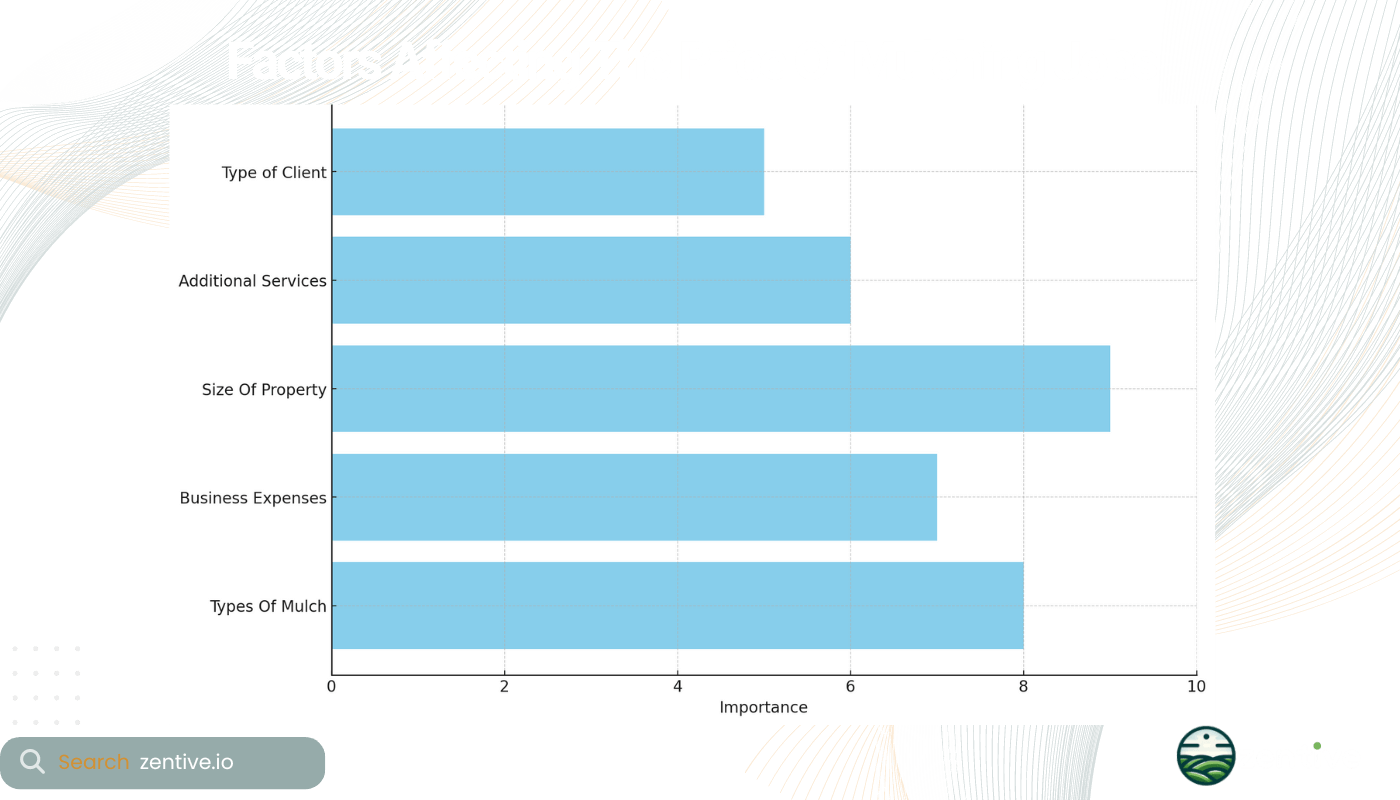
There are five main factors that affect the price of mulching jobs.
- Types Of Mulch: Different mulch materials lead to different mulch costs. Organic mulches are generally more affordable than inorganic ones. The choice of mulch impacts both the initial material cost and the longevity of the mulch, affecting overall value.
- Business Expenses: The total cost of materials, labor, equipment, and transportation, as well as the general overhead of running the business.
- Size Of Property: Larger properties require more materials and labor, increasing the overall cost. The scope of the mulching project directly impacts the amount of mulch needed, and the time it takes your team to apply it.
- Additional Services Being Provided: Services such as weed removal, soil preparation, and edging, when done in conjunction with mulching, can increase the total cost of the project.
- Type of Client (Residential or Commercial): Commercial jobs usually have larger areas or require more durable, costly materials, affecting the final price. Residential jobs are typically smaller but might demand more detailed work, affecting pricing.
What Are The Different Types Of Mulch?
There are two main types of mulch: organic and inorganic. Organic mulch is made from naturally occurring materials and can improve soil fertility as they decompose.
- Bark Mulch: Ideal for trees, shrubs, and garden beds, it decomposes slowly and provides a natural look.
- Straw: Excellent for vegetable gardens, offering great insulation and moisture retention.
- Grass Clippings: Easily accessible, they decompose quickly, adding nitrogen to the soil.
- Leaves (Leaf Mold): Improve soil structure and nutrient content, suitable for all garden areas.
- Compost: Enriches the soil with nutrients but should be finely textured to serve as mulch.
- Wood Chips: Commonly used for paths and large areas, they decompose moderately fast and improve soil texture.
Inorganic mulch does not decompose, providing a more permanent solution. Below are the 5 main types of inorganic mulch commonly used by landscapers.
- Rubber Mulch: Offers excellent insulation and moisture retention and is often used in playgrounds.
- Rock or Stone: Ideal for areas that need good drainage, available in various sizes and colors.
- Landscape Fabric: Suppresses weeds while allowing water and air to pass through.
- Plastic Sheeting: Effective weed barrier, best used in vegetable gardens.
- Glass Mulch: Mostly serves a decorative role, reflecting light and adding color to the landscape.
What Are Business Expenses For Mulching Jobs?
Business expenses for mulching jobs are all the expenses your business incurs when performing a mulching job. Material costs are the price of the mulch itself, which can vary based on the type (discussed above) and quality.
Labor costs are the wages you pay your workers for the time spent on the job, from preparation to application to cleanup. Equipment costs are the expenses for any specialized equipment used, including mulch blowers.
Transportation costs are the cost of delivering the mulch to the job site, as well as travel costs for you and your team. It might seem absurd to charge for your traveling costs, but remember those profit killers we addressed earlier. Fuel costs are an ever-growing concern, especially in 2024, so be sure to factor that into your business expenses.
Business overhead includes indirect costs like office rental, utilities, insurance, and marketing. All these should be combined to determine cost per mulch project & to ensure a certain level of profit. Landscapers can take advantage of Zentive's free profit margin calculator.
What Landscape Services Are Related To Mulching?
Before you mulch a property, there is a list of different landscaping services you should do to ensure the mulching job is performed properly. The below landscape services should be completed before mulching your property.
- Weed Removal
- Soil Testing and Amendment
- Planting
- Edging
- Soil Aeration
- Pruning and Trimming
- Cleaning and Clearing Debris
- Leveling and Grading
- Mulching Sheets
What Is Planting?
Planting is a type of landscaping service that involves setting plants (flowers, trees, etc.) into the soil in a certain way that promotes optimal growth and health. Doing this before mulching is essential to avoid disturbing the mulch layer and to ensure plants are properly settled. The cost of planting services per project can range from $100 to $500 for basic projects, and it can range all the way up to $5,000 for advanced installations.
What Is Trimming?
Trimming is a type of landscaping service that involves cutting back plants, shrubs, and trees to remove overgrown or dead parts, shape the plant, and promote healthy growth. Trimming before applying mulch reduces the risk of pest infestation and disease. The cost of hedge trimming services is generally affordable to moderately priced, totaling around $50 to $250.
What Is Grading?
Grading involves leveling or sloping the ground to ensure proper drainage and to prepare for landscaping activities like planting or mulching. Performing grading before mulching ensures the prevention of water accumulation and the longevity of the mulch. It can be an expensive service due to the equipment and expertise required. The cost of grading services is anywhere from $1,000 to $5,000.
What Are Tips For Pricing Mulch Jobs
Tips for pricing mulch jobs involve improving the accuracy of your quotes and increasing the efficiency of your pricing process. The first tip is to use landscape estimating software. Implementing software like Zentive streamlines the estimation process, allowing for quick adjustments and accurate quotes.
The next tip is to estimate time accurately. Understand how long tasks take, including delivery, preparation, and application, to avoid underquoting. Finally, avoid common issues such as inaccurate measurements, fluctuating material costs, and underestimating labor.
How Does Landscape Software Help Quoting Mulch Jobs?
Landscape estimating software, like Zentive, can help you quote mulch jobs by improving quote accuracy and efficiency.
Some estimating software for landscaping jobs automatically calculates the total cost by factoring in the size of the area, the depth of mulch needed, and the type of mulch. A cost calculator ensures that your quotes are accurate and competitive.
These tools save time by streamlining the quoting process, from measurement to final proposal, allowing for more quotes in less time. A standout feature of estimating software is that it can quickly adjust quotes based on real-time material cost changes or modifications to the job scope, ensuring up-to-date and accurate pricing.
How Long Does It Take To Spread Mulch?
An experienced team typically takes about an hour to spread a yard of mulch. The project timeframe can vary based on the landscape's complexity and your application method (hand vs blower).
A common mistake landscapers make is spreading mulch too thin, leading to inadequate soil coverage and moisture retention, not to mention a damaged brand reputation. Aim for a depth of 2-4 inches for optimal results.
What Are The Biggest Issues With Estimating Mulching Jobs?
The most significant issues in accurately estimating mulching jobs include inaccurate site measurements, fluctuating material costs, and underestimating labor requirements. Over- or underestimating the size of the area can lead to incorrect material and labor cost calculations. Fluctuating material costs can affect overall job costs if you do not monitor them closely. Failing to account for the time needed for site preparation, mulch application, and cleanup can result in lower profit margins.
Get This Guide as a PDF
Save this article for offline reading. We'll send a formatted PDF straight to your inbox.
No spam. Unsubscribe anytime.
Ready To Streamline Your Field Service Business?
Zentive is the all-in-one field service management software built for landscaping, lawn care, tree care, and snow removal businesses. Start your free trial today.
No credit card required · Cancel anytime