
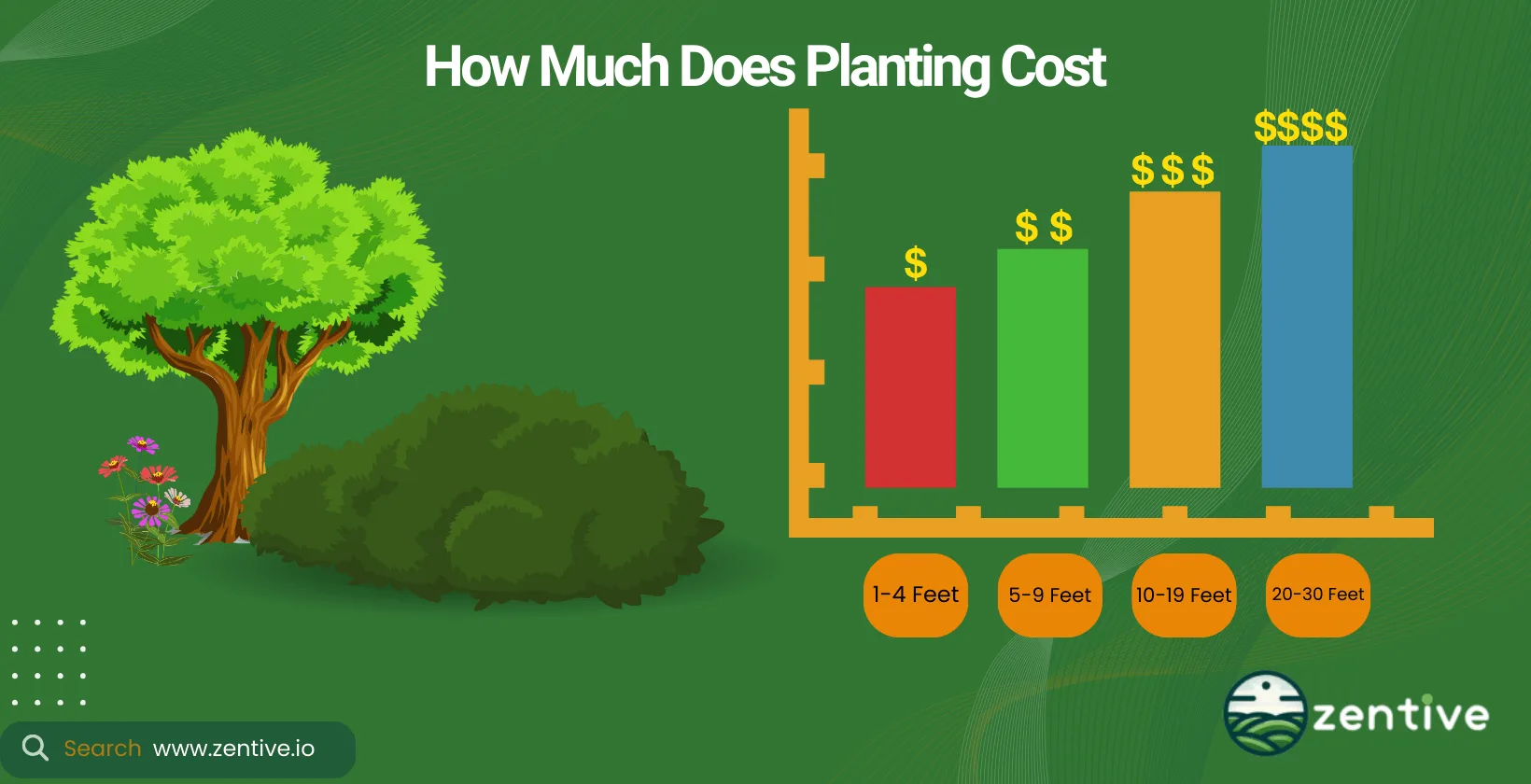
The cost of hiring a landscaper to plant a tree ranges from $150 to $3,000, based on size and species. Flower planting costs range from $50 to $500, depending on flower type and project scope. Planting shrubs and bushes costs $25 to $200 per plant, and planting grass seed ranges from $90 to $180 for an average-sized lawn.
Planting is a landscaping service that includes placing plants in a client's soil, pot, or garden for growth. Types of planting services include tree planting, flower planting, shrub planting, and grass seed planting.
Price your planting services accurately to stay competitive and profitable. Challenges in pricing include plant costs (type, seasonality), labor, and job site specifics.
Bidding on planting jobs requires site assessment, calculation of material and labor costs, and consideration of client needs. Failing to account for factors like plant type, quantity, delivery costs, and site conditions can reduce profit. A key tip for accuracy is using landscape estimating software to price planting jobs effectively.
What Is Planting For Landscapers?
Planting is a type of landscaping service that involves establishing plants in a client's outdoor space. For this landscaping business, you need to be able to select the right plants for the soil, climate, and overall landscape design and establish those plants within a pre-determined timeframe in the client's outdoor space.
Consider a scenario where your business offers tree-planting services. The process begins with choosing a suitable species, considering its full-grown size, root system, and the space available. Then, discuss suitable species with the client and recommend locations in the outdoor space. Dig the hole and plant the tree after receiving the green light from the client, Be sure to offer a ongoing maintenance service, ensuring regular upkeep and good health of the tree.
Planting has numerous benefits—plants enhance a property's visual appeal while contributing to its ecosystem by providing oxygen and shade, improving air quality, and offering habitat for wildlife. Clients ask for planting services to unlock the benefits mentioned above with the added bonus of not having to do the planting process themselves.
As a landscaper, you can offer several types of planting services, including tree, flower, shrub, and grass seed planting, each with its specific process and benefits.
What Are Types Of Landscape Planting Jobs?
There are four main planting jobs: tree, flower, shrub, and grass seed. All of the planting jobs have sub-types, requiring different care and conditions to thrive.
- Tree Planting: Involves planting saplings that will grow into trees, providing shade and improving air quality.
- Flower Planting: Adding annuals or perennials to gardens for aesthetic appeal, color, and variety.
- Shrub Planting: Establishing bushes and shrubs to enhance landscape structure and provide privacy.
- Grass Seed Planting: Seeding lawns to create lush green spaces.
What Is The Cost Of Planting Services?
The cost of planting services ranges from $25 to $3,000, but varies greatly depending on the type of planting service.
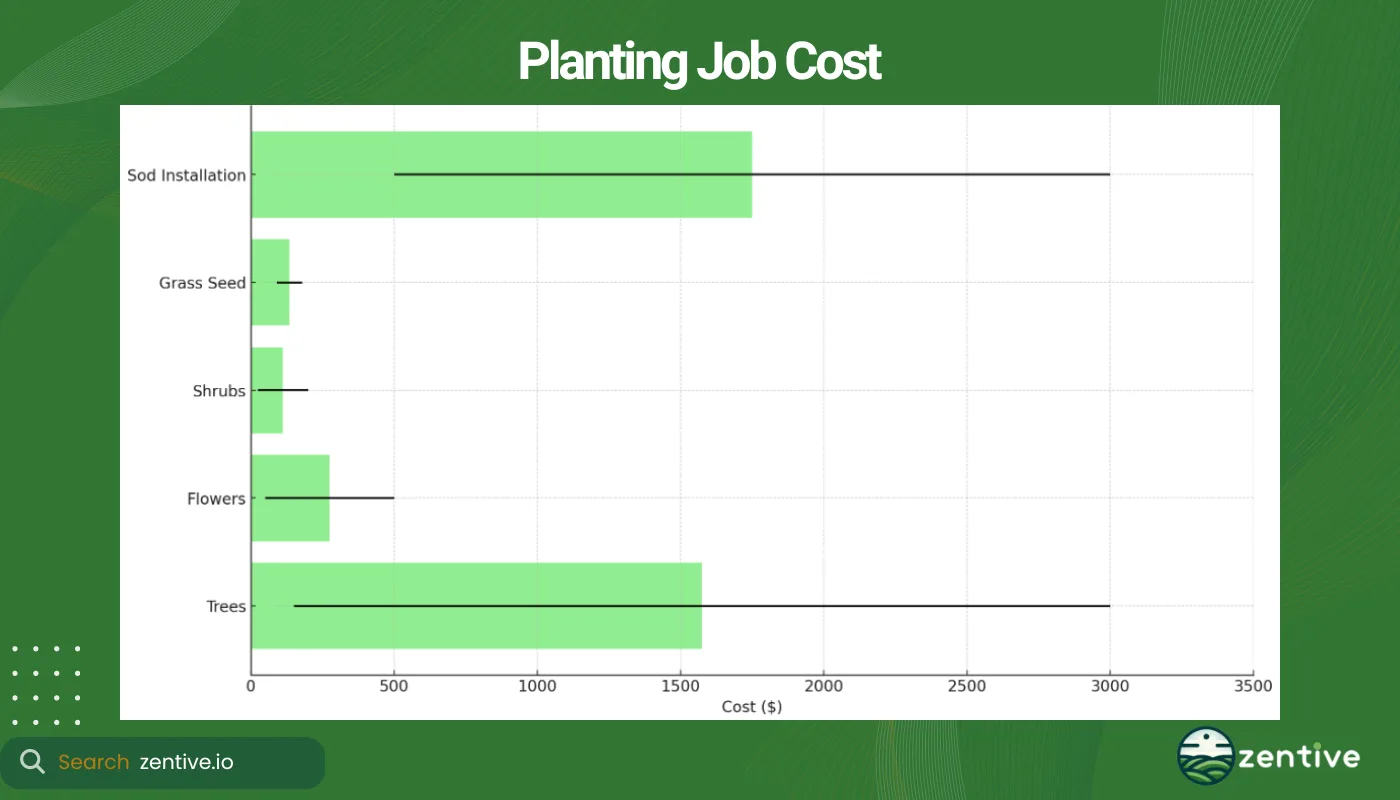
The cost of planting trees ranges from $150-$3000, depending on the soil, tree size and maturity. The cost of planting flowers ranges from $50-$500, based on the variety and quantity of flower beds the client wants. Depending on the species and size, the cost of planting shrubs ranges from $25 to $200 per shrub. Landscaping costs for grass seed range between $90-$180 for a standard lawn, with sod installation being significantly higher per square foot. The chart below displays how planting jobs cost can vary depending on the type of job.
What Is The Cost Of Planting Trees?
The landscaping cost of planting a tree ranges from $150 to $3,000. Planting a tree involves both the cost of the tree itself and the installation. Small, young trees are more affordable, ranging from $150 to $300, while mature trees, requiring deeper holes and specialized equipment for handling the trees, can cost anywhere from $1,000 to $3,000 or more, including installation. Remember that the tree's maturity, size, and species will always impact its price ehen you're pricing trees as a landscaper,
What Is The Cost Of Planting Small Trees?
The cost of planting small trees is $150–$300 per tree, including the plant and basic installation. They require less labor for planting, don't need specialized equipment for transportation or digging holes, and are more readily available.
What Is The Cost Of Planting Large Trees?
The cost of planting large trees is $1,000-$3,000 or more per tree, reflecting heavier equipment and more complex installation. It costs more to plant a mature tree because of the increased labor and equipment required for the installation and transportation of larger trees.
What Is The Cost Of Planting Flowers?
The cost of planting flowers can range from $50 to $500. The flowers themselves can cost anywhere from $15 to $100 per flower, depending on the type and their seasonal availability. Asking a professional landscaper to perform the installation will cost you around $30-$50 per hour.
Utilizing their expertise, they will ensure the flower is planted in the correct area, at the correct depth, and receives the correct amount of water and nutrients. The table below depicts the factors that affect the cost of flower planting services.
| Factor | Cost Range | Notes |
|---|---|---|
| Cost of Flowers | $15 to $100 per flower | Varies based on type and seasonal availability |
| Professional Installation | $30 to $50 per hour | Cost for hiring a professional landscaper for installation |
| Total Planting Cost | $50 to $500 | Overall cost range for planting flowers, including materials and labor |
| Expertise Benefits | N/A | Ensures correct planting area, depth, and appropriate water and nutrient levels |
Use our man hour cost calculator to determine how much you should charge your customers for planting services per hour.
What Is The Cost Of Planting Shrubs?
The cost of planting shrubs is $25-$200 per shrub in total, combining a typical $5-$35 plant cost with $25-$70 per shrub installation. This pricing is influenced by the labor involved and the number of shrubs the client wants to plant.
What Is The Cost Of Planting Grass Seed?
The average landscaping costs of planting grass seed is between $90 to $180 for an average-sized lawn. Popular grass seed choices cost around $3 to $18 per pound. Installation costs must be accounted for, with labor costing around $40 to $80 per hour.
Sod installation is another common method of establishing grass on a property, but it does cost more than standard seeding due to the higher material and labor costs. Sod provides immediate results, while growing grass seed takes weeks to see new sprouts.
How To Create Estimate For Planting Jobs?
In order to land a planting job, you'll need to create an estimate. There are six steps you need to master if you want to learn how to price landscaping jobs better and more competitively.
- Measure and Assess the Job Site: Gather precise site dimensions and conditions to inform your design and planning.
- Calculate Material Requirements: Determine the quantities of plants, soil, mulch, and other supplies needed based on site data.
- Estimate Labor Costs: Calculate the total work hours required and multiply by labor rates to project workforce expenses.
- Account For Administrative Expenses: Include overheads such as permits, insurance, and office costs in your overall estimate.
- Pick A Pricing Strategy: Select a method (e.g., cost-plus, competitive pricing) to ensure profitability and market competitiveness.
- Send Your Quote: Compile and deliver a clear, detailed proposal outlining costs and project scope to the client.
1. Measure and Assess the Job Site
The first step is to get a general idea of the project's scope, which you do by visiting the job site. This enables you to assess the size of the area, the types of plants desired, and any specific requests or needs the client may have.
Measure the client’s property while at the job site. Accurate measurements of the area where the planting will occur are crucial. This ensures that you can calculate the number of plants needed and estimate materials accurately. The more accurate your job estimate, the more likely the client will higher you.
You must observe site conditions, such as paying attention to slopes, existing plants, soil type, or hard-to-reach areas. Conditions significantly impact the labor and materials required, which impacts the overall cost.
2. Calculate Material Requirements
To calculate the number of plants you need, you will need to know the area you want to cover with plants (in square feet or square meters) and the recommended planting density for the type of plant you are using. The planting density is the number of plants needed to cover a certain area.
To calculate the number of plants you need, first determine the area you want to cover with plants. For example, if you want to cover a 100 square foot area. Next, find the recommended planting density for the type of plant you are using. For example, if the recommended planting density for your plant is one plant per square foot.
Multiply the area you want to cover by the recommended planting density. In the example I used, you would multiply 100 square feet by one plant per square foot, which equals 100 plants.
3. Estimate Labor Costs
Labor costs are the wages paid to workers for their time and effort in completing the planting job. This is often the most significant cost in planting projects apart from the cost of the plants.
To estimate the number of hours it will take to complete the project, consider the size of the area, the type of planting, and any preparatory work required (digging holes, removing foliage or existing plants, etc.). It is recommended to include all labor involved, from preparation to planting and cleanup, as well as administrative labor.
You can calculate labor costs using the formula: Labor cost = Labor hours x Labor rates.
4. Account For Administrative Expenses
Administrative expenses are the indirect costs of running your business, such as office supplies, utilities, transportation, and communication with clients. It's important to account for these costs in your estimates proportionally, ensuring that all aspects of the job are covered financially. These expenses are usually your profit killer, so always factor them into your estimation quotes; the chances are good that your competitors are doing the same.
5. Pick A Pricing Strategy
In order to pick a pricing strategy, you first need to understand what they are. Below are the main strategies landscapers can choose from when pricing planting services.
- Cost-Plus Pricing: Calculate all costs associated with the project and add a markup for profit. It's the easiest method and makes the most sense for field-service businesses, which is why it's the most popular option for a landscaping project.
- Value-Based Pricing: Set prices based on the perceived value to the customer. This type of pricing allows for higher pricing in cases where the work significantly enhances the property's value. It's a difficult pricing strategy as your perception of value will most likely differ from the homeowner's.
- Competitive Pricing: Set landscaping prices in line with market rates. While this can help you remain competitive, it must still be profitable. Some businesses have lower overheads than others.
6. Send Your Quote
The last step is to send your quote. Once you have calculated all costs and chosen a pricing strategy, the next step is to compile this information into a professional quote for the client.
Many landscapers now use estimating software to automate and streamline the process of sending quotes. Software like Zentive saves time, reduces errors, and presents the information professionally, helping with brand image.
What Factors Affect Price Of Planting Jobs?
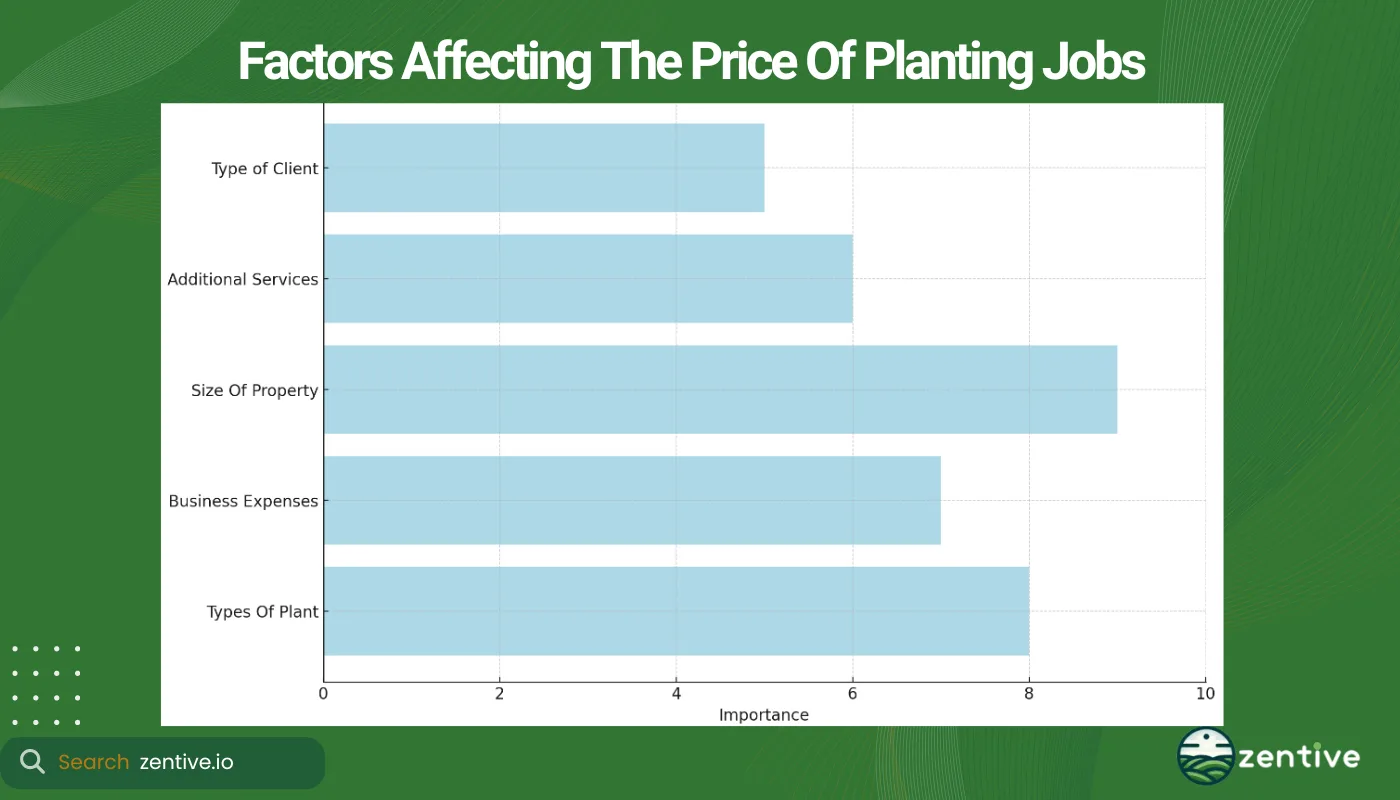
The below five factors affect the price of planting jobs.
- Types Of Plant: Different plants have varying costs, with exotic or larger plants typically being more expensive than common or smaller ones. Plant seasonality can affect the price.
- Business Expenses: These include costs such as labor, equipment, materials, and transportation, all of which impact the final price you will give to the client.
- Size Of Property: Larger properties require more plants and labor, increasing the overall cost.
- Additional Services Being Provided: Services such as landscape designer services, soil preparation, grading, or irrigation installation will add to the cost.
- Type of Client: Commercial vs residential. These two types of clients often have different requirements and scales, which affects the price.
What Are Business Expenses For Planting Jobs?
Business expenses for planting jobs include material costs, labor, equipment, transportation, and overheads. Material costs are the price of the plants themselves as well as additional materials like potting soil or fertilizer. Labor is the wages paid to workers for digging the holes and planting the plants.
Equipment expenses include the tools and machinery used in the planting process. It can be anything from shovels for a flower bed to hiring excavators for planting multiple trees. Transportation is another business expense associated with planting jobs and includes the average costs of getting the plants, labor, and specialized equipment to the site.
Business overhead is indirect costs like insurance, marketing, and office expenses. Every business has them, and it's important to include them proportionally in the total cost of a landscaping project.
What Landscape Services Are Related To Planting?
The below landscape services are related to planting on your property.
- Site Analysis and Planning: Understanding the property layout and how planting can enhance it.
- Soil Testing: Determining soil characteristics like pH and nutrient concentrations to ensure plants will thrive.
- Weed Removal: Clearing the area of weeds that can compete with new plants for resources.
- Soil Preparation: Preparing the soil to provide a healthy foundation for plants.
- Grading and Leveling: One of the most expensive services on the landscaping services list, yet it is vital to ensure the land is properly shaped for drainage and plant health.
- Edging and Defining Beds: Creating clear boundaries for planting areas and enhancing curb appeal.
- Installation of Irrigation Systems: Ensuring plants will receive adequate water.
- Selection of Plants: Choosing the right plants depends on the soil, sunlight, climate conditions, and ongoing maintenance costs
- Mulching: Applying a protective layer of mulch to conserve moisture and discourage weeds.
What Is Mulching?
Mulching is a type of landscaping service that involves spreading a loose layer of shredded plant material or inorganic materials on top of the soil to protect it and supply it with nutrients. It's crucial before planting to conserve soil moisture, reduce weed growth, and provide a polished look. Doing it after planting can disturb the microbiome surrounding the plant's roots and can even damage the plant.
The cost of mulching services is generally considered an affordable landscaping service, with prices ranging from $20 to $60 per cubic yard of mulch, depending on the type and quantity.
Tips For Pricing Landscape Planting Jobs
There are three tips you can implement to accurately price landscape planting jobs. The first tip is to utilize landscape estimating software. Tools like Zentive help with the process of bidding on landscaping jobs, allowing you to estimate faster and more accurately.
The second tip is to ensure you accurately estimate the time required. Ensure you account for all job phases, from preparation to completion. Finally, make sure you bypass typical pitfalls, such as underestimating the number of plants you need or overlooking site-specific challenges like the removal of large rocks.
How Does Landscape Software Help Quoting Planting Jobs?
Landscape software like Zentive helps quote planting jobs by using advanced algorithms and calculators to estimate more accurately and efficiently. Landscape estimating software provides templates for estimates and quotes, ensuring your quotes look more professional and stand out from the competition.
Zentive has a built-in planting cost calculator that ensures accurate calculations of materials and labor based on property measurements. This means you never overprice or underprice your services. These tools even offer a platform for efficient communication between you and your clients.
How Long Does It Take To Plant A Tree?
Planting a tree typically takes 30 minutes to 3 hours for small trees and 2-6 hours for larger trees depending on hole depth, access, and equipment. Planting a memorial tree, for instance, typically takes two hours because of the emotional meaning behind the tree and the fact that it's usually a larger tree requiring a deeper hole.
A common mistake when planting a tree is to dig the hole too shallow, causing roots to be above the surface and can even lead to the tree dying.
What Are The Biggest Issues With Estimating Planting Jobs?
Underestimating time requirements, incorrect material estimates, and overlooking side conditions of landscaping projects are the biggest issues with estimating planting jobs.
Failing to account for all the time needed for job completion causes additional labor costs that are on your dime and not the client's. Miscalculating the amount of plants, mulch, or other materials required will lead to additional costs for the client and damage your reputation. Overlooking site conditions means not considering factors like soil quality, rocks, slopes, and existing vegetation that can impact the job.
Get This Guide as a PDF
Save this article for offline reading. We'll send a formatted PDF straight to your inbox.
No spam. Unsubscribe anytime.
Ready To Streamline Your Field Service Business?
Zentive is the all-in-one field service management software built for landscaping, lawn care, tree care, and snow removal businesses. Start your free trial today.
No credit card required · Cancel anytime