
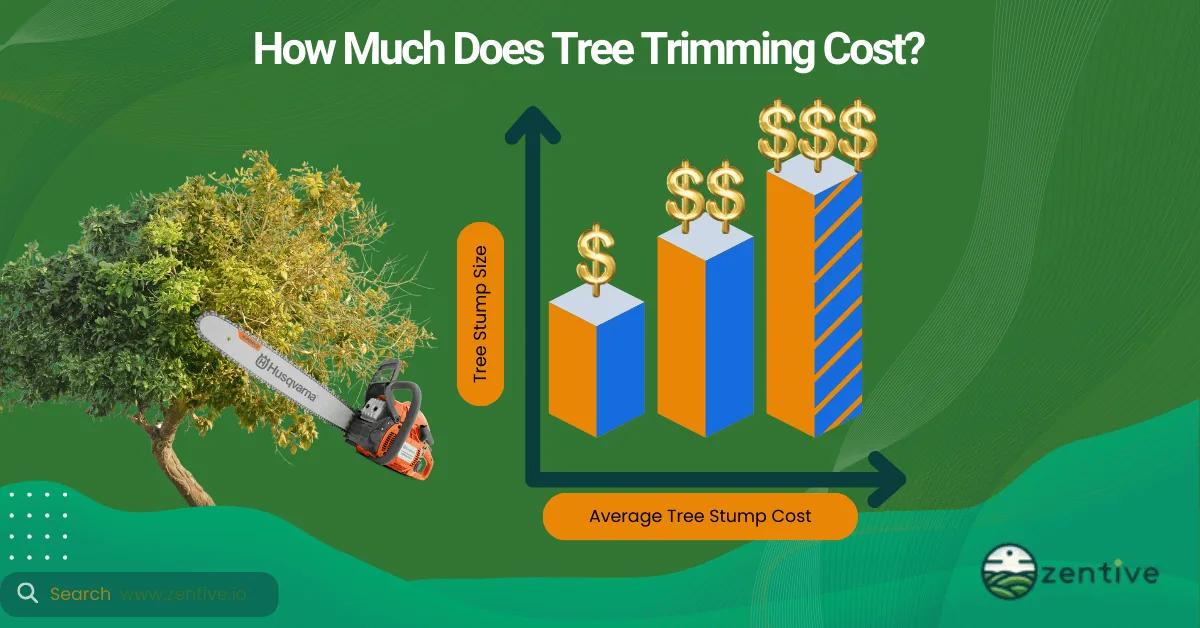
Tree trimming aims to maintain trees' health, safety, and appearance. It's one of the core services tree service businesses offer as it's in high demand and doesn't require too much experience.
You must be able to accurately price trimming jobs because chances are good that it will be one of the services that generate the most amount of revenue for your business. Therefore, the better you price the jobs, the better your profitability.
While the average cost of tree trimming is around $200 to $800 per cubic yard, it's challenging to accurately price these jobs. You have to factor in all the costs that affect the price, including size, quantity, equipment, tree health, location, and accessibility. Then, you have to add your markup to ensure profitability while still offering a reasonable price for tree trimming compared to the rest of the market.
Bidding on tree trimming jobs should be considered as important. You might cost the client extra money and leave them dissatisfied if you don't follow the right bidding procedure. It usually involves first assessing the site, measuring tree dimensions, and considering factors like tree species, quantity, equipment needed, and the tree's overall health.
Established tree service businesses use tree service estimating software to simplify the process. The software helps streamline the quoting process and ensures you're competitive in the market. This software can simplify the bidding process by calculating labor, materials, and overhead costs effectively, ensuring a reasonable price for tree trimming services.
What Is Tree Trimming?
Tree trimming is a landscaping service designed to maintain the health and aesthetics of trees. It involves removing dead, overgrown, or hazardous branches to improve the tree's structure and appearance. It includes trimming tree branches, but it does not always cover debris disposal or post-job cleanup unless specifically requested or factored into the initial quote.
Why would a client want tree trimming? Tree trimming improves the aesthetics of the trees while promoting overall health by allowing more sunlight to reach the leaves for photosynthesis, reducing the risk of disease, and preventing potential damage from falling branches during storms.
There are two main types of customers that employ tree trimming services - residential and commercial clients. Homeowners often request trimming to improve their property's curb appeal or to reduce the risk of hazardous branches by taking a preventive approach before it can harm the property or a person. In comparison, businesses often ask for different types of tree trimming services to maintain clear signage, prevent liability from falling branches, or keep landscapes looking tidy and professional.
What Are Types Of Tree Trimming Jobs?
There are six types of tree trimming jobs tree service businesses can offer.
- Crown Thinning: Removing branches to allow more light and air to pass through the tree's canopy.
- Crown Raising (Lifting): Removing lower branches to clear pathways, roads, or buildings.
- Crown Reduction: Reducing the overall size of the tree to prevent it from outgrowing its space.
- Crown Cleaning: Removing dead, dying, or broken branches to improve the tree's health.
- Deadwooding: Focusing solely on removing dead limbs that could pose safety hazards.
- Structural Pruning: Trimming young trees to develop a healthy structure that reduces the need for future pruning.
It's important to note that each type of tree trimming job requires a different approach and, therefore, has a different cost.
What Is the Cost of Tree Trimming?
The cost of tree trimming ranges from $200 to $800 per tree. However, tree trimming price can vary greatly depending on the job type (whether it's crown thinning, reduction, or deadwooding), tree species, tree amount, size, and location.
For example, tree species, height, and accessibility all play roles in determining the final cost. Larger trees with hard-to-reach branches will typically cost more, and trees in challenging locations, like near power lines or structures, can drive the tree trimming estimate up.
Another factor that can affect pricing is the removal of debris and leftover branches. This service can come with an additional cost, so it's essential to clarify upfront.
When learning how much does it cost to remove a tree, you'll see various pricing structures - per hour, per acre, per tree - and it's important that you pick the right one for your business structure. For instance, per hour typically ranges from $75 to $150 per hour, per acre costs for large properties can range from $500 to $2,000 per acre, depending on tree density, and per tree prices generally range from $200 to $800 for standard tree trimming.
How Does Quantity of Trees Affect Trimming Prices?
Quantity plays a significant role in pricing tree trimming jobs. Typically, businesses offer reduced per-tree rates when trimming multiple trees at once. For instance, trimming a single tree might cost more on a per-tree basis compared to trimming a group of trees because of fixed costs and quantity of scale.
How Does Species of Trees Affect Trimming Prices?
The species of a tree plays a role in determining trimming costs because some species are more challenging to trim due to their structure or growth patterns. In contrast, others may require special equipment or additional time. Here's a pricing table that highlights the average cost of trimming common tree species.
| Tree Species | Average Trimming Cost |
|---|---|
| Palm | $250 - $600 |
| Oak | $400 - $1,000 |
| Maple | $350 - $850 |
| Pine | $300 - $750 |
| Cedar | $350 - $900 |
| Eucalyptus | $500 - $1,200 |
| Birch | $250 - $600 |
| Sycamore | $400 - $1,000 |
| Willow | $350 - $850 |
| Ash | $300 - $800 |
How Does Size of Trees Affect Trimming Prices?
The size of a tree, both in terms of height and diameter, is another major factor in determining trimming costs. Larger trees generally require more labor and equipment, increasing the price.
As a general guide, you can categorize any trees under 30 feet in height as small, and they cost around $100 to $400 to trim. In comparison, any tree over 60 feet in height is considered large and is more costly to trim, ranging from $600 to $1,500 or more.
Remember, the tree size impacts how long the job will take, the equipment needed, and the level of expertise required, all contributing to the final cost listed on the tree trimming estimate.
How To Create Estimate For Tree Trimming Jobs?
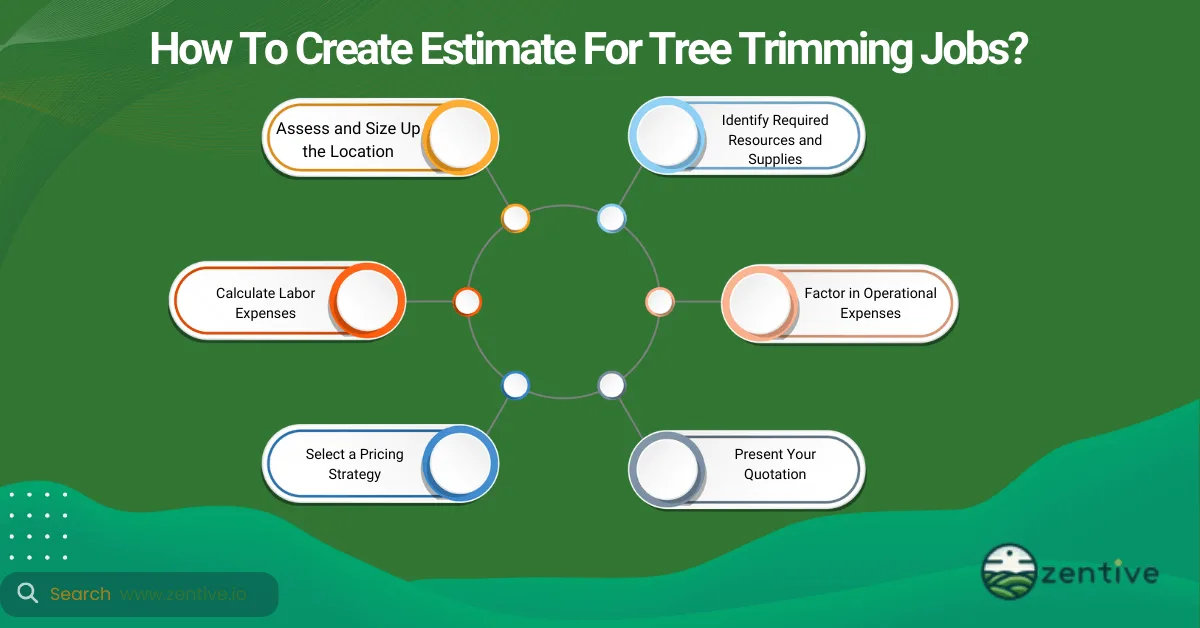
There are six steps involved in creating the perfect estimate for tree trimming jobs. It's pretty similar to the steps involved in learning how to price tree care jobs.
- Assess and Size Up the Location
- Identify Required Resources and Supplies
- Calculate Labor Expenses
- Factor in Operational Expenses
- Select a Pricing Strategy
- Present Your Quotation
1. Assess and Size Up the Location
First and foremost, conduct a site visit. Measure the height and diameter of the trees to determine the scope of work. Be sure to identify any obstacles that might complicate the job, such as power lines or buildings.
Evaluate access points, like driveways and gates, to ensure whether it's possible to bring in large equipment. A thorough inspection of the surrounding area will help prevent surprises during the job.
2. Identify Required Resources and Supplies
After you've completed your site visit, you can start listing all the tools and equipment you need for the job, including chainsaws, lifts, and safety gear. It's important to account for debris removal needs, such as chippers and trucks for hauling branches away.
Lastly, determine if any special materials, like tree sealants or protective wraps, are required to complete the job efficiently.
3. Calculate Labor Expenses
Once you're finished with equipment and tools, you need to estimate the number of crew members and hours required for the project. Labor can quickly add up, and failure to account for all the manhours will be money out of the business' pocket.
Address whether the job requires specialized skills. This includes but is not limited to, certified arborists and specialized climbers. Finally, and very importantly, consider if overtime or extra labor will be required to meet tight deadlines or accommodate complex jobs.
4. Factor in Operational Expenses
Don't forget to include operational expenses in your estimate. Insurance, permits, and other legal requirements can add to the total cost. You should account for fuel and transportation fees, especially if the job site is remote.
Another key operational expense is administrative and management overhead, like scheduling and customer communication. You should always include these costs in your estimate; otherwise, it will eat away at your profitability.
5. Select a Pricing Strategy
Choose between charging by the hour or offering a flat rate. Consider the complexity and risks involved in the job when determining your pricing strategy. Research market trends and adjust your rates to stay competitive without underpricing your services. Remember, no job is better than a job where you incur a loss.
6. Present Your Quotation
The key to a professional quotation is to provide a clear itemized breakdown of the costs. Be sure to include the timeline for the project and any relevant terms so the client knows what to expect.
Remember to differentiate your offer by highlighting value-added services, such as cleanup or ongoing maintenance. Additionally, you can use quoting software like Zentive, which includes a tree service estimate template to help you create more professional quotes and speed up the quoting process.
What Factors Affect Price Of Tree Trimming Jobs?
There are six factors that affect the price of tree trimming jobs.
- Tree Size and Height: Larger and taller trees are more challenging to trim, often requiring more time and specialized equipment. This makes them more expensive.
- Tree Health and Condition: If a tree is diseased or dead, the job may be more complex and dangerous, increasing the cost.
- Accessibility and Location: Hard-to-reach trees, such as those near power lines or in tight spaces, will increase labor time and equipment needs.
- Scope of Trimming Required: The extent of the trimming needed minor maintenance or significant pruning will affect pricing.
- Season and Timing: Trimming during off-peak seasons may be more affordable. Some companies charge more during the busy spring and summer months.
- Disposal and Cleanup Requirements: The overall price will increase if the client wants debris removed and the area cleaned up.
What Are Business Expenses For Tree Trimming Jobs?
The business expenses of tree trimming jobs include materials, labor, equipment, transportation, and overhead costs. Materials such as tree sealants or protective wraps must be accounted for in every job. The cost of labor is another major factor, with wages for crew members and any specialized workers, such as certified arborists, driving up the overall cost.
Equipment like saws, safety gear, lifts, chippers, and trucks add to the expense, particularly if specialized machinery is required for more challenging jobs (like trimming tall trees). Transportation costs include fuel and the cost of moving equipment to and from the job site, which can increase if the location is remote. Additionally, business overheads such as insurance, permits, and administrative expenses should be factored into every quote.
All of these business expenses ultimately affect the price you charge a customer for tree trimming. The more complex or resource-intensive a job is, the higher the final cost will be to cover these operational requirements.
What Landscaping Services Are Related To Tree Trimming?
There are a couple of landscaping services that are related to tree trimming and should be completed either before or after tree trimming. The below tree services are related to tree trimming on your property.
Stump trimming focuses on reducing the height of a tree stump left after tree removal, making it less obtrusive and easier to remove entirely. Arborist reports provide a detailed assessment of a tree's health and any recommended treatments or maintenance.
Tree transplant services relocate trees from one area to another, ensuring the tree remains healthy during the process. Wood chipping involves turning trimmed branches and debris into mulch, which can be used for landscaping or removed from the property.
While these are only a handful of the complete list of different tree services, they are important and are often done with tree trimming services.
What Does Tree Removal Cost?
Tree removal costs an average of $500 to $2,000 per tree. The service involves cutting down a tree and removing it from the property. It's often required when a tree is dead, diseased, posing a danger to nearby structures, or if the landowner wants to create space for construction or new landscaping.
Compared to the cost of tree trimming, tree removal is usually more expensive due to the complexity and risks involved. Most often, a tree service business would first trim a tree to gain access to the stump.
What Does Stump Removal Cost?
Stump removal typically costs between $100 to $300. It involves grinding down the tree stump and removing the roots, allowing for landscaping or new plantings in the cleared area. The cost of stump trimming can vary greatly depending on the size of the stump and its root system.
Stump removal is often performed after tree trimming or tree removal to enhance the aesthetics of the property or to clear space for construction.
What Does Tree Planting Cost?
Tree planting can cost anywhere from $150 to $1,500, depending on the tree species, size, and planting conditions. Planting large or mature trees will be more expensive while planting saplings or smaller trees is typically more affordable. A factor that can quickly increase the price of tree planting is specialized arborist services. The cost of arborist services is especially high when the person needs to travel to a different location.
Tree planting is often performed after tree trimming, especially on large trees if the tree's growth makes it too difficult to transport.
What Are Tips For Pricing Tree Trimming Jobs?
To price tree trimming jobs accurately, use tree trimming estimating tools, estimate the time needed for the job with accuracy, and avoid common pricing pitfalls.
You can use tools like Zentive to improve the efficiency of the quoting process and create more professional quotes. The next tip is to always account for time realistically, considering any potential delays.
Lastly, avoid common pitfalls new tree service businesses usually experience. Double-check site access, tree health, and equipment needs to avoid underestimating the job or duration of the project.
How Does Tree Business Software Help Quoting Tree Trimming Jobs?
Tree business software, like Zentive, can help quote tree trimming jobs by making the process easier and result in more accurate and professional quotes. Estimating software for tree service allows you to enter job details and instantly generate estimates, saving time and reducing errors. They track past jobs, helping you stay competitive by ensuring consistent pricing across similar projects.
What Is Average Time It Takes To Trim A Tree?
On average, trimming a tree can take anywhere from 1 to 3 hours, depending on the size and complexity of the job. Larger or more complex trees take longer, especially if access challenges or hazardous conditions are involved.
It's important to use tools like a tree trimming cost calculator to help you estimate your jobs more accurately and calculate the labor costs respective to the time needed for the job.
What Are The Biggest Issues With Estimating Tree Pruning Jobs?
The biggest issues with estimating tree pruning jobs are underestimating the time required, overlooking potential access challenges, and misjudging the tree's health and stability.
It's difficult to accurately estimate the time needed for a job, which is why so many people get it wrong. Rather overestimate than underestimate. You should pay attention to access points. Limited access can increase labor and equipment needs.
Lastly, misjudging the tree's health and stability can cause an increase in cost because a tree's condition influences the pruning process, adding time and risk to the job.
Get This Guide as a PDF
Save this article for offline reading. We'll send a formatted PDF straight to your inbox.
No spam. Unsubscribe anytime.
Ready To Streamline Your Field Service Business?
Zentive is the all-in-one field service management software built for home service and field service businesses. Start your free trial today.
No credit card required · Cancel anytime