
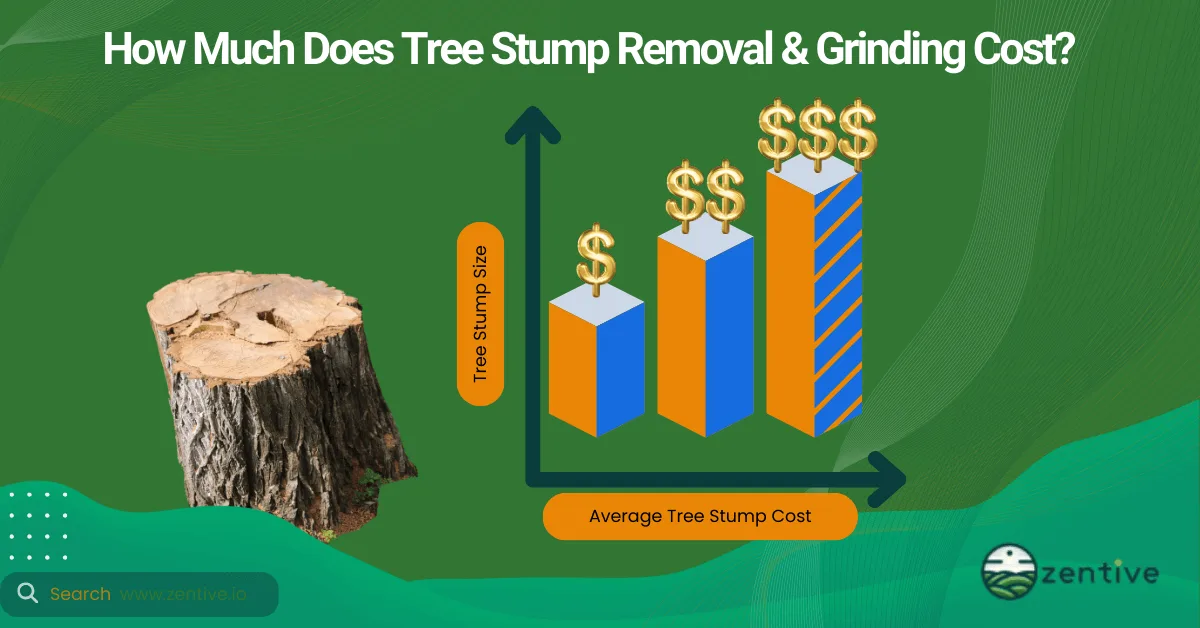
Tree stump removal involves clearing out the leftover stump after a tree has been cut down, either by extraction or grinding it down to ground level. This tree service usually follows tree removal and can be offered as a package.
It's essential that you accurately price stump removal cost to ensure a fair price and no errors that can leave you with a dissatisfied customer. It's tricky to price these jobs because of all the factors involved in creating the estimate, such as stump size, quantity, equipment required - extraction or grinding -, tree health, and root system. However, the average reasonable price for tree stump removal is $200 per cubic yard, with a range of $75 to $500.
We'll teach you how to bid on stump removal jobs and what factors to consider to avoid underpricing and overpricing, ultimately helping you win more jobs. However, the best way to upgrade your tree stump estimating process is to use tree service estimating software. This software helps you generate accurate bids quickly and more professionally, almost eliminating the risk of human error. But more on this later in the article. First, let's discuss the cost of tree stump removal.
What Is Tree Stump Removal?
Tree stump removal is the process of extracting/ removing a leftover stump after a tree has been cut down. The service involves either physically removing the stump and its roots or grinding it down into small wood chips.
The actual stump removal process includes digging out the stump's roots to pull it out entirely. In contrast, stump grinding shaves the stump down to ground level using specialized machinery. The former is more expensive but is often in higher demand. The main benefit of stump removal is that it clears out the space entirely, leaving you with a clean slate for future landscaping projects or buildings.
Homeowners and commercial property owners are the most common customers seeking stump removal. Homeowners want the service to maintain a neat yard. At the same time, commercial property owners seek different types of tree stump removal services to mitigate hazardous spaces or clear space for construction.
What Are Types Of Tree Stump Removal Jobs?
There are five different types of tree stump removal, each with a different way of getting rid of the tree stump.
- Standard Stump Removal: The typical removal of the stump using a stump grinder.
- Full Stump Removal: Complete extraction, including deeper roots.
- Chemical Stump Removal: Using chemicals to decompose the stump.
- Burning Stump Removal: Lighting the stump on fire to remove it.
- Manual Stump Extraction: This process involves removing the stump by hand or by sawing it into small pieces.
Each type of tree stump removal job has a different cost, with full stump removal usually being the most expensive due to the labor and fuel.
What Is The Cost Of Tree Stump Removal?
The cost of tree stump removal ranges from $75 to $500 with an average cost of $200 per cubic yard, $100-$150 per hour, $2-$3 per inch of stump diameter, or $100 to $400 per tree.
However, tree stump removal price is incredibly dynamic because of all the factors that influence the price - type of tree removal job, tree species, stump size, and where you're located. For instance, removing a small bush stump will result in a significantly lower tree stump removal estimate than one where the team removes a large tree stump deeply rooted in the ground.
What Is The Cost Of Tree Stump Removal By Species?
Tree stump removal costs $150 to $350, depending on the species. Different tree species have different costs due to their root systems, density, and overall difficulty in removal.
- Palm Stump: $150 - $250
- Bush Stump: $50 - $100
- Oak Stump: $200 - $350
- Pine Stump: $175 - $300
- Maple Stump: $180 - $325
What Is The Cost Of Tree Stump Removal By Size?
Small stumps (1-10 inches) typically cost between $75 - $150 to remove, and large Stumps (11-20 inches) cost between $150 - $400, especially if their roots run deep or the tree species is particularly stubborn. In general, the larger the stump, the higher the cost.
What Is The Cost Of Tree Stump Removal By Quantity?
Low quantity (1-2 stumps) costs around $150 - $500 total, depending on size, and high quantity (3+ stumps) is typically more cost-effective at $100 - $300 per stump, especially for tree service businesses offering bulk deals. The more stumps you remove at once, the better pricing you'll likely get.
Is It Cheaper To Grind A Stump Or Remove It?
Grinding a stump is usually cheaper than removing it entirely. For example, grinding a 12-inch stump costs around $75-$150, while fully removing that same stump could run you $200-$300.
But, before you decide, consider the future plans for the space. Full removal might be worth the extra cost if you want to build something. Most tree service businesses would offer stump grinding because it's quicker, less labor-intensive, and leaves less mess behind. However, some tree service businesses prefer full removal and would even include it in their tree stump removal estimate as an optional extra.
How To Create Estimate For Tree Stump Removal Jobs?
You need to follow these six steps to create a tree stump removal estimate.
- Evaluate and Measure the Area
- Determine Necessary Tools and Materials
- Estimate Workforce Costs
- Include Overhead and Running Costs
- Choose a Pricing Method
- Provide Your Estimate
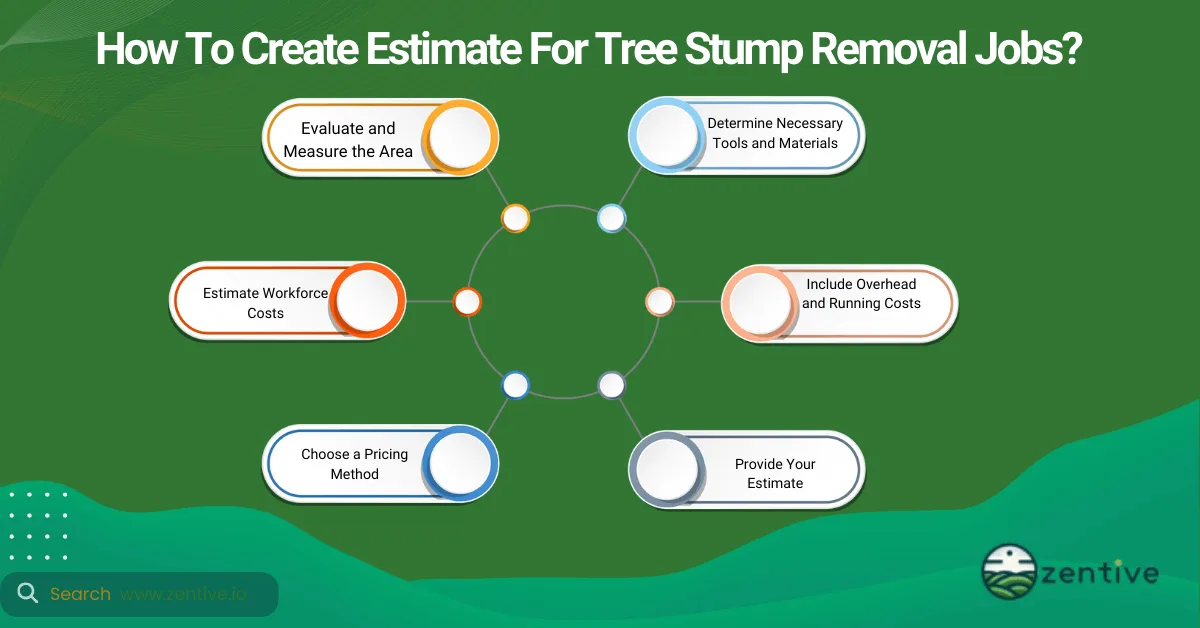
Remember to follow these steps when pricing tree care jobs diligently, and you'll create accurate and professional estimates.
1. Evaluate and Measure the Area
Conducting a site visit should be your first step. During the visit, you'll measure the stump's size and depth - two characteristics that play a big role in determining the job's complexity.
Additionally, assess any obstacles or hazards around the stump, such as nearby structures or underground utilities. The last thing you want is to nick an underground waterline. Terrain challenges and limited access may increase the cost, so factor those in early.
2. Determine Necessary Tools and Materials
Next, you should determine the right equipment for the job. If stump grinding is required, be sure to account for the machine needed. Full removal requires excavators and other tools.
Alternatively, chemical removal requires chemicals for stump decomposition. Don't forget to factor in the cost of disposal and the tools required for the necessary cleanup to leave the area looking tidy.
3. Estimate Workforce Costs
How many hours will the job take? And how many workers will you need? Labor is one of the core costs of service-related businesses, and failing to calculate it correctly leads to unnecessary expenses and unhappy clients.
Some jobs may require specialized labor, such as heavy machinery operators, so plan for that as well.
4. Include Overhead and Running Costs
Running a tree service business comes with ongoing costs like any other business. Be sure to include fuel and equipment maintenance as part of your estimate.
Additionally, don't overlook insurance, permit fees, and administrative expenses. Your admin team is responsible for the services rendered, so they should be included in the estimate.
5. Choose a Pricing Method
Flat-rate or hourly pricing is the question you should ask yourself. Each job will have a different approach based on the complexity and risk of the job. Riskier jobs, like those near utility lines, may justify a higher fixed rate than a simple bush stump removal. Look at what your competitors charge for their services and adjust accordingly.
6. Provide Your Estimate
You can now create your estimate after you've collected all the cost elements. Remember to present the estimate in a clear, itemized fashion to help clients understand what they're paying for. Be sure to outline payment terms, services included, and any warranties offered.
Struggling with this step? You can use tree service quoting software, like Zentive, to automate the quoting process. Not to mention, the tool includes a tree care estimate template to help you create more visually appealing and professional-looking estimates that will impress clients.
What Factors Affect Price Of Tree Stump Removal Jobs?
Five factors affect the price of tree stump removal jobs.
- Stump Size (Diameter and Height): Larger and taller stumps generally cost more to remove.
- Root Complexity and Depth: Stumps with deep or widespread roots require more time and labor.
- Accessibility of the Stump: Hard-to-reach areas with limited access will increase the cost.
- Type of Tree and Wood Hardness: Harder woods or certain tree species are more challenging to remove.
- Cleanup and Disposal Requirements: The amount of debris and waste to be cleared after the job will affect pricing.
What Are Business Expenses For Tree Stump Removal Jobs?
Business expenses for tree stump removal jobs include material costs, labor, equipment, transportation, and overhead.
Material costs cover any chemicals, removal products, or grinding equipment. Labor involves paying your workforce and any specialized personnel like arborists or heavy machine operators.
Equipment includes the maintenance, fuel, and depreciation of stump grinders, saws, excavators, and trucks. Transportation is another considerable business expense, especially if the job involves tree stump removal and not grinding, as the costs associated with getting your crew and equipment to and from the job site are much higher.
You shouldn't overlook overhead expenses. It includes insurance, permits, and administrative expenses, which all add up.
These expenses impact your final pricing, as they need to be factored into every job to ensure profitability.
| Tree Stump Removal Business Expenses | |
|---|---|
| Materials |
• Chemicals and removal products • Grinding materials • Safety equipment |
| Labor |
• Worker wages • Arborist fees • Machine operators |
| Equipment |
• Stump grinder maintenance • Fuel costs • Equipment depreciation |
| Transportation |
• Crew transportation • Equipment hauling • Fuel costs |
| Overhead |
• Insurance • Permits • Administrative costs |
What Landscaping Services Are Related To Tree Stump Removal?
The below tree services are related to tree stump removal on your property. They should be done either before or while the stump is being removed.
Tree trimming and pruning clear away overgrowth to make stump removal safer. Tree removal eliminates the tree before addressing the stump. Tree planting may follow stump removal to refresh the landscape. Land clearing removes debris and vegetation, preparing the area for stump removal.
Root removal ensures that invasive roots won't interfere with structures or future plantings. Soil grading and releveling help prepare the ground for new development after the stump is removed.
These are only a small portion of the 21 tree services a business offers, but they're in high demand and pay well.
What Does Tree Trimming Cost?
Tree trimming cost on average $200 per tree. The cost of trimming trees varies on the size and type of tree as well as the complexity of the work. This service involves removing overgrown or dead branches to improve a tree's health and appearance. It's often done before removing a tree or stump to make the overall process easier.
What Does It Cost To Remove Trees?
Tree removal cost on average $1000 per tree. The cost of removing trees can vary based on the tree's size, location, and species. Larger trees, especially hardwood, cost more, and if there are any complicating factors (like proximity to structures), expect the cost to rise.
What Does Planting Trees Cost?
Tree planting cost on average $150 per tree. The cost of planting trees depends on the species, transportation, equipment, and labor involved in digging the hole and planting the tree. Planting new trees is often part of a broader landscaping plan after stump removal or tree clearing, and the price can shoot up if the soil becomes nutrient-deficient because of the old tree's growth.
What Are Tips For Pricing Tree Stump Removal Jobs?
When pricing stump removal jobs, use tree estimation tools, calculate the time required for the job accurately, and steer clear of common mistakes.
Use estimating tools like Zentive to streamline your entire estimating process. It saves time, and you'll have a reduced risk of human error.
Pay attention to how you calculate the time required for a job. Avoid underestimating labor hours by factoring in potential obstacles. Lastly, steer clear of common mistakes like failing to account for overhead costs or site accessibility challenges.
How Does Tree Company Software Help Quoting Tree Stump Removal Jobs?
Tree service quoting software can help a business create faster, more accurate, and professional quotes. An estimating app for tree service businesses, like Zentive, automates the entire process. That means you can produce more quotes in a fraction of the time, enabling you to send out more quotes and potentially earn more jobs.
You can even use the estimating software to adjust for variables like stump size, location, and job complexity.
What Is Average Time It Takes To Remove A Tree Stump?
On average, it takes 2 to 4 hours to remove a tree stump. This is just the average figure. Some jobs can take multiple days if the tree has a complex root system or is dangerously close to underground utility lines.
Using a tree stump removal cost calculator is the best approach to calculating the time required for a job and, ultimately, the final cost.
What Are The Biggest Issues With Estimating Stump Removal Jobs?
The biggest issues with estimating stump removal jobs are inaccurate assessment of root depth, underestimating equipment and labor needs, and overlooking access and site conditions.
Inaccurate assessment of root depth means missing how far roots extend and can really hike up the costs of the job. Underestimating equipment and labor needs involves insufficient hands or the right tools. This is problematic as it leads to delays and higher costs, ultimately leading to dissatisfied customers.
Overlooking site conditions is another big issue, as limited access to the stump can slow things down and require more labor.
Get This Guide as a PDF
Save this article for offline reading. We'll send a formatted PDF straight to your inbox.
No spam. Unsubscribe anytime.
Ready To Streamline Your Field Service Business?
Zentive is the all-in-one field service management software built for landscaping, lawn care, tree care, and snow removal businesses. Start your free trial today.
No credit card required · Cancel anytime