
Tree planting is a service tree care businesses offer and involves planting saplings or young trees in clients' outdoor areas. It's a popular service many clients request as they often lack the expertise or equipment to plant trees in a new area. Therefore, you should learn how to accurately price these jobs in order to fully leverage the demand and unlock more revenue for your business.
The average cost to plant a tree ranges from $150 to $3,000 per tree. However, tree installation cost can vary based on tree size, location, soil type and requirements, and more.
In order to win more tree-planting jobs, you will need to perfect your bidding strategy. It's not as simple as just telling clients the price after they ask how much do trees cost. Instead, you need to follow a step-by-step process, starting with a visit to a client site to evaluate the intricacies of the job. After that, you can start determining the necessary equipment and estimate labor hours. Remember to clearly outline factors that will affect cost, such as the number of trees, soil type, and accessibility can impact costs.
There are various tools that can help you create better bids and more accurately price your jobs. However, the best tool, and our main tip for today, is to use tree service estimating software. You'll create the quote in a fraction of the time it once took, and chances are that calculation errors will be almost nonexistent.
What Is Tree Planting?
Tree planting is as straightforward as it sounds: placing a tree into the ground where it can grow, thrive, and help beautify the environment. You can plant just about any tree as long as it will be able to adapt and grow in the new environment. Of course, you can't replant 100-year-old Oak trees. Instead, this service is more aimed at young saplings or smaller mature trees with less intricate root systems.
People can plant trees themselves, but it's best to hire a professional tree-planting business. These guys do everything from helping the client select the right tree to handling the messy details like soil preparation and permits and providing the necessary equipment and labor.
Tree planting customers can be just about anybody, from homeowners looking to spruce up their backyards to businesses that want to create welcoming green spaces in commercial properties. Municipalities employ tree-planting services in projects like urban tree-planting programs.
What Are Types Of Tree Planting Jobs?
Different customers, different needs—let's break down the three types of tree planting jobs:
- Residential Tree Planting: This involves planting trees for homeowners on private properties, such as yards and gardens.
- Commercial and Institutional Tree Planting: Large-scale plantings for businesses, schools, or other institutions.
- Municipal and Urban Tree Planting: Public tree planting projects to improve the aesthetics of city landscapes or reforest areas.
It's important to note that each of these jobs has different costs.
What Is The Cost Of Tree Planting?
The cost of tree planting ranges from $150 to $3,000 per tree. Tree planting businesses charge tree planting jobs differently, so expect a per-hour price of $50-$100 or a per-day price of $400-$1000, depending on the job.
People often ask how much does a tree cost expecting a straightforward answer. However, several factors influence the cost of planting a tree. For starters, you need to consider the location (region and backyard location), size of the tree, and site preparation. The cost to plant a tree in a rural area is usually cheaper because you don't have all these additional permits or regulatory considerations that a suburban area has.
When further breaking down tree planting cost, you're looking at labor and materials. Labor includes the time spent on-site and any machinery used to get the tree in the ground. Materials consist of the tree itself, soil amendments, and sometimes fertilizers.
Feeling overwhelmed? Don't worry; take a look at our below.
What Is Cost Of Planting Different Size Trees?
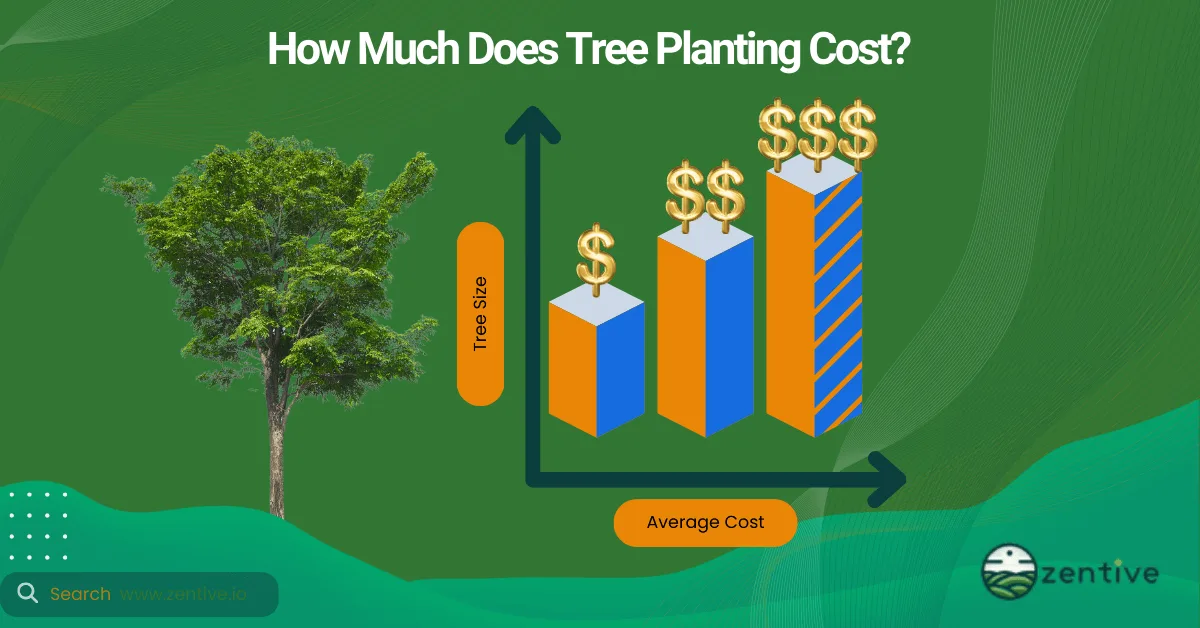
Smaller trees, between 5-10 feet, can cost as little as $100 to $300 to plant, medium trees (10-20 feet) cost $300 - $1,500, and larger trees—20-30 feet tall—can be set you back between $1,000 to $3,000.
The general rule is that the larger the tree, the more expensive it is. The cost to plant 15-gallon tree is around $200 to $400, whereas a 30-gallon tree might cost double that. This is due to the extra labor, equipment, and transportation required for these larger trees. Some large trees can take up to a full day to install properly, especially if the planting involves cranes or other heavy machinery.
Below is a table of the three most common tree size categories that you can plant. These are some of the values we use in our tree planting cost calculator.
| Tree Size | Average Cost |
| Small (5-10 ft) | $100 - $300 |
| Medium (10-20 ft) | $300 - $1,500 |
| Large (20-30 ft) | $1,000 - $3,000 |
How Much Do Trees Cost?
A sapling costs between $20 to $200, while mature trees can range anywhere from $500 to $2,500 based on their size and growth stage. However, your prices may be widely different from these. It all depends on whether you're buying from a nursery or retail. Nurseries tend to be more affordable and offer a wider variety of species, while retail charges more for convenience.
It's worth noting that tree prices can spike during peak planting seasons in the spring and fall and that the cost will differ between tree species.
How Much Do Trees Cost By Species?
Below is a list of the costs for different tree species.
- Maple (Sugar or Red Maple): $100 to $500
- Oak (Red or White Oak): $150 to $600
- Pine (Eastern White or Ponderosa Pine): $100 to $400
- Dogwood (Flowering Dogwood): $150 to $450
- Magnolia (Southern Magnolia): $200 to $700
- Birch (River Birch): $100 to $400
- Cedar (Eastern Red Cedar): $150 to $500
- Cherry (Yoshino or Kwanzan Cherry): $200 to $600
The price can be higher for more rare species.
- Japanese Maple: $300 to $1,500
- Bonsai Trees: $100 to $3,000+
- Palm Trees (Rare Varieties): $500 to $2,500
- Ginkgo Biloba: $250 to $1,000
Remember to justify the cost of the tree when creating an estimate for a tree planting job, and don't forget to obtain multiple quotes.
How To Create Estimate For Tree Planting Jobs
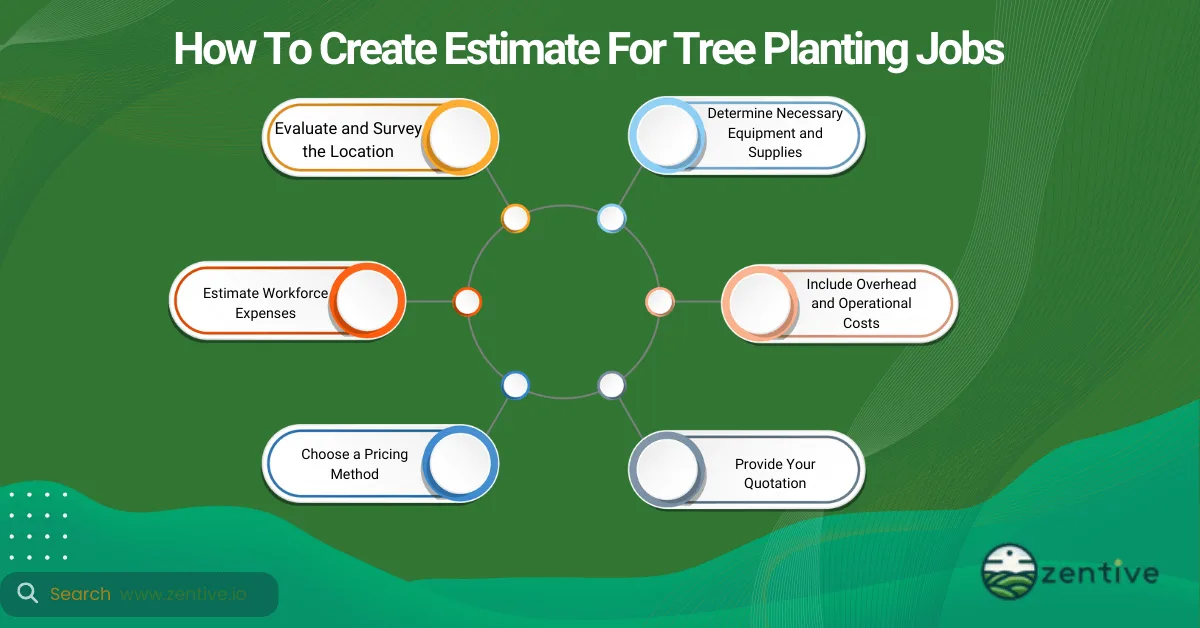
There are six steps involved in creating a tree planting job estimate.
- Evaluate and Survey the Location
- Determine Necessary Equipment and Supplies
- Estimate Workforce Expenses
- Include Overhead and Operational Costs
- Choose a Pricing Method
- Provide Your Quotation
It's vital you follow these steps when bidding tree care jobs, as it will increase the likelihood of a successful bid.
1. Evaluate and Survey the Location
The first step of any tree service bid is to visit the job site. You'll want to assess the terrain and soil type to make sure it's suitable for planting and identify any nutritional deficiencies or concerns (pH, soil composition, etc.).
Measuring the area and pinpointing the specific tree planting locations helps avoid surprises later on. Don't forget to consider site accessibility—steep slopes or limited space can add to the job's complexity (and cost), especially if you're planting large trees and require an excavator and crane.
2. Determine Necessary Equipment and Supplies
You'll need tools like shovels, tree spades, pruning shears, and water hoses. If you do larger trees, you'll need backhoes, excavators, and cranes. The right tools make the job that much easier.
In terms of material, you'll need the tree, fertilizer, unique soil, and other materials if required. You should estimate these costs after identifying all the required tools and materials.
3. Estimate Workforce Expenses
Labor is often the biggest expense in tree planting jobs. Calculate the total labor hours needed based on the size of the job and include the wage rates for each worker. If specialized labor is needed—such as arborists for large or complex plantings—be sure to account for that.
4. Include Overhead and Operational Costs
Running a business comes with overhead costs, and tree planting is no exception. Make sure to factor in transportation, delivery, and any additional operational expenses (admin staff, rent, etc.). This will prevent unexpected costs from diminishing your profit margin.
5. Choose a Pricing Method
Once you've got a solid understanding of your costs, it's time to set your prices. You can go with a flat rate per tree or hourly pricing, depending on the job. Research competitor prices in your area to keep your rates competitive.
6. Provide Your Quotation
Now comes the easy part: presenting your estimate. Offer an itemized breakdown of costs so the client knows exactly what they're paying for. Don't forget to include payment terms, an estimated timeline, and any deadlines.
Tree quoting software can help you create the quote. Software like Zentive uses smart automation algorithms and has a preloaded template for tree estimates to help you create professional tree-planting quotes faster and more accurately than it would take when creating them manually.
What Factors Affect Price Of Tree Planting Jobs?
Several factors influence the cost of tree planting jobs. Here's what to keep in mind:
- Tree Size and Type: Larger or rarer tree species generally cost more due to their higher purchase price and specialized care needs.
- Site Conditions: Difficult terrain, poor soil quality, or restricted access can increase the overall cost of planting.
- Labor Requirements: The complexity of the job and the number of workers needed can significantly impact the total price.
- Materials and Equipment: Costs rise when special tools, soil amendments, or supports like stakes or irrigation systems are required.
- Location and Distance: Remote or hard-to-reach sites may involve additional transportation or logistical expenses.
- Permits and Regulations: Some areas are a regulatory pain. They often require a stack of permits before even breaking ground. This increases the administrative costs and project timeline.
- Seasonal Factors: Planting during off-peak seasons or extreme weather conditions can increase prices due to limited availability or higher labor demand.
Each factor can change the final price as it influences business expenses, with tree size and site conditions usually having the most impact.
What Are Business Expenses For Tree Planting Jobs?
The four main business expenses influencing tree planting jobs include materials, labor costs, equipment and transportation, and business overhead. Materials are your trees, soil, mulch, and anything tangible that you require for the job.
Labor costs include general, specialized, and admin staff costs. Equipment and transportation is any tool you use to move and plant the trees. This includes pickup trucks, low beds, excavators, trailers, shovels, etc. Lastly, and the most frustrating business expense, is business overhead. This includes your permits, insurance, benefits, etc.
Each of these plays a role in how much you'll need to charge customers to cover your costs and still make a profit.
What Other Landscaping Services Are Related To Tree Planting Services?
Tree planting isn't a standalone service—there are five related landscaping services.
- Tree Removal
- Tree Trimming
- Stump Grinding and Removal
- Tree Transplanting
- Irrigation System Installation
Most of the services from this tree services list complement tree planting and often go hand-in-hand, depending on the customer's needs.
What Is The Cost Of Tree Trimming?
Tree trimming cost on average $200 per tree. Tree trimming involves removing excess branches and shaping the tree to promote healthy growth or improve aesthetics. The more intricate the work, the higher the cost of trimming a tree.
What Is The Cost Of Tree Removal?
Tree removal cost on average $700 per tree. Tree removal involves cutting down a tree on a property and removing the remnants of that tree. The cost of removing trees includes cutting the tree down, chopping it into manageable pieces, and removing it from the site. Additional costs may apply if stump removal or grinding is necessary.
What Is The Cost Of Hiring An Arborist?
The cost of hiring a certified arborist cost $300 per tree for a thorough tree health assessment or between $75 to $150 per hour. Arborists are certified tree specialists who provide professional advice on how to care for trees, remove pests, or handle delicate tree species in processes such as tree relocation. The cost of hiring an arborist can vary based on the type of job we mentioned above.
What Are Tips For Pricing Tree Planting Jobs?
When you're pricing your tree planting jobs, consider using tree estimation tools, paying more attention to calculating the required time, and preventing common pricing mistakes. Each of these tips can help you create more accurate estimates and help you seal the deal with your potential clients.
How Does Tree Company Software Help Quoting Tree Planting Jobs?
Tree company software helps quote tree planting jobs by using automation features and professional templates to help businesses create more accurate quotes faster.
A job management software for arborist, like Zentive, is designed to simplify the entire process. Using software can reduce human error, save time, and allow for quick comparisons of different pricing methods, giving you a more professional edge in your business.
What Is Average Time It Takes To Plant A Tree?
On average, planting a tree can take 1 to 3 hours. However, your final price will largely depend on the tree's size and site conditions. Factors such as soil type, terrain, and the need for specialized equipment can affect the overall time. Larger trees or more complicated projects may take up to a full day.
What Are The Biggest Issues With Estimating Cost Of Tree Planting Jobs?
Some of the biggest challenges in estimating the cost of tree planting are inaccurate assessments of site conditions, underestimating labor and equipment needs, and overlooking permits and regulatory costs.
Overlooking site complexities, such as rocky or uneven ground, can lead to miscalculations and increase the price. Digging a hole in rocky ground is much harder than standard clay ground. Additionally, failing to account for specialized tools or labor can drive up costs unexpectedly, which ties into overlooking site complexities. For instance, digging a rocky hole requires more labor and costs more than a standard clay hole.
Lastly, overlooking permits and regulatory costs increases costs.: These often-forgotten expenses can add up, especially in urban areas with stricter regulations.
Get This Guide as a PDF
Save this article for offline reading. We'll send a formatted PDF straight to your inbox.
No spam. Unsubscribe anytime.
Ready To Streamline Your Field Service Business?
Zentive is the all-in-one field service management software built for landscaping, lawn care, tree care, and snow removal businesses. Start your free trial today.
No credit card required · Cancel anytime