
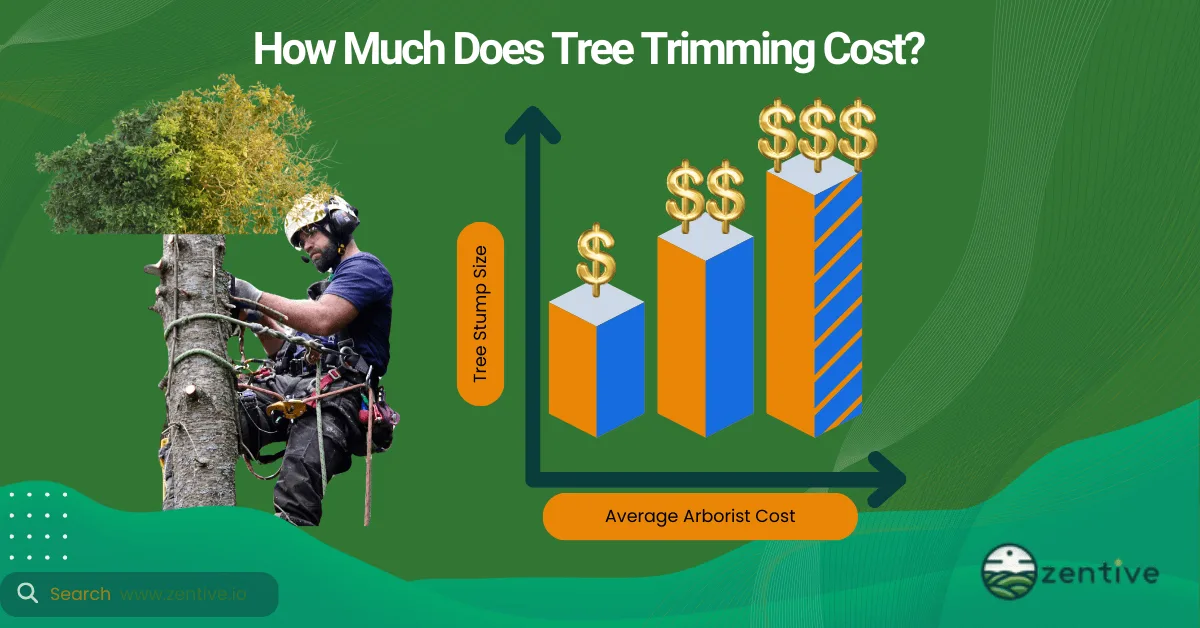
An arborist, known as a tree surgeon, is a tree care professional who specializes in everything from tree removal to health assessments. These professionals know the ins and outs of tree species, including proper care and maintenance. Customers often call them to advise on improving tree health or removing delicate species without damaging them.
The scope of the advice services an arborist provides is extremely wide, which makes it difficult to price arborist cost as no two jobs are the same. Still, it's essential that they price the jobs accurately in order to maintain profitability and remain competitive.
The average tree survey cost of an arborist ranges from $75 to $150 per cubic yard, depending on tree quantity, health, size, species, location, etc.
The best approach to accurately pricing arborist jobs is to follow the correct bidding process. It's a step-by-step process that involves assessing the site, determining the required tools and labor, and factoring in overhead expenses.
The best way to truly step up your arborist pricing game is to use tree service estimating software. This software is a game-changer for those using it, boosting quote creation efficiency and making quotes more accurate. Remember, the main goal of a high-quality quote is to avoid underestimating costs and staying ahead in the competitive landscaping industry. Tree service estimating software makes it that much easier.
What Is An Arborist?
An arborist is a tree care expert trained in the art and science of maintaining and managing trees. There's a reason why people often dub them tree surgeons. They handle everything from tree trimming, pruning, and tree removal to more specialized services like tree health assessments and risk evaluations. They are your go-to specialist if you want something advanced done to your trees.
These professionals go through rigorous exams and certifications, like the ISA (International Society of Arboriculture) certification, to ensure they meet industry standards and live up to the reputation arborists carry.
Hiring an arborist is a smart move for anyone looking to keep their trees healthy and safe, especially when dealing with delicate tree species or tree diseases. An arborist can identify problems early on, saving you from costly damage later.
Both residential and commercial clients hire arborists. Residential customers often employ arborists to look after their property's trees. In comparison, commercial clients seek different types of arborist services for managing trees on commercial properties.
What Are Types Of Arborist Jobs?
There are five types of arborist jobs.
Residential or Commercial Arborists: These arborists focus on managing trees around homes and businesses.
- Residential or Commercial Arborists: These arborists focus on managing trees around homes and businesses.
- Utility Arborists: They work around power lines, making sure trees don't interfere with electrical services.
- Municipal Arborists: Responsible for trees in public areas, like parks or city streets.
- Consulting Arborists: They give expert advice, often offering tree health assessments and planning.
- Climbing Arborists: These arborists use ropes to climb trees for trimming or removal jobs.
Each type of arborist comes with a different cost. The cost primarily depends on the job's complexity and safety needs.
What Is Cost Of Arborist?
The cost of hiring an arborist ranges from $75 to $4,500. It's a very wide range, but it can be expected given the wide scope of services these professionals provide. For example, smaller jobs like pruning a small tree might only cost $250, whereas removing a large tree can easily set you back $1,500-$4,500.
Anything and everything can influence arborist costs. However, the most influential factors are the tree's size and type, the tree's health, and location and accessibility. For instance, services on a larger tree or trees in tricky spots, like near power lines or buildings, will cost more. Stump grinding usually adds another $100 to $500 to the bill. If you're considering a more thorough service, a tree risk assessment cost will be around $100 to $300 for the inspection.
Arborists can even price jobs in different units. They might charge you $600 per day if you want to remove three small trees, whereas they would charge you $300 if you only want to remove one small tree.
| Arborist Service Pricing Guide | |
|---|---|
| Service Type |
• Small Tree Pruning: ~$250 • Large Tree Removal: $1,500 - $4,500 • Stump Grinding: $100 - $500 • Tree Risk Assessment: $100 - $300 |
| Cost Factors |
• Tree size and type • Tree health condition • Location accessibility • Proximity to structures/power lines |
| Pricing Models |
• Per job (single tree) • Per day (multiple trees) • Based on complexity • Based on equipment needed |
What Is The Cost Of Hiring An Arborist Per Hour?
Hiring an arborist can cost between $75 and $150 per hour, depending on their expertise and your location. Arborists in urban areas or those with specialized expertise charge at the higher end of that range. Expect to pay closer to the lower end in a more rural area.
Expertise, equipment, and the complexity of the job play a big part in determining the hourly rate of arborists.
What Is The Cost Of Hiring An Arborist Per Tree?
The cost of hiring an arborist per tree ranges from $150 to $1,500. However, the cost largely depends on the size and condition of the tree. A small tree in good health might only cost $150 to $500 for routine maintenance. In comparison, larger, older trees can cost upwards of $1,500 for more involved work like removal or trimming.
Arborists charge extra for a tree health inspection report, which can help you decide the best course of action for any tree-related concerns.
What Does An Arborist Charge Per Inspection Report?
An arborist inspection report usually costs around $100 to $300. But you can expect to pay more for more trees if the assessment is complex. For instance, a branch assessment of tall trees or a root assessment.
The cost will be on the lower end if the trees are in good shape and require minimal inspection.
How To Create An Estimate For Arborist Jobs?
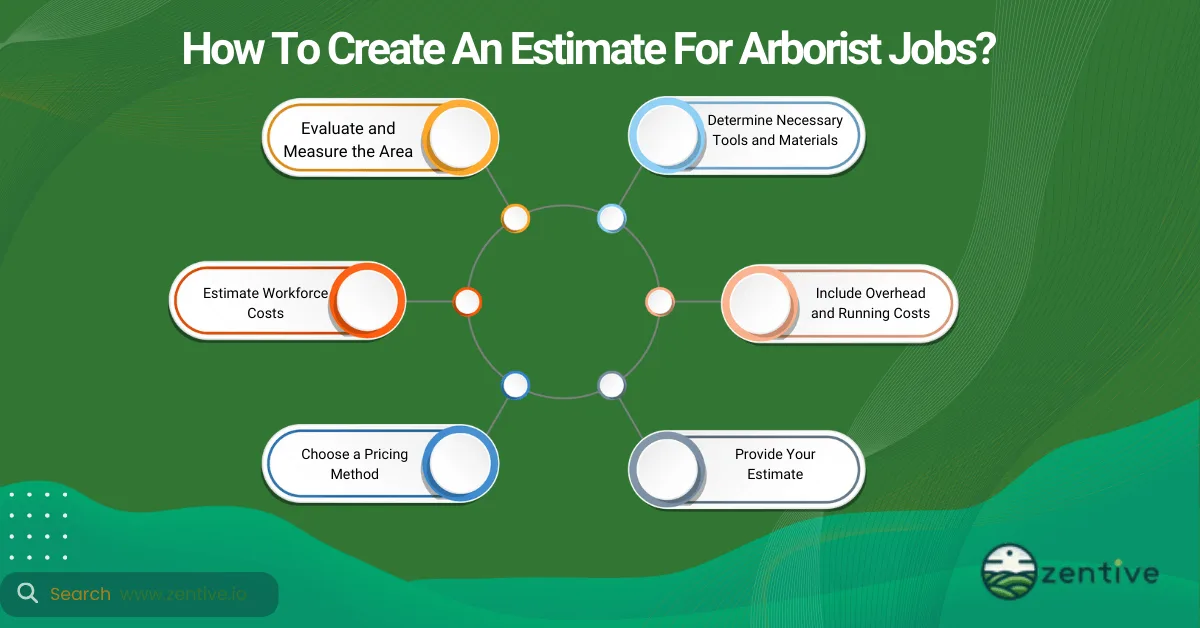
There are six steps you should follow in order to provide accurate and competitive quotes.
- Evaluate and Measure the Area
- Determine Necessary Tools and Materials
- Estimate Workforce Costs
- Include Overhead and Running Costs
- Choose a Pricing Method
- Provide Your Estimate
Use these steps in order to learn how to bid on tree jobs the right way. Avoid common pitfalls tree business owners make to win more jobs.
1. Assess and Measure the Site
First, and before even starting the quote, you should visit the site. Seeing the tree and its surroundings in person allows you to assess its size, stump depth, and any obstacles, like fences or nearby buildings.
You'll need to determine whether utilities or structures are nearby, which could add complexity to the job and, ultimately, the price of the job. A thorough assessment reduces the chance of improperly pricing the job and minimizes any potential surprises later on.
2. Identify Required Tools and Materials
Next, take stock of the tools and materials you need for the job. You'll likely need specialized equipment such as grinders, chainsaws, and wood chippers.
Don't forget to estimate the amount of material, such as mulch or soil, for replanting. Lastly, consider any debris removal services. Businesses often overlook this element, but it can cost you a considerable amount of money on fuel and transport, especially if you need to remove large amounts of debris.
3. Calculate Labor Costs
Labor costs are a huge part of any arborist estimate. You'll need to consider how complex the job is. Are you removing a tall tree in a tight space? Do you need to cut high-hanging branches that might be a hazard? These are much more time-consuming and dangerous than trimming branches from small trees.
The best way to approach your labor costs is to factor in the amount of time the job will take per tree, as well as the size and skill level of your crew. Remember, more experienced workers may cost more, but they can get the job done faster. Don't put all the rookies on one job and all the experienced workers on another. Mix them and let the rookies learn from the experienced workers.
4. Add Overhead and Operating Expenses
Running an arborist business comes with many hidden costs. These include maintaining your equipment, covering transportation expenses, and ensuring you have all the necessary permits.
Don't forget administrative costs, like the time spent coordinating with clients and preparing quotes. Your business won't be profitable in the long run if you don't start charging for these expenses.
5. Select a Pricing Strategy
When the time arrives to set your price, decide what is the best pricing strategy. Is it a flat rate or an hourly rate? Your decision will largely depend on the type of job and your competition. A flat rate works better for one tree, while an hourly rate will be better for more intricate jobs.
In a competitive market, offering bundled services (like tree removal and stump grinding together) can help you stand out. Make sure your pricing is clear and fair while being competitive within the local market.
6. Deliver Your Estimate
Once you have all the details, it's time to deliver your estimate. Your estimate should be clear and itemized. The goal is to break down costs for labor, tools, and any other services as much as possible so that the client knows exactly what they are paying for.
Make sure to include an estimated timeline for the project and offer flexible payment options to make it easier for customers to proceed. You can use tree quoting software like Zentive to help you with this step. Your estimate creation process is guaranteed to be more efficient with the included tree estimate template, and automation features the software offers.
Remember, if there is an opportunity to have an edge in this competitive market, you should take it.
What Factors Affect The Price Of Arborist Jobs?
Six factors affect the price of arborist jobs.
- Tree Size and Type: Larger, older trees typically cost more to work on. Tree species with dense branch growth or hardwood species cost more.
- Tree Health and Condition: Diseased or dead trees may be harder (and more expensive) to remove. They are a safety hazard and require a more strategic approach.
- Location and Accessibility: If the tree is near power lines or hard to reach, prices go up.
- Service Type: Different jobs, like pruning or tree removal, vary in cost. Simpler jobs like pruning are cheaper, while tree removal or trimming high-hanging branches costs more.
- Travel and Transportation Costs: Jobs further from your base may incur additional fees.
- Seasonality: Supply and demand affect the price. The demand for arborist services increases during busy seasons, such as late spring and summer. Therefore, their prices go up.
What Are Business Expenses For Arborist Jobs?
Arborist jobs have business expenses such as materials, labor, equipment, transportation, and business overhead. Material cost can be any material the job requires, and it really depends on the specific job the arborist is offering. Still, it usually includes your cost of mulch, soil, or tree care products.
Labor is another big business expense. It involves paying your crew, including their wages, benefits, and bonuses. Equipment costs should be considered. Your equipment does strenuous work, so naturally, they require regular maintenance and repair, which hikes up cost. Not to mention transportation costs such as fuel for trucks and machinery to get workers and equipment to the job site.
Business overhead, the often overlooked business expense, can quickly eat away at your profitability if not accurately calculated. These include general expenses like insurance, office costs, office personnel wages, software, and permits.
These expenses directly affect how much you charge customers. The more efficient you are in managing these costs, the more competitive your pricing can be.
What Are The Most Popular Arborist Services?
The six most popular arborist services are listed below.
- Tree Removal: Removing dead or dangerous trees from residential or commercial properties.
- Tree Pruning and Trimming: Keeping trees healthy and attractive by trimming branches.
- Stump Grinding and Removal: Removing stumps left after tree removal.
- Tree Health Assessment: Inspecting trees for disease or structural problems.
- Emergency Tree Services: Responding to storm damage or urgent tree issues.
- Tree Planting and Transplanting: Adding new trees or relocating existing ones.
These are all tree service options arborists can offer. They are the most common services as they are always in high demand.
What Is The Cost Of Tree Trimming?
Tree trimming costs an average of $200 per tree. This service involves cutting back branches to maintain tree health and appearance. It's generally considered affordable for most homeowners. However, tree trimming prices have a wide price range due to the dynamic nature of the job. Everything influences the price, from the size of the tree(s) to the condition of the tree.
What Is The Cost Of Tree Removal?
Tree removal cost on average $700 per tree. Tree removal, as the name suggests, involves removing a tree from a property. This can either be cutting down the tree and leaving the stump or a full removal that involves separate services (tree removal and stump removal).
Tree removal price largely depends on the size, location, and condition of the trees. Large trees, trees near structures, or trees that appear to fall at any moment will cost more due to the added risk.
What Is The Cost Of Planting Trees?
Tree planting cost on average $150 per tree. Tree planting involves digging a hole and planting a desired tree in that hole. The cost of tree planting is relatively inexpensive. Still, it can become costly if it's a large tree, influencing the cost of labor, materials (such as mulch and soil), and follow-up care to ensure the tree thrives.
What Are Tips For Pricing Arborist Jobs?
The three best tips for pricing arborist jobs effectively involve utilizing tree estimation software, precisely estimating the time required for the job, and avoiding common pricing errors.
Tree estimation software makes the entire quoting process easier by providing costing data from previous jobs, automating mundane tasks like client details, and more.
Remember to estimate the time required for a job accurately. It's a difficult trick to master. It can save you a lot of money and bad reviews from clients.
Finally, avoid common pricing errors: Ensure you're not underestimating overhead costs or failing to account for extra services like cleanup.
How Does Tree Company Software Help With Quoting Arborist Jobs?
Tree company software can make the quoting process faster and more accurate. Software like Zentive allows you to quickly input job details and generate professional, itemized quotes at a fraction of the time it would normally take by hand.
A tree service estimating app not only saves time but prevents you from overlooking any costs. It can store customer information and past quotes, making it easier to manage repeat business. Overall, it's one of the best tools arborists can use to improve their business operations.
What Is The Average Time It Takes To Remove A Tree Stump?
The average time to remove a tree stump is between 2 to 4 hours. This is just one of the services arborists offer, but estimating the time correctly is important. An arborist cost calculator can help you calculate the costs more accurately and faster.
I highly recommend using a cost calculator for arborist services to further streamline your quoting process.
What Are The Biggest Issues With Estimating The Cost Of Arborist Jobs?
The biggest issues with estimating arborist job costs include the variability in tree health conditions, difficulty in predicting job complexity, and fluctuations in local market rates.
A tree might seem healthy, but hidden problems can make removal more complex. This is why you should always be as thorough as possible with your initial site visit.
Most arborists would agree that struggling to predict job complexity is a pain point in the industry. Don't worry; it gets easier as you build up experience. In the meantime, ask for advice when you struggle and rather have a contingency plan in place before starting the job.
The final issue is fluctuations in local market rates. Arborist rates can vary significantly depending on the region, making it tough to stay competitive without undercutting yourself. The best advice would probably be to always stay true to your services. Be the best you can be, guaranteeing customer satisfaction, and the clients will eventually pick loyalty and quality of service over price.
Get This Guide as a PDF
Save this article for offline reading. We'll send a formatted PDF straight to your inbox.
No spam. Unsubscribe anytime.
Ready To Streamline Your Field Service Business?
Zentive is the all-in-one field service management software built for landscaping, lawn care, tree care, and snow removal businesses. Start your free trial today.
No credit card required · Cancel anytime