
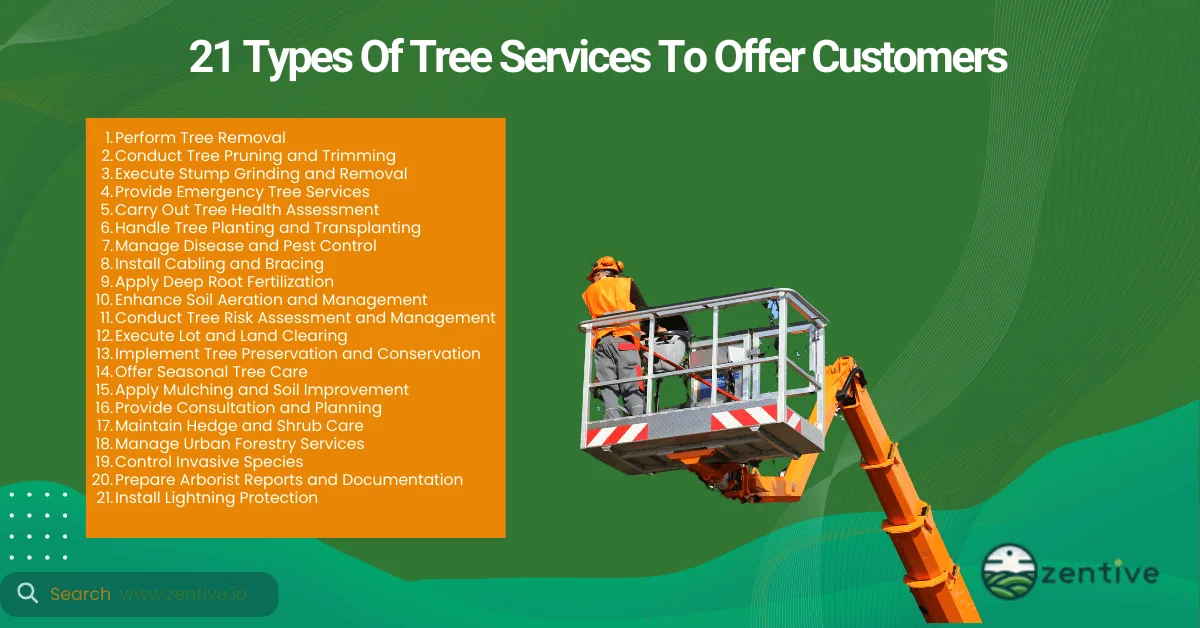
As the name suggests, tree services refer to services you perform on commercial and residential properties, specifically on trees. You're responsible for maintaining the health, appearance, and safety of trees on these properties. This can be through any of the 21 types of services typically offered by tree service businesses. Tree removal, routine pruning, disease management, and emergency removals remain the most popular.
Most new tree service businesses want to start with the complete tree services list, but that can actually do more harm than good. You're allocating resources to tree services you don't have enough experience to perform, and if you do a bad job, your reputation will be tarnished. That's why you should consider the demand for types of tree services and focus on those with the highest demand that you have experience in. You can always expand to other tree services as your business grows.
The below table is the list of 21 tree services.
| Tree Service | Definition |
|---|---|
| Tree Removal | Tree removal eliminates hazardous, dead, or unwanted trees through controlled cutting and disposal. |
| Tree Pruning and Trimming | Tree pruning and trimming remove dead or overgrown branches to improve structure and health. |
| Stump Grinding and Removal | Stump grinding removes tree stumps at or below ground level to prevent regrowth. |
| Emergency Tree Services | Emergency tree services address storm-damaged or dangerous trees that pose immediate risk. |
| Tree Health Assessment | Tree health assessments evaluate tree condition to diagnose disease, pests, or structural issues. |
| Tree Planting and Transplanting | Tree planting and transplanting install or relocate trees to support proper growth and survival. |
| Disease and Pest Control | Disease and pest control treats infestations that threaten tree health and longevity. |
| Cabling and Bracing | Cabling and bracing stabilize weak limbs or trunks to reduce failure risk. |
| Deep Root Fertilization | Deep root fertilization delivers nutrients directly into the root zone. |
| Soil Aeration and Management | Soil aeration reduces compaction to improve root access to air, water, and nutrients. |
| Tree Risk Assessment and Management | Tree risk assessment identifies hazards and implements preventive safety measures. |
| Lot and Land Clearing | Lot and land clearing removes trees and vegetation to prepare sites for development. |
| Tree Preservation and Conservation | Tree preservation protects valuable or heritage trees through specialized care practices. |
| Seasonal Tree Care | Seasonal tree care adjusts maintenance activities based on growth cycles and climate. |
| Mulching and Soil Improvement | Mulching improves soil quality and moisture retention around trees. |
| Consultation and Planning | Consultation and planning guide tree selection, placement, and long-term care strategies. |
| Hedge and Shrub Care | Hedge and shrub care maintains ornamental plants through pruning and shaping. |
| Urban Forestry Services | Urban forestry services manage municipal trees to enhance public landscapes. |
| Invasive Species Control | Invasive species control removes non-native plants that threaten local ecosystems. |
| Arborist Reports and Documentation | Arborist reports provide professional evaluations and official tree records. |
| Lightning Protection | Lightning protection systems prevent electrical damage to trees during storms. |
1. Perform Tree Removal
Performing tree removal means cutting down and safely removing a tree that is dead, hazardous, or interfering with structures or utilities. Tree removal involves cutting down and safely removing a tree from a property. This tree service usually applies to trees that are dead, dying, or posing a risk to structures or power lines, although the latter can be managed through tree trimming.
The scope of tree removal varies depending on the size and location of the tree. For smaller trees, removal can be straightforward. For larger trees near buildings or other hazards, a professional tree service is essential to ensure the work is done safely. In some cases, advanced rigging equipment and techniques are needed to lower large branches to the ground without causing damage. These larger trees require a systematic approach, which can take hours, sometimes even a full day, before the tree is actually removed.
Clients for this service often include homeowners looking to improve their yard's safety, businesses with hazardous trees, and municipalities maintaining public spaces.
The equipment you'll need for tree removal includes chainsaws, wood chippers, and often cranes or bucket trucks for larger jobs. Protective gear for the crew is essential and compulsory for safety.
Tree removal is fairly affordable if it's a small tree - ranging between $150 to $500. For larger, more complex projects, tree removal prices can go upwards of $2,500. Remember, the longer the crew is cutting the tree, the more expensive it gets.
2. Conduct Tree Pruning and Trimming
Conducting tree pruning and trimming means removing dead, damaged, or overgrown branches to improve tree health, safety, and appearance. This is one of the most common types of tree services offered by professionals as it's always in demand and doesn't require too much prior experience.
The scope of this service ranges from light maintenance trimming to more detailed pruning that shapes the tree's structure and improves its long-term health. Regular pruning can prevent branches from becoming too heavy or hazardous. Many homeowners with fruit and citrus trees use tree trimming services to stimulate the trees to grow more fruits that are easily accessible - something you can look into when marketing your tree services.
The usual client list for this service are homeowners looking to improve curb appeal, businesses maintaining their landscapes, and municipalities ensuring public safety in parks and along streets.
Equipment needed for pruning and trimming includes pruning shears, saws, pole pruners, and ladders. A bucket truck or climbing gear may be necessary for larger trees to reach high branches safely.
The estimated timeframe for pruning varies and can range from an hour for a smaller tree to several hours for a larger one.
Basic tree services like trimming a small tree might cost between $100 and $300, while more involved pruning jobs for large trees can range from $500 to $1,200. Trimming only one tree at a time can reduce profitability due to transportation, overheads, etc. Instead, you can offer a bundle discount to trim all the property's trees or offer other services in addition to the trimming. This way, you can extract more value from each client.
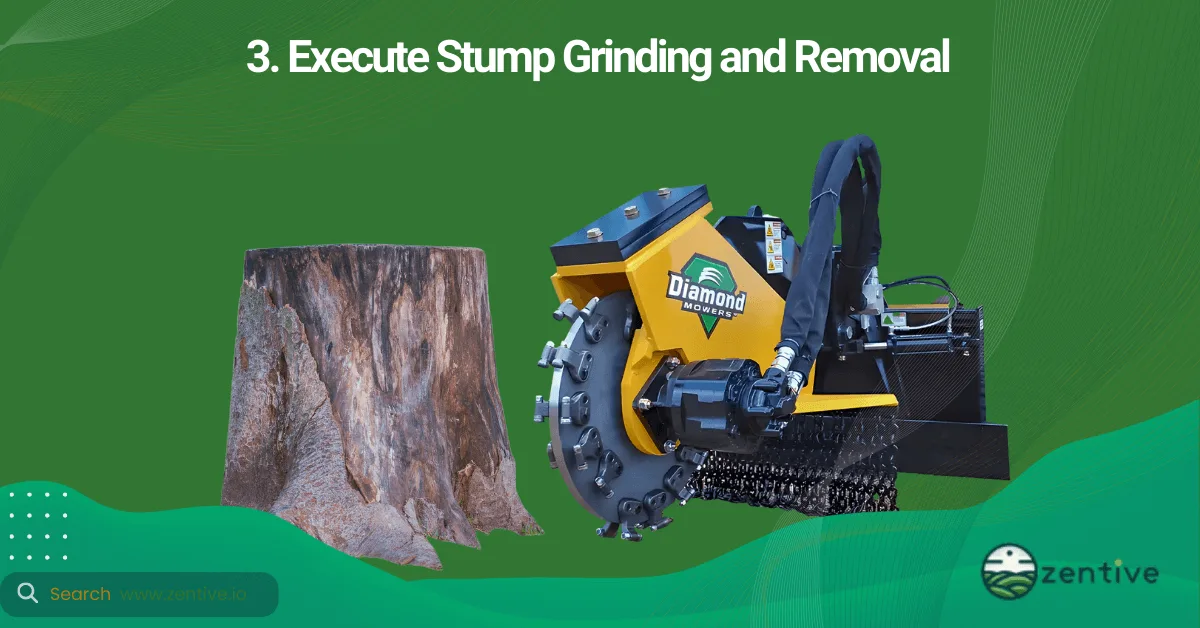
3. Execute Stump Grinding and Removal
Executing stump grinding and removal means eliminating the remaining tree stump after removal to prevent regrowth, hazards, and space obstruction. This service ensures the area is clear and safe, preventing regrowth or tripping hazards or just making space for new construction.
The scope of stump removal depends on the size of the stump and its location. Grinding is usually sufficient for smaller stumps and quite quick (30 minutes to 2-3 hours). Larger stumps often require complete removal, especially if the client wants to plant something in its place or install a structure. This is difficult and usually takes a couple of hours (6+), depending on the root system.
Clients for this service include homeowners who want to remove unsightly stumps from their yards and businesses needing a clear space for landscaping or construction.
The needed equipment includes stump grinders of varying sizes and occasionally heavy machinery for more extensive stump removal jobs.
Basic stump grinding services can cost between $100 and $400. For full stump removal, the price may range from $500 to $1,000. This service pairs well with the tree removal service. You can even offer a bundled discount for the two - most clients would just avoid the effort of calling someone again, and they will accept your offer on the spot.
4. Provide Emergency Tree Services
Providing emergency tree services means responding quickly to remove fallen or dangerous trees caused by storms or unexpected events. This type of tree work is essential in emergency situations.
The scope of emergency tree services can vary widely. It often involves removing trees or large limbs that have fallen or are at risk of falling due to storms or accidents.
Target clients include anyone who needs fast action to clear dangerous trees or debris. You'll need equipment like chainsaws, cranes, wood chippers, and sometimes bucket trucks to access high or precarious limbs.
The estimated timeframe for emergency tree services depends on the severity of the situation but usually ranges from a few hours to a full day.
Emergency tree services are often priced higher due to the urgent nature of the work, ranging from $500 to $2,500 or more, depending on the complexity. It's a lucrative type of tree service but is very dangerous.
5. Carry Out Tree Health Assessment
Carrying out a tree health assessment means inspecting a tree for disease, pests, structural issues, or nutrient deficiencies. Tree health assessments diagnose any health issues and recommend treatments. This service helps maintain the long-term vitality of trees.
The scope of this service includes checking for signs of disease, pests, structural damage, and nutrient deficiencies. A professional assessment can identify problems early and prevent the need for tree removal down the road.
Target clients are anyone who cares about a tree. It can either be homeowners (most popular), commercial clients, or municipalities requiring expertise for a tree in a park or a public space.
You will need equipment like diagnostic tools, such as probes, moisture meters, and sometimes soil testing kits to test the pH and nutrient composition (especially common in nut, fruit, and citrus trees).
The estimated timeframe for a health assessment is usually around 1-2 hours, depending on the size and number of trees the client wants you to evaluate.
Health assessments are fairly affordable. They typically cost between $100 and $300 per visit, depending on what you need to analyze and how many trees.
6. Handle Tree Planting and Transplanting
Handling tree planting and transplanting means installing new trees or relocating existing trees to promote proper growth and landscape design. This service is ideal for creating landscapes or improving yard design.
The scope of this service covers selecting the right tree species, ensuring proper planting depth, and offering aftercare advice to help the tree thrive.
Clients for this service are homeowners who recently moved to a new home and want to improve their property's aesthetics, landscapers creating new designs, or businesses looking to enhance their grounds.
Equipment usually includes shovels, tree spades, and, in some cases, heavy machinery to move larger trees.
The estimated timeframe for planting or transplanting trees can range from a couple of hours to a full day, depending on the tree's size.
Basic tree services like planting small trees can cost between $200 and $600 while transplanting large trees can cost $1,000 or more. A great way to get started with this service is networking with landscapers and telling them that you offer tree planting and transplanting.
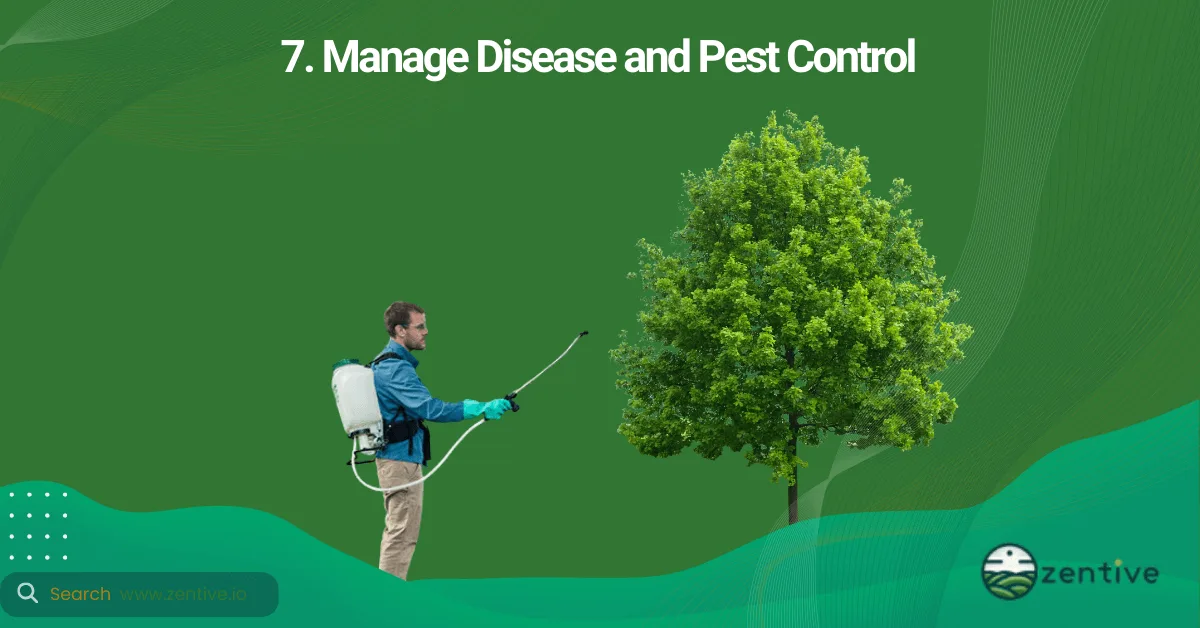
7. Manage Disease and Pest Control
Managing disease and pest control means identifying and treating insects, fungi, or diseases that threaten tree health. These issues can range from fungal infections to insect infestations like termites.
Managing disease and pest control includes diagnosing the problem, applying treatments such as insecticides or fungicides, performing a follow-up, and advising on prevention techniques in the long run.
Target clients are property owners dealing with sick trees or those wanting to prevent disease or pest problems before they start.
Equipment needed includes sprayers, pesticides, insecticides, fungicides, pruning shears, and sometimes soil treatments.
The estimated timeframe for disease and pest control varies, but treatments generally take 1-2 hours to apply. Treatment costs range from $150 to $500, depending on the severity of the issue and the number of trees involved.
8. Install Cabling and Bracing
Installing cabling and bracing means reinforcing weak branches or trunks to stabilize trees and reduce failure risk. Cabling and bracing services are designed to support trees with weak branches or trunks, preventing breakage and ensuring stability during storms.
You will need to install cables or braces in key areas to reinforce the tree's structure. It's a specialized tree service that can prolong the life of an otherwise vulnerable tree.
Target clients are homeowners and businesses with large, mature trees that need extra support to avoid hazardous situations. This tree service requires equipment like cables, braces, and special tools to secure these supports to the tree.
The estimated timeframe for cabling and bracing depends on the size of the tree and the extent of the work, but typically takes 1-4 hours.
Cabling and bracing services generally cost between $400 and $1,200.
9. Apply Deep Root Fertilization
Applying deep root fertilization means injecting nutrients directly into the soil to strengthen roots and improve tree vitality. This service is vital for trees struggling with poor soil conditions.
It usually involves using specialized equipment to deliver fertilizers and nutrients deep into the soil, reaching the roots more effectively than surface-level treatments.
Target clients are property owners who want to improve the health and longevity of their trees, particularly those in urban environments with compacted soil.
Equipment needed includes soil injectors and nutrient solutions specifically designed for deep root application. The estimated timeframe for deep root fertilization depends on the number of trees but typically takes 1-2 hours for an average-sized yard. This professional tree service can range from $150 to $500 per treatment, depending on the number of trees and the specific nutrient requirements of the trees.
10. Enhance Soil Aeration and Management
Enhancing soil aeration and management means loosening compacted soil so air, water, and nutrients reach tree roots effectively. It's a great service to offer alongside the deep-root fertilization service.
The scope of this service includes using specialized equipment to create small holes in the soil, improving airflow and water absorption.
Target clients for this service include property owners with compacted soil or trees that aren't thriving due to poor soil conditions.
Equipment needed includes aeration machines, spades, and soil amendments like compost or sand.
The estimated timeframe for soil aeration depends on the size of the area but typically takes 1-2 hours for an average-sized yard. Aeration services usually cost between $200 to $600. But this depends on the size of the area that requires aeration.
11. Conduct Tree Risk Assessment and Management
Conducting tree risk assessment and management means identifying hazardous trees and recommending actions to reduce safety risks. This service is essential for preventing property damage or personal injury.
Tree risk assessment and management includes inspecting trees for structural issues, such as cracks or decay, and recommending corrective actions like pruning, bracing, or removal.
Target clients include homeowners, businesses, and municipalities concerned about the safety of their trees.
Equipment needed includes diagnostic tools, such as resistographs or sonic tomography devices, to detect internal decay and climbing gear for close inspections.
The estimated timeframe for risk assessments can range from a couple of hours to a full day, depending on the number of trees, the complexity of the assessment, and the size of the trees involved.
Tree risk assessments typically cost between $200 and $500 per tree, depending on the size and risk level. It's a very niche service that most people only ask for if they care about the tree in question or pose a safety risk.
12. Execute Lot and Land Clearing
Executing lot and land clearing means removing trees and vegetation to prepare land for construction or development. This service is often required on estates with a lot of vegetation or new property developments.
The scope of this service includes clearing large areas, handling the disposal of debris, and ensuring the land is ready for its intended use. The usual list of target clients is developers, contractors, and property owners.
The equipment for this service is quite expensive. For instance, you'll need bulldozers, dump trucks, chainsaws, wood chippers, and sometimes larger machinery like excavators.
The estimated timeframe for land clearing can range from a day to several days, depending on the size of the lot and the amount of vegetation.
Land clearing services are one of the most expensive tree company services due to the high fuel costs and expensive equipment. It generally costs between $1,500 and $5,000, sometimes exceeding $10,000.
13. Implement Tree Preservation and Conservation
Implementing tree preservation and conservation means protecting existing trees during construction or environmental projects. The scope of this tree service includes assessing trees for health and stability, creating protection plans, and providing treatments to ensure their long-term survival. Your target market is clients who want to preserve existing trees on their land, either because they're old or the client enjoys them.
Equipment needed includes tree barriers to protect the tree from heavy construction machinery, protective fencing, and sometimes soil treatments or aeration tools.
Tree preservation is quick (1-2 hours for the initial assessment), but it requires ongoing monitoring, which requires regular site visits and maintenance of the protection equipment if needed.
This tree service typically costs between $500 and $2,000, depending on the number of trees and the size of the tree or required protection measurements.
14. Offer Seasonal Tree Care
Offering seasonal tree care means maintaining trees year-round with services tailored to each season’s growth and weather conditions. This service is often aimed at delicate trees, ensuring they receive the right care depending on the season.
Clients (homeowners and property managers) might require a number of requests for their trees, but it usually involves pruning in the winter, fertilizing in the spring, and disease prevention treatments in the summer and fall. The main goal of seasonal care is to ensure trees are ready for changing weather conditions.
You will need tools like pruning tools, fertilizers, and sometimes pest control treatments, depending on the season. Each visit usally takes a few hours but may vary depending on the season. For instance, pruning in the winter won't take as long as disease prevention treatments in the fall.
Seasonal tree care services are often sold as a bundled package, meaning a set price for the entire year's tree care. It can range from $300 to $1,200 annually, depending on the number of visits and the specific services you include in the package deal.
15. Apply Mulching and Soil Improvement
Applying mulching and soil improvement means adding organic material to retain moisture, enrich soil, and protect tree roots. This is a basic tree service yet essential for maintaining healthy trees.
The service involves spreading mulch around the base of trees and applying soil amendments to enhance nutrient levels. Mulching and soil improvement services apply to anyone looking for low-maintenance ways to support the health of their trees.
You will need mulch spreaders, wheelbarrows, and soil amendment tools. Mulching and soil improvement usually takes 1-3 hours, but it is subject to the number of trees on the property that require mulching. Basic mulching services cost between $100 and $400, depending on the size of the area and the materials used.
16. Provide Consultation and Planning
Providing consultation and planning means advising clients on tree care strategies, layouts, and long-term maintenance plans. This service helps clients - homeowners, landscapers, and businesses - make informed decisions about their trees and overall landscape.
The scope of consultation and planning services includes site visits, tree health assessments, and long-term care planning tailored to the client's needs.
This service doesn't require much equipment. At most, you will need a couple of diagnostic tools or software for planning and design.
Each consultation ranges between 1 and 2 hours and costs between $150 and $500.
17. Maintain Hedge and Shrub Care
Maintaining hedge and shrub care means trimming and shaping smaller plants to preserve health, structure, and appearance. While not as large as trees, hedges and shrubs require regular care to prevent overgrowth and maintain their aesthetic appeal.
This service involves regular trimming, pruning, and sometimes fertilization to keep shrubs and hedges in optimal and healthy condition.
The target clients include homeowners and businesses with extensive landscaping that includes hedges and ornamental shrubs. You will need shears, hedge trimmers, and sometimes ladders for taller shrubs.
The service duration is usually a couple of hours, but it depends on the condition of the hedges and shrubs and the amount that requires attention. Hedge and shrub care services cost from $75 to $400 per visit.
18. Manage Urban Forestry Services
Managing urban forestry services means maintaining and planning trees in cities to improve safety, sustainability, and public spaces. This service is vital for cities and towns looking to create greener, healthier environments.
The scope of urban forestry services includes planting, pruning, tree health assessments, and sometimes tree removal, all done with the community in mind.
The target market is professional and government. You will most likely deal with municipalities, developers, and property managers responsible for large urban areas.
Urban forestry services require pruning tools, planting equipment, and sometimes larger machinery for urban tree care.
With regards to the timeframe for these professional tree services, it's difficult to say. It mostly depends on your contract with the client. But it can be anything from 2-3 months to a year.
Urban forestry services pay well. The normal range is from $500 to $5,000 or more per tree, depending on the length of the contract.
19. Control Invasive Species
Controlling invasive species means removing non-native plants or trees that threaten native ecosystems and landscapes.This type of tree work helps preserve the natural balance of the landscape and prevent the spread of harmful species.
You need to be able to identify invasive species, remove them, and sometimes apply treatments or poisons to prevent regrowth.
The target market for this type of tree service is homeowners, land developers, and municipalities looking to protect native plants and trees.
You will need equipment like chainsaws, herbicides, and sometimes excavation tools for larger invasive species.
Most tree service businesses require 1-2 days to fully remove the invasive species. Controlling invasive species can cost between $300 and $3,000. The final price depends on the size of the infestation and the methods used.
20. Prepare Arborist Reports and Documentation
Preparing arborist reports and documentation means producing formal tree assessments required for permits, insurance, or legal use. This tree company service provides clients with the necessary paperwork for their projects.
The scope of this tree service requires you to inspect trees, assess their health, and prepare a formal report with recommendations for care or removal.
Target clients include developers, legal professionals, and property owners needing documentation for construction, permits, or insurance purposes.
You require diagnostic tools for tree health assessments, along with software for report generation.
The service usually takes 4-5 hours. The arborist report is around 1-2 hours for site visits, with an additional 2-3 hours for report preparation. Arborist reports and documentation cost between $250 and $1,000. But you can offer more if it's a specialized niche of tree types, e.g., citrus, Bonzai, etc.
21. Install Lightning Protection
Installing lightning protection means fitting trees with grounding systems that safely redirect lightning strikes into the earth. This professional tree service is ideal for large, valuable, or historic trees.
It's a fairly straightforward job. You need to place metal rods and wiring around the tree to safely conduct the electricity into the ground if struck by lightning.
The equipment required for installing lightning protection includes lightning rods, wiring, grounding systems, and the tools required to anchor the rods.
This service takes around 3-5 hours but can differ depending on the size of the tree and its location. Lightning protection services generally cost between $500 and $2,000, making it one of the more lucrative types of tree services.
How To Pick Services For Your Tree Business?
There are five factors you need to consider when picking which tree services to offer. The first factor is to use tree software for scaling. This will help you determine which tree services your business offers are the most profitable and which you should focus on. Tree service software makes running a tree business easy, thanks to its automation feature.
Next, assess capacity for new work. Before offering more services, evaluate your current workload. Do you have enough competent staff and equipment to handle new types of tree services?
You should know your tree business type. Different types of tree companies cater to different clients - residential vs commercial.
The fourth factor is seasonality. The demand for most tree services fluctuates based on the season. Offer services that complement each other, like pruning in winter and leaf removal in fall.
Lastly, consider business age and experience. Newer businesses should stick to basic tree services like pruning and removal until they build experience.
How Can A Tree Business Software Help Expand Your Service Offerings?
Tree business software offers tools like automated quote services, invoicing tools, scheduling services, and more, which can all help a tree business expand its offerings. Automating quotes allows clients to get instant estimates, reducing the back-and-forth and saving you time. Tree company management software produces professional quotes that can help you leave a lasting impression on clients.
Tree company services benefit from invoice software. These tools keep your billing organized. This ensures prompt payments and better cash flow. They can even send automated follow-ups to clients who haven't paid, ensuring you get the money needed to expand your service offerings.
Tree business software even offers scheduling services, which helps you manage your team's time better. This software performs job routing and scheduling based on proximity to the job, skill level required, and more. All this contributes to a more efficient day-to-day operation, allowing you to take on more clients and expand your tree service offerings.
| Tree Business Software Benefits | |
|---|---|
| Quotes |
• Automated instant estimates • Professional quote generation • Reduced response time |
| Invoicing |
• Organized billing system • Automated payment follow-ups • Improved cash flow |
| Scheduling |
• Smart job routing • Team management • Location-based assignments |
What Are The Different Types Of Tree Companies?
There are two main types of tree companies, including residential and commercial tree service businesses. Residential tree businesses are the types of arborist companies that primarily provide services to homeowners and offer services like trimming, pruning, and basic maintenance.
Commercial tree services handle larger projects for businesses, including lot clearing, tree planting, and even hardscaping.
Different types of businesses often provide varying services. For example, a residential tree business might focus on softscaping. At the same time, commercial services may extend to hardscaping and large-scale landscaping design.
What Are The Different Residential Tree Services?
Residential tree services include pruning, trimming, removal, and health assessments. These services are aimed at homeowners who want to maintain the appearance and safety of their property's trees.
What Are The Different Commercial Tree Services?
Commercial tree services cover extensive work such as lot clearing, land clearing, and large-scale tree planting. These services cater to businesses, developers, and municipalities needing more complex projects.
How Does Seasonality Affect Tree Services?
Seasonality plays a significant role in tree services as the demand for different services fluctuates based on the time of year, weather, and location. In winter, there's often more demand for pruning, while storm damage cleanup and leave removal are common in the fall.
What Are Winter Tree Services?
The three most common winter tree services include the following.
- Pruning and Trimming: Involves shaping trees in desired forms or cutting away overgrowth. This is the best time to prune, as trees are dormant.
- Cabling and Bracing: Securing trees to withstand winter storms and heavy snowfall.
- Tree Removal: Winter is an ideal time for tree removal, as it minimizes disruption to landscapes.
What Are Fall Tree Services?
Fall tree services include three main tree services.
- Storm Cleanup: Trees often need emergency care or removal after autumn storms.
- Deep Root Fertilization: Preparing trees for winter by boosting their nutrients.
- Leaf Clearing and Mulching: Essential for maintaining a healthy landscape before winter sets in.
How Does Your Business Experience Impact Your Tree Services?
Your business experience directly impacts the types of tree work you can offer. Experienced tree workers can handle complex tasks like risk assessments or dangerous tree trimming because they have built up the necessary knowledge to handle the job professionally. In comparison, newer companies should stick to basic tree services such as pruning and trimming. As you gain experience, you can expand your service list.
Which Services To Offer In A New Tree Business?
For a new tree business, start with essential services like pruning, trimming, and stump grinding. Knowing what services to offer at the start of a new tree business is one of the essential pillars when learning how to start an arborist company.
These services are in demand and easier to manage with limited experience and equipment. As your business grows, you can add more advanced services like cabling or emergency storm work.
What Tools Do You Need To Offer Tree Services?
When offering tree services, you need basic tools like chainsaws, pruning shears, stump grinders, and safety gear like helmets and harnesses. As your business expands, so too does your list of tree service tools.
How To Expand Your Service Tree Services?
To expand your tree services, build up the necessary knowledge to perform these services professionally and then learn how to market them to attract new clients.
Strategies for tree service growth include using social media, local ads, and SEO to promote your services. Social media offers the highest client reach for the lowest amount of money. At the same time, ads boast immediate results, and SEO provides long-term organic growth. A combination of these three marketing strategies often yields the most profitable results for tree service businesses.
What Are The Most Profitable Tree Services?
The most profitable tree services are tree removal, stump grinding, and emergency storm services. All of these jobs are in high demand and require expertise and expensive equipment.
Get This Guide as a PDF
Save this article for offline reading. We'll send a formatted PDF straight to your inbox.
No spam. Unsubscribe anytime.
Ready To Streamline Your Field Service Business?
Zentive is the all-in-one field service management software built for landscaping, lawn care, tree care, and snow removal businesses. Start your free trial today.
No credit card required · Cancel anytime