
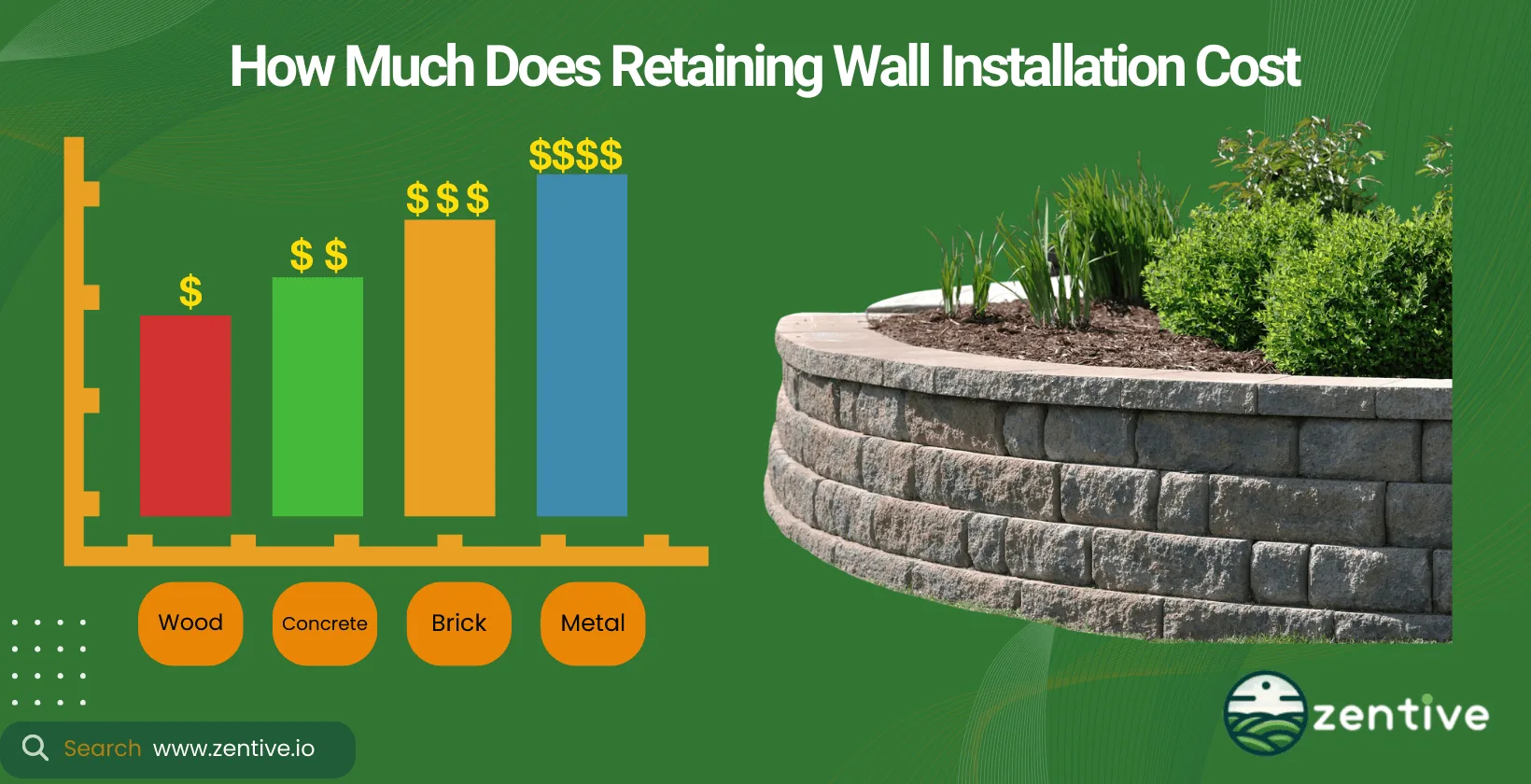
The average cost for hiring a landscaper to install a retaining wall ranges from $6,000, with a range of $3,500 to $9,500 for residential projects and $10,000 for larger projects. When bidding on a retaining wall project, landscapers first visit the site. They measure the project’s scale, estimate materials, calculate labor costs, and identify any additional equipment needs. Next, they compile everything into a quote, and finally, they send the quote pending approval from the client.
Several factors influence the final cost of installing a retaining wall, including the type of wall (e.g., stone, concrete, wood), the size of the wall, site preparation needs, and geographic location.
Installing a retaining wall is a landscape service that involves constructing a structure to retain soil on one side and prevent erosion. Landscapers in this industry require the technical know-how and a keen understanding of the materials and methods best suited for the task.
Apart from the physical installation of a retaining wall, landscapers need to understand the intricacies involved in the cost of retaining wall services and how to price these services accurately. When they price more accurately, it ultimately leads to more satisfied customers as your initial quote aligns more accurately with the final cost of delivering the services. However, pricing retaining wall cost is not that easy; you need to account for a lot of variables, including type of materials, labor, terrain of the property, and wall durability.
There are many tips and tricks to help you price these landscaping jobs more accurately. Still, the best tip is to utilize landscape estimate software. This software ensures accurate and competitive pricing while streamlining the entire process, making it easier and faster to send out your quotes.
Retaining Wall Cost Calculator
Estimate materials and optional labor using per-sq-ft ranges from your guide.
Add labor (optional)
Note: labor typically ranges $50–$60/hr. Enter your own hours for the job.
What Does It Cost To Install A Retaining Wall?
On average, a retaining wall costs $23 per square foot or $6,000 per project. However, several factors influence the cost.
- Property Size: Larger areas require more materials and labor.
- Type of Wall: Different materials can significantly affect the cost, such as gravity walls vs. cantilever vs. tie-back vs. sheet piling retaining wall.
- Wall Height: Taller walls require more materials and structural support.
- Cost Of Labor: Geographic location and the complexity of the work influence labor costs.
- Hire Professional vs DIY: Hiring professionals adds to the cost but ensures quality and longevity.
What Is The Cost Of A Retaining Wall By Type?
All in all, there are eight types of retaining walls a person can opt for.
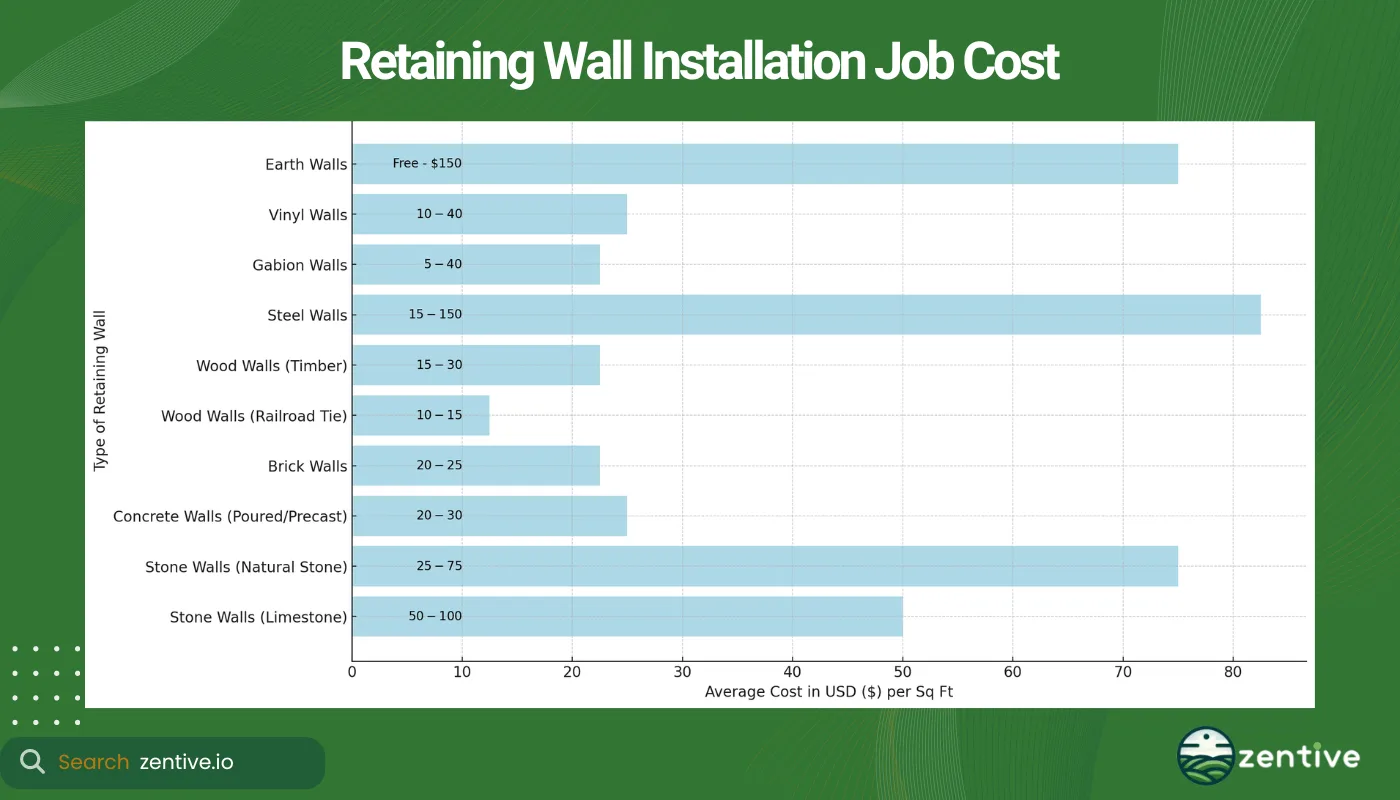
- Stone Walls: For a natural look, either limestone or natural stone, the prices are $50 and $100 per square foot and $25 and $75 per square foot, respectively.
- Concrete Walls: Highly durable and strong, either poured concrete or precast concrete, $20-$30 per sq ft.
- Brick Walls: These have a classic aesthetic and act as a veneer on the wall. They cost $20-$25 per sq ft.
- Wood Walls: These can be railroad tie retaining walls or normal timber, both of which are budget-friendly options. The former costs $10-15 per sq ft, and the latter costs $15 to $30 per sq ft.
- Steel Walls: Modern and very durable. The cost of a steel retaining wall depends on its design; basic thin walls cost $15 per sq ft, while thick walls that feature more advanced designs can cost up to $150 per sq ft. These are usually used for heavier weights like decks or pools.
- Gabion Walls: This unique look features galvanized wire baskets filled with stone. It includes drainage benefits and costs $5-$40 per sq ft.
- Vinyl Walls: Low maintenance and budget-friendly, $10-$40 per sq ft.
- Earth Walls: Eco-friendly, varying costs largely depend on labor costs. Earth retaining walls can range from free (DIY retaining wall) to $150 per sq ft.
What Is The Cost Of Wood Retaining Walls?
There are six types of wood retaining walls, each with its own cost and lifespan.
- Railroad Tie Walls: Constructed from recycled ties, a railroad tie retaining wall is economical and robust. They cost about $10-$15 per square foot and typically last 10-20 years, depending on environmental conditions.
- Pressure-Treated Timber Walls: This popular choice due to its resistance to rot and pests costs around $15-$25 per square foot and can last up to 40 years with proper maintenance.
- Cedar Wood Walls: Cedar is naturally resistant to decay, offers a beautiful finish, and costs $20-$30 per square foot. These walls generally last about 20 years.
- Redwood Walls: Known for their durability and rich color, they cost $25-$35 per square foot and can last over 20 years if treated and maintained correctly and regularly.
- Treated Pine Walls: An affordable option at $15-$20 per square foot, treated pine can last 15-20 years with regular treatment against rot and insect invasion.
- Hardwood Timber Walls: Durable and strong, hardwood varieties like oak or teak range from $25-$40 per square foot and can last 40 years or more with minimal maintenance.
What Is The Cost Of Retaining Walls By Size?
The size of the retaining wall significantly impacts the overall cost, with a 10-foot retaining wall closing between $400 and $3,500, a 15-foot between $600 and $5,200, a 20-foot between $800 and $7,000, a 50-foot between $2,000 and $17,000, and a 100-foot between $4,000 and $35,000.
However, these prices are not set in stone. Taller walls are more expensive due to the need for more retaining wall materials and engineering to ensure stability. By now, you know that you calculate the cost of retaining walls per square foot, so longer walls are more expensive because they require more materials and labor.
Use case influences the cost. Smaller retaining walls are often used for landscaping aesthetics, while larger ones are for structural purposes.
| Wall Size | Cost Range | Description |
|---|---|---|
| 10 feet | $400 - $3,500 | Smaller retaining walls are often used for landscaping aesthetics. Cost varies depending on materials and complexity. |
| 15 feet | $600 - $5,200 | Moderate size, may be used for both aesthetics and minor structural purposes. Cost influenced by materials and engineering requirements. |
| 20 feet | $800 - $7,000 | Medium size, used for structural support in addition to aesthetics. Higher cost due to more materials and labor. |
| 50 feet | $2,000 - $17,000 | Larger walls primarily for structural purposes, significant material and engineering requirements, hence higher cost. |
| 100 feet | $4,000 - $35,000 | Very large walls for substantial structural support, highest cost due to extensive material and labor needs. |
What Is The Cost Of Retaining Walls By Height?
Retaining walls come in different heights. It's noteworthy that each of these heights serves a specific purpose. Here is a list of the four most popular retaining walls by height.
- 4' (1.22 meters): Ideal for garden terraces; cost varies by material but is usually around $400 to $1,000 per linear foot. Suitable for controlling water flow and preventing soil erosion in sloped areas.
- 6' (1.83 meters): These walls cost between $800 and $2,000 per linear foot. They are used to support structures or create level areas in sloped landscapes.
- 8'(2.44 meters): An 8-foot-tall retaining wall costs between $1,200 and $3,000 per linear foot. It supports buildings or creates large-level areas in sloped landscapes.
- 10' (3.05 meters): Costs between $2,000 and $5,000 per linear foot. Similar to 8-foot walls, they are used to support large structures or create large-level areas in sloped landscapes.
- 20' (6.10 meters): A 20-foot-tall retaining wall costs between $4,000 and $10,000 per linear foot. Extremely tall retaining walls are used to support very large structures or create very large level areas in extremely sloped landscapes.
What Is The Cost Of Retaining Walls Per Square Foot?
The cost of retaining walls per square foot is $23 on average but varies between $20 and $50. Let's say you want to build a 50 ft long and 4 ft tall wall, it would cost, on average, $4,600 (50x4x$23). However, this figure can change dramatically based on labor costs alone.
What Is The Cost Of Labor For Building Retaining Walls?
The cost of labor is between $50 and $60 per hour. It's a skilled job, which is why the labor cost is higher than that of most other landscaping services. Labor can be further increased by the material the client wants, shape, and property slope, as all three aspects can make the job easier or more difficult. The average cost to repair an existing retaining wall is between $800 and $20,000 but depends entirely on the repair work needed.
Are you afraid you might under budget given the intricacies involved in installing a new retaining wall? Landscapers consider all these aspects I mentioned when they provide a quote to ensure you know what the full cost will be before any construction commences.
How Do Landscapers Create Estimates For Retaining Walls?
Landscapers create estimates for retaining walls by following six steps. We'll explain the six steps in detail so you know how to price and quote landscape jobs more professionally.
- Assess Site Scope: Examine the project location to understand dimensions, terrain conditions, and any obstacles that could influence the design and construction of the retaining wall.
- Estimate Material Requirements: Calculate the quantity and types of materials needed—including concrete, blocks, reinforcement, and drainage components—based on the wall's design and size.
- Compute Labor Expenses: Determine the total labor hours and associated costs by evaluating the complexity of the build and the skill levels required for proper installation.
- Account for Operational Overheads: Incorporate additional business costs such as equipment, permits, insurance, and administrative fees to ensure a comprehensive estimate.
- Select Pricing Strategy: Establish a pricing approach that covers all material, labor, and overhead costs while remaining competitive and profitable.
- Dispatch Detailed Quote: Present the client with a clear, itemized estimate that outlines every cost element and service included in the retaining wall project.
1. Assess Site Scope
The first step is to visit the job site to get a clear representation of what the job entails. Once you're there, you can measure exactly how long the wall needs to be and what preparation work is needed. This will help you create a more accurate quote and land the job.
A site visit will help you identify potential challenges the job might have which can affect the cost of the services. Remember, site conditions such as removal of old walls or cutting brush all influence labor requirements, which influences total cost.
2. Estimate Material Requirements
Material requirements, whether it's stone, wood, or precast concrete, are relatively easy to calculate. You simply multiply the length of the wall with the height to get the square feet. Retaining wall materials are measured in square feet, so just match your calculation of the wall size with the correct footage of required materials.
3. Compute Labor Expenses
Labor expenses are all work hours involved in the job from planning to execution and cleanup. You can estimate the work hours by using industry standards and your own experience with the type of retaining walls you need to install.
After determining the work hours it will require, you can calculate the labor costs by applying this formula: Labor cost = Labor hours x Labor rates.
Always overestimate your labor instead of underestimating it to make your quote look cheaper. You never know what challenges you might face during the project that can extend the labor hours.
4. Account for Operational Overheads
Operational overheads are expenses related to running your business and include administrative costs, communication services (WIFI, cellular), equipment maintenance, depreciation, and transportation.
These are the indirect costs of running a business and completing projects, so it's important you include them in your quotes. Otherwise, you'll struggle to make a decent profit.
5. Select Pricing Strategy
Landscapers typically use one of three main pricing strategies.
- Cost-Plus Pricing: Simply calculate all costs and add a markup for profit (usually 15% to 20%). It ensures that all expenses are covered and is very easy to calculate and explain to a client, which is why it's the most popular type of pricing strategy landscapers use.
- Value-Based Pricing: Prices are set based on the perceived value to the client. You can use this model if you plan on adding intricate designs to the walls. Value-based pricing is less appropriate for standard retaining wall installations.
- Competitive Pricing: Setting prices in line with market rates, ensuring competitiveness while maintaining profitability. Best for new businesses who want to quickly build up a client base by simply offering the cheapest prices.
6. Dispatch Detailed Quote
The last step is to compile all your expenses into a detailed and accurate retaining wall installation quote. When you're done, you can send it to the client and wait for his feedback. Landscape estimating software is a great tool you can use to streamline this last step. Software like Zentive utilizes calculators and algorithms to improve the accuracy of your quote and reduce the time spent creating it so that you have more time for other aspects of your business.
What Is A Retaining Wall?
A retaining wall is a type of wall that restrains soil to a slope that it would not naturally keep to. It's a popular landscaping service, but operating a landscaping business in this sector requires technical expertise in everything related to force, slopes, and material durability.
People opt for retaining walls to prevent erosion, manage water runoff, create usable flat areas in a yard, and even make the space more appealing. The cost to build a retaining wall is not cheap, but the use cases usually outweigh the costs. Retaining walls can be used as garden terraces, boundary walls, and supporting a slope next to a driveway.
What Factors Affect Cost Of Landscape Retaining Wall Construction?
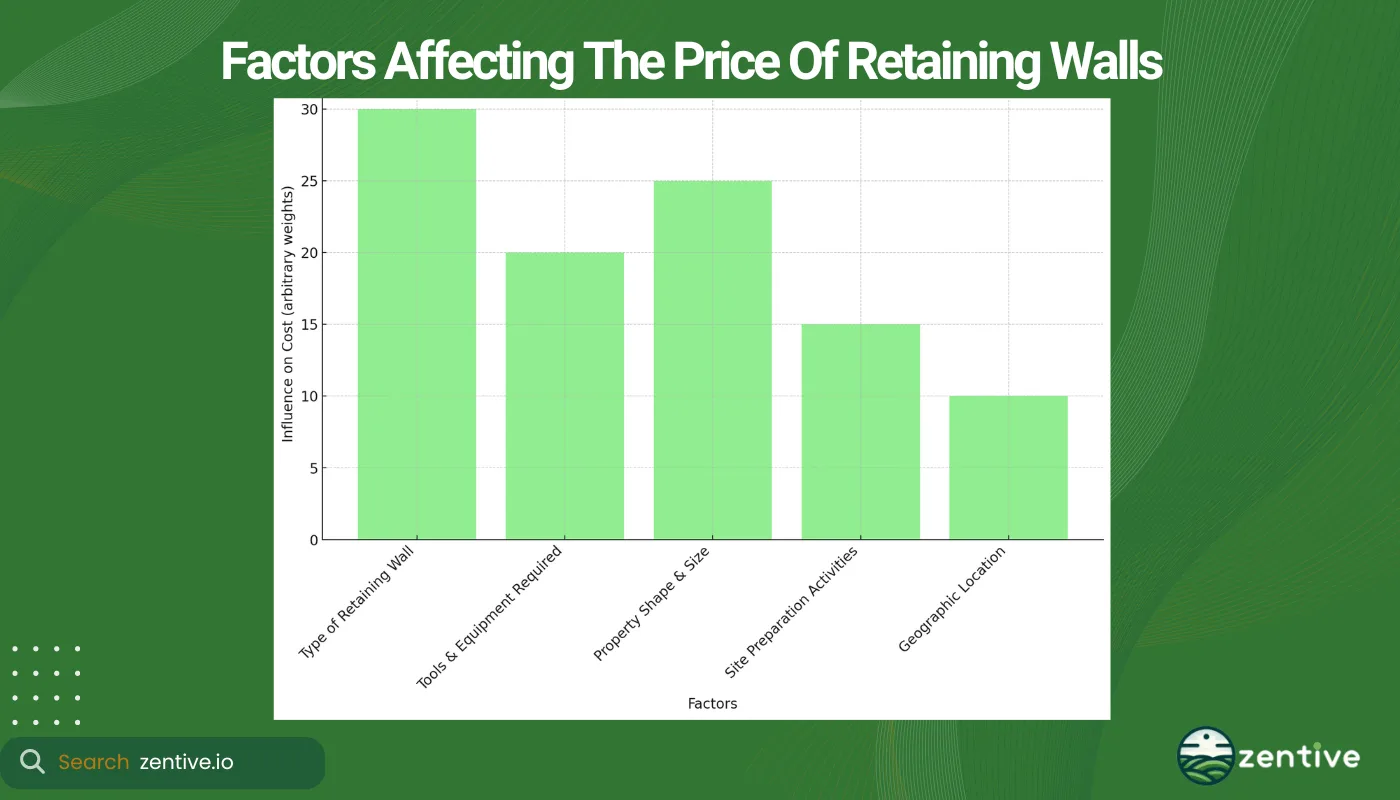
Five factors affect the cost of landscape retaining wall construction.
- Type of Retaining Wall: The materials the client wants (stone, concrete, wood, etc.) significantly affect overall costs due to variations in price and installation complexity.
- Tools & Equipment Required: Tools and equipment affect the installation cost, as some types of walls require specialized equipment for the installation.
- Property Shape & Size: Larger or irregularly shaped properties require more extensive work and materials.
- Site Preparation Activities: Pre-construction work such as clearing, excavation, and grading add to the cost.
- Geographic Location: Prices for materials and labor vary widely by location, as do requirements for permits and regulations.
What Preparation Services Are Needed Before Installing Retention Walls?
Before installing a retaining wall, there are some landscaping services you need to do. The below landscape services should be completed in preparation of installing a retaining wall.
- Site clearing and excavation to remove any obstructions, such as rocks or roots.
- Soil testing and grading to ensure stability and suitability.
- Foundation preparation for a solid base and to ensure the wall can withstand the pressure of the soil.
- Drainage planning to prevent water damage.
- Land grading & leveling for the optimal positioning of the wall and to make it look professionally installed.
How Does Geographic Location Affect Cost For Building Retaining Walls?
Geographic location plays a significant role in the cost, especially when you consider state vs state. The state in which your business works significantly influences the cost of pricing. Remember, each state has different material costs and labor rates, which make up the majority of your cost, so naturally, the quote will look different in South Carolina than in California.
Local regulations and permit requirements further affect complexity and expense. The more permits you require, the more expensive the job gets. California is the most expensive state to offer retaining wall installations due to higher labor costs and tight regulations.
What Are Tips For Pricing Retaining Walls?
To price retaining walls more accurately, you should use estimation tools, forecast the time needed for the job more accurately, and avoid typical errors. You should utilize landscaping estimation software to streamline and improve the accuracy of your quotes.
Always ensure you allocate enough time for each phase of the installation process, including site prep and cleanup. Lastly, be mindful of common pitfalls such as underestimating material costs, the scope of the project, or overlooking site complexities, which is why the first step of the quote estimation process is so important.
How Does Landscape Software Help Quoting Retaining Walls?
Landscape software, like Zentive, offers significant advantages, such as reducing calculations, increasing quote production speed, and helping to make your quotes look more accurate.
Zentive, the best landscape quoting app, acts as a retaining wall cost calculator. It utilizes pre-loaded data to calculate labor, material, and overhead costs. The calculator is generally much faster and more accurate than human calculations.
How Long Does It Take To Install A Retaining Wall?
The installation time for a retaining wall depends largely on its size but is, on average, 60 hours for residential jobs, which equates to 7.5 working days, assuming an 8-hour work day. Several factors influence the duration of the installation process, the first being site preparation work like clearing vegetation, excavating soil, and leveling.
Property shape and size influence the duration, with larger or more difficult property shapes taking longer than smaller or standard straight shapes. Lastly, the overall size of the retaining wall itself affects the time. Larger walls take longer to install than smaller walls.
What Are The Biggest Issues With Estimating Retaining Walls?
The primary challenges in estimating retaining walls include underestimating material costs, overlooking site preparation complexities, and failing to accurately estimate labor requirements.
Underestimating material costs lead to budget overruns and delays. Overlooking site preparation complexities, such as neglecting to consider water drainage or specific permits, can delay projects, sometimes even indefinitely.
Lastly, failing to accurately estimate labor requirements impacts project timelines and costs, which leads to angry clients and bad reviews.
Get This Guide as a PDF
Save this article for offline reading. We'll send a formatted PDF straight to your inbox.
No spam. Unsubscribe anytime.
Ready To Streamline Your Field Service Business?
Zentive is the all-in-one field service management software built for landscaping, lawn care, tree care, and snow removal businesses. Start your free trial today.
No credit card required · Cancel anytime