
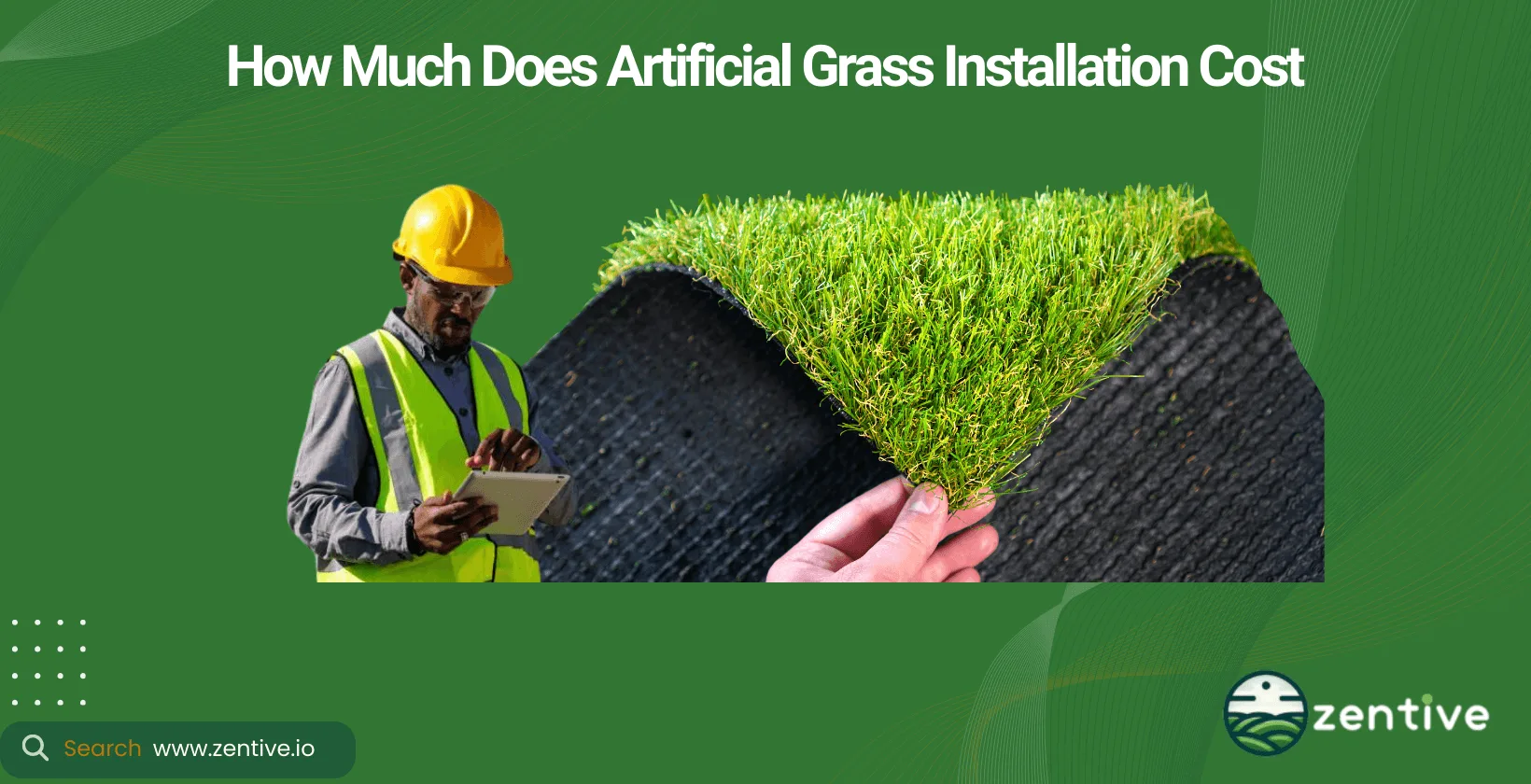
It costs between $3 and $12 per square foot to hire a landscaper for artificial grass installation or $3,000 to $8,000 on average for the entire project. Landscapers bidding on these jobs start by visiting the job site and analyzing the project's unique aspects, from the specific type of synthetic lawn the client wants to the preparation work needed for the site and the project's scope. They then create the estimate based on their calculations and send the quote to the client for approval.
The installation of artificial turf involves replacing natural grass with synthetic fibers that look and feel similar to real grass without the ongoing maintenance of mowing, watering, or fertilizing.
As a landscaper, you must accurately price the installation, factoring in artificial grass cost and labor. Accurate estimates provide honest quotes to clients and ensure your business remains profitable. Pricing in landscaping is challenging, particularly when estimating labor and material costs.
Numerous factors influence artificial turf cost, including material choice, installation complexity, and geographic location. The most efficient way to price these jobs is by using landscape estimating software. Tools like Zentive help you win more clients by making your quotes more accurate and professional. They reduce time spent creating estimates, allowing you to bid on more jobs.
What Does It Cost To Install Artificial Grass?
It costs between $3 and $12 per square foot to install artificial grass. It costs $3,000 to $8,000 for the entire project. However, the price varies per project and depends on several factors.
- Property size: The larger the area, the higher the cost.
- Type of turf: Different materials and textures affect pricing.
- Brand of Turf: High-quality brands tend to be more expensive.
- Cost of Labor: Professional installation adds to the total expense.
- Hire Professional vs. DIY: Doing it yourself saves on labor costs but requires skill and time.
What Is Artificial Grass Cost Per Square Foot?
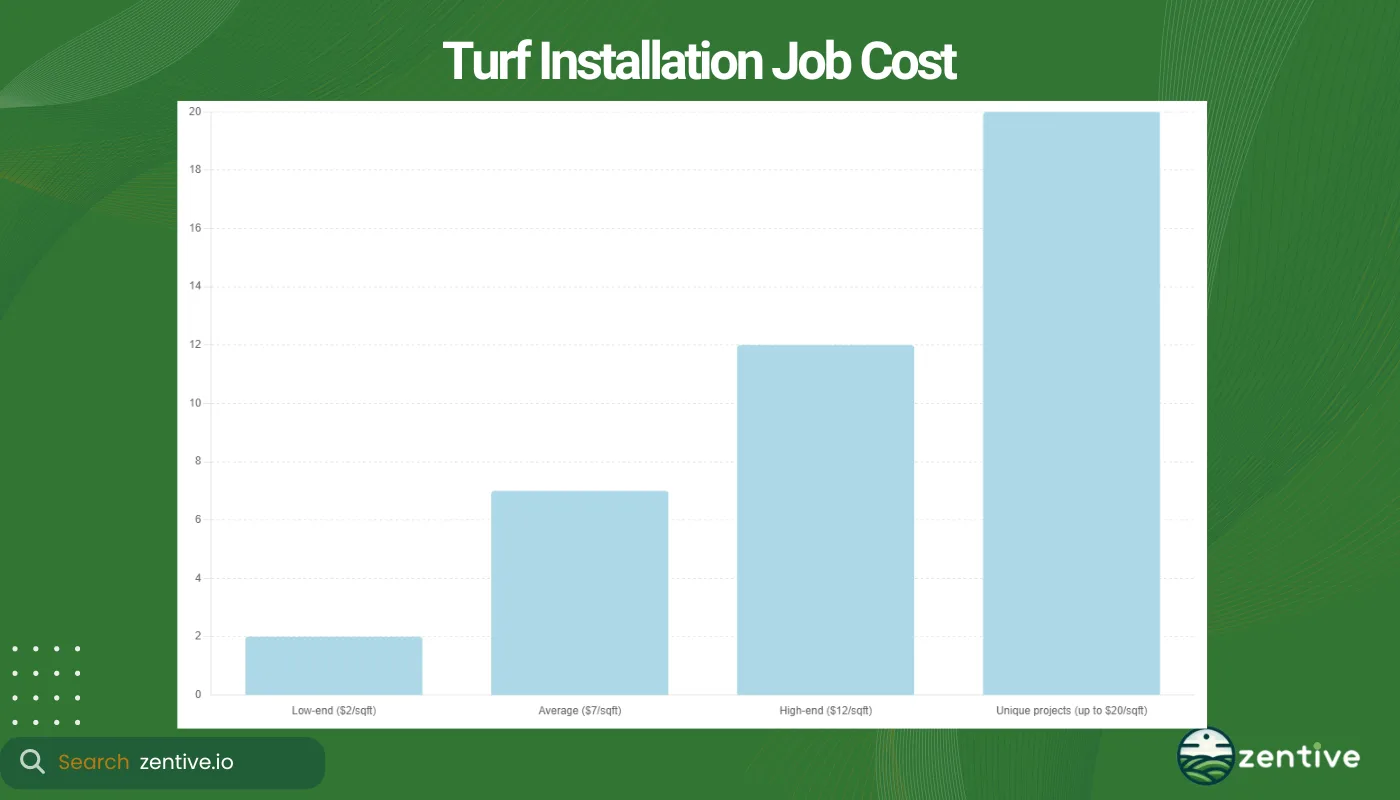
The cost per square foot for artificial grass installation ranges between $2 and $12, sometimes reaching $20 for unique projects. For this price, you'll get the turf material, labor, base materials, and infill.
For instance, installing artificial grass in a 1,000-square-foot yard could cost anywhere from $3,000 to $20,000, depending on the factors mentioned above. You can expect to pay around $7,000 for the entire project if you have a standard project that doesn't require a lot of infill and labor.
What Does It Cost To Install Different Types Of Artificial Grass?
Artificial turf comes in three main types: polyethylene, nylon, and polypropylene. Each has varying costs. Polyethylene turf is a common choice for artificial grass, balancing durability and softness. It is suitable for general landscaping purposes and is priced between $2 and $4 per square foot. This type is ideal for spaces with minimal foot traffic that are not exposed to prolonged high heat, such as shaded backyards and indoor playgrounds.
Nylon turf has exceptional durability, making it a preferred choice for high-traffic areas like sports fields. It is more expensive, ranging from $5.50 to $7.50 per square foot.
Polypropylene turf is the most budget-friendly option, priced between $2 to $4 per square foot (usually towards the cheaper side of the spectrum). While it is the least durable, it can be suitable for low-traffic areas and spaces not subjected to high heat for extended periods. This type of synthetic turf is the best option if you only have a small backyard and want a "green space" where your pets can do their business.
| Type of Artificial Grass | Cost per Square Foot | Description |
|---|---|---|
| Polyethylene | $2 - $4 | A common choice for artificial grass, balancing durability and softness. Suitable for general landscaping purposes, ideal for spaces with minimal foot traffic and not exposed to prolonged high heat. |
| Nylon | $5.50 - $7.50 | Exceptional durability, preferred for high-traffic areas like sports fields. |
| Polypropylene | $2 - $4 | Most budget-friendly option, suitable for low-traffic areas and spaces not subjected to high heat for extended periods. Ideal for small backyards and pet areas. |
What Does It Cost To Install Artificial Grass By Brand?
The artificial grass industry has three popular brands: EasyTurf, Mega Grass, and Astro Turf.
- EasyTurf: EasyTurf costs $1.80 to $3.50 per square foot. It's the best option if you want artificial grass for standard use cases such as backyards or indoor playgrounds.
- Mega Grass: Mega Grass costs between $2 and $4 per square foot. The brand focuses on eco-friendly and pet-friendly solutions. It's more affordable but less durable.
- Astro Turf: Astro Turf is the most popular brand and can cost anywhere from $2.50 to $7.50 per square foot, depending on the specific product you choose. You'll most likely find Astro Turf on sports fields because it is such a high-quality product.
What Does AstroTurf Installation Cost?
AstroTurf installation costs between $2.5 to $7.5 per square foot. AstroTurf is actually only a brand name, but it has become so popular that people actually refer to artificial grass as AstroTurf.
The time it takes to install AstroTurf varies based on the scale of the project, but a standard backyard with a smooth ground surface only requires a few hours to one or two days for the installation.
What Are Labor Costs To Install Fake Grass?
The labor costs are $3 to $5 per square foot for an experienced team to install fake grass. However, artificial grass costs, specifically labor costs, can skyrocket if the project requires extensive ground preparation, has access issues, or other installation complexities, e.g., removal of plants or trees.
Artificial grass is not difficult to install. You can opt for the DIY installation route when you possess the necessary skills.
What Does It Cost To Install Artificial Grass Yourself?
The cost of materials and tools for a DIY installation can range from $4.50 to $7 per square foot. While doing it yourself saves on labor, you have to factor in the tool expense, the time spent on the project, and the potential risk of not doing it correctly.
To install artificial grass yourself, you will need tools such as a turf cutter, wheelbarrow, shovel, pick, hammer, and a float, among others. Additionally, you will need to prepare the ground, lay the turf, and secure it in place.
It's a relatively simple project, but it can become very difficult very fast if the surface is uneven or the area has many curves. Request a quote from a landscaping installer when your budget allows. Professional installers have the expertise and experience to ensure a high-quality installation, saving you time and potential issues in the long run.
How Do Landscapers Create Estimate For Artificial Turf?
To create an accurate estimate for artificial turf, you need to follow six steps. After you've studied these six steps, you'll know exactly how to price & estimate landscaping jobs professionally.
- Visit The Site To Understand Scope: Conduct an on-site evaluation to measure dimensions, assess terrain, and identify any challenges that could impact the installation project.
- Calculate Amount Of Materials Needed: Determine the precise quantity of turf, base layers, and ancillary supplies required by taking detailed measurements and accounting for installation specifics.
- Determine Total Labor Costs: Estimate the total man-hours and associated wages needed by analyzing the project’s complexity and the skills required from your team.
- Factor In Business Operational Costs: Include overhead expenses such as equipment maintenance, permits, insurance, and administrative fees to ensure all business costs are covered.
- Decide On Your Pricing Approach: Develop a pricing strategy that balances competitive market rates with the need for profitability, taking into account all material, labor, and operational expenses.
- Send A Comprehensive Quote: Deliver a clear, itemized estimate to the client that details every cost element of the project from materials to labor and additional fees.
1. Visit The Site To Understand Scope
Conducting a site visit will help you fully understand the project's scope. This step allows you to accurately measure the client's property and observe site conditions, such as slopes, curves, or existing landscaping features (trees, hedges, etc.), which can significantly impact labor and material requirements.
2. Calculate Amount Of Materials Needed
After taking all your measurements, it's time to calculate the amount of materials you require. This includes artificial turf, base materials, infill, and any required edging or drainage systems.
Remember, the quantity of materials you need is directly influenced by the property's size. Landscapers must measure the area precisely and consider how the turf is packaged to calculate the necessary materials.
3. Determine Total Labor Costs
Labor expenses are the expenses you pay to your workers for performing the job. It's a significant portion of the total project cost.
Estimating work hours involves taking the size of the area needed for the turf and multiplying it by the standard time it takes for 100 square feet or any other size you feel comfortable with. For instance, a yard of 100 square feet might take you one day, so a 300 square foot yard might take two to three days.
After estimating the work hours, you can calculate the estimated labor costs. The formula for calculating labor costs is straightforward: Labor cost = Labor hours x Labor rates.
4. Factor In Business Operational Costs
Admin costs include everything related to running your business, such as WIFI, utilities, transportation, admin staff salaries, rent, vehicle maintenance, etc. As a business owner, you should always factor these costs into your estimate because they are still expenses your business underwent while performing the service. Note that they should be proportionally split among several estimates among different clients and not one lump sum in a single estimate.
5. Decide On Your Pricing Approach
There are three pricing strategies landscapers can choose when estimating their landscaping jobs.
- Cost-Plus Pricing: This involves calculating all project costs and adding a pre-determined profit markup. It's the most popular type of pricing strategy because of its simplicity.
- Value-Based Pricing: Prices are set based on the perceived value you offer the client.
- Competitive Pricing: Pricing is set in accordance with market rates for similar services. You have to conduct regular research on market rates, but it is a good pricing model for new businesses as they can win bids by simply offering the cheapest service.
6. Send A Comprehensive Quote
The final step is to compile all the gathered and calculated information into a detailed turf grass installation quote. You should include a breakdown of materials, labor, and other costs, along with the total project price.
The process can be very tedious, especially if you have to send out more than one each day. You're prone to making errors - it's human; it happens. But, you can mitigate these errors and improve quote creation speed by simply using estimating software. This software is designed to help with the entire creation process, automating calculations while ensuring your quote looks professional.
What Is Artificial Turf?
Artificial turf (synthetic grass) is a surface made from synthetic fibers designed to mimic the look and feel of a natural grass lawn. Installing artificial turf is a landscaping service where a landscaper will purchase the materials and install the grass at the client's home or business to create an artificial lawn.
People prefer artificial turf over natural grass because of its year-round green appearance, no need for watering or mowing, and its suitability for areas where natural grass might struggle to grow, e.g., deserts. Part of effective landscaping business management is being able to offer services like synthetic turf at a reasonable price.
| Use Case | Description |
|---|---|
| Residential Lawns and Gardens | Artificial turf is used in home lawns and gardens for a lush, green look year-round with low maintenance. |
| Commercial Landscaping | Used in commercial spaces to enhance the aesthetic appeal while minimizing maintenance costs. |
| Playgrounds | Provides a safe, durable, and clean surface for children to play on in playgrounds. |
| Sports Fields | Widely used in sports fields to provide a consistent playing surface and withstand heavy use. |
| Pet Areas | Specially designed turf for pet areas, offering durability and easy cleaning for pet owners. |
What Factors Affect Cost Of Landscape Synthetic Grass Services?
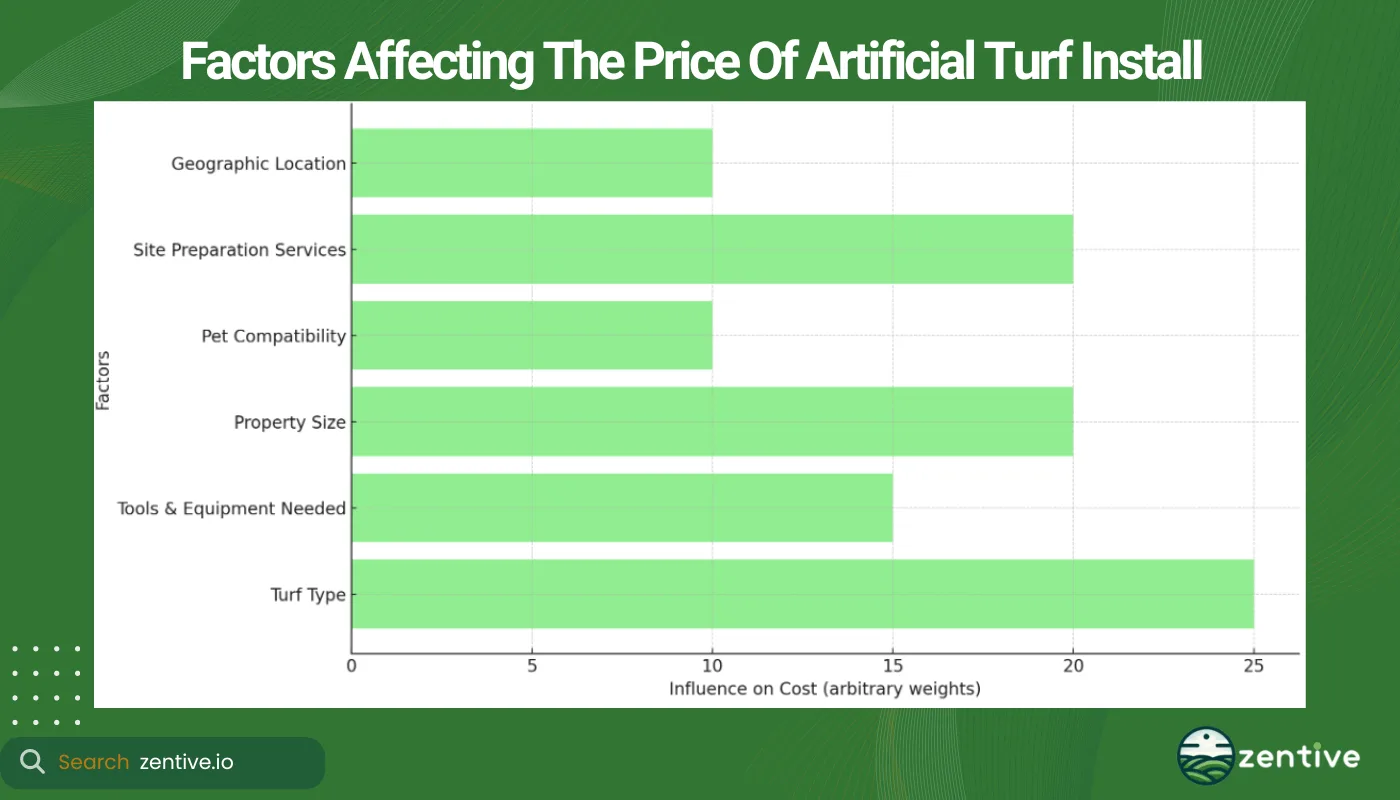
Like most landscaping services, there are costs associated with the landscape synthetic grass services that affect its price.
- Turf Type: The material and quality of the artificial turf significantly influence the price. Higher-end, more realistic turf like AstroTurf are more expensive.
- Tools & Equipment Needed: Specialized tools and equipment for installation can add to the cost.
- Property Size: Larger areas like sports fields require more materials and labor; consequently, the price increases.
- Pet Compatibility: Pet-friendly turf is expensive, especially when it includes pet urine substrates.
- Site Preparation Services: The cost depends on the extent of site preparation needed before installation. More extensive preparation work will increase expenses, especially if the terrain is uneven or when you need to remove trees or hedges with deep roots.
- Geographic Location: Costs vary by region or state due to differences in labor rates, material availability, and the area's specific landscaping requirements.
What Preparation Services Are Needed Before Installing Fake Grass?
Preparation is key to ensuring the longevity of fake grass. The below landscape services should be completed in preparation of installing fake grass.
- Locate and handle utilities: To prevent damage to pipes, sewage lines, or fiber cables during excavation.
- Remove existing grass and roots: To prepare the ground for artificial turf.
- Apply weed killer: To prevent future weed growth underneath the turf.
- Excavate and grade for drainage: Ensures proper water runoff and prevents pooling; it's the most expensive one of the landscaping list of services.
- Compact sub-base soil: Creates a stable foundation for the turf.
- Install and compact base material: Provides a smooth surface for turf installation.
- Optionally place weed barrier: Prevents weeds while allowing for drainage.
- Warm up and roll out turf: Prepares the turf for installation.
- Install edging and secure turf: Finalizes the installation for durability and so that it looks well-rounded.
How Does Geographic Location Affect Cost For Artificial Turf?
Geographic location plays a major part in the cost of artificial turf. The state where your business operates affects pricing due to different labor costs, material availability, regulations and permit costs, and even environmental factors that influence installation requirements.
For example, California has some of the highest living and labor costs. Consequently, it's the most expensive state for landscaping services, including artificial turf installation.
What Are Tips For Pricing Artificial Grass?
To help you price artificial grass services, follow these three tips. First, utilize estimation software, which helps in accurately calculating both materials and labor costs, makes your quotes look more professional, and decreases the time it takes to create a quote.
The second tip is to always precisely calculate the required time to finish a project. Always double-check your labor hour calculations to avoid underpricing. The last thing you want is for your client to pay extra on the agreed-upon cost because you underpriced labor.
Finally, try to avoid common mistakes. It's difficult, especially when you're starting your business, but take all necessary measures to prevent mistakes; it'll only help increase your credibility that much faster.
How Does Landscape Software Help Quoting Artificial Grass?
Landscape software helps quote artificial grass by increasing the accuracy of quotes, giving them a more professional appeal, and reducing the time spent creating the quote.
A landscape quoting app, like Zentive, is a comprehensive tool that simplifies the quoting process. Zentive acts as your artificial grass cost calculator, reducing errors while ensuring your business remains profitable. It helps you to create more quotes in less time, which means you can either bid on more jobs or spend more time on other aspects of your business.
How Long Does It Take To Install Turf?
The installation time for artificial turf varies from a couple of hours for a small backyard to a few days for a medium backyard to a couple of weeks for a sports field.
While property size is the main determinant of the duration of the project, preparatory landscaping services increase the job duration. However, they are necessary. For instance, if you don't install drainage, you run the risk of ruining your entire synthetic lawn well ahead of its lifespan.
What Are The Biggest Issues With Estimating Turf Costs?
There are three major issues in estimating turf costs. The first is underestimating material costs. Not accurately calculating the amount of turf and other materials the project requires leads to unexpected expenses and delays.
Another issue is overlooking site preparation requirements. Failure to factor in all the site preparation requirements leads to additional expenses or a shorter lifespan of the turf when the preparation steps are not done.
Failing to account for labor complexity is one of the most common issues. Landscapers underestimate the project's labor requirements. Consequently, labor becomes more expensive, and the project takes longer than initially agreed upon.
Get This Guide as a PDF
Save this article for offline reading. We'll send a formatted PDF straight to your inbox.
No spam. Unsubscribe anytime.
Ready To Streamline Your Field Service Business?
Zentive is the all-in-one field service management software built for landscaping, lawn care, tree care, and snow removal businesses. Start your free trial today.
No credit card required · Cancel anytime