
Driveway installation is a landscape service focused on creating a durable, functional path to a home or garage. It improves curb appeal, adds property value, and enhances accessibility.
Landscapers price driveway jobs carefully in a competitive market. Precise estimating helps landscapers appear reliable and professional while maintaining profitability. Accurate pricing can be difficult due to fluctuating material costs and the dynamic nature of driveway projects.
The cost of hiring a landscaper for driveway services depends on whether it is a new installation or a replacement. A new driveway costs $2,500 to $9,500, with an average of $6,500 for concrete. A replacement costs $1,000 to $2,500 for removal, plus the installation cost, typically totaling $6,000 to $8,000.
Aspiring driveway landscapers must understand the bidding process. It begins with client contact, followed by a detailed site assessment. Then, material and labor costs are estimated. The final step is sending the estimate and finalizing an agreement.
Factors affecting driveway service prices include the type of driveway (e.g., concrete, asphalt, gravel), whether it is an installation, replacement, or resurfacing, and the driveway size. Landscape estimating software improves pricing and bidding efficiency, making the process faster and more accurate.
How Much Does A Driveway Cost?
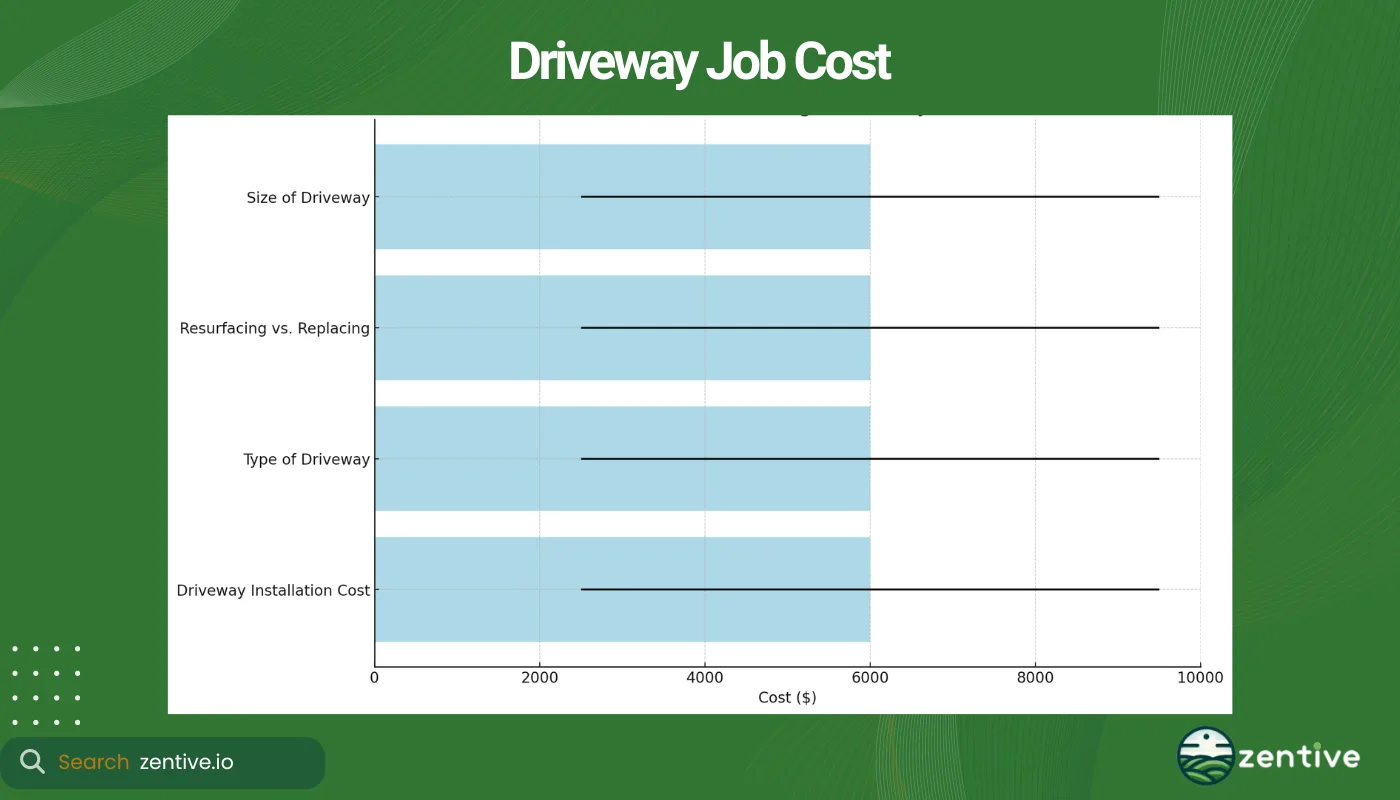
The cost of installing a driveway ranges from $2,500 to $9,500. This estimate is not set in stone; several factors influence your driveway cost, including the type of driveway, resurfacing vs. replacing, and the size of the driveway. All these variables affect the amount of materials needed and the labor investments, directly influencing the cost.
What Is The Cost Of Different Types Of Driveways?
The cost structure for driveway installations varies across five types—concrete, asphalt, gravel, paver, and heated—with each material presenting its own price range. Concrete driveways cost between $4 to $15 per square foot, with an average cost ranging from $2,500 to $7,500
Asphalt driveways cost between $5 to $12 per square foot installed, or $4,700 on average. Gravel driveways are the most affordable option, costing around $1 to $3 per square foot installed. Paver driveways are the most expensive commonly used driveway material, with costs ranging from $12 to $15 a square foot.
The cost of heated driveways can vary significantly depending on the system the client wants and the size of the driveway. Typically, heated driveways can cost between $12 to $21 per square foot for installation.
| Type of Driveway | Cost per Square Foot | Installation Complexity | Benefits |
|---|---|---|---|
| Concrete Driveway | $4 to $15 | Simple unless excessive slope | Strong, durable surface; lasts for decades with proper care |
| Asphalt Driveway | $5 to $12 | Can increase in cost in remote areas | Durable, cost-effective, smooth, quiet ride, slip-resistant |
| Gravel Driveway | $1 to $3 | Highest maintenance requirement | Good drainage, cost-effective |
| Paver Driveway | $12 to $15 | Labor-intensive | Durable, easy repair, high-end look |
| Heated Driveway | $12 to $21 | Advanced installation process | Reduces winter maintenance, melts snow and ice |
What Is The Cost Of Concrete Driveway Installations?
A new concrete driveway cost around $4 to $15 per square foot. They are usually very simple to install if there is no excessive slope present. Once the job becomes more complex, the price increases.
Contractors install concrete driveways by pouring a mixture of cement, water, and aggregate into a prepared area in the ground and then finishing it to a smooth or rough surface, depending on the client's preference. Benefits include a strong, durable surface that can last for decades with proper care.
What Is The Cost Of Asphalt Driveway Installations?
Asphalt driveways cost between $5 to $12 per square foot. They are popular due to their durability and cost-effectiveness. The cost can increase when there is a shortage of materials, which typically occurs in remote areas.
The installation process involves laying down a base of compacted materials before applying several layers of hot asphalt like you would make a road. The benefits include a smooth, quiet ride and the ability to withstand harsh weather conditions. It's more slip-resistant than concrete driveways.
What Is The Cost Of Gravel Driveway Installations?
Gravel driveways are the most budget-friendly option, costing between $1 and $3 per square foot to install. While they are the cheapest to install, they do have the highest maintenance requirement, involving regular topping up of gravel. This type of driveway is created by spreading layers of gravel over a compacted base layer. It's not very durable, but it offers good drainage and is cost-effective.
What Is The Cost Of Paver Driveway Installations?
Driveway pavers are very expensive, costing around $12 to $15 per square foot. They cost so much because of the labor involved, which involves manually laying each paver. Installation involves paving stones or bricks over a compacted base and sand layer. The benefits of choosing a paver driveway include durability, easy repair, and a high-end look.
What Is The Cost Of Heated Driveway Installations?
Heated driveways are the most expensive type of driveway installation, costing between $12 and $21 per square foot. They're so expensive because of the advanced installation process, which requires heating elements within the driveway itself. Heated driveways involve embedding heating elements beneath the driveway surface, which can be costly but offers significant benefits in cold climates by reducing winter maintenance in the form of snow and ice-melting capabilities.
What Is Cost Difference Between Replacing vs Resurfacing A Driveway?
Replacing a driveway is more expensive than resurfacing, costing between $5 to $15 per square foot while resurfacing only costs $2 to $5 per square foot. Resurfacing involves adding a new layer to the existing driveway while replacing means removing the old driveway and installing a new one, which explains why it's more expensive.
The size of the driveway is a major cost factor, influencing both material costs and labor, and probably the main influencer in deciding whether to replace or resurface a driveway.
How Does Driveway Size Affect Cost?
The size of the driveway directly impacts the cost—the larger the driveway, the higher the cost. The concrete driveway repair cost typically ranges from $4 to $15 per square foot.
To calculate the cost easily, you first need to determine your average driveway square footage, which is simply the length and width of your driveway multiplied (length x width). Then, multiply the square footage by the average cost.
For example, let's take an average 300-square-foot driveway, which can be calculated by length x width. Take the 300 and multiply it by the average cost (300 x $9), which equals $2,700.
How To Create Estimate For Landscape New Driveway Installation?
To estimate landscaping jobs, you need to master six steps. We'll explain in the following sections exactly how to estimate landscape jobs, so you can offer competitive bids and win more clients.
- Assess Job Site: Evaluate the installation area to identify terrain conditions, obstacles, and necessary site preparations.
- Determine Material Needs: Calculate the quantities and types of materials required based on the driveway design and site specifics.
- Calculate Labor Expenses: Estimate the total workforce cost by considering the project's scope, duration, and required expertise.
- Include Administrative Costs: Factor in overhead expenses such as permits, insurance, equipment rentals, and project management fees.
- Select Pricing Strategy: Choose a pricing model that balances competitive market rates, project complexity, and desired profit margins.
- Dispatch Estimate: Present the detailed cost breakdown and project plan to the client for review and approval.
1. Evaluate Site
The first step in creating an estimate is conducting a site visit. This is crucial for understanding the scope of the driveway installation. You'll need to measure the area the client wants the driveway in to better understand the material and labor requirements, which can help you create more accurate estimates.
Identify potential challenges, looking specifically at slopes, soil type, and accessibility (backyard, in-between trees, etc.). Addressing challenges proactively prevents future complications. Failing to do so leads to client dissatisfaction and reduced profit.
2. Estimate Material Requirements
To accurately estimate the materials needed, you use the measurements from the initial job visit and run some calculations. First, determine what driveway the client wants, such as a paver, concrete, or asphalt driveway.
Next, determine the quantity you need based on the driveway dimensions and the chosen material. Remember to consider the depth and compaction of materials like gravel or base layers for pavers.
3. Compute Labor Costs
Labor expenses are the money you pay to your employees for completing a driveway installation. To calculate the labor costs, first estimate the work hours. Consider how long the driveway installation will take and the number of workers you need. Factor in tasks like excavation, material laying, and finishing.
A simple yet accurate labor cost formula is multiplying labor hours by labor rates. This will give you the total labor expense for the driveway installation.
4. Factor in Overheads
Administrative costs, known as overheads, include all the expenses related to running your business that are not directly tied to a specific job. These can include office expenses like rent, utilities, and office supplies, as well as equipment depreciation like wear and tear on machinery and vehicles.
You must include these costs proportionally in your estimate because if you don't, they will significantly reduce your profit margin. Remember, for your business to grow, it should be profitable beyond the direct costs of materials and labor it uses for rendering services.
5. Choose Pricing Model
As a business owner, you have to choose a pricing model to secure profit while offering competitive rates. There are three main types of pricing models landscapers use.
- Cost-Plus Pricing: Calculate all costs (materials, labor, overhead) and add a profit markup. This model is straightforward, which is why most landscapers choose it.
- Value-Based Pricing: Prices are set based on the perceived value your services add to the customer's life, which can be higher than actual costs for high-demand services. It's a difficult model to use in general landscaping services, and you should only use it for niche services.
- Competitive Pricing: In this pricing model, you set prices based on what your competitors are asking for in terms of their services. You'll need to have a good understanding of the market.
6. Send Quote
The last step is to send your driveway quote to the client. Prepare a detailed quote by summarizing the costs, including labor, materials, and overheads, along with your profit margin. Use estimating software to simplify this step.
Modern estimating software like Zentive is a game changer. This tool significantly enhances the quoting process by leveraging advanced algorithms and data analytics for superior accuracy and efficiency.
What Is A Driveway Installation?
Driveway installation is a landscaping service that creates a path for vehicles from the street to a home or garage. People want driveway installation for several reasons, including boosting curb appeal, improving property value, and enhancing the durability and usability of the area leading to their property. Consider whether you prefer a well-maintained concrete driveway over a poorly constructed path that may soil vehicles and footwear.
But how much does it cost to replace a driveway or install a new one? Read on to discover how much it would cost to hire a landscaper to handle your driveway installation costs.
What Factors Affect Cost Of Landscape Driveway Services?
Like any service, there are factors that affect the cost of landscape driveway services.
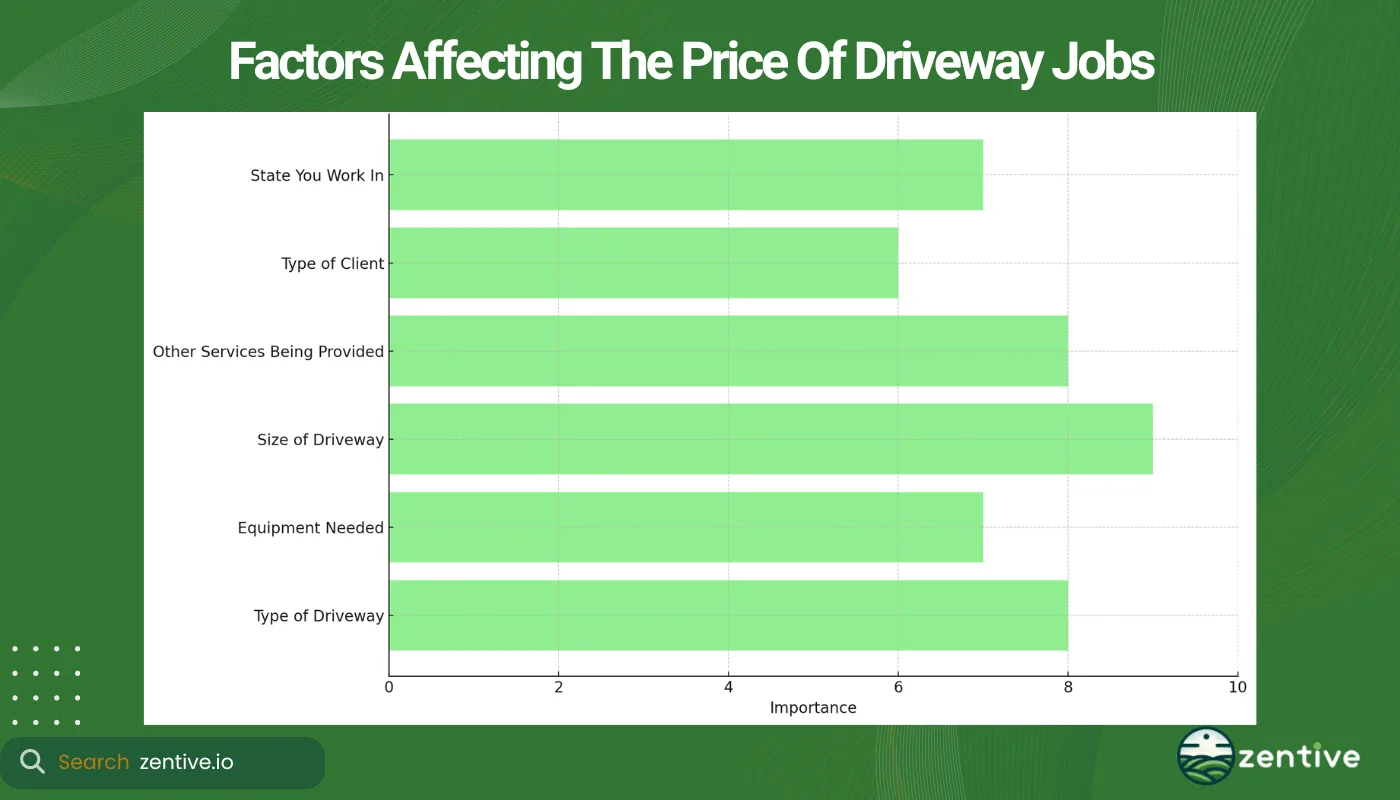
- Type of Driveway: Different materials have different costs. Driveway materials such as concrete, asphalt, pavers, or gravel have varying costs, with pavers generally being the most expensive and gravel the least.
- Equipment Needed: The need for specialized equipment for excavation, grading, or compacting can increase costs.
- Size of Driveway: Larger driveways require more materials and labor, increasing the total cost of the driveway installation.
- Other Services Being Provided: Additional landscaping services, such as grading, drainage solutions, or the installation of landscape lighting or driveway heating, increase the cost.
- Type of Client: Commercial projects usually require larger driveway installation areas—think shopping centers. They often require more durable materials, as the traffic on the driveway is much higher. Both mentioned factors increase the cost.
- State You Work In: Labor and material costs can vary significantly from state to state, affecting the overall cost of driveway installation services.
What Landscape Services Are Related To Driveway Installation Services?
Several landscape services are crucial to complete before or during the driveway installation process. What are types of landscaping services, you might ask? The below landscape services often occur during driveway installation.
- Grading and Leveling: Ensures a flat, stable base for the driveway.
- Drainage Solutions: Prevents water buildup that could damage the driveway.
- Hardscaping: Incorporates additional non-living elements to spruce up your driveway, including lighting or curbs.
- Landscape Lighting: Enhances visibility around the driveway.
- Planting Beds and Borders: Makes the area look more natural and helps with erosion control.
- Sod Installation: For quick establishment of a lawn around the new driveway.
- Irrigation Systems ensure the surrounding landscape remains well-watered without damaging the driveway. This is usually done when pipes need to travel across the driveway.
- Retaining Walls: Provides structural support and can enhance the appearance of the driveway area.
Why Do Customers Get Sod Installation With New Driveways?
Customers often opt for sod installation with new driveways to immediately improve the appearance of their landscape, ensuring a lush, green lawn without waiting for seed growth. Installing driveways damages the immediate area around the driveway- you have vehicles driving to and from the area, chemicals, and more. Sod installation can, therefore, help improve the environment while providing erosion control.
The average price of new sod typically ranges from $0.25 to $0.85 per square foot, with additional delivery and installation costs bringing the total to approximately $0.80 to $2.00 per square foot. Quoting sod installation differs between states, so be sure to get one in your state as they may differ from the above-mentioned rates.
How Does Location Affect New Driveway Pricing?
Location significantly affects new driveway pricing. Labor costs, materials availability, and local regulations differ in every state. For example, businesses operating in states with higher living and wage costs charge more for driveway services. California is the most expensive state for installing a new driveway due to its high labor and material costs.
What Are Tips For Pricing Landscape Driveway Jobs?
When pricing landscape driveway jobs, you need to incorporate some tips to help you stand out from the crowd. The first and most effective tip is to use landscaping estimation software. Tools like Zentive help you create better quotes faster and more accurately.
The next tip is to precisely calculate the time needed to finish the job. I don't have to stress the importance of how labor can eat away at your profit or the client's budget, so ensure you account for the time required to complete the job accurately to avoid underquoting.
Finally, common mistakes should be avoided to prevent a bad review from the client or decreased profit. Common mistakes include underestimating material costs, overlooking project complexities (grading, water drainage, etc.), and not accounting for potential delays (shortage of materials). Landscapers can use Zentive's profit margin calculation tool to help price driveway installations.
How Does Landscape Software Help Quoting Driveway Services?
Landscape software makes quoting driveway services faster and more accurate, helping you to win more clients and bid on more jobs. A tool like Zentive acts as your personal driveway cost calculator, offering benefits like helping precisely estimate material and labor costs and streamlining the quoting process, saving time and reducing errors.
A quoting app for landscape services can help improve the professionalism of your business, something most new landscape businesses struggle with as they're still learning the ropes.
How Long Does It Take To Install A Driveway?
The installation time for a driveway takes two to three days to a week. The process is usually very straightforward, which is why it is a short timeframe. Still, it can take longer if the job gets more complex with regard to size, material, and site conditions.
What Are The Biggest Issues With Estimating Driveway Cost?
The biggest issues landscapers face when estimating driveway costs is underestimating material cost, underestimating project difficulty, and poor scheduling assumptions. The first is underestimating material costs, specifically not accurately accounting for the project's required materials. Another issue is overlooking project complexities. Each driveway installation has unique challenges, whether it's erosion-prone soil or underground utilities, all of which affect the project's cost.
Lastly, failing to account for potential delays can put you in a bad spot with the client. The client relies on your expertise to get the job done, so not accounting for delays like weather, material shortages, and other unforeseen issues can damage your reputation and increase costs beyond the initial agreed-upon budget.
Get This Guide as a PDF
Save this article for offline reading. We'll send a formatted PDF straight to your inbox.
No spam. Unsubscribe anytime.
Ready To Streamline Your Field Service Business?
Zentive is the all-in-one field service management software built for landscaping, lawn care, tree care, and snow removal businesses. Start your free trial today.
No credit card required · Cancel anytime