
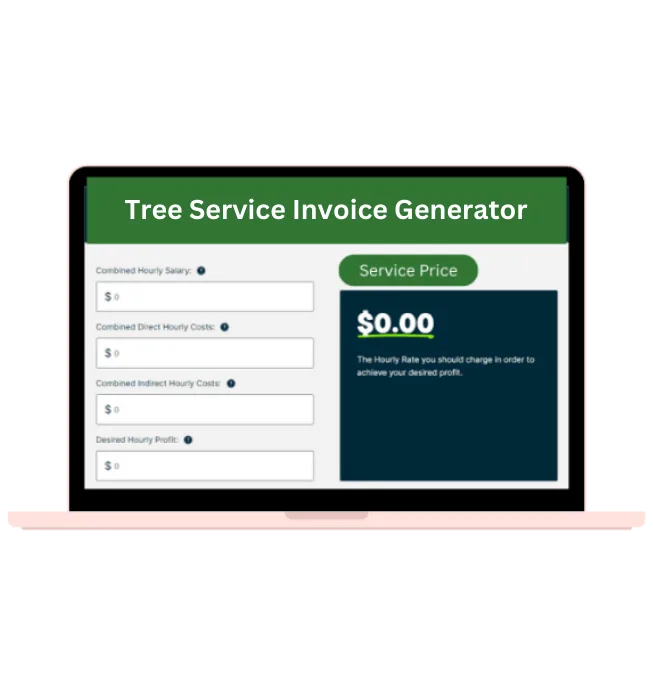
Creating an invoice for tree services involves collecting job details, creating the invoice, verifying accuracy, sending the invoice, and following up on payment. A tree service invoice is a document that details the services your business provides to a client, including costs of service (tree removal, trimming, or stump grinding) and payment terms and details.
A tree removal invoice is just as important, if not more important, than a quote. It fosters better financial tracking, creates a better tax record, reminds clients of payment, and acts as a formal document you can use in case a client doesn't pay and legal action is taken.
One of the biggest challenges for tree service providers is creating clear, professional invoices that avoid payment delays. This article explains how to create a tree service invoice and provides an invoice template. We're here to help you create professional tree service invoices and provide you with the necessary tips to streamline the process.
Follow steps in the below table to create a tree service invoice for your customers.
| Invoicing Step | Definition |
|---|---|
| Collect Job Details | Job detail collection records services performed, labor time, materials used, and pricing. |
| Utilize Invoicing Software or Template | Invoicing software or templates standardize billing format and automate calculations. |
| Create the Invoice | Invoice creation generates a formal billing document with itemized charges and totals. |
| Verify the Invoice | Invoice verification confirms accuracy of services, pricing, and customer information. |
| Dispatch the Invoice | Invoice dispatch delivers the billing document to the customer through digital or physical channels. |
| Follow Up | Invoice follow-up tracks payment status and resolves outstanding balances. |
It's important that you send professional invoices for all types of tree service customers. Doing so reflects positively on your brand image and will make it easier for people to pay you.
There are ways to speed up the learning process or skip it altogether. You can use tree service invoicing software to create and send invoices. This type of software includes a tree service invoice template you use to create invoices more efficiently. But first, let's analyze and discuss how a typical tree removal invoice example looks.
1. Collect Job Details
Collect job details such as the client's full name, address, and contact information. We want the invoice to reach the right person without any hiccups.
List the services your business provided, including specific dates when the work was done and, if you worked on an hourly agreement, the number of hours spent on the job. This helps the client remember what you are billing them for. Invoice line items include materials used and subcontracted services. This way, there's no confusion about additional costs.
Make sure invoice details match the original job quote. The last thing you want is to overcharge or undercharge a client for your services.
2. Utilize Invoicing Software or Template
Tree service invoicing software is a type of management software specifically designed to streamline invoice creation, delivery, and follow-up. Tree service invoicing software reduces time spent creating and sending invoices. It streamlines the process, making invoicing faster and more efficient.
Not only does it save time, but it reduces the chances of human errors. For instance, Zentive is an invoice generator that helps you create professional invoices faster and more accurately than ever.
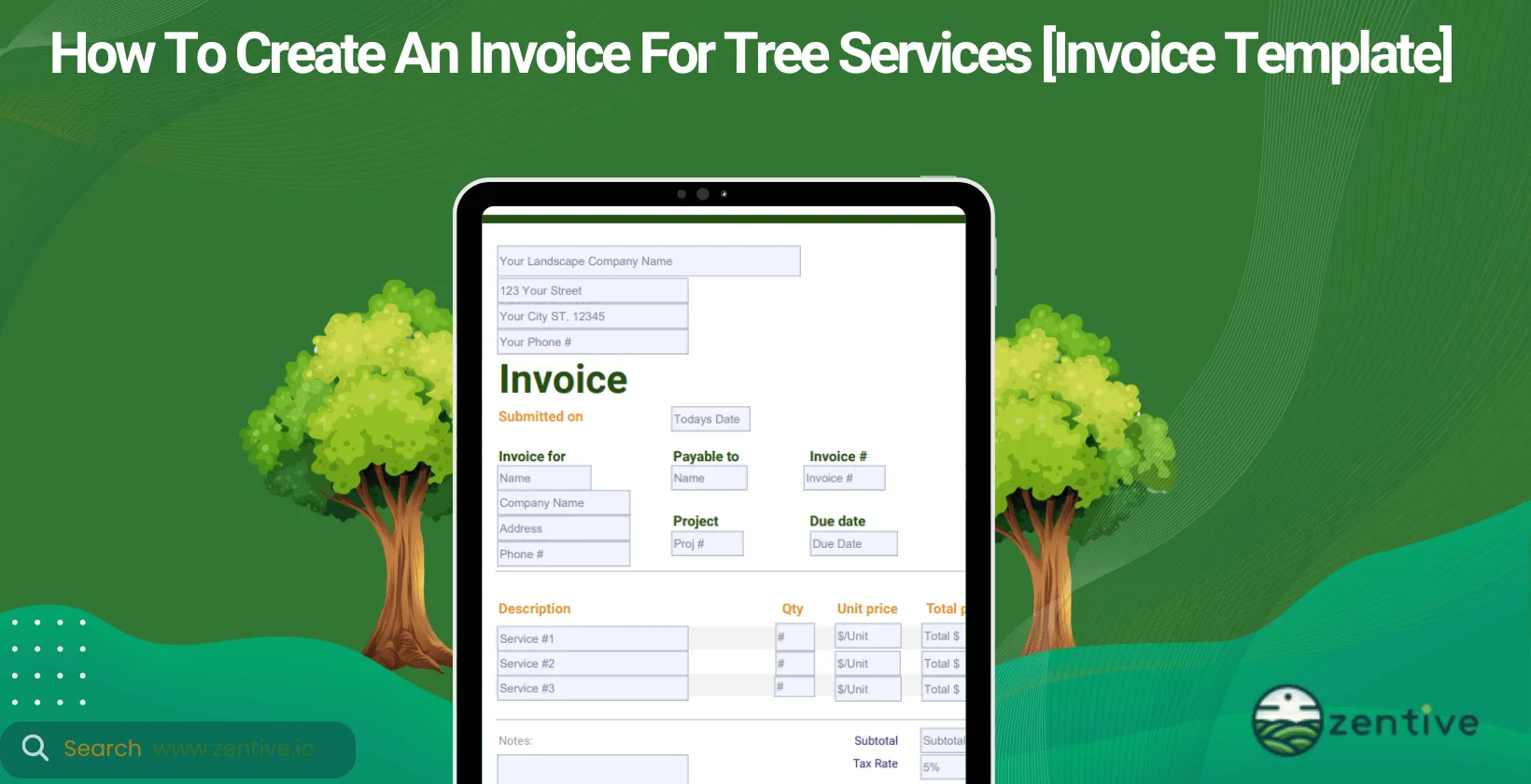
Use our downloadable tree service invoice template (printable) below for those who prefer something more hands-on.
3. Create the Invoice
It's time to put everything together and create the tree service invoice. Your invoice should include the client's details, service list, expense records, and the final total. Typically, either the business owner or office manager handles this task.
Before sending it off, take a moment to review your invoice. I can't stress this enough, but a quick check can save you from potential headaches down the road.
4. Verify the Invoice
Proofreading and verifying the invoice involves looking for any typos, incorrect numbers or calculations, or missing information. Reviewing your tree service invoices helps you maintain a professional image and avoid misunderstandings.
5. Dispatch the Invoice
With everything in order, it's time to send the invoice. The process is super-easy if you're using invoicing software. Software like Zentive has a customer relationships manager (CRM), which means your client is already in the database, so you can simply select the client from the list, and the software will handle the rest. This includes automatically following up with the client if there is a delayed payment beyond the pre-agreed payment terms.
For those who prefer the traditional route, mailing the invoice is still an option. Just make sure it's sent promptly to avoid payment delays.
6. Follow Up
Sometimes, clients need a gentle reminder that they are late on payment. It's something businesses don't like to do because it creates awkwardness and is uncomfortable, but how else are you going to get paid?
Send these follow-ups at regular intervals, starting when the pre-agreed payment deadline has expired. Reminding clients to pay ensures that your business maintains a steady and predictable cash flow.
As I briefly mentioned, you can use tree service management software to keep track of outstanding invoices and send timely follow-ups automatically - securing your payment and sparing you an awkward conversation. You can even adjust the payment terms and follow-up periods for your invoices based on the different types of tree service clients your business has.
How To Invoice Different Types Of Tree Service Clients
There are two types of tree service clients - commercial and residential clients. Commercial clients are hotels, parks, and businesses that require large-scale services, such as regular maintenance of large properties, tree removal, or storm cleanup. Commercial clients often require detailed documentation and longer payment terms for invoices, as businesses may have specific processes for approving and paying invoices.
Residential clients usually require tree care services like tree trimming, removal of a tree, or stump grinding for their personal property. These invoices are often simpler, with quicker turnaround times for payment.
How To Invoice Residential Tree Service Clients
Residential clients are homeowners or tenants who need tree services on their personal properties. The invoicing process is simple and direct. Be sure to include all relevant job details, make sure the total matches the initial quote, include multiple payment options and send the invoice promptly after the job is completed.
How To Invoice Commercial Tree Service Clients
Commercial clients are businesses, municipalities, or organizations that need tree services on a larger scale. Your invoices should include detailed breakdowns of the job, including services rendered, materials used, and itemized labor costs. Payment terms may be longer, and it's important to follow up professionally if payments are delayed.
While creating these invoices is more complex, you still follow the basic flow as outlined in this article; just remember to include all necessary details that align with the client's accounting procedures.
How To Invoice Different Types Of Tree Services
You invoice different types of tree services based on the unique requirements of each. Tree services can be anything related to trees, including tree removal, trimming, pruning, stump grinding, or emergency storm cleanup. There will be different labor and material costs for each of the services on the list of tree service types, and they should be included in your invoices appropriately.
For example, tree removal requires heavy machinery and more labor, so you need to itemize these details. Stump grinding and storm cleanup involve additional materials or subcontracted work, which you should note.
Keeping track of the procedures for each type of service is difficult. Fortunately, tree service invoice software can help you simplify the invoicing process.
Why Use Software To Send Tree Service Invoices?
Using software for invoicing is a smart move for any tree service business, making it quicker and more accurate. Invoicing software for arborists helps you avoid mistakes, saves time, and even allows you to send invoices in bulk.
Plus, many invoicing tools integrate with other systems, like your CRM or job scheduling software, which makes the process even easier. The convenience of having everything in one place can't be overstated—think of it as your all-in-one office tool.
Does Tree Service Invoicing Software Integrate With CRM?
Yes, many tree service invoicing software integrates with CRM systems. A CRM is a type of app or software that helps you manage client relationships and track every interaction you have with them.
By integrating your invoicing software with Arborist CRM apps, you can automatically update client records with billing information, send out invoices, and track client payments.
Does Tree Service Invoicing Software Integrate With Job Scheduling?
Yes, invoicing software like Zentive integrates with job scheduling software. Arborist job scheduling tools help you organize your work, assign tasks to your field service team, and track job progress throughout the day.
An invoicing x job scheduling integration is handy because it ensures that you accurately bill all the services. This integration helps you keep track of completed jobs and send invoices immediately after a finished job.
Does Tree Service Invoicing Software Integrate With QuickBooks?
Yes, tree service invoicing software integrates with QuickBooks. QuickBooks is a popular accounting tool that helps you manage your finances, track expenses, and handle payroll.
This type of integration is useful because it means your billing and financial records are always in sync, making it easier to manage your business's finances.
What Should Be Included On A Tree Service Invoice?
There are 15 elements that you should include in your tree service invoice.
- Tree Service company's name, address, and contact information: Clearly identify and list your business's contact details to avoid any confusion.
- Client's name, address, and contact details: This will help the invoice reach the correct person and prevent payment delays.
- Invoice number: A unique identifier for tracking and reference purposes, e.g., "Inv 001."
- Date of the invoice: The day the invoice was issued.
- Detailed description of services provided: A breakdown of the services your company provided, e.g., tree removal, trimming, etc.
- Labor hours and rates: Specify the time spent on the job and the hourly rate.
- Subtotal of services and materials: The total before taxes, covering all services and materials used.
- Applicable taxes: Include any taxes required by law based on the service location.
- Total amount due: The full amount the client needs to pay.
- Payment terms and due date: Outline when payment is due and any relevant terms.
- Payment methods accepted: List the options available for payment, like bank transfer or credit card.
- Late payment policy: State any penalties for late payments to encourage timely transactions.
- Warranty or guarantee information: Provide details on any warranties or guarantees associated with the work.
- Notes or special instructions: Any additional information the client should know.
- Tree Service company's logo (if applicable): The addition of your logo enhances brand recognition and professionalism.
- Signature line for the Tree Servicer: A space for the service provider to sign, indicating the job's completion and the invoice's accuracy.
What Are Tips For Tree Service Invoicing?
Always send the appropriate type of invoice (pdf, jpeg, etc.) and type of service (trimming, hedging, etc.). You should implement automated reminders about due payments. You can use invoicing software to help you.
Be sure to incorporate taxes to avoid discrepancies later. Many commercial clients won't pay the payment if you don't outline the taxes clearly.
You should include detailed payment terms, including when and how the client should make payments. This will help speed up the payment process and legally protect you from late payments.
Furthermore, provide a receipt as proof once you receive payment. This will convey a message of trust to the client and might even initiate a follow-up. It makes your financial records more complete.
Lastly, always generate accurate estimates and double-check your invoice, especially if you provide more than one type of tree service invoice. An accurate invoice mitigates conflicts during invoicing and speeds up the payment process.
What Are The Types Of Tree Service Invoices?
There are four types of tree service invoices, and you can use each for a specific project or service. A standard Invoice is for straightforward, one-time tree service projects. In comparison, a recurring Invoice is for ongoing maintenance services. It's the clients you visit twice a month or monthly.
A prepayment invoice is a type of invoice you issue before the commencement of a project. This type of invoice is usually for large-scale projects that require you to purchase materials.
The last type of invoice is a time and materials invoice. These invoices are issued based on the actual time spent and materials used on the project. They're uncommon because materials and time are often included in other invoices, but some commercial clients require you to create one.
Why Use Automated Tree Service Follow-Ups?
Automated tree service follow-ups for your invoices are essential for maintaining strong cash flow. You can use invoicing software to send automatic reminders for unpaid invoices. All you need is to gently nudge your clients to make their payments on time.
Automated follow-ups improve your cash flow and save you a lot of time you would have spent chasing down payments.
Do All Invoices For Tree Services Include Tax?
No, not all tree service invoices will include tax. It depends on the state and local tax laws of your jurisdiction whether you include taxes in your invoices. Always check the relevant regulations to ensure compliance.
How Long Do Tree Service Clients Get To Pay Invoices?
It depends on your business structure and cash flow needs, but tree service clients usually get net 15, net 30, or net 60 days to pay for invoices. These terms indicate how many days the client has to make the payment. For instance, a net 15 payment means that a client gets 15 days to provide full payment after receiving the invoice. The same applies to net 30 (30 days) and net 60 (60 days).
Should Tree Servicers Provide Bill Receipts?
Yes, tree servicers should provide bill receipts after receiving payment. Bill receipts offer the benefits of serving as proof of payment (POP) and help avoid any future disputes. Clients appreciate the professionalism, and it keeps your records clean and organized.
How Can Better Quotes Improve Invoicing?
Better quotes lead to better invoicing in that you avoid misunderstandings, delayed payments, and potential disputes. Clear and detailed quotes help clients know exactly what to expect - cost-wise. This transparency reduces the chances of disputes over invoices and helps maintain a positive client relationship, leading to more recurring business and a better brand image. Following a proper tree service quoting guide can teach you everything you need to know about how to create better quotes.
Get This Guide as a PDF
Save this article for offline reading. We'll send a formatted PDF straight to your inbox.
No spam. Unsubscribe anytime.
Ready To Streamline Your Field Service Business?
Zentive is the all-in-one field service management software built for landscaping, lawn care, tree care, and snow removal businesses. Start your free trial today.
No credit card required · Cancel anytime